Prisonisms

Prison:

  1.  A place where persons convicted or accused of crimes are confined; a penitentiary or a jail.
  2. A place or condition of confinement or forcible restraint.
  3. A state of imprisonment or captivity.

While prison is a physical place made up of buildings with barred windows, locked doors, and surrounded by fences intended to keep people securely and safely away from society; it is also a state of mind that imprisons the spirit in ways that no parole can ever free them from.

-ism:

  1. Action, process, practice.
  2. Characteristic behavior or quality.
  3. State, condition, quality.
  4. Distinctive or characteristic trait.
  5. Doctrine, theory, system of principles.
  6. An attitude of prejudice against a given group.

ism is a suffix added to the end of a word which transforms the root word.
breakfreechainPrisonisms are the shackles that bind the mind and spirit that can only be unlocked from the inside.  They are the prisons of our own making that we have confined ourselves within, often for a life sentence.  Only God has the power to commute your sentence.  No amount of education or re-education, counseling, or religious programming can set you free.  A popular Bible in prison is the “Free on The Inside” Bible published by Biblica explains in simple English how God can set you free, but it all starts with you.  You have to take the first step.  For many people fear is what keeps them bound.  Fear of change, fear of the unknown, fear of being ridiculed or ostracized by their associates, fear of being alone.  Prisonisms are often the root cause of recidivism.  Errors in thinking that cause an individual to slip back into a pattern of criminal behavior, if they ever left it.

Alcoholism: Psychophysiological dependence on alcoholic beverages.

Substance abuse is a major underlying factor in crime.  Studies report up to 90% of crime is related to or committed under the influence of drugs or alcohol.  This continues to be a problem for those who are incarcerated. “Spud juice” prison home brew is readily available and consumed in amounts sufficient to get drunk, as often as a prisoner can afford to. Brewing alcohol in prison is big business and an organized crime.  Teams coordinate the theft of ingredients from the chow hall and individuals steal from other initiates to pay their bar tabs.  Half-hearted attempts by custody staff to prevent theft from the kitchen and lax security in the housing units makes this possible.

AA/NA groups are held in every prison, but too many attend these groups for the wrong reasons.  They want to look good for the Parole Board rather than change their ways.  For those individuals, coming to prison wasn’t hitting rock bottom and they are not prepared to admit that they are powerless over their addictions.  They are dying for a drink.

Barbarism: An act, trait, or custom characterized by ignorance or crudity.

The corrections officer’s union advertises that their job is the most dangerous job in the state, which propagates the stereotype.  Violence in prison is accepted by far too many as being part of the sentence.  The price you pay for committing a crime against society is to serve time in the “Thunderdome”.  Some prisons have the reputation of being gladiator schools.

Coming to prison is a rite of passage for being a gang member and a fertile ground for recruiting new members. “There is safety in numbers” is the recruiters mantra. “Us” versus “Them”, predators versus prey, CO’s versus inmates, black versus white, gang versus gang, strong versus weak, young versus old.  The old wild, wild west idea of an armed society is a polite society is propagated from one generation to the next.  Defy authority; rules are made to be broken; stupid is as stupid does; ignorance is bliss; life imitates art imitates life.  A vicious cycle of depravity.  Life is cheap.  Only the strong survive.

Some people say that capital punishment is barbaric.  I can tell you from first-hand experience that it’s not the only thing barbaric about the criminal justice system.

Dogmatism: Arrogant, stubborn assertion of opinion or belief.

In prison there is no mutual cooperation because everyone believes that they’re right and everybody else is ignorant. “I’ll see it when I believe it” describes the state of unreality many prisoners live in “LaLa Land”. Students arguing with teachers over school rules and policy.  Everyone is convinced that they have the best, most accurate insight into human behavior.  They know the best way to get things done whether it be cooking, cleaning, or jailing.  Life could be so much better if everyone else did it their way.  They deny your reality and substitute their own.  They rearrange and reinterpret the facts to fit their own conclusions.  “I’m right and you’re wrong.”  When something doesn’t work out or they get caught it must be somebody else’s fault.  There must be a snitch, “I’m too slick to get caught.” Conspiracy theories; slavery; white power; “sex, drugs and rock-n-roll”; reality television is real; sports and hip hop will make you a millionaire; easy money; every woman wants what I’ve got; Orange is the new black; Next time I won’t get caught; I’m a bad man; A tough guy; A gangster; A fighter and a lover.  “I’m never gonna change, but I’m never coming back to prison.”

Until attitudes change, lifestyles will not change.  Dogma blocks any attempts to enlighten through the willful disregard of truth.

Hedonism: Pursuit of or devotion to pleasure.

“If it feels good, do it.”  Impulse control is an issue for many people in prison.  Their daily pursuit is pleasure: food, TV, alcohol, sex and not necessarily in that order.  They don’t worry about others, they are the most selfish people on earth, only concerned about themselves.  They look for ways to “get over” on people.  Their idea of work is doing nothing for something.  They always look for the easy way out, getting someone else to do it for them.

They trade the main course for an extra dessert.  Up all night, sleep all day; Party animal; Eating machine; Rap star; Pop culture trivia expert.  They have multiple baby’s mamas, none of which is their current wife or girlfriend.

They have never worked a day in their lives (legitimately).  They never have a dime in their trust accounts because they owe restitution, but always go to the store.  They live on coffee and honey buns (the breakfast of champions) and nacho do’s.  They deny themselves nothing today and put no thought towards tomorrow or how their actions impact others.  “Eat, sleep and be merry for tomorrow die” is their mantra.

Fatalism: The doctrine that all events are predetermined and unalterable.

For some, coming to prison was inevitable.  They see themselves as the product of their environment.  The child of poverty, growing up in a broken home, raised by their grandmothers because their addicted mothers were unfit, never knowing their fathers. Running wild on the streets; never having anything of their own except a record; state raised.

Entitlement mentality: Bridge Cards; Welfare; Cash Assistance; Unemployment; No education, can’t get a job, but why bother?  They take no responsibility for anything.  The system is broken, the cards are stacked against me.  The cops are out to get me.  A felon can’t get a job, so I’ll keep selling dope on the corner and see how long I can stay out of prison before I get caught or killed. Dropped out of school to hustle, doesn’t see any value in earning a GED.  Book learning can’t prepare you for a life on the streets. Life is hard so I have to be hard too.  Life is painful so I take drugs to dull the pain.  Life is a bitch and then you die.  There isn’t anything else, no after life – no god would be so cruel as to make us live this way.

Without the good news of the gospel of Christ the people parish.  Fatalistic people need a compelling reason to live life as if life – both theirs and others – really matter.

Institutionalism: Use of public institutions for the care of those who are mentally disabled or who are criminally delinquent, or incapable of independent living.

In the 1980s two things happened to cause an explosion in prison populations: Mental hospitals closed leaving the mentally impaired no place to go except the streets which in turn lead them to prison.  The second was the imposition of longer prison sentences. Prison became a maze with no way out for many people.

Prison is a highly structured place: set times to eat, work, study, and play. This is something that many in prison couldn’t change on their own.  The state provides three meals a day, shelter and clothing.  No responsibility to do anything for yourself.  For those who lived on the streets, it doesn’t get much better than that.  Also, for those with mental issues, they are getting some mental health care such as counseling and medication to help regulate their mood or to help them sleep.

For some spending long periods of time behind bars leaves them behind. Family and friends move on or die, technology advances put them at a disadvantage and leave them so lost that the world they return to is foreign to them.  They simply seek to return to the security of the simple life that they’ve come to an accommodation with in a love/hate relationship.

Puerilism: Childish behavior in an adult.

Many men in prison are literally and figuratively in a state of arrested development. Grown men who are very immature.  They throw temper tantrums, act out to get attention, and have no self-discipline.  Gray hairs acting like teenagers: following youth culture, music, and dress styles.  They insist on having their way and will make a scene to get what they want, when they want it.  Many have the attention span of a humming bird. Afflicted with ADHD or other mental disorders, they are unable to focus long enough to learn anything from their required programming.  Forced to sit through classes without the benefit of medication that would allow them to concentrate, they are disruptive to others and have disciplinary problems.  They run the yard like they ran the streets and are unable to lay down when they receive tickets and have to serve LOP (loss of privilege) which only compounds the problem.  Unable or unwilling to follow directions or obey rules, they can’t complete a program or a parole.  Self-medicating to try and regain a “normal” feeling only compounds the issue. They are more like the pirates than the Lost Boys living in Neverland.

Diabolism: Devilish conduct or behavior.

While the barbarians are sociopaths, the truly diabolic are psychopaths. They have no conscience.  You can see the predatory look in their eyes, like the big cats eyeing the wildebeest.  They test the fences always looking for weaknesses to exploit.  They know exactly where all the security cameras are.  They are loners who are never alone.  They surround themselves with minions that aspire to be like them.

They hate the world they live in and anyone who is not like them.  They judge everything and condemn what they determine to be soft.  They despise those who have prosperity and happiness, just like the Grinch. They are distrustful of any authority.  They live life by their own rules. They demand respect but rarely give it.  They value no life but their own.

When given a choice between a legal or illegal opportunity, they always choose the illegal one. They see themselves not just as living on the fringe of society, but outside it as true outlaws.  They are rebels without a clue.  They are truly a menace to society.  They are pathological liars who believe their own lies.  The truly unrepentant and unremorseful. The only thing they regret is getting caught.

These are the ones that Christ died for because nobody else would.  They are filled with legions of demons that only Christ can excise.

Defeatism: Acceptance of or resignation to the prospect of defeat.

Many people who come to prison proclaim their innocence and mount a boisterous and rigorous appeal.  There are others, however, who arrive beaten up and broken down by the criminal justice system.  These people have resigned themselves to the end of their lives as they know it. Whether they are actually guilty or not doesn’t matter at this point. They have lost everything: family, friends, jobs, assets and just want to get their prison sentence over with.  Emotionally and spiritually drained, they have lost faith in society and the government bureaucracy that they thought once cared for them and have now given up hope of a happy ending.

These people are more or less law-abiding citizens who ended up in prison after their first encounter with the criminal justice system and never imagined that they’d be on the inside looking out.  Facing long prison sentences, they are ill prepared for life behind bars.  They are not hardened criminals, but someone who made a mistake, a lapse in judgment and will pay for it with the rest of their lives even after they are released.  They have gone through a life altering experience and it has broken them.  They have no energy, the has gone out of their eyes.  They don’t feel like they have anything left to life for.  They feel abandoned by God and their prayers go unanswered.

These are the least of these that Jesus said we should give a cup of water to. They need to know that Jesus hasn’t left them or forsaken them.

Parasitism: The characteristic behavior or mode of existence of a parasite.

There are two types of parasites in prison.  Those who live life vicariously through others and those who are a financial drag on society.

Social parasites are busy bodies, gossips, rumor mongers, ear hustlers, nosey neighbors. They don’t have a life of their own so they are in everyone else’s business.  They can’t keep a secret and don’t really try.  They are information brokers.  They butt in where they don’t belong, join in conversations uninvited.  By focusing on everyone else around them they never address their own issues.  God is the only one they should be listening to and he would gladly use their talents to spread His gospel among all men.

Financial parasites live off the largess of others.  They borrow from family and friends, bunkies, cubies, and the “store man.”  They may be either too lazy to work or enjoy living far beyond their means.  They have an entitlement mentality and believe that someone will take care of them: parents, spouse, significant other, or the government.  They don’t adequately monitor their spending habits or cash flow and have frequent confrontations with their debt holders.  Their solution to their financial problems in prison is to lock up and ride out, then start over someplace else.

In the world foreclosure, repossession, calls from collection agents and bankruptcy are familiar events.  Payday lenders, pawnshop brokers, welfare, cash assistance and SSID are their way of life. They won’t do anything to jeopardize these by getting a GED or job training.  The only debt they don’t have is a debt of gratitude.

Parasites need to learn that the only one we should be dependent upon is God.  He wants to provide all they need if they would only agree in return to be generous to others.

Here are a few more –isms that can be used to describe some facet of prison and the prison experience. If you aren’t familiar with the word look it up in a good dictionary:

  1. Absurdism
  2. Activism
  3. Adventurism
  4. Antagonism
  5. Aphorism
  6. Chauvinism
  7. Classism
  8. Criticism
  9. Cronyism
  10. Despotism
  11. Determinism
  12. Egotism
  13. Elitism
  14. Empiricism
  15. Escapism
  16. Euphemism
  17. Exhibitionism
  18. Existentialism
  19. Externalism
  20. Favoritism
  21. Idealism
  22. Indeterminism
  23. Individualism
  24. Inerrantism
  25. Infantilism
  26. Instrumentalism
  27. Intellectualism
  28. Intuitionism
  29. Irrationalism
  30. Legalism
  31. Mannerism
  32. Materialism
  33. Narcissism
  34. Nepotism
  35. Obscurantism
  36. Obstructionism
  37. Opportunism
  38. Optimism
  39. Paralogism
  40. Particularism
  41. Passivism
  42. Paternalism
  43. Patriotism
  44. Pauperism
  45. Perfectionism
  46. Pessimism
  47. Pragmatism
  48. Privatism
  49. Professionalism
  50. Prohibitionism
  51. Racism
  52. Recidivism
  53. Relativism
  54. Sadism
  55. Sexism
  56. Skepticism
  57. Solecism
  58. Stoicism
  59. Terrorism
  60. Vandalism
  61. Vulgarism


Phone Tag

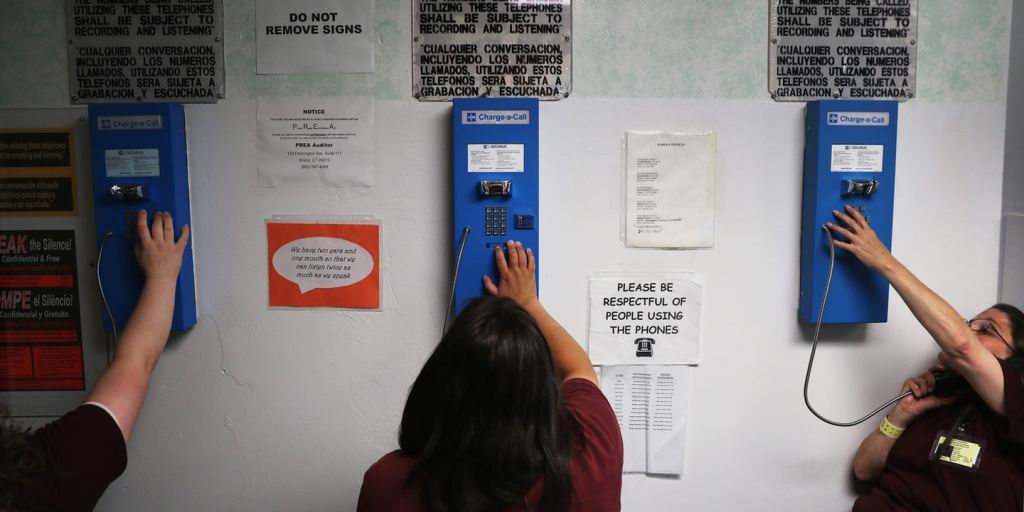
This is what the phones in the housing unit looked like at my last Level I facility.

Communication with friends and family in the free world is very important to those serving time in prison.  There are four primary means of communication available to inmates: phone calls, email, snail mail, and visits.  For some visits are a rare treat to savor, while these other forms of communication take precedent and occur at greater frequency.

In the housing units and on the yard are phones that can be used when the housing unit or yard are open.  Collect and pre-paid debit calls can be made to a limited number of phone numbers each month (check for change to the phone policy).  Except for calls to lawyers, the calls are recorded and possibly monitored.  A phone call can last 15 minutes.

Given the ratio of inmates to phones there is almost always a line of people waiting to get on the phone.  There is no privacy in prison and the phones are no exception.  The phones are clustered together making it easy for other inmates to overhear half of the conversation.  Many prefer to use the outdoor phones since it tends to be a little quieter than in the housing units.

Phone service is under contract with a private service provider that is responsible for the upkeep of the system.  It seems that at any one time at least one phone in four is out of service.  Men in prison experience high levels of stress and frustration and tend to take it out on those they are talking to on the phones and when that is not good enough they take it out on the phones themselves.  The current carrier is Global Tel Link (GTL).  Phone rates are a national issue and both the FCC and the federal courts have gotten involved trying to set fair rates.  Prisons are captive markets and almost every vendor under contract to the MDOC to provide services and products to inmates take advantage of that by charging significantly more than what the general public normally pays with a free market. With the MDOC these higher prices generally translate into so portion of the proceeds being shared by the department.  In the real world we would call this a kick back, but it is business as usual for Corrections.  In the case of GTL, they offered to set up a fund where the states portion of the revenue proceeds would go to buy cell phone detection and blocking technology to combat the growing problem of contraband cell phones in prisons.  (At the time of the contract award it was against federal law for the states to utilize this form of technology.)  The result is that prison phone calls cost $0.34 -$0.37 per minute, depending on whether they are collect or debit calls.  Long distance and international calling rates were even higher.  Now this is far better than the county jail were calls could cost $1.00 per minute, which is outrageous and far beyond what calls cost in the free world.  It is clearly a case of the state and counties making profit from those that can least afford it.  At one point the courts ruled that it was predatory pricing and ordered that phone rates be reduced, however the phone companies that provide services to prisons and jails successfully lobbied to get a stay while further study was done.

Either an inmate can put money on a disbursement to GTL to setup a debit account to pay for phone calls or those that receive the calls can either contract with a phone carrier that will allow them to receive collect calls and then bill their account or they can put money on a debit account of their own with GTL.  When I was in the county jail the hardest phone call I have ever had to make in my life was to my mother.  Fortunately, it was a land line and the carrier allowed them to accept the charges.  Cell phone carriers don’t work that way and you have to set up the prepaid debit account.  I was fortunate enough that I had the luxury of calling home collect and put money on a debit account so that I could call my family’s cell phones in case of emergency or vacation. Most people in prison don’t have that luxury.  I made it a practice to call home for 15 minutes once a week for the 8 years that I served behind bars.  This probably ran into the thousands of dollars in order to keep the lines of communication open.  Not everybody in prison will be able to afford this, although I knew several married guys who called home daily to talk to their wife and kids.

Being able to have the ability to pick up the phone and make a call is a major comfort to people in prison.  I knew a lot of guys whose priority was putting money on the phone instead of purchasing commissary items.  If you have a loved one in prison the best thing you can do for them is to set up a pre-paid debit account so they can call your cell phone and talk to you any time they can.  In a place so full of stress and hostility, being able to hear a friendly voice is a comfort and a blessing beyond words.

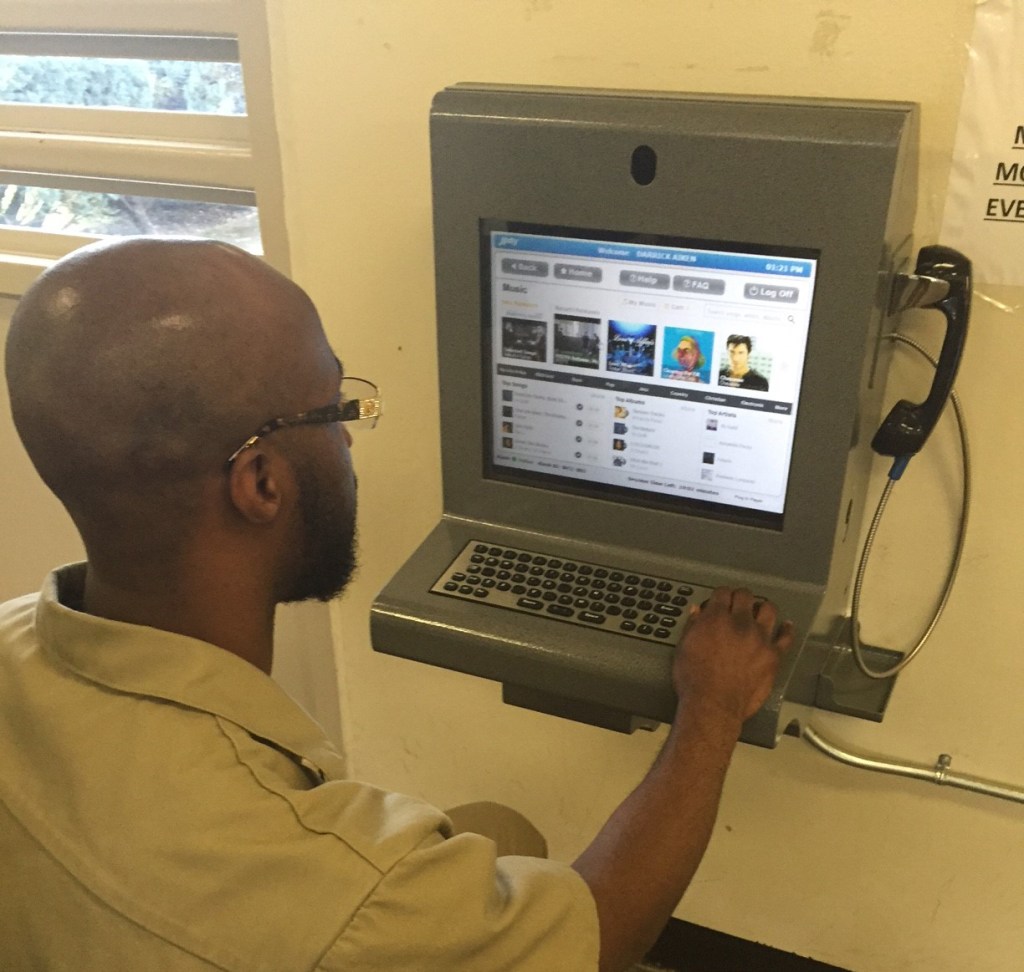
This is what a JPay kiosk looks like. You can send and receive email using a very limited function computer terminal.

Starting around 2010 the MDOC brought in another vendor JPay to provide a form of electronic communication.  Friends and family can register on the JPay website and buy “stamps” to send what amounts to email to prisoners.  In the housing units, prisoners can then use a kiosk with a monitor and a keyboard where they can send and receive JPay messages.  The inmate can only send messages to people who have registered on the JPay website to communicate with them. The inmates can also buy “stamps”.  It costs about $0.50 per “page” to send a message.  Messages can even have photo attachments.  These messages are subject to the MDOC mail policy.

Snail mail through the good old USPS is also a good way to keep in contact with inmates. In 2017 the prisoner mail policy was updated due to contraband being sent to prisoners. Envelopes are discarded because of drugs being hidden in the adhesive under stamps, flaps, or address labels. Also, black or blue ink only, no colored ink, borders, or water marks.  Photos printed on plain paper only are permitted.  Forget sending stuff like newspaper articles, magazines, church bulletins, etc.  Greeting cards also have restrictions.

Children will longer be able to send their daddies refrigerator art.  It is as if the MDOC wants to discourage people from sending snail mail to prisoners.  The same thing has occurred in county jails where the only permissible format is a postcard.

Prisoners can purchase letter sized envelopes with metered postage.  The story is that back in the day, prisoners actually purchased postage stamps but that these would be treated like currency and used to pay prison debts among prisoners who would send the stamps to people in the free world who could return the stamps to the USPS for cash.  I can’t verify this but it was told to me by a lifer bunkie who had been down since the 1970’s.  It is an example of how those held against their will will attempt to find ways to circumvent the system.  And that a few will ruin it for everyone.

Pavlovian Response

Pavlov's dog

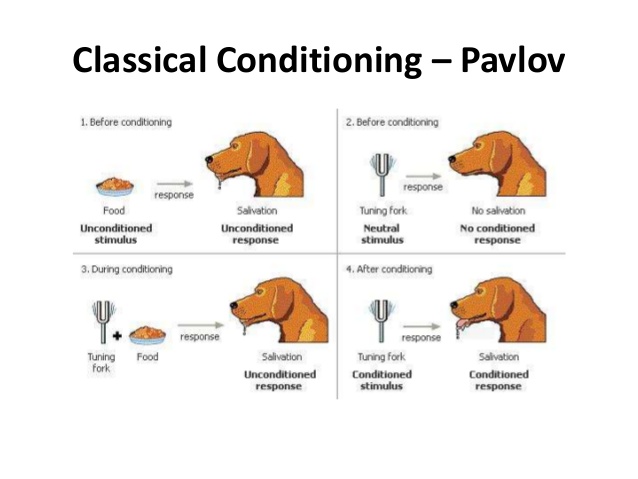
Ivan Pavlov is known for his work in Classical Conditioning back in the early Twentieth Century in which he was able to create a learned response in dogs by getting them to salivate when a bell was rung rather than by showing them food.  In the MDOC something similar happens.  Meal service begins morning, noon, and evening after count clears.  The housing units are dismissed to the chow hall one at a time.  There are different rules in different levels and the COs also enforce their own rules.  In general, the lobby area is off limits until the unit is called to chow.  The CO gets on the PA system and announces “Chow Time” to dismiss the unit to chow.

In level IV the inmates must be released from their rooms and they will then leisurely stroll to chow, drawing out the amount of time spent out of their cells to the maximum amount possible.  There is no urge to be first because there is no sitting and enjoying the meal.  You eat and you leave the chow hall under the strict watch of the COs.  But level I and II are completely different.

In level I and II when the unit is called to chow it is a stampede.  The door to the unit is a natural choke point and it gets pretty crowded with bodies jostling each other to get out.  When you add canes and walkers, someone is likely to get run over.  To alleviate this some facilities will call a special early chow for handicapped inmates.  Those with canes or walkers find it difficult standing in line and given the distance from the housing unit to the chow hall would end up at the back of the line.

mdoc-food-service
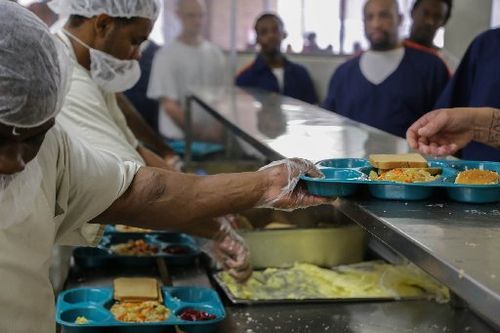
MDOC food service at an unnamed prison.
( Photo: Ryan Garza/Detroit Free Press)

Chow can take 1½ to 2 hours to run depending on the size of the chow hall and the number of inmates to be fed.  Factors like food preparation issues can add additional delays.  Aramark and Trinity had a history of problems like running out of food and were fined for it.  Running out of chicken quarters on a Sunday could delay the release of the last unit while more is cooked or an alternative like chicken patties were prepared.  In level I and II getting the last unit into the chow hall is the cue to open the yard.  Prior to this movement is controlled.  This means that after eating inmates return to their unit or go to callouts such as school or medical.  When the yard opens inmates can go into the front yard and big yard. The reason for controlled movement is to among other things prevent inmates from slipping back into the chow hall.

Double dipping is a real problem.  Portions are not big enough to satisfy most adults, so guys will try almost any way to get full.  To control food costs the kitchen prepares a certain number of meals based on estimates of inmate and staff meal consumption from historical records. For instance, maybe only 50% of inmates at a given facility regularly eat breakfast, so only that much food will be prepared for oatmeal, grits or cream of wheat days.  However, on waffle and sausage day 75% of the inmates will get up for breakfast so more food will need to be prepared that day.

From friends working in the kitchen I’ve heard reports of meal preparation exceeding 125% of the inmate population plus staff.  To combat this the MDOC invested in a computerized system using bar code or magnetic strip readers to scan ID cards as people go through the serving line.  But like the other cat and mouse games that inmates play they are always looking for ways to beat the system.  I’ve seen guys duck under the rail to get back in line when the staff wasn’t looking.  Guys passing trays from the line to others sitting nearby.  Guys taking two trays off the line to get a second burger or hot dog and abandoning the tray when they leave the end of the line.  Use someone else’s ID card who isn’t going to chow.  And the old standby of having a friend on the serving line.  All of this in addition to food service workers stealing food.  No wonder the portion sizes are so small.

Not only do you leave the chow hall hungry but also disappointed because the food quality is so bad that some things had to be left on the tray as uneatable.  Potatoes that were so over cooked that they are as hard as bricks.  Under cooked rice.  Over cooked greens.  Polish sausage that is the texture and consistency of rubber hose.  Fish that is mostly fins and scales.

There were rumors abound about boxes of food labeled “Not for Human Consumption” being delivered to food service for inmate meals. Newspaper articles appear from time to time documenting events where Aramark or Trinity were fined for attempting to serve food with maggots, rat droppings, or fished out of the garbage.  The bottom line is the bottom line, food costs money.  The goal is to feed an inmate for $1 a day and has been for years regardless of inflation.  When buying the cheapest food isn’t enough food service management will do whatever it can to contain costs, even cut corners.  I suspect that Pavlov’s dogs wouldn’t have salivated in anticipation of a meal at the MDOC.

Parole Violation

sd-ljl-sponsored-columns-law-offices-vikas-bajaj-parole-violations-20171018A rapper that I’ve never heard of made the news by being in prison.  It’s not what you think.  Famous people from entertainment and sports were coming to aid in his cause. He had been serving a 10-year probation and was sent to prison for a technical violation. He had apparently been charged for an infraction of the motor vehicle code involving a motorcycle.  The charges were dropped but the judge still sent him to prison against the recommendation of the prosecutor.


I’ve met a number of people who were in the same boat.  Committing a crime while on probation or parole is a violation of its terms and even if you weren’t in prison before as part of your original case you can still end up there.  The problem is that you don’t have to actually be convicted, just having police contact is enough to set things in motion.

To address the parole violation situation in Michigan, instead of sending parole violators back to Quarantine they are sent to the Parole Reentry Center in Detroit, a former prison. Your parole officer can take you there directly while you await a hearing with the parole board or a judge.  The problem is like the rapper you can be sent to prison for up to the maximum length of your remaining sentence on a technicality.  While on parole or probation you are considered guilty until proven innocent and you are not subject to due process.  This means that they can do whatever they want and you have no legal recourse.

Now it is not as bad as it used to be.  There have been significant changes made to reduce the number of parole violators being sent back to prison.  It is expensive to house them and does not address the underlying causes of recidivism.  Now things like substance abuse counseling, restriction to approved activities or even house arrest may be used.  In the case of the rapper it was the judge herself that chose to put him behind bars.  Sure, he had a poor track record with a number of previous violations but this time was without merit.  It took a great public outcry to get him released.  What about the others that don’t have such powerful allies?  It is clear that the system both in Michigan and nationally is broken when someone like a judge or parole board member can defy counsel or the regulations to impose a punishment.  If anyone else was to do this they would be called a vigilante and themselves be subject to punishment.  The difference being that they would get due process.

Over Due


Prison libraries have the smell of old books and the looks of a hoarders living room without the eclectic charm. Books were the only thing to keep me sane.


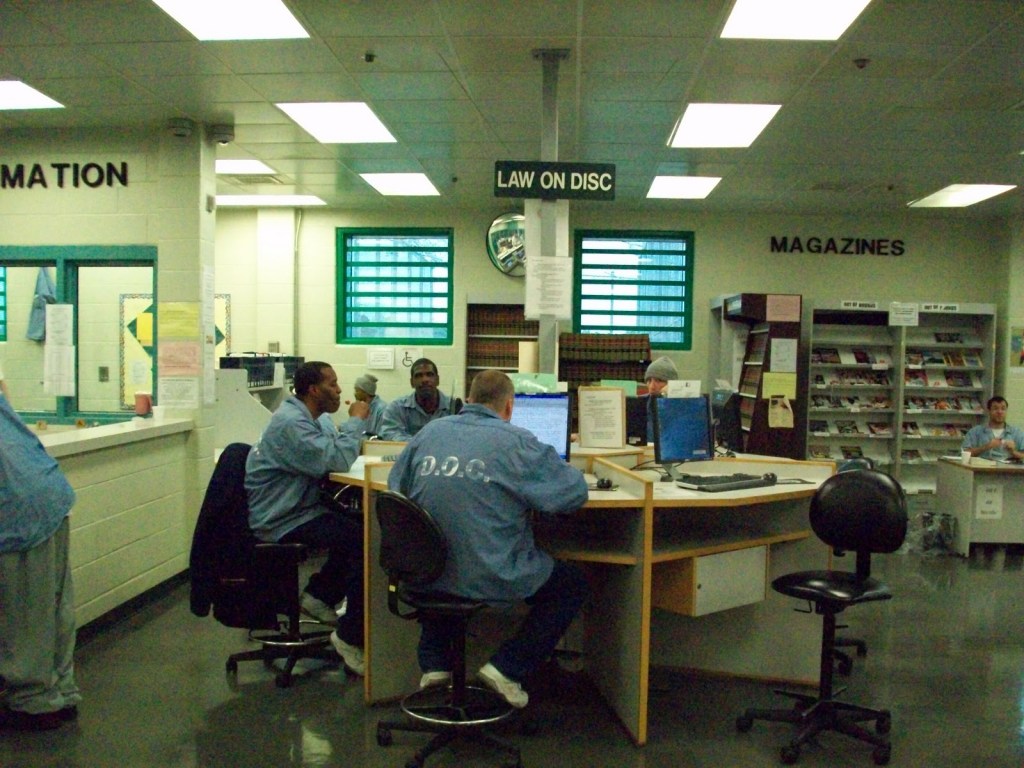
By law inmates are not allowed access to the internet so computer access is very limited and heavily restricted.  The three places where inmates have access is the JPay kiosk for email in the housing units, educational software and GED test taking in the school, and the LexisNexis legal software in the Law Library.  All of which were grudgingly adopted. The MDOC is not a 21st century institution.

This is a picture of a law library in a federal prison with the computerized work stations similar to the ones I saw while I was in prison.

The General Library on the other hand is as traditional and anachronistic as it gets.  At my first facility it even had a card catalog.  At my second, the catalog was computerized, but made available to inmates in a printout kept in a 3-ring binder.  Fiction, Nonfiction, Reference, and Periodicals.  Like the rest of the MDOC there is really no budget to update the libraries contents. Books have to be acquired creatively, such as donations of books removed from circulation in public libraries and inmate donations which comprise the majority of the library collection.  The result is an eclectic conglomeration of incomplete series, authors no one has ever heard of, yellowing paperbacks and the odd best seller or two.

Reading 3 to 5 books per seek I probably read between 1200 and 2000 books. About my 3rd or 4th year I saw a guy with a notebook where he kept a log of everything he read.  I wish I had thought of that.  More than once I checked out a book that by the time I’d read the first chapter I realized I had already read it.  The low-tech method of date stamping an index card utilized means that the library clerk can’t tell you whether or not you’ve read a particular book title.

Most prison libraries have an Inter-Library Loan program where inmates can borrow books from the local public library.  The catch is there is no way to know what titles are actually in the library.  You need to have the book title and author you want to request. After completing the ILL form and signing a blank disbursement form to pay for the book whatever the cost if something should happen and it is lost.  Then wait three weeks to find out if it is available.  The perfect system for people who have nothing but time on their hands.

The library is a very small space packed floor to ceiling with books and sometimes a waiting list of guys wanting to get on the call out.  Frequently when I was reading a series I would have to wait weeks to get the next book.  One of the most frustrating things about the library was the number of lost books.  Guys rode out or go home and the books don’t get returned.  Books lost in the housing unit often turned into wedges to prop up desks or bunks, or any number of tragic ends.  It may take years for missing books to be removed from the catalog.

One of the blessings I received from my family was their willingness to order books for me from Amazon, an approved vendor for books that outside people could order from for us.  I was able to plug the holes in several series that I was reading by donating the books after I read them.

Getting newspaper subscriptions was problematic.  I had a subscription for my home town paper, but papers were frequently missing. Because of the indirect delivery system, the paper company did not give credit or refunds for the papers I did not receive.  The alternative is to read newspapers at the library.  With a short callout there wasn’t enough time to digest the whole weeks’ worth of papers, but at least I could look at the headlines so I could have some awareness of local events back home.

I couldn’t resist this bad prison pun. Early on I realized that there isn’t much humor in prison and made attempts to make light of the situation. While most guys could understand and tell dirty jokes most did not have the language skills for puns like this one.

Newspapers were generally available for 4 – 5 of the largest cities in Michigan so guys could keep on top of local news.  Magazines mostly dealing with culture are also available.  These varied greatly from facility to facility based on what requests the librarian was receiving from inmates.  All paid for by the PBF.

Like most libraries prison libraries are quiet.  At least relatively speaking in comparison to the rest of the facility.  I was always amazed how quickly the time passed there. Whether wandering through the stacks perusing the title looking for just the right book to read or skimming the headlines, the time just flew bye and all too soon it was time to go home.  If I hadn’t had a job working as a tutor I would have probably worked in the library.

While the callouts were always full, it represented only a small percentage of the inmate population. Too many men were functionally illiterate, others were poor readers who just didn’t enjoy it so won’t turn to it as a past time.  When working with students in the school I always encouraged them to sign up for a General Library call out, find something you liked to read.  I told than that the more they read the stronger they would get mentally.  I compared it to weight lifting. The more you do it the stronger you’d get.  It didn’t matter what the subject matter was just do it. With count tine occurring several times a day there was a 60-minute opportunity every day to exercise your mind.  Unfortunately, few took me up on this suggestion.

At one facility the library offered a 363-certificate program called the Individual Resource Study Center (IRSC).  It allowed inmates to independently study a variety of educational offerings. Course materials had homework and there was a final exam.  You worked at your own pace. Course offerings ranged from high school social studies and math, advanced small business to empathy and leadership courses.  The educational materials would help those who only had a GED to round out their education.

IRSC provided an opportunity for inmates to participate in self-help programming that was recognized by the parole board.  Due to lack of over sight by the librarian, the library clerks working with the program were able to falsify student assignments and test results for profit, to assist those who tried to exploit the program for the purpose of trying to look good for the parole board without doing the work.  As a result, the program was significantly curtailed, clerks were fired and greater oversight was instituted.  The materials I found to be at least 10 years old and like so many other programs, it started out with good intentions suffered from neglect.

One in A Million

Fiery_furnace_02
The symbolic story of tribulation and redemption is represented in this early Christian painting of the biblical story of “The Three Hebrews in the Fiery Furnace”. From the Catacombs of Priscilla, Rome, Italy. Late 3rd century / Early 4th century. 

There are exceptions to every rule.  There are personalities that don’t fit any profile. There is always one in every crowd.  There are behaviors that defy explanation.  There are people that beat the odds and succeed against all probability.  Even a blind squirrel finds the occasional nut.  Never say never.  When it comes to the human spirit statistics are meaningless.  Success is 5% genius and 95% perspiration.  By the grace of God.

Whether you believe in fate, karma, luck, or Jesus one thing is certain. Some people will walk out of prison like Daniel from the lion’s den or the 3 Hebrew boys from the fiery furnace. And it probably won’t be the ones that you might have picked going in. Everyone responds differently to prison.

The pressure: the physical, emotional, mental, and spiritual pain that gnaws at you relentlessly. The conditions that make a diamond out of a lump of coal reduce everything else to dust.  There really are no winners coming out of prison, everyone has lost something.  But how you deal with adversity truly is a matter of character.

Do you make the best of a bad situation or roll over and die?  Do you see the glass as half full, half empty, or as an opportunity to get more?  Prison can make you bitter if you let it, but there is always a choice.  Grow, change, adapt, learn, look to the future.  Or you can cling to the past, resist, stagnate, and die.

Erma Bombeck once wrote a book entitled “The Grass Is Always Greener Over the Septic Tank.”  Well prison is a septic tank and there is most certainly a lot of sh*t there.  But it is all about how you deal with it.  Prison makes very few people better for the experience. More people are appreciative of freedom having lost it for a period of time.  Others found opportunities for education that they had failed to take advantage of in the world and leave with a degree or vocation.  Some learn their lesson and go straight.  All of these comprise a minority of those who are released.  But they have one thing in common. They did it themselves.  They didn’t expect the system to do it for them.  They made conscious decisions that affected the outcome in a positive way rather than just sitting back and going along for the ride.

No matter where you came from or who your family is, or what happened to you before going to prison, what matters is how you used your time there.  There are only two options: either you do your time or your time does you.  Figuring this out is what separates the winners and losers in the prison lottery.

If your loved one is in prison make sure that they understand this.  There is no magic trick, sleight of hand, or hocus pocus, only hard thankless hours of effort for which there is little short-term gain.  The rewards are all long term, deferred until after they are released.  If you can’t do right in prison, then you won’t do right in the free world.  The system is against you, wants to break you, doesn’t care if you succeed.  You have to reform yourself under the worst conditions imaginable.  But to do so is to snatch victory from the jaws of defeat.  To walk away from a fatal crash.  To escape the maze.  To show true character in the face of adversity.  To be the one in a million.

Motel 6

1201193-Vintage-Black-And-White-Vacant-Prison-Cell-Poster-Art-Print

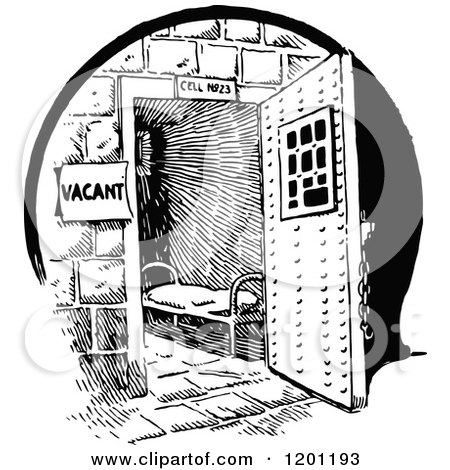
Tom Modell, the spokesman for the Motel 6 lodging chain used to end his commercials by saying, “We’ll leave a light on for you.”  A friendly way of letting people know that they were always prepared to receive guests.  The MDOC by contrast is more like the “Hotel California” in that “you can check out any time you want but you can never leave.” Prison and county jails for many are like a rat’s maze that is difficult to navigate, full of many dead ends, and all the exits seem to lead right back in.

Like all areas of government in this day and age, financial resources are tight, yet jails and prisons are critically over crowded.  Being asked to do more with less has resulted in a situation where jails and prisons more closely resemble warehouses than rehabilitation centers.  It has reached the point where correction has been replaced with punishment.  To most, the idea of pointless punishment is considered cruel and unusual, but for the MDOC it is business as usual.

After serving a sentence which is on average 127% of the minimum which is 120% of the federal average, many find themselves back on the streets with a large debt accumulated and limited prospects for an income sufficient to live on let alone spare resources to go toward retiring that debt.

It is the practice of county jails to charge booking fees for each suspect arrested and processed into jail.  So, whether you are ultimately found guilty or not you have started accumulating debts which will add up.  Many jails also charge inmates a daily rate.  Any money found on your person at the time of processing immediately goes toward paying the bill.  Any unpaid charges will follow you after your release.

In court you must have legal representation and if you can’t afford a lawyer on will be appointed to you.  What used to be provided as a pro bono service by a local attorney or through a public defender’s office at no charge now comes with a significant price. When you pay for your own attorney you must pay up front prior to having services rendered. If you are indigent and can’t afford an attorney they will provide you one and then bill you later.  In either case you are out thousands of dollars simply to “negotiate” a plea agreement and tens of thousands of dollars to fight your case in court.  Only those with significant financial resources can afford to mount a rigorous defense.

Upon conviction, as part of the sentence agreement you will receive a bill for fines, restitution, and court costs.  These will follow you to prison and under state law the MDOC will collect from your prison wages and any deposits to your trust account 50% of what you receive over $50 per month, and if you have multiple cases they can take up to your last $20 or $5 if there are federal charges involved.

To ensure that these costs are recouped, the MDOC has the power to seize your assets, and empty your bank accounts and investment savings -anything that is solely in your name.  They don’t have the ability to seize anything that is in a joint account or has a second owner named such as a deed to a house or car.

After paying off the fines, restitution, and court costs including court appointed attorney, the MDOC can then charge prisoners a daily rate for their incarceration, until the seized financial resources have been consumed.  Paying for your own room and board in prison does not entitle you to any extra privileges, no extra helping at chow, and no mint on your pillow.

In theory the prison chow hall diet is based on 2000 calories per day, but the reality is somewhat less than filling.  Most people will lose 10-20 pounds in prison.  Overweight people may lose 50 pounds or more as their fat reserves are tapped.  For many, physical activity such as weight lifting, rigorous workouts, and sports are part of a daily routine in prison to help the time pass quicker.  However, with increased physical activity comes a biological demand for more calories.  To supplement the necessary caloric intake the commissary does a booming business.  As this is not a basic necessity but is considered a luxury it comes with a steep price.  In county jail a package of Raman noodles may cost a dollar, in prison it costs $0.34, while in the world they go for 10-15 cents each.  With a captive market, prisoners pay exorbitant prices for low quality products.  Catalog vendors, for instance charge $20 for a pair of sweatpants and another $20 for a sweatshirt that you could buy at WalMart for $15 for the set.  Most of what is sold is seconds and irregulars, not high quality durable goods.

I found this picture of a prison TV for sale on an Etsy webpage.

Due to safety concerns TVs, radios, headphones, and other appliances approved for purchase must be made of clear plastic so that it is not possible to hide contraband inside.  However, some of the plastics used are of an inferior quality and are subject to breakage under conditions of routine usage. A small 13-inch flat screen TV that you probably can’t even buy on the streets will cost you $200.

They say “it sucks to be poor” but it is even worse to be poor in prison.  Since the majority of people in prison are from the lover socio-economic classes they and their families are the least able to afford it.  Prison didn’t use to be this way.  Society paid the cost of keeping the streets safe by paying to incarcerate the violent offenders.  Then the “war on drugs” sent a large number of non—violent drug addicts to prison.  Prison populations increased dramatically and so did budgets but not at the same rate.  Prison officials needing to do more with less have sought ways to charge for services that they previously provided for free.  When it’s time to leave prison, you have to turn in your state blues, the state will sell you a pair of khakis cut from the same uniform pattern for $50.  Something you wouldn’t even want from the Salvation Army store at half the price.

Dealing with the Quarter Master can be like dealing with a used car sales man.  If you lose a towel or a washcloth, they will charge you for them, luxury prices for third world quality.  Underwear and socks that are ill fitting and shoes that will ruin your feet.  Blankets and sheets are used until they are threadbare and then some.  To save money they reduced the number of sets of state blues from 3 pair to 2.  At some prisons laundry in only once a week, prisoners have to wear the same set of cloths for days on end.

The MDOC requires that prisoners either attend school or work.  Students are paid $0.58 per day for a 5-day school week.  Pay rates for the various jobs from porter to kitchen worker and wheel chair pusher to clerks and tutors vary significantly.  Most jobs pay less than $1 per day.  Depending on whether it is a 3, 4 or 5-day detail or has overtime available some earn as little as $10-15 a month while others may earn as much as $70-100.  For those very few who are fortunate to work for the Michigan State Industries (MSI) or Braille Transcription Service income rates may be higher still.  Pay rates for prisoners have been stagnate for years and in some cases have gone down significantly, such as when they eliminated bonuses for kitchen workers.

And the cost of living keeps rising so that what little buying power they had has eroded. Currently in the commissary prisoners are allowed to spend $100 per store every two weeks.  From this they must purchase their necessary hygiene and food items.  For an individual with no outside resources they must live on what little income they have earned from some type of hustle on the yard.  There is a great gap between the haves and the have nots.  A small bag of instant coffee costs $4, so for many it is the only luxury item they can afford and may preferentially choose that over soap and deodorant.

If you have need of medical service from Health Care there will be a $5 co-pay required for all routine services including teeth cleanings, eye exams, illnesses and non-job-related injuries.  If you don’t have the money in your account, service will be rendered but they will take the money out first when some shows up.  Additionally, over time the co-pay has been applied to chronic care visits for those with long-term and possibly life-threatening conditions that cause the person to seek medical services beyond the semi-annual exam.

For those who are unable to work or receive outside support, the Prisoner Benefit Fund (PBF) can provide $11 a month to those who meet the criteria for indigent status.  This is a loan that must be paid back when there are funds in the inmate’s trust account.  To qualify a person must have had no money in their account for the last 30 days.  The funds provided are for necessary hygiene only.

Health Care no longer provides basic medical pharmaceuticals such as aspirin for headaches, cough drops, cold pills, antacid, fiber laxative or hemorrhoid cream.  In the crowded living conditions colds and other illnesses spread rapidly throughout the population due to poor hygiene and sanitization.  Those unable to afford the remedies available for purchase in the commissary must struggle through their illness without symptom relief.

With the inability to earn money to pay for the basic necessities and large debts assessed by the courts most prisoners leave prison without any financial resources at all only to find out that the debt accumulation is not over.  On parole oversight fees and electronic tether monitoring fees can cost hundreds to thousands of dollars more.  Depending on the type of programing required by the Parole Board there may be additional program fees incurred.  All outstanding fees owed at the end of parole will be turned over to a private collection agency on behalf of the state.

The longer a person is on parole the higher the chances of violating that parole. Recidivism rates within the first 3 years of release from prison range as high as 75% for some categories of felonies.  Random drug and alcohol testing, random curfew enforcement checks, failure to comply with reporting and work requirements can all result in the revocation of the parole and send you back to prison.

For some the only hope to break this cycle is to “max out” on their sentence so that they can avoid having to deal with parole.  The result is that a person doing 2-10 years may be eligible for parole at their earliest release date (ERD) of 2 years may return to prison several more times due to parole violations and received a flop by the parole board and end up doing the full ten years on the installment plan.

For some this is not an option, since the tail on their sentences from multiple convictions have been stacked so that they have a potential 25 to life that they could theoretically have to serve in prison.  But in either case it sets up a revolving door whereby a person can expect to return to prison for some additional period of time.

To address the high recidivism rates and the critics accusations of warehousing, the MDOC does offer programming for some categories of felonies. Violent offenders may be required to take Violence Prevention Programming (VPP) or Thinking for A Change.  Sex offenders may be required to take Sex Offender Programming (SOP).  Those that have drugs or alcohol involved in their cases may have to take Phase 1 and Phase 2 Substance Abuse and additionally have to take ASAP/RSAP which are residential treatment programs.  Domestic abuse cases may have to take Bridges.  There are group classes, some of which are conducted by Psych Services.  Positive reports must be earned or else the parole board may not grant parole.  For those without education or with learning and/or psychological disabilities this can be a challenge.  Also, the mentality of so many prisoners is to resist authority, a “you can’t make me learn” mentality, or simply a person who likes who/what they are and doesn’t feel the need to change.  These programs will do little good to ensure a positive outcome and successful rehabilitation for these people. For some repeat offenders who have completed all the applicable programming and returned with a new case for the same crime no additional classes may be assigned, not even a refresher course.  The opposite is also a possibility, a person back on a parole violation may be required to complete the programming a second time even when the violation was on a technicality not a new conviction.  In either case all they can do is hope for the best with the parole board.  Just as it is true that you can lead a horse to water but you can’t make him drink.  You can send a felon to prison but you can’t make him think.

Going to prison is costly both financially and in human terms.  Lost productivity which can never be recouped, lost years of family time including weddings, births, and funerals.  A debt to society that society refuses to accept payment for.  Trust that has been broken by both parties in the relationship but for which separation is not an option. For many in prison the only light at the end of the tunnel is the oncoming train.

Laundry Dis-Service

Laundry_collage_63124_7
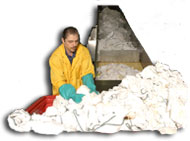
Laundry porter working at a MSI laundry.

One of the most sought-after jobs for inmates in the DOC is Laundry Porter.  At most facilities laundry is processed by unit laundry porters.  Prison laundries are located either in the housing unit, a facility laundry or in a few rare instances at an off-site facility.  With the doubling of the number of prisoners housed in each housing unit, like most ancillary infrastructure the laundry facilities did not increase.  The result is a real need for 24/7 laundry operations in order to keep up with the demand.  The washers and dryers are generally commercial/industrial grade in nature and most are decades old. The result is that there are frequent breakdowns with repairs conducted by in-house maintenance staff as long as there are parts available.  Laundry detergent and bleach are delivered in 5-gallon pails which are hooked up by tubing to the washing machine and are automatically measured out and added to the wash, depending on the cycle chosen.

Laundry Porters are considered unskilled labor and are paid less than $1 per day but make a fortune in coffee and Raman noodles by providing special service.  If you wanted your laundry to come back clean you contracted for about $3 per month with a laundryman to personally see to the washing of your clothes, especially items like sweats.  If you didn’t pay to have your laundry done then it would likely be crammed into the washer with too many others’ bags.  Laundry is placed into mesh bags with your prison ID and housing unit bunk number (called a lock).  So, if you didn’t pay to have it washed separately it be washed in the bag and tended not to come clean due to the lack of agitation.


The standing joke was that laundry came back dirtier than when it was turned in.  I proved this once by turning in a brand new white tee shirt and it came back gray. Leaving one to wonder if the laundry had been washed with the rag mop heads.  Also, the odds of your laundry not coming back due to theft increased significantly if you didn’t pay.  In one housing unit where I locked the laundry porter would put wet laundry bags on the heat register to finish drying where anyone had access, so laundry frequently turned up missing, especially items like sweats or new uniform blues.

Paying for a free service was the only way to get your clothes cleaned and returned each time.  It wasn’t without risk but there isn’t any coin operated self-service alternative.  At a different facility the laundry was a facility laundry so there were fewer problems with laundry theft, but the washing was really poor.  I had to resort to hand washing my tee shirts in the bathroom sink and hang them over the end rail of my bunk to dry.  Theoretically this is against the rules but a lot of guys who were concerned about their appearance did it all the time.  Considering that you only got 3 tee shirts that meant sink washing 2-3 times a week.

Doing laundry was necessary since you have such a limited wardrobe, at least it should be. Not everyone was hygienically inclined and would wear their uniforms for days on end.  Some of these were people with mental disorders and it would take a direct order from the CO to get them to shower and change clothes.  In cases like this the laundry man would treat the dirty laundry like it was a biohazard and wash it separately.  Laundry Porters had to trained to handle blood borne pathogens, since blood, urine, and fecal material are biohazardous.  Since the washing process does not sterilize and the colored load doesn’t use bleach these could contaminate other people’s clothes and spread disease.

I knew one guy who had bowel troubles and he paid several laundry men to handle his biohazardous laundry so any time he had an accident he could get his soiled laundry cleaned.  If he didn’t pay they wouldn’t touch his stuff.  For someone who was disabled and unable to work this represented a financial hardship, but he didn’t have an option. The laundry porters treat their jobs like a business and aren’t into charity.

Keystone Cops

keystone cops

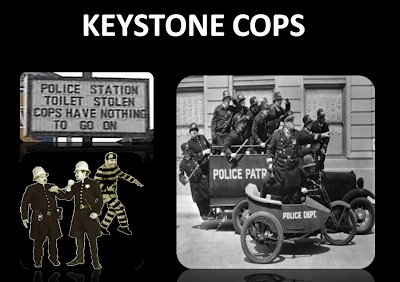
Corrections Officers (COs) are trained professionals, some with previous military or law enforcement experience, and a minimum of an associate degree from an accredited university. At each prison there is a command structure for custody staff similar to that found in most police departments: Captains, Lieutenants, Sergeants, Officers, and Inspectors.  The custody staff reports in a silo to the Warden and Deputy Warden to carry out day-to-day custody operations.  Where ever there are inmates there will be COs watching over them, often times directly, at other times by surveillance camera.  At least that is the theory, however the reality of the situation is not so straight forward.

Officers conduct periodic rounds of their assigned areas to visually monitor inmate activity.  Routine searches are conducted to look for contraband such as weapons, stolen property, alcohol, tobacco, illegal drugs, tattoo paraphernalia, and everything else forbidden to inmates by policy.  Innates are subject to pat downs in any place at any time at the discretion of the officers.  There is even a quota of random searches intended to make inmates think twice about participating in illegal activity.

Corrections Officers are all part of a union that advertises that theirs is the most dangerous job in Michigan.  They lobby the legislature and administration continuously regarding staffing levels, compensation, prison closures, use of Tasers, prisoner personal clothing, and an endless list of wrongful termination cases to protect their fellow officers.  From my personal observation the majority are overweight, out of shape and aging, especially in Level I.  They sit around in offices, especially second and third shift, doing nothing but talking or surfing the internet.  They don’t enforce the rules consistently and turn a blind eye to theft, illegal activity and bullying.  They show favoritism and will single out inmates, often based on their crime for harassment or worse.

There used to be a position called Regular Unit Officer (RUO) and for each shift there would always be the same officers working in the housing units.  They knew everyone’s names and faces.  They knew who caused trouble, who was troubled, and those who stayed out of trouble. They received higher compensation for the position than COs that worked in other areas.  The position was eliminated a few years back as a cost savings measure.  The COs and their union were not happy about this.  The COs that worked in the housing units tended to have higher seniority and resented the loss of income and position.  Officers can now be assigned to other positions on their shift at will.  The result has been a work slowdown, a form of silent protest.  I watched it happen first hand.

Officers in the housing units still tend to be routinely assigned to the same unit, but they tend to do the bare minimum for their required duties.  It is the younger officers that don’t routinely work in the housing units that are making the big busts, actively shaking bunks and inmates down.  The older officers are too predictable in the timing of their rounds, lax in their searches, and even turn a blind eye to illegal activity.  They spend their time in the office on the internet or phone. Loss of Privilege (LOP) is the restriction of an inmate to his cell or cube as a punishment for some ticketed behavior or activity is not enforced very strictly, to the point that inmates are on the phone or on the yard instead of on their bunks.

Unless you front-off a CO you can get away with almost anything.  Rules enforcement is inconsistent at best.  In an incident in a housing unit where I lived the CO put the following warning message on the board:

”Unless the spud juice stops tickets will be written no questions asked for the following:

  • Use of the bathroom during count time.
  • Going down the hall beyond your cube.
  • Use of the back bathroom, if you lock in the front hall.”

In other words, unless the drinking is brought under control we’ll actually have to do our jobs.  Too bad they didn’t want to enforce the other rules like not cutting hair and no tattooing, since the bathroom is a barber shop/tattoo parlor, in addition to being a brewery.  The CO actually thought that by making these threats that the inmates might either exercise self-control or positive peer pressure to bring the situation under control.  During Emergency Count, two 5-gallon buckets of spud juice were placed in the toilet stalls on the toilet seats, since the COs would never check there.  There are so many issues like this I don’t know where to start.

Sugar is the major ingredient in spud juice so they took it off the commissary, so instead it is stolen out of the kitchen in bulk.  Officers fail to adequately monitor food service worker activity and the inmates are able to walk out with it hidden on their person or pass it off to others during chow.  The 5-gallon plastic buckets are what the laundry soap, bleach, floor wax, and cleaning chemicals come in.  The empties are not secured or rendered unusable and are easily procured by the inmates right in the housing unit. During fermentation the 5-gallon buckets are even vented out the window using plastic tubing to keep the smell down that might give the location away.  Unit officers should be able to smell spud juice if it is in the cubicles since everyone else can.  Brewing debris left in trash bags should also be a giveaway that there is spud juice in the unit.

One time an officer tried to write a ticket for the spud juice she found, the lieutenant made her tear up the ticket and just dump the spud juice down the drain.  It is clear they know what’s going on and intentionally turn a blind eye to it.

The officer station is near the front entrance to the housing unit in the lobby.  This allows them to keep an eye on who is coming and going from the unit.  Only resident inmates are allowed in to unit (except for maintenance workers.)  But with irregulars working in the units who don’t know names and faces the inmates will take advantage of this situation and slip in for various reasons, usually up to no good.  Even with the regular officers there may be times when the front desk is unmanned and people can slip in and out.  One time a group of gang members raided a unit by turning their orange knit caps into ski masks so they wouldn’t be recognized on camera.  They went into a cube and beat a guy up who had done something they didn’t like.  Like a smash and grab, in and out in 60 seconds, and they got away with it.

Televisions are a big-ticket item that cost nearly $200 new for a 13″ model you wouldn’t consider buying on the street.  Nobody takes them home when they parole.  They are sold on the black market.  The prisoner’s ID is engraved by the Property Room before it goes to the owner.  If you are caught with a that has someone else’s number you could get a theft ticket, even if you actually paid the owner for it since there is no legal way to transfer ownership.  So, there is a hustle for guys that can sand off the old number and put a new one on.  While it may pass a casual visual inspection under the low light conditions in the housing unit, the property records are available on the COs computer so they can easily determine whether or not an inmate legally possess that TV.

The officers know that the majority of the TVs in the unit are contraband but unless there is an incident that really pisses them off they will let sleeping dogs lie.  More than a few times I’ve witnessed massive unit wide shake downs during Emergency Count where dozens of TVs are swept up as contraband.  If someone in the unit is tipped off in advance, the TVs will vanish off the shelves to be hidden in lockers or footlockers until the all clear is sounded.

When TVs are confiscated it generally leads to a rash of thefts, as guys who lost theirs will secure another one.  Sometimes the CO will make an announcement warning that the stolen needs to be returned, no questions asked and threaten additional retaliatory measures if not.  The funny thing is, usually the stolen TVs to replace one confiscated ones come from another housing unit and have been transported across the front yard in plain view.  The result is that the COs retaliatory round of contraband confiscation won’t turn up the stolen and only further propagates the problem.  The amazing thing is this happened before flat screen were introduced into prisons.  The old color CRT TVs were about 18-inch cubes.  So how is it that something larger than a breadbox could be carried out of a cube, out of a unit, across the yard, into another unit, and into another cube when all of these are under video surveillance and the supervision of COs?

I would hope that I am not the only one who is sick and tired of COs undermining, thwarting, confounding, ignoring, or otherwise circumventing the purpose of discipline in prison as the primary means of correction through their willful negligence, lax rules enforcement, dysfunctional internal security, and poor job performance.  No wonder prisons are so unsafe, the COs like it that way- job security.


Update to this essay- In the March 16, 2019 Detroit News there was an article regarding the lawsuite brought by the officers regarding the elimination of the Resident Unit Officer (RUO) positions in 2012.  The state Supreme Court declinded to revisit the decision by the Court of Appeals ruling that affirmed the Michigan Civil Service Commission decision authorizing the state to reclassify nearly 2,500 correction works to lower paid jobs.  If it takes nearly 7 years to resolve this dispute imagine how long it takes for those appealing their convictions.

DWH

Duane Waters Hospital Google Earth

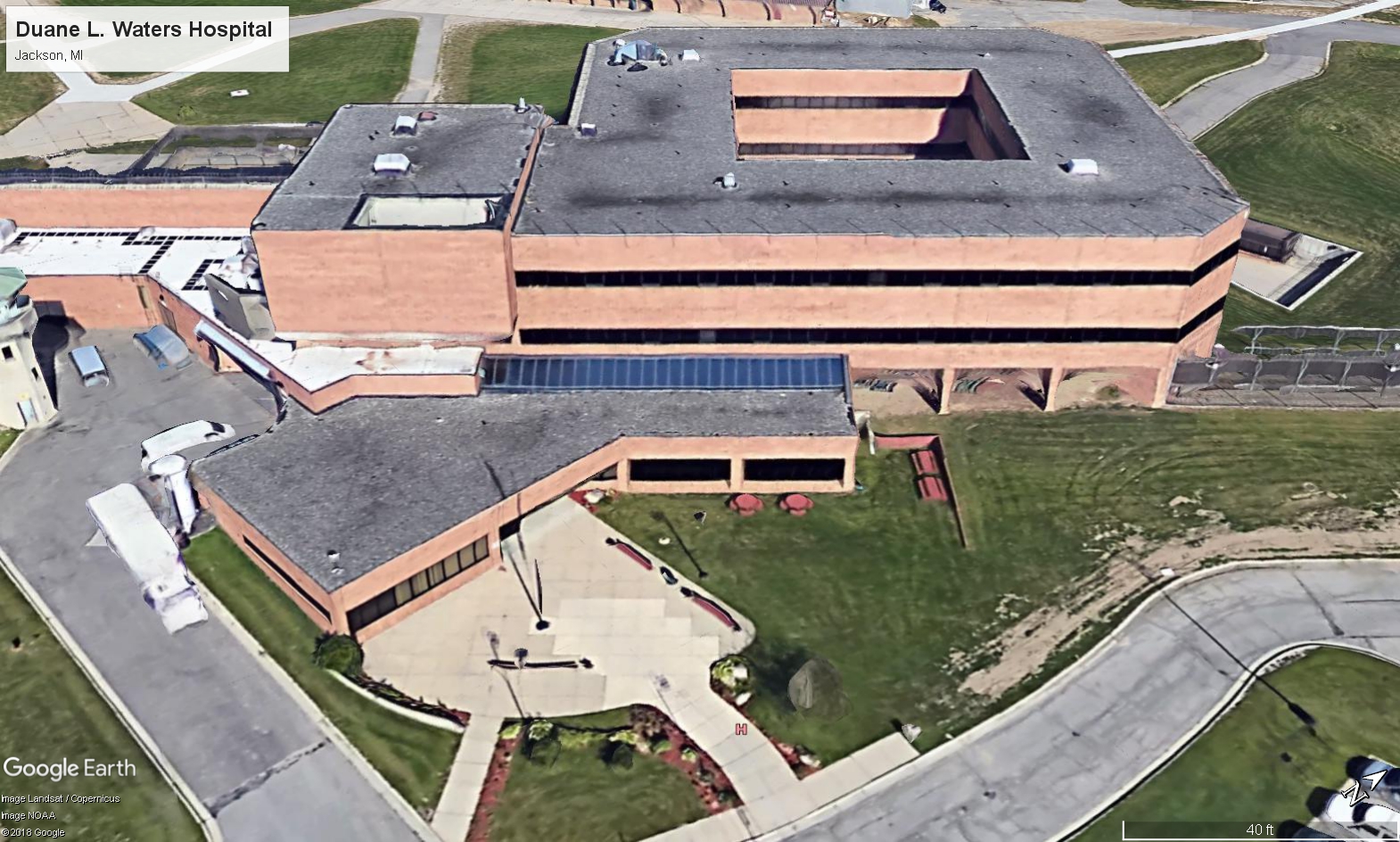
Duane Waters Health Center (DHW) is a 112 inpatient bed medical facility operated by the MDOC.  It provides acute medical, outpatient, and long-term care.  It is adjacent to the Charles Egeler Reception and Guidance Center and is located at the site of the old walled prison in Jackson.  Opened in 1986 DWH was named after Dr. Duane Leonard Waters who worked with the Michigan Corrections Commission for 25 years to modernize health care for Michigan prisoners. This information comes from the MDOC website and sounds well and good but like so much else doesn’t tell the whole story.

In the 1980’s a number of inmate lawsuits filed in federal court regarding prison conditions and medical care were combined into a class action.  The state negotiated a settlement known as the Hadix consent decree which outlined specific goals for improvement of prisoner care.  Despite repeated attempts by the MDOC to convince the court to end the consent decree it is still in force, providing oversight and monitoring progress made to improve conditions.

Over the course of the first 5 years I was in prison I made annual trips to DWH for eye exams, so I have some firsthand experience.  There were a lot of stories about DWH circulating and from talking with the old timers it was clear that you didn’t want to end up there.  I don’t know the statistics but a lot of inmates have died there over the years. One time when I was being processed into the facility and was standing across from the elevators waiting to have my leg irons removed I watched them wheel out a body bag on a stretcher.  When that happened the dozen or so inmates I was with grew very quiet and still in respect for the dead.

While prison is a dangerous place and several inmates are killed by other inmates on an annual basis, for the 95% of inmates which will likely receive parole, the fear of dying in prison is more likely related to a medical issue such as a heart attack or cancer.

DWH lost its certification to perform surgery years ago.  I heard horror stories of wrong limbs being amputated, post-operative infections, patient neglect, misdiagnosis, and excessive pain and suffering.  The doctors and nurses no longer work for the MDOC but for a subcontracted medical service provider, a for profit company.  But that hasn’t done anything to improve medical care. doctors that work in prisons have a reputation for being poor physicians that can no longer work with the general public.  Not long after I arrived at my first prison the state police showed up to arrest the doctor.  They found that he had been stealing prescription medications that were supposed to be distributed to inmates.

Decisions regarding treatment are made by case managers working for the medical service provider and will routinely deny requests for testing and treatments recommended by the physicians.  The medical service provider has a national reputation for providing substandard care and has faced numerous lawsuits both by innates and the states that it contracts for.

Their philosophy seems to be to delay and if possible avoid making a diagnosis and when that doesn’t work delay treatment or seek to least costly treatment option regardless of success rate.  Major medical procedures required by inmates including surgery and cancer treatments are now performed at public hospitals.  In Jackson and Lansing there are enough inmates in the hospital that the MDOC maintains a prison ward.  In addition, inmates are transported off site for doctor’s appointments and outpatient treatments. Inmate medical expenses are one of the highest cost centers due to the aging prison population.  Yet getting medical treatment can be a major ordeal with delay, denial, and a very one-sided grievance process that puts the inmate at a significant disadvantage to fight the decisions made.  Inmates pay a $5 copay for medical service appointments and are charged this even when no services are provided.  For those without financial resources this is just another debt added to their bill that will follow them after they get out.

My level II bunkie was a lifer that had been down since the 1970’s.  He had COPD due to emphysema from smoking his whole life.  It was well managed using a national brand inhaler.  The health care company decided to change his medication to a cheaper alternative over the objections of his doctor.  The result was an almost immediate deterioration of his condition from fit enough to work in the chow hall wiping tables for $90 per month to wheel chair bound, oxygen dependent, and indigent.  Quality of life is a major concern in prison since it doesn’t take much to destroy what little you have when a major change in health status occurs.  The result of going cheap on his medication is that the overall cost of his health care increased significantly.

From talking with an inmate who was suing the doctors and nurses for pain and suffering in regards to a misdiagnosis for cancer, I learned that the ability to successfully prove malpractice is not easy.  The lawyers provided for the doctor were so used to dealing with prison malpractice claims that when they asked the judge to dismiss the claim during a pretrial hearing they were caught off guard when the judge informed them that the doctor was being sued under different statutes and the case was going forward.  Every now and then an inmate will win, but the cost to the doctors, the medical service provider and the state aren’t great enough to cause them to change their ways and improve inmate medica1 services.

I myself had personal experience with prison medical services.  Due to a preexisting medical condition I was at a high risk for heart attack or stroke and classified as chronic care for additional monitoring.  This meant I got a medica1 exam every six months instead of the annual checkup that was part of routine medical care.  But when I developed an unrelated non-life-threatening condition, I did not receive the same level of care.

Due to poor food quality I developed hemorrhoids as a result of hard stool and difficult bowel movements.  The hemorrhoid ointment for sale in the commissary wasn’t Preparation H and did nothing to treat the painful condition I was suffering from.  I was literally reduced to tears from the fiery pain I experienced from bloody swollen hemorrhoids.  My first trip to medical I received a small supply of Tuck’s pads that actually worked to provide temporary relief in treating my condition, but no further supplies were provided when those were used up.  Medical wouldn’t address the underlying cause and I ended up having to purchase fiber laxative powder for $5 every two weeks for the next 7 years, along with hydrocortisone cream to reduce the swelling. If I hadn’t had the financial resources available to afford this I have been in a world of hurt.