What’s in a name?

William Shakespeare asked that question in Romeo & Juliet. “What’s in a name? That which we call a rose by any other name would smell as sweet.” Juliet was not allowed to associate with Romeo because he was a Montague. If he had any other name, it would have been fine. She was complaining that his name is meaningless. If the rose had any other name, it would still be the same. So, with Romeo- he would still be the same beautiful young man even if he had a different name.1

Our name is how we are identified from birth.  It represents us conceptually to others.  Hearing someone’s name that we know often brings their face, personality, or character to mind.  We can remember conversations, funny anecdotes, or life encounters that inform our opinion of who they are. When we hear a stranger’s name it is just a name until we have information to associate with it.  Information may come in the form of gossip passed along from another person, social media viewed online, or news reports. 

Back in the day before the internet, employers would review applications and resumes to screen for potential job candidates.  Calls or letters would be sent to verify employment history.  References would be contacted to gain information necessary to inform the hiring process.  Businesses routinely run background checks on job candidates and active employees to determine if they should be disqualified from employment opportunities. Once I was fingerprinted because the FBI had to check to ensure that I did not have any mafia connections when I applied to work as the lab manager at a landfill.

Modern hiring practices have changed significantly because of the potential of litigation regarding the release of information that could be considered negative regarding a former employee.  Your previous employer will now only confirm that an individual worked for the company.  To get information, many employers have turned to third party companies that collect massive amounts of information about individuals from a wide variety of companies and government agencies that have commoditized their vast databases.  Information about credit worthiness, social media posts, along with court filings and criminal convictions are available instantaneously. 

I was recently fired from a job after 6½ years because of a change in hiring policy.  When I was first hired the policy was that you could not have a criminal conviction in the last 7 years.  A new change to the policy specified that you could not have certain specific convictions period. My employer knew who I was based on years of interaction- a hardworking, intelligent, dedicated, and loyal employee. Yet based on a single entry in a background check I was dismissed without any opportunity to explain.

The issue with computer data has always been “Garbage In, Garbage Out”.  The information is only as good as the source.  While it may be useful in this age of information overload to get information in small, overly simplified bites, context is everything, as it is in life.  When we spend our lives with a person, we will have a much better image of who they are than if we only read the sensationalized headlines about what might be the worst day in someone’s life.  And yet it is those snapshots, those life events presented without context by which our society makes life altering decisions about other people.

Case in point is SORNA, the Sex Offender Registration and Notification Act.  In 1994 the Wetterling Act established baseline standards for states to register sex offenders.  Megan’s Law in 1996 mandated public disclosure of information about registered sex offenders and required states to maintain a website containing registry information.  The Adam Walsh Child Protection and Safety Act, which includes SORNA, created a new baseline of sex offender registration and notification standards.2 The registering and tracking sex offenders went from being a tool useful to law enforcement to a modern-day Scarlet Letter.  It is the public shaming, disenfranchising and discrimination of people who, in addition to many serving long jail/prison sentences, now face additional civil penalties including restrictions on where they can live and who they can live with.

In July of 2025 President Trump signed an executive order entitled “Ending Crime and Disorder on America’s Streets”.3  In Section 3 the order zeroes in on registrants who are homeless, instructing the Department of Justice to “substantially implement and comply with” the Sex Offender Registration and Notification Act (SORNA) for individuals with no fixed address. It calls for mapping and monitoring the locations of homeless sex offenders, effectively treating poverty as a risk factor warranting heightened surveillance.

The order goes even further. If a homeless individual is arrested for a federal crime, they may be evaluated under 18 U.S.C. § 4248, a statute that allows for indefinite civil commitment of individuals deemed “sexually dangerous”—even after they’ve completed their sentence. That’s not rehabilitation. That’s preemptive detention.

This isn’t about protecting the public or preventing new offenses. It’s about maintaining a narrative that portrays registrants as permanent threats, regardless of evidence. And it comes at the expense of people who are already marginalized—those struggling with mental illness, addiction, or simply trying to survive without stable housing in a system designed to push them out.

Supporters of the executive order may argue it’s a step toward restoring order. However, safety rooted in fear and endless punishment is not justice; it’s containment. What this order reveals isn’t reform, but the further cementing of a system that punishes for life, with no offramp, no redemption, and no demonstrated public benefit.4

In the Old Testament King Solomon wrote in Proverbs 22:1 “A good name is more desirable than great riches; to be esteemed is better than silver or gold.” This verse emphasizes the importance of a good reputation and the value of being respected over material wealth.  It suggests that a good name reflects one’s character and integrity, which are more enduring and impactful than material possessions.5  This is a lesson that anyone who has been to prison learns the hard way. Not everyone that gets convicted is a “hardened” criminal.  And once your good name is gone, it is impossible to get it back.

Many people that I met in prison were there because of one bad choice that was not in line with who they are, how they were living or their belief system.  The downfall of Adam and Eve in Genesis chapter 3 was that they believed the lies of the Satan and ate of the forbidden fruit.  Romans 3:23 says that “all have sinned and fall short of the glory of God.” Yet the Bible is a narrative on redemption.  In both the Old and New Testaments God used people that went to prison to do great things. I have a tee shirt that says, “All my role models went to prison: Joseph, Paul, Peter, John, Daniel and Jesus.”  God used ordinary people, fallen people, people who sinned.  He redeemed them, he changed them, and he used them for His glory.

In our society we have lost this prospective.  Forgiveness has been replaced by Condemnation.  Restoration has been replaced by Punishment. Redemption has been replaced by Damnation. There were two other people crucified on Golgotha with Jesus. Their choices are the same ones that we must all make.  Either we choose to believe or we choose to reject the promise of eternal life.  Yet it is the crowd surrounding the condemned that were jeering, hostile and calloused to the barbarous, gruesome execution taking place. These people are the true face of evil.

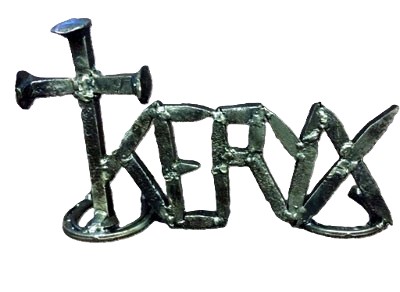
“There but for the grace of God go I” is an old proverbial phrase used to express empathetic compassion and a sense of good fortune realized by avoiding hardship. An early version was ascribed to the preacher John Bradford who died in 1555. 6  The Keryx volunteers that go into prisons say the same thing.  There isn’t much that separates them from those in prison, just that they did not get caught.  What our society needs today is more John Bradford’s and more Keryx volunteers.  Men and Women of faith that acknowledge the saving grace of Jesus, not just in their own lives but in the lives of others.  People that get involved, get to know people for who they are, not a stereotype or a caricature. 


End Notes
1          ‘What’s In A Name’: Phrase Meaning & History✔️

2          Legislative History of Federal Sex Offender Registration and Notification | Office of Sex Offender Sentencing, Monitoring, Apprehending, Registering, and Tracking

3          Ending Crime and Disorder on America’s Streets – The White House

4          Trump’s Executive Order Confirms the Registry Machine Isn’t Going Anywhere – Women Against Registry

5          What does Proverbs 22:1 mean? | BibleRef.com

6          Quote Origin: There But For the Grace of God, Go I – Quote Investigator®

Second Chances

There has been much said about whether or not those convicted of committing a crime should be given a second chance.  A wide variety of voices in our culture have made their opinions perfectly clear.  “Tough On Crime” was a political approach that emphasizes strict enforcement of laws and harsher penalties for offenders, often associated with policies aimed at reducing crime rates through increased policing and incarceration. This strategy has been a significant part of political discourse, particularly in the United States, and has seen a resurgence in recent years among various political leaders. But does it really work? 

The Southern Poverty Law Center reports that Mandatory minimums effectively shift the power of sentencing from judges to prosecutors, resulting in less objective and more politicized outcomes. Although they are largely used for drug and other nonviolent crimes, mandatory minimum sentences can apply to a wide range of offenses. When mandatory minimums are in effect, the ultimate sentence will be based on the specific offense charged. This means that prosecutors have enormous, unchecked power because by choosing which charges to bring, they are also selecting the sentence the person will receive if convicted. This results in an imbalance of power and a high risk of unfair outcomes. For example, regardless of guilt, the threat of specific charges that carry stiff mandatory minimums may encourage people to plead guilty to a different crime with lower penalties. Furthermore, the exploitation of mandatory minimums effectively prevents judges from considering the totality of the circumstances when determining an appropriate sentence after a person has been found guilty of a crime. Historically, one of the roles of judges was to adjudicate an appropriate punishment. Usurping the judges’ role is especially problematic considering 98% of federal convictions are the result of guilty pleas over which prosecutors completely control the terms; very few people resolve their case with a trial.

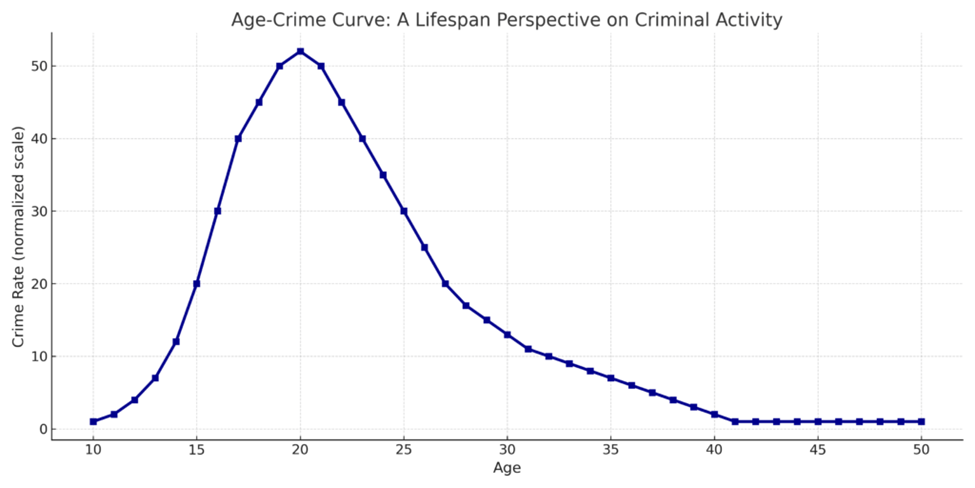
A primary rationale behind mandatory minimum sentences was to deter crime. Today, the average federal sentence for people convicted of a mandatory minimum offense is 151 months; when the mandatory minimum is for drug offenses, it is 138 months.  Contrary to the notion that these sentences will have a deterrent effect, ample research demonstrates that mandatory minimums do not decrease crime and, in fact, they likely generate more crime. Ample research concludes that imprisoning people not only does not lessen the likelihood that people will reoffend, but it can actually increase it. This may be for a multitude of reasons: Prisons are a place of trauma, people released from prison face stigma and economic hurdles, and people may struggle to return to families and communities after being away for so long. A policy of seeking harsh sentences will not improve public safety, but it will certainly destroy communities.1

There’s a growing movement to replace the tough on crime approach with a more evidence-based, data-driven, and compassionate approach to criminal justice. This “Smart On Crime” approach seeks to reduce the number of people behind bars, while still protecting public safety, by focusing on evidence-based policies that have been proven to be effective at reducing crime and recidivism.

One of the key components of the smart on crime approach is a focus on rehabilitation and reentry. This means investing in education, job training, and mental health and substance abuse treatment programs to help people who’ve been incarcerated successfully reintegrate into society and avoid reoffending. By investing in these programs, we can reduce the number of people who end up back in prison, while also improving public safety.2

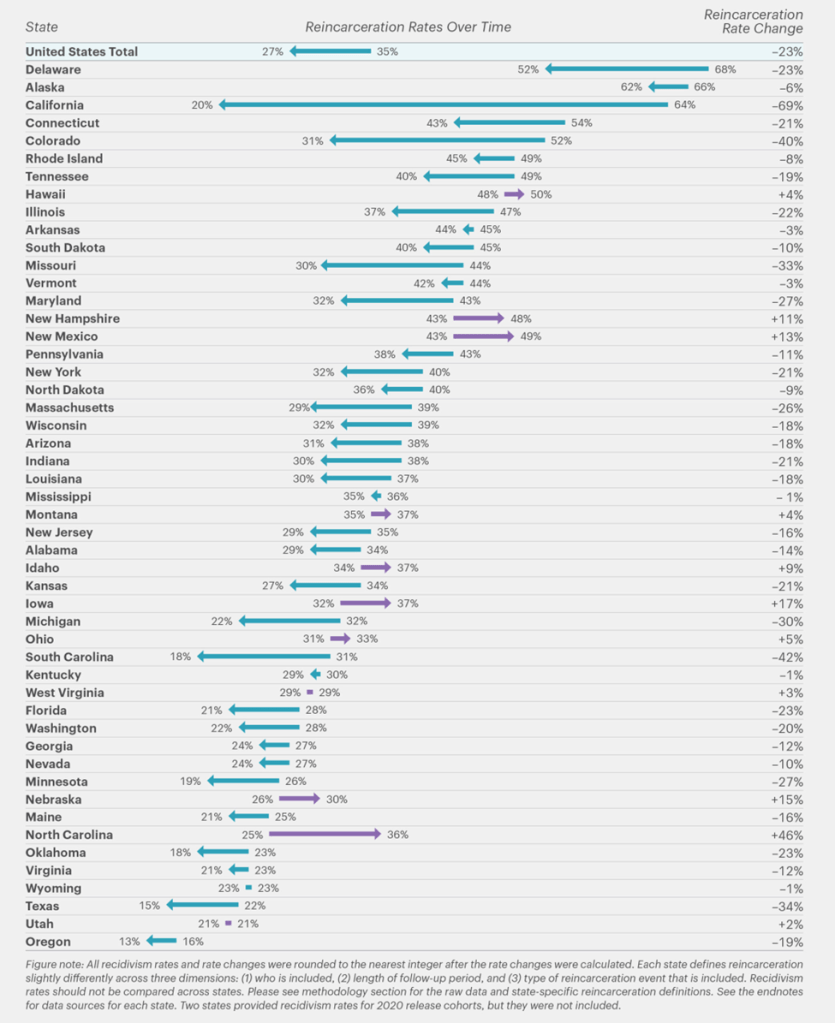
Recidivism is the tendency of a convicted criminal to repeat or reoffend a crime after already receiving punishment or serving their sentence. The term is often used in conjunction with substance abuse as a synonym for “relapse” but is specifically used for criminal behavior. The United States has some of the highest recidivism rates in the world. According to the National Institute of Justice, almost 44% of criminals released, returned before the first year out of prison. In 2005, about 68% of 405,000 released prisoners were arrested for a new crime within three years, and 77% were arrested within five years.

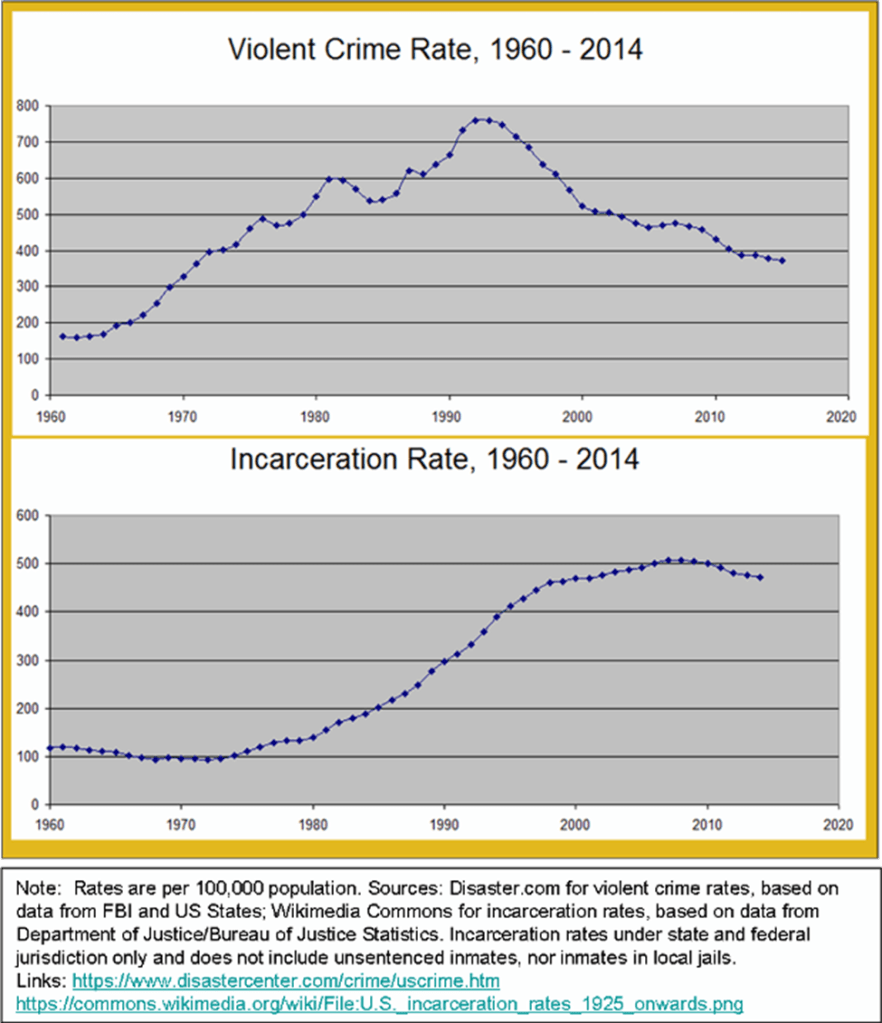
Factors contributing to recidivism include a person’s social environment and community, their circumstances before incarceration, events during their incarceration, and one of the main reasons, difficulty adjusting back into normal life. Many of these individuals have trouble reconnecting with family and finding a job to support themselves. Incarceration rates in the U.S. began increasing dramatically in the 1990s. The U.S. has the highest prison population of any country, comprising 25% of the world’s prisoners. Prisons are overcrowded, and inmates are forced to live in inhumane conditions, even those who are innocent and awaiting trial.

The United States justice system places its efforts on getting criminals off the streets by locking them up but fails to fix the issue of preventing these people from reoffending afterward. This is why many believe that the U.S. prison system is greatly flawed. Recidivism affects everyone: the offender, their family, the victim of the crime, law enforcement, and the community overall. Crime can affect anyone in any community. If a previously incarcerated person is released only to repeat an offense or act out a new crime, there will be new victims. Furthermore, taxpayers are impacted by the economic cost of crime and incarceration as the average per-inmate cost of incarceration in the U.S. is $31,286 per year.

Steps can be taken during incarceration to decrease recidivism. First is assessing the risks for reoffending and the criminogenic needs that contributed to breaking the law, such as a lack of self-control or antisocial peer group. The second is to assess their individual motivators, followed by choosing the appropriate treatment program. The fourth step is to implement evidence-based programming that emphasizes cognitive-behavioral strategies, coupled with positive reinforcement that can help them recognize and feel good about positive behavior. Lastly, the formerly incarcerated need ongoing support from a good peer group, as repeat offenders who were in gang culture have the greatest challenge to stay away from that behavior.3

The Second Chance Act, officially known as H.R. 1593, was enacted on April 9, 2008. Its aim was to improve the reintegration of formerly incarcerated individuals into society. The Act provided federal grants to state and local governments and nonprofit organizations to support reentry programs.

Goals of the Act

Reduce Recidivism: The Act focuses on lowering the rates of reoffending among released individuals.

Enhance Public Safety: By supporting successful reintegration, the Act aims to improve community safety.

Support Services: It provides funding for various services, including:

  • Employment assistance
  • Substance abuse treatment
  • Housing support
  • Family programming
  • Mentoring services

Nationally

Since its passage in 2008, the Second Chance Act has invested $1.2 billion, infusing state and local efforts to improve outcomes for people leaving prison and jail with unprecedented resources and energy. Over the past 15 years, the Bureau of Justice Assistance and the Office of Juvenile Justice and Delinquency Prevention have awarded funding to 1,123 Second Chance Act grantees to improve reentry outcomes for individuals, families, and communities.1 And critically, the Second Chance Act-funded National Reentry Resource Center has built up a connective tissue across local, state, Tribal, and federal reentry initiatives, convening the many disparate actors who contribute to reentry success.

The result? A reentry landscape that would have been unrecognizable before the Second Chance Act’s passage. State and local correctional agencies across the country now enthusiastically agree that ensuring reentry success is core to their missions. And they are not alone: state agencies that work on everything from housing and mental health to education and transportation now agree that they too have a role to play in determining outcomes for people leaving prison or jail.
Community-based organizations, many led or staffed by people who were once justice involved themselves, are contributing passion and creativity, standing up innovative programs to connect people with housing, jobs, education, treatment, and more. Researchers have built a rich body of evidence about what works to reduce criminal justice involvement and improve reentry outcomes, allowing the National Reentry Resource Center to create and disseminate toolkits and frameworks to support jurisdictions to scale up effective approaches. And private corporations that once saw criminal justice involvement as fatal to a candidate’s job application are now using their platforms to champion second chance employment as both a moral and business imperative.
The efforts of these key stakeholders are bigger, bolder, and better coordinated than ever, and they are producing results. Recidivism has declined significantly in states across the country, saving governments money, keeping neighborhoods safer, and allowing people to leave their justice involvement behind in favor of rich and meaningful lives in their communities.4

Closer to home

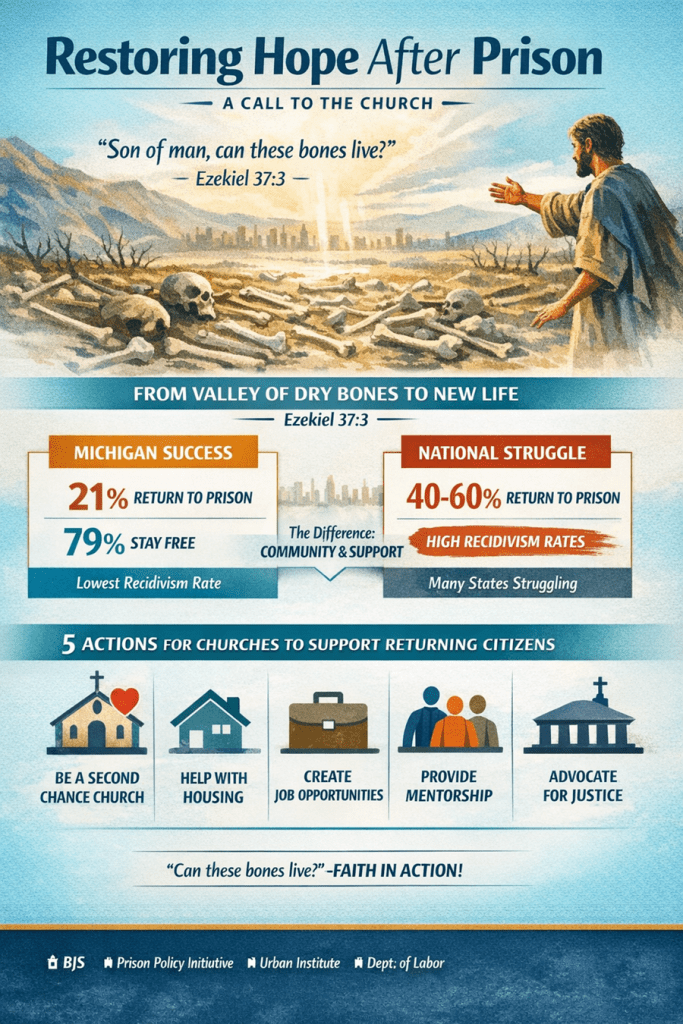
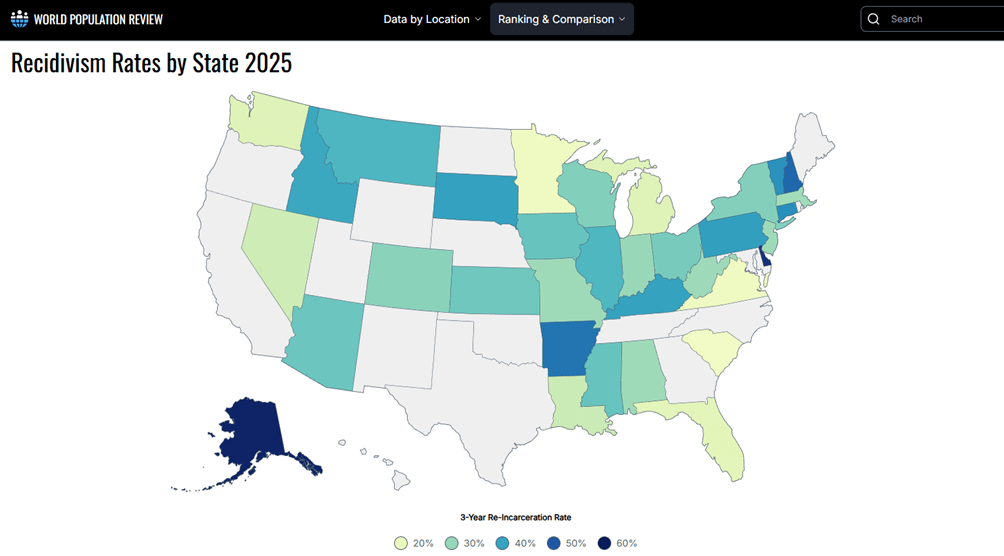
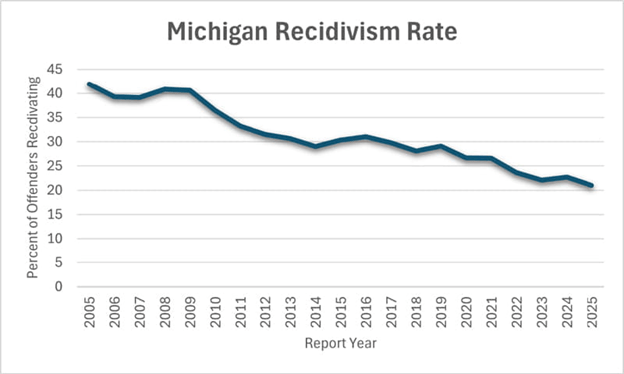
Michigan currently has a recidivism rate measured at 21.0%, the lowest rate on state record. The rate measures those who are three years from their parole date and records how many individuals have reoffended and returned to prison within that timeframe. The latest report shows a 79.0% success rate of those paroled not returning to prison.

MDOC has undertaken numerous evidence-based programs to continue reducing the state’s recidivism rate including supporting access to vital documents, housing, and recovery resources; job placement assistance; and effective supervision and care while individuals are incarcerated and on parole.

Prison educational programs have been seeing significant success with thousands of graduates since their inception. There are now 14 skilled trades programs and 12 post-secondary education programs operating in correctional facilities across the state, with additional programs expected to be added next year.

“This report shows that when we provide a full circle support system to those reentering our communities, they are less likely to return,” Director Heidi E. Washington said. “I am proud of our dedicated MDOC staff, and appreciate the support of our partners, all of whom help motivate and lift up those we are welcoming back into our communities. With increased support for reentry programing, we are very likely to see the state recidivism rate continue to decline.”

This report connects directly with a recently released MDOC prison population report which showed the lowest prison population since 1991, with 32,778 incarcerated individuals statewide, down from a peak of 51,554 individuals in 2007, illustrating success in rehabilitating offenders.5

Why this matters today

The Second Chance Act is up for reauthorization again this year.  It has not attracted much public attention with all the other actions taking place in Washington that have overshadowed this crucial piece of legislation. The Second Chance Reauthorization Act of 2025 (H.R. 3552/S. 1843) aims to enhance rehabilitation efforts for individuals transitioning from incarceration back into their communities.

Key Provisions

Grant Programs

  • Reauthorization: Extends grant programs for five additional years.
  • Support Services: Provides funding for reentry services, including housing, employment training, and addiction treatment.

Focus Areas

  • Substance Use Treatment: Enhances services for individuals with substance use disorders, including peer recovery and case management.
  • Transitional Housing: Expands allowable uses for supportive housing services for those reentering society.

Impact and Importance

  • Recidivism Reduction: Research indicates that effective reentry programs can reduce recidivism rates by 23% since 2008.
  • Community Safety: By supporting successful reintegration, the Act aims to improve public safety and reduce the burden on the criminal justice system.

The Senate passed the Act on October 9, 2025, as part of the National Defense Authorization Act, and it is now awaiting consideration in the House of Representatives.  Tell your Representatives to pass this bill and see it enacted in law so that the progress made in reducing recidivism and US prison populations will continue.

Find Your Representative | house.gov


End Notes

1 https://www.splcenter.org/resources/guides/trump-tough-on-crime-memo-faq/

2 Why the Tough on Crime Approach is Failing and What We Can Do About It – LAMA

3 Recidivism Rates by State 2025

4 50 States, 1 Goal: Examining State-Level Recidivism Trends in the Second Chance Act Era – CSG Justice Center


Testimony

In April of 2025 I was given the opportunity to give my testimony to a group of Keryx volunteers preparing for a Keryx Weekend Spiritual Retreat at Mid-Michigan Correctional Facility.  Prior to Covid they were able to conduct these retreats twice a year.  After Covid it took several years to even begin having weekly groupings with outside volunteers.  Currently they are only allowed to have one weekend retreat per year.  Covid had a significant impact on the Keryx ministry as it did on so many other faith-based ministries.  The need to recruit and train new volunteers means that about one third of the men for the upcoming weekend had never been involved previously.  In preparation for the Keryx Weekend the volunteers gather for three weekend training events.  One of the highlights of this training is that the Rector for the weekend will invite a former inmate who was part of Keryx to come and speak to the group about the impact that Keryx has on the participant’s lives both in prison and after release.  This testimony allows the ministry volunteers to understand how vitally important and life changing these weekends can be for the inmates who attend.


“My name is Tim and I sat at the table of Timothy here in St. Louis level 1 at Keryx 9.”

“I am here to give my testimony and to speak specifically about the Impact that Keryx can have on those who attend a weekend and get involved in regular Keryx meetings while serving time and after they are paroled back into their communities.”

“I grew up in a Christian home and regularly attended church my whole life.  I attended Spring Arbor College and earned a BA in Chemistry and Biology in 1986.  I did a Master’s program in Environmental Studies at Michigan Technological University. Education is a major indicator of whether or not a person is likely to go to prison.

“After graduation I took a job working for an engineering firm and got married to a college sweetheart.  One of my job assignments was to perform asbestos air monitoring behind the walls of the old prison in Jackson in the intake unit. For a week, every day I was escorted thru the cell block and locked in the attic.  We were chaperoned by a guard and took our breaks on the yard.  I told myself after that experience that I would never see the inside of a prison again.  In less than 2 years I was headhunted by an Environmental Laboratory in Ann Arbor.  We moved there and started a family.  Having a stable family life and work environments is another indicator of whether or not someone might go to prison.

“We attended the local Free Methodist church near where we lived in Ypsilanti. I was involved in couples and men’s groups.  For 20 years I was a sound man running AV for the church. I was elected to the church board, served as a trustee and on the Pastor’s cabinet. Having deep social and spiritual connections is yet another indicator of whether or not someone might go to prison.

“In 2008 I defied the odds and was sentenced to serve 8-12 years in the MDOC.  While waiting in the Washtenaw County jail for sentencing, I was served with divorce papers for our 20th anniversary and had my parental rights terminated for my 17-year-old daughter.  I spent the first 5 ½ years of my sentence in Jackson at Cotton Correctional.  I started in level 4 and worked my way down to level 1.  While I was serving time I worked as a tutor in the GED program.  I attended the Protestant church services on Sunday’s.  There isn’t a Keryx program at Cotton. I worked on my spiritual growth by reading all of the books by Chrsitian authors I could get my hands on and memorizing scripture. But my spiritual life was dry, it felt like my prayer’s were going unanswered.”

“The only outside contacts I had were my parents.  They faithfully supported me and encouraged me.  They came every month almost without exception for 8 years.  It was from them that I learned about the earthly manifestation of unconditional love.”

“I was jumped by a gang member in a hit, because another member had gotten caught breaking into my bunkie’s locker. They thought I was a snitch. While I was being attacked in the bathroom, the gang was ransacking my locker.  God intervened and a CO passing by the bathroom stopped the attack.  I was taken into protective custody and transferred to St. Louise level 1.  The COs recovered most of my earthly possessions, which fit into a footlocker and a duffle bag.  When I went to the property room, the CO told me that the power cord had been cut on my TV.  Normally that would mean that they wouldn’t give you back the TV, but the CO surprised me by saying that they were going to repair it.  I was able to pick it up the next day after they had put a new cord on it. No one on the inside that I spoke to said they had never heard of that happening before.”

“I had seen a posting in my housing unit for a Keryx weekend and sent a kite to the chaplain’s office.  I had heard from some of my church brothers in the housing unit that this was a great opportunity.  I was again attending Sunday service and Tuesday night Bible study, but it wasn’t meeting my needs by just having access to a worship service, Bible study and spiritual reading material.  I was again jumped by two gang members on the yard at the direction of my gang leader bunkie, because he thought I had snitched on his spud juice storage location.  In prison, everything is always someone else’s fault, that getting caught couldn’t possibly be because of anything you did, because you’re slick and the COs couldn’t possibly find out without someone telling.  This was regardless of the fact that anyone walking by our cube could smell it from 20 feet away.”

“Instead of being rode out, I was moved from the west side to the east side of the prison.  I again meet church brothers who encouraged me to apply when the next Keryx weekend was posted.  I got accepted and that weekend changed my life.  I had reached the point after being jumped twice in less than a year where I was losing hope.  I felt like my prayers were hitting the ceiling.  My hope for release at my ERD seemed slim based on what the parole board was doing to the guys I knew that had seen the board and been denied. The future looked bleak and my faith was beginning to crumble. The idea of having family, meaningful employment, community and spiritual connections was a fading dream that I didn’t believe I would ever have after I eventually got paroled.”

“Keryx changed that.  I found community and spiritual connection.  I served on three Keryx weekends.  I was a soundman for two and had the privilege of serving in the prayer room for my last.  The outside volunteers that I met treated me like a person and not a number. Their faithfulness in showing up every week for grouping meant more than I can possibly express.  That includes a number of you here in this room.  It is because of Keryx that I regained the spiritual fire that had once burned in me.  In Keryx I found likeminded brother’s in Christ, who encouraged me as I encouraged them.  My prayer’s now reached heaven and answers began to rain down.”

“I was paroled at my ERD.  I was a prodigal son who was welcomed home and given the family credit card.  I served most of my parole as care giver to my mother.  She’s had two knees, two hips, a shoulder and an ankle replaced, so far. I was able to attend my parent’s church and got to taste again the spiritual and community relationships that had come to mean so much to me in Keryx.  My first job working outside of the house was working as a dishwasher at a restaurant where half the staff was wearing a GPS tether. After parole, I began the process of looking for real, meaningful employment. I had the experience of having an application ripped out of my hands before I could even complete it, because of an instant background check.  The lady said she was sorry for my wasting their time.”

“I did find a job where the criminal background check was only focused on the last 7 years, and I got hired.  I started at the bottom as a media blaster cleaning metal engine parts.  That was 5 ½ years ago.  Now I am one of two regional project managers for a quality inspection company overseeing projects all over southeast Michigan.”

“In the last two weeks of my parole I met an old friend who’s father had just passed away.  She and her mother came to church to see friends and to say “thank you” for all the support the church had been providing to them as they mourned.  Leanne and I have been married for four years now.  A Keryx volunteer and pastor named David officiated our backyard wedding during Covid-19.”

“I had written to Wayne, care of the Keryx mailing address after I had been released.  He couldn’t reply to me obviously, but he did pass my contact information to David, who reached out to me about this new ministry that was starting in the Detroit area.  It was there that I met Scott.  Freedom Dreamers has a small group component.  When Covid-19 shut down society, Scott, myself and another brother DJ who had served time, grouped on line with visits from other Freedom Dreamer and Keryx brothers.”

“Scott and his wife became closes friends and my wife helped care for her from time to time during her illness, and was one of the last people to be with her before she lost consciousness and passed.”

“Jesus promised life and not just life, but abundant life.  There was a time before Keryx where my faith wasn’t strong enough to believe that.  A time when everything that I had worked so hard for was taken from me.  A dark place where I didn’t think that I would ever see the light of day again. But Keryx was that light shining in the darkness.  Keryx outside volunteers became the hands and feet of Jesus, bringing more than donuts and songs.  Keryx lead me to service with Freedom Dreamers.  Keryx helped me find my voice.  I have published a blog with over 100,00 words called Christ, Crime and Punishment at www.ccpministries.org, where I reflect on my time in prison, the correction system, societies impressions of crime and punishment and the Christians place in the criminal justice system.”

“I believe that without Keryx I would not have been able to endure prison, like Job endured Satan’s testing.  My life after prison has been richer and more fulfilling than I could have ever dreamed.  I came out of the fiery furnace like Shadrach, Meshach, and Abednego praising God and not smelling even like smoke.  I survived the Lion’s den like Daniel.  I have experienced Peter’s forgiveness and Paul’s enlightenment.”

“That doesn’t mean that my life hasn’t been without difficulties or pain.  My daughter has chosen not have a relationship with me.  At the holiday’s I learned thru a prayer by my father when he thanked God for his children, grandchildren and great grand child, that I had become a grandfather.  I don’t even know my grandson’s name and will probably never get to know him.  But I trust in, cling to and rely on God to provide for me, and that everything rests in God’s hand and His perfect timing.  Just like when God brought you and your ministry into my life.”


Sharing my testimony not only brought tears to my eyes, but to many men in the room.  For now, it is as close as I can get to participating in Keryx as an outside volunteer. But my hope and prayer is that someday I will be blessed with the opportunity to go inside the walls and minister to my brothers through this powerful ministry that is impacting so many in such miraculous ways.

We Bear US

International debut of unique UK and US prison art exhibit at Ann Arbor Art Fair.

In the depths of the Covid pandemic lockdown, 31 people isolated in prisons in the UK and US produced extraordinary artworks exploring personal experiences of incarceration. 

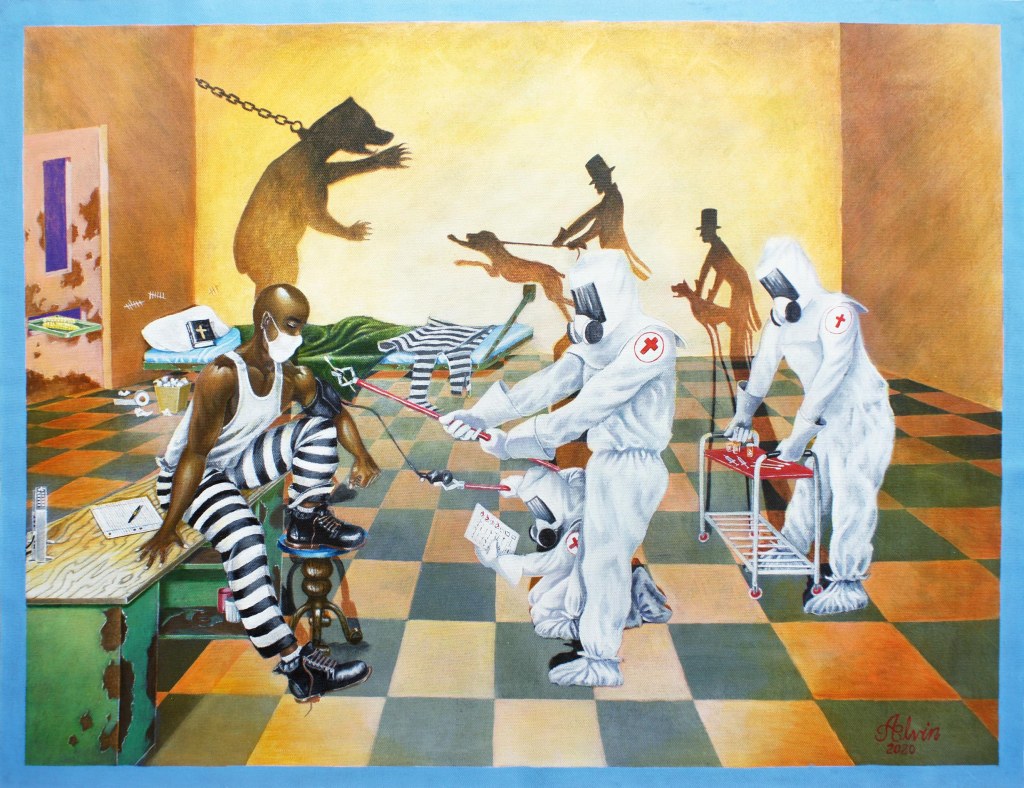
Artist Faye Claridge sent each participant a letter inviting creative responses to the Warwickshire symbol of the chained bear. She paired two folk art paintings from the two countries1, showing different treatment of captive bears. These, as metaphors, provided inspiration for the remarkable artworks presented in We Bear

Incredible artwork – so beautiful, emotional and in depth. The atmosphere is incredible. So much talent.” ~ Exhibit visitor 

Ann Arbor Summer Art Fair, Main Street & Liberty 

Thurs – Fri, July 21 & 22 – 10am – 9pm 

Saturday, July 23rd – 10am – 8pm 

The We Bear artworks were made in the most difficult of circumstances, in the middle of a global pandemic, and communicate sincerely a range of experiences of being incarcerated. 

They were created for a one-off exhibition in the UK, with Coventry Biennial, and attracted a staggering 52,068 visitors. Engagement from audiences and everyone involved has been astonishing, participants said they grew from the professional feedback and personal development in the opportunity and the results they produced are breath-taking. 

In response, Arts Council England has extended project support, allowing We Bear to travel to the US and be showcased at the hugely popular Ann Arbor Art Fair. 

The Prison Creative Arts Project (PCAP), based at the University of Michigan, has partnered in the project from conception and is now collaborating as co-curator for the art fair exhibit. Join them, Thursday – Saturday, to experience the entire collection and leave your mark in the ongoing collaborative public art installation at the exhibit’s activity tent. And don’t miss their engaging live events just down the street, thanks to support from The Guild of Artists and Artisans. 

The Stage on Main, William & Main Street 

Thurs, July 21st – 2pm – 4pm 

Friday, July 22nd – 2:30pm – 4:30pm

At the Stage on Main, located at the corner of Main & William in the parking lot next to Palio Restaurant, hear first hand the captivating stories of artists who have created art inside prison, celebrate the spoken words of writers who are currently/formerly incarcerated, and be swept away by musical performances from the U of M Men’s Glee Club. 

Global Reach

To engage a global audience, an online event and StoryMap are being created so audiences near and far can experience the project in depth, with behind-the-scenes documentation, correspondence with participants, and additional insights into each of the participants’ artworks. 

We Bear: Behind the Scenes*

Thurs, July 14th – 2pm – 3pm

*registration required: https://myumi.ch/pZrA2

Here’s your opportunity to get an exclusive look into the makings of the compelling international collaboration, We Bear

Hear from project creator Faye Claridge, the artist participants, along with commissioners Coventry Biennial, UK prison education provider Novus, and the director of PCAP. 

“I hope this can give a glimpse into the creative minds and talent that reside in prisons and impart some insight into the effects of mass incarceration on our populations.” 

~ Darryl Rattew (US Artist) 

Scan to add to calendar, register for virtual event, and/or for more exhibit information.

Follow: @fayeclaridge, @prisonarts, @annarborartfair, @Coventry2021, Hashtags: #WeBear #annarborartfair #CovBiennial2021 #prisonarts 

We Bear is a Coventry Biennial Commission made possible thanks to UK City of Culture 2021, Arts Council England and Art Fund, and Prison Creative Arts Project

1 The two folk art paintings inspiring participants’ responses are Man Feeding A Bear An Ear of Corn (1840, American Folk Art Museum, New York) and Bear Baiting (1830s, Compton Verney Art gallery & Park, Warwickshire).


As a past participant in the Prison Creative Writing Project I have a very high opinion of the work being done by The University of Michigan PCAP to bring attention to the reality of prison as seen through the eyes of the incarcerated. When I was approached about posting an advertisement for the art exhibit on my blog site I did not hesitate. When I got the chance to read my poem at a PCAP event I had the opportunity to view the art exhibition from 2016. The old adage is true that a picture is worth a 1000 words. It may be fair to say that these art works created by incarcerated individuals are worth a lot more. To experience the raw emotion and deep seated pain that is so apparent in the paintings says more than all my blog posts combined about the conditions of confinement. If you live in the Detroit Metropolitan area or in Southeast Michigan I would encourage you to check out this art exhibit. These artists truly belong at the Ann Arbor Art Fair.

Disquieting Solitude

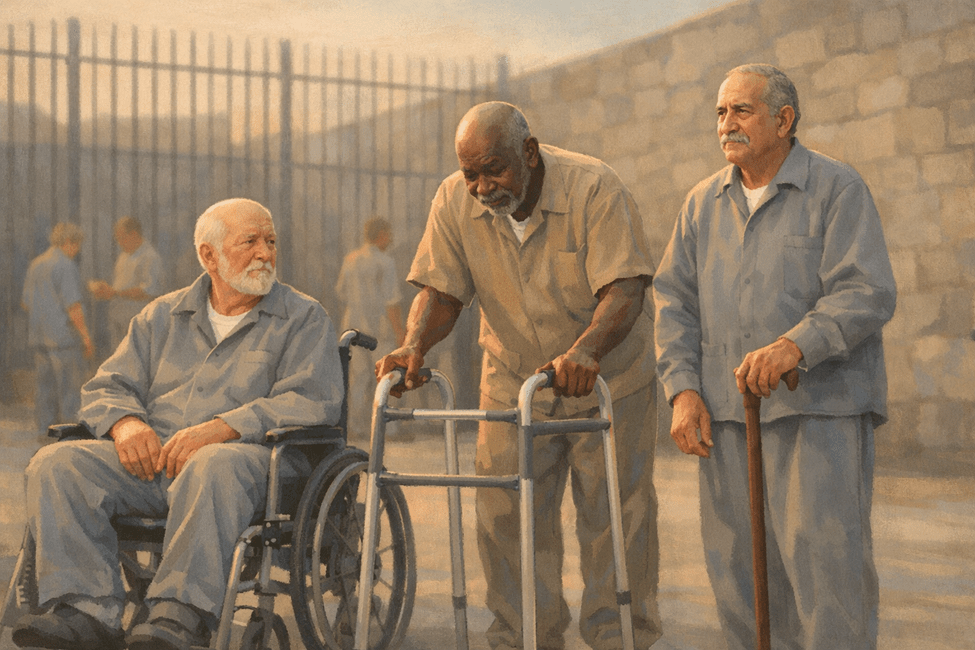
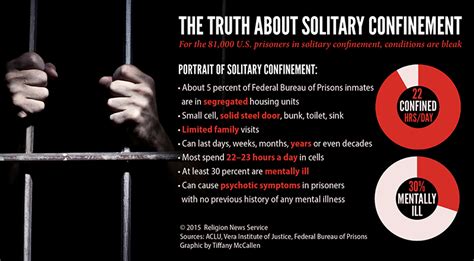
While I was in prison, I dreamed of having a room to myself.  Having a single room in housing units that had grown to contain twice as many people as they were originally designed for was just that a dream.  Except for a very limited number of cells in Level II and IV did I see single man cells, and these contained mainly lifers that needed wheelchairs due to health issues.  During the seven months I spent in Level IV there was a total of six weeks where I did not have a roommate.  Those were the last days I would be alone for the next seven years.  Even in Level IV I was able to get two hours of day of yard time, three trips to the chow hall, weekly trips to the library and religious service.  These provided plenty of time to exercise, socialize, and relieve the monotony of being locked down 20 hours a day.  I had a TV and a radio, so I never lacked for input. 

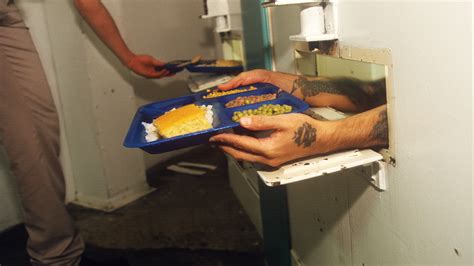
How very different for those in solitary confinement.  While I spent a week in protective custody, it was a two-man cell located in the same housing unit as solitary where people were sent for violating the rules.  In solitary meals are served in the cells through a slot in the door and the only way to leave the cell was in hand cuffs, even to go to the shower every other day.  No personal property, no TV or radio.  No commissary, no phone calls or email.  It was not a nice place and one that I didn’t want to visit.

While out walking the track in the big yard I would hear guys in solitary shouting to each other out the tiny window vents to talk to someone in another cell.  I would also walk past the cages behind the building where guys in solitary got yard time.  The cages were just big enough to pace a couple of steps or drop down and do pushups.  Even in wintertime you would see guys in cages that would be shoveled clear of snow by a unit porter.  Signs posted on the fences separating the yards strictly warned that we were not to communicate with those in the cages.  The signs might as well have said, “Don’t feed the animals.”

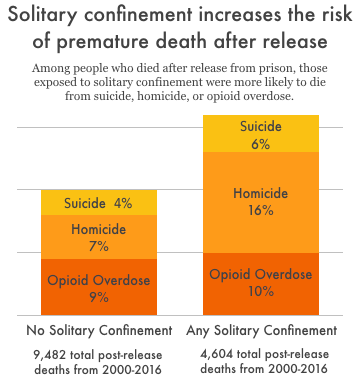
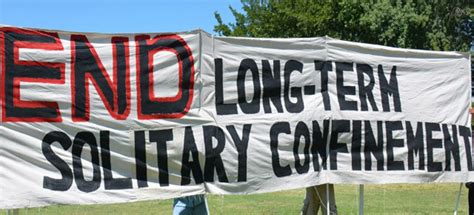
This form of punishment inside of prison has been gaining more and more attention in the United States as activists seek to bring this barbaric and discredited practice that is used widely in both federal and state correctional facilities to an end. Articles and videos about the gruesome reality of solitary confinement have been published by many news organizations and prison reform activists including The New York Times, The LA Times, The Guardian, Huffington Post, Scientific America, Psychology Today, The Atlantic, GQ, ABC, NBC, CBS, PBS, CBC, BBC, YouTube, and Facebook to name a few. Those who defend the practice point to the idea that the psychological effects of isolation from the general population serve as a tool to break strong willed inmates who are difficult to handle-The Wall Street Journal. The reality is that there is no evidence that this works in the way it is intended and instead simply breaks the person making them less controllable in prison and unrehabilitatable.

I recently read an article in Rolling Stone entitled ‘Right Before I Hung Myself’: Prisoners Share Tales of Solitary Confinement in Michigan by Tana Ganeva.  First, I would highly recommend that you take the time to read the article because it is professionally well written and brings a national spotlight onto the dark underbelly of the Michigan Department of Corrections.  Secondly it uses firsthand information obtained from correspondence directly with those who have experience serving time in solitary confinement.  Like my blog the author is providing a voice for those who otherwise couldn’t speak for themselves.  But it doesn’t stop with the article there is an excellent website that contains the words and artwork of those whose lives have been forever changed by a practice that is internationally recognized as inhumane and by many to constitute torture.  Please check out ‘Silenced: Voices from Solitary in Michigan’ a website where prisoners tell harrowing experiences in their own words.

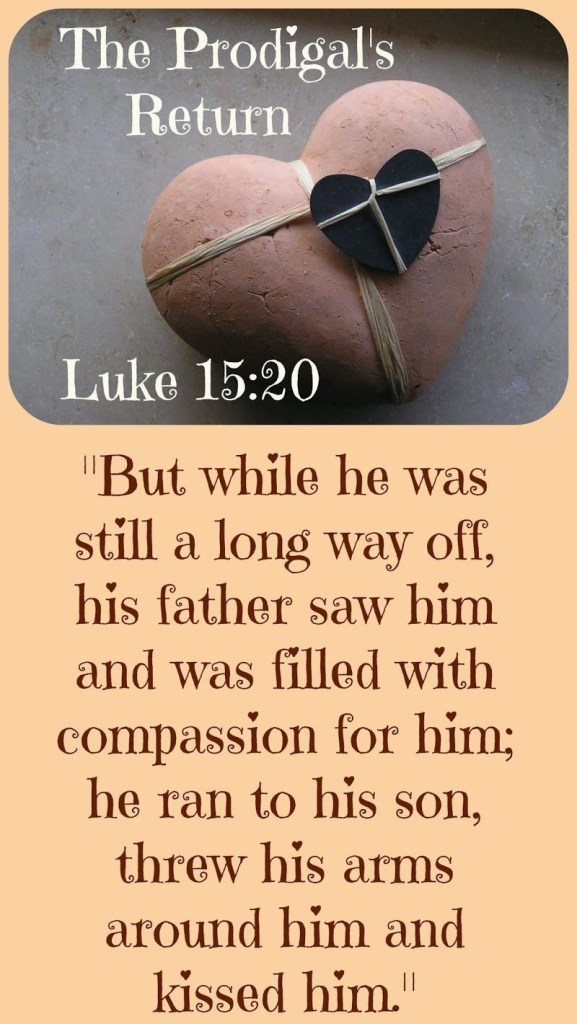
The Prodigal’s Return

According to Merriam-Webster a prodigal is a son/daughter who leaves his or her parents to do things that they do not approve of but then feels sorry and returns home.  In Luke 15:11-32 Jesus tells the story of two sons and their life choices.  The point of the story was not about passing judgement on the irresponsible son but about repentance and forgiveness on one hand and unforgiveness on the other.  I’m not going to focus on the reaction of the older son but on the journey of the younger son and the father’s response as it applies to my own spiritual life journey.

From my teenage years I wanted to distance myself from my family.  I went off to college and then further away for graduate school seeking to gain my freedom.  I then got married and started my career to establish my independence.  I filled my time with what I wanted and only made grudging appearances for holidays.  My brother grew up and got married.  My parents grew their business and took up square dancing.  They had their lives and I had mine.  I didn’t live in a faraway land but halfway between my parents and my wife’s parents.  Close enough to make the trip but far enough to not have to make it frequently.  My focus was on my career, my interests, and my friends.  I didn’t have time for family obligations or responsibilities.  Even after my daughter was born, I continued to pursue my dreams without any concerns for how this affected anyone else.  This is the very essence of being a prodigal. 

I didn’t appreciate what my family had to offer me: a stable nuclear family, deeply held religious beliefs, education, strong work ethic and financial security.  Growing up my extended family including grandparents, aunts, uncles, and cousins always got together for the holidays.  Family reunions happened every year exposing me to an even larger group of family members in which I didn’t take the time to learn who they were or what our family history was.  I dreamed of being anywhere but there.  With age comes wisdom and only now do I appreciate what I had.  My parents will be celebrating their 58th wedding anniversary this year.  My family wasn’t perfect, but I was given all the advantages.  My time in prison exposed me to people who came from not just dysfunctional but truly broken homes.  Growing up on the streets and in some cases literally killing to get what I had.

Growing up, Sundays were all about church.  My parents were active members in their church.  My brother and I attended church for as long as we lived in their house.  Not attending wasn’t an option.  Even when I was older, I attended church, but it was more social and cultural than spiritual. My entire life my has been lived in the shadow of the cross.  My parents brought me up in church, raised me with conservative Christian values, and sent me to a college founded by our denomination.  I knew the hymns, the books of the Bible, and the tenants of the faith, but even though I confessed my faith there were areas of my life that weren’t surrendered to God.  

I was a very average student in high school.  When I went to college, I became a much better student when I started dating a girl who spent her time in the library.  While we parted ways, I still graduated with honors and double majored in chemistry and biology.  I went to graduate school and found out how really smart I was by consistently outscoring some of the best and brightest students at one of the state’s most prestigious universities.  But academic knowledge isn’t the same as wisdom and the more I learned the more foolish I became.  According to Proverbs 10:1b “a foolish son brings grief to his mother.” And I certainly caused my mother a lot of grief.

My pride of life, gluttony, intellectual arrogance, and selfishness kept me from following Christ fully.  Proverbs 11:2 says, “When pride comes, then comes disgrace, but with humility comes wisdom.”  It was in quiet desperation that I truly called on the God of my fathers when I found myself in jail.  Many who find faith in prison point back to someone in their family, like a mother or grandmother who modeled it to them.  Those without a model have a much harder time coming to believe.

As a tutor in prison, I was able to use my education to help those who did not have the opportunities that I had.  I would encourage my students to look forward to a brighter future that would only be possible by completing their GED.  Not because of what education had done for me but what they could do with it to help their families.  On more than one occasion I had students tell me that they were determined to get their GED to challenge or encourage their own children to complete their education.  Those inmates were the ones that really got it and tried to make the best of their prison experience.

My father earned money by delivering papers when he was young.  He served in the military and afterwards went to night school while working and starting a family.  While I was still in elementary school, he made a life altering decision and became an insurance salesman.  He was consistently one of the top salespeople in his company.  He had his own agency for 47 years and did all right.  His hard work set the example for me.  I worked occasionally for him while I was in high school but knew that I didn’t want to follow him into business.  I chose a different path as part of my rebellion.  I had different skills and abilities but much of the same drive and work ethic.  In prison I encountered those who worked hard at not working.  Those who plotted and schemed at making the big score.  Always more talk than action.  Uneducated and unethical, a far cry from my up bringing.

I had a moderately successful career in the sciences.  I worked hard.  I worked long hours.  I provided for my family.  I never really had to worry about money to pay the bills, put food on the table or buy a few toys.  A lot of my satisfaction and self-esteem came from my work.  I liked getting above average employee annual reviews.  I liked my steady advancement up the corporate ladder.  And it was gone in the blink of an eye like the parable of the rich fool in Luke 12:13-21.  The barns I had built for myself were gone and life as I knew it was over.

In prison I had plenty of time to reflect on my life choices and the decisions that lead to that low point in my life.  I was in a pig sty and my thoughts often drifted back to life at home and how much better it would be to live there.  My thoughts weren’t fantasies of some make-believe fairytale life, but of a home that wanted me there as a part of the family.  While I was in prison my parents were the only ones who did not abandon me to my fate.  I knew very few inmates who had more visits than I did.  Approximately every two weeks I got to spend time with my parents who made the trek to wherever I was incarcerated to see me.  I received mail and/or emails from them regularly keeping me up to date on the happenings in the family.  I talked to them weekly on the phone and was occasionally blessed to call into a family get together were I could talk to my brother.  Not once in what was literally thousands of communications, did I hear any condemnation but rather endless encouragement.  I got to know about my extended family and all that I had missed out on over the years.  I got to hear about what was going on at church, the office, and with their friends.  I received postcards from all over the country and even around the globe as my parents traveled.  There was no doubt that I would be welcomed home, it was only a question of when.

When I got home, I wept with overwhelming emotions.  I had a room of my own.  Access to good food anytime of the day or night.  I was given the keys to one of the family cars to go out on errands and work.  I was given a family credit card so I could start rebuilding my credit and make purchases for the family.  I cooked meals, cleaned house and laundry, shopped for groceries, made home repairs, painted around the house, and gardened like Martha Stewart.  I did it, not because I had to as if I was expected to pay my parents back for supporting me while I was in prison but rather to express my gratitude for all that they had done for me.  I wanted to be fully engaged in the very family life that I had previously shunned.  I focused on completing my parole without any violations just like I completed my sentence behind bars without any violations.  I wanted to do and be my best because like the Grinch my heart had grown three sizes.

My time on parole flew by.  It was quite anticlimactic when I was discharged from parole.  The parole officer that had managed my case wasn’t even in the office on the day that I signed my discharge papers, there was no need to say goodbye.   I was a free man but running away from home never crossed my mind.  My parents are aging and need my help now more than ever.  I don’t worry about what I might or might not inherit when they pass.  I am secure in my position as a beloved son.  I don’t live at home anymore, but I live nearby so that I can stop in and check on things.  I have a new job and recently got married so I have more responsibilities too.  But they are not a way of establishing my independence again but rather a celebration of the new life I was given.  I have confidence that “all things work together for the good of those who love God” (Romans 8:28).  I never imagined that my life would turn out this way, but the Bible and church history are full of convicts that God called to do His will and I guess that I’m just one more.


As far a prodigals go I would say that my experience is not typical. My parents did more than keep a vigil by looking down the road for my return. They walked with me through my period of incarceration confident that God would make a way for me to return to them. God used them to encourage and sometimes even feed me in a difficult situation. Their faithfulness is what got me involved in the church behind bars and with Keryx. It was there that I truly began to understand about grace, mercy, forgiveness, and repentance. And more importantly to truly appreciate these foundational principles of the Christian faith and how important they are to rehabilitation and restoration of those convicted as opposed to punishment and retributive justice that are the hallmarks of the current criminal justice system. There are far too many men and women behind bars that will never get to experience the celebration of homecoming because regardless of how bad things get in prison they either haven’t come to their senses or don’t have anyone waiting for them. One of the strongest indicators for successfully completing parole is placement back into the family. Prodigals need to be welcomed home whether it is their nuclear family or some other group that can act as a surrogate. I’m proud to be part of a group called Freedom Dreamers Chapel who’s mission is to provide that surrogate family for those coming out of prison who have come to their senses but don’t have a family of their own to return to. We provide small accountability groups, mentors, and worship experiences in a Christ-centered judgement free atmosphere to encourage success while on parole and beyond.

Thank You

The church behind bars in prisons and jails is alive and well.  In a place that most people wouldn’t expect to find humble, faithful servants, there are a surprising number.  These are men and women who have hit rock bottom and were saved when they looked up and found God.  But they can’t grow and live without community.  Lone ranger Christians don’t last long in the hostile environment of incarceration.

Outside ministries provide essential assistance in cultivating and growing disciples in the church behind bars, everything from preaching on Sunday mornings, leading addiction groups like Celebrate Recovery, teaching life skill or spiritual development classes, to Bible studies.  The church behind bars benefits from the diversity of religious perspectives brought by the various denominations and independent churches represented.  In fact, the demand for professionals and volunteers to go inside exceeds the available pool of individuals.

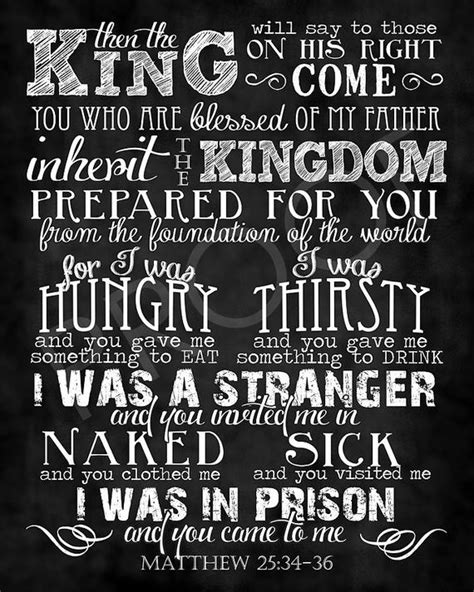
Responding to the call to minister to those in prison is part of the call that all Christians receive and for which we will be judged by God (Matthew 25:34-40).  For those that step forward in faith and enter prison ministry, not only will they have eternal rewards but also blessings from interacting with fellow Christians in the most unlikely places.

For myself I had the privilege of interacting with dozens of people who came to preach, teach, sing, pray, and encourage me and my brothers.  They treated me as a human, not a convict; as a fellow Christian, not an outcast; as worthy of redemption, not deserving of condemnation; as a child of God, not the spawn of Satan.  They uplifted, edified, encouraged, challenged, and educated me in my Christian walk.

In the overcrowded yet lonely confines of prison I looked forward with great anticipation for the weekly callouts to the Sunday Worship Service, Tuesday night Bible Study, Spiritual Development classes, and Keryx.  It wasn’t just something to do in a vast wasteland of monotony.  It was an opportunity to chew on spiritual meat, to sharpen iron, and to be renewed in my inner being.  All of this was only possible because of the dedication of faithful, Spirit-filled, gifted pastors and laymen; retirees and businessmen.  These were missionaries, clergy, and volunteers from all walks of life who have given up much to bring light into darkness, hope to the hopeless, wisdom to the foolish, and the love of God to the least of these.

Saying thank you somehow seems inadequate for these superheroes of the faith.  The English language doesn’t contain enough words of admiration to express what these men and women of God mean to me.  I can speak of the miracles that have occurred; the lives changed; the tears cried and dried; the power of prayers spoken, and the answers received; and the peace of God imparted, and only scratch the surface of the impact that they have had on my life.

But try to tell them and their humility immediately redirects any praise to God.  Certainly, gratitude warms their hearts and expressions of appreciation encourage them to come back again and again.  While it was strictly against the rules, I wanted to hug these saints.  God used these ministers to prepare me for my own ministry.  To place in me the desire to step out of my comfort zone and see the world through Jesus eyes.  To speak Truth without cast stones.  To be an encourager of the brethren.  To write what the Holy Spirit gives me and not one word more. 

My heartfelt gratitude, admiration, and loves goes out to these ministers of the Gospel.  While we may not cross paths again in this life, I look forward to seeing you again in heaven.

If You Can’t Stand the Heat

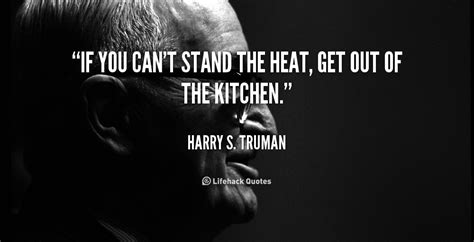
The expression was popularized by US President Harry S Truman to tell someone that if they cannot deal with a difficult situation, they should leave that situation.  Somewhat insulting, it implies that the person addressed cannot tolerate pressure and that they should leave others to deal with it rather than complaining.

While on parole I worked in a commercial kitchen.  I started out as a dishwasher and moved up to be a prep cook.  I can tell you that the kitchen is an extremely hot place to work, especially in the summer.  Hot stoves, ovens, deep fryers, and dishwashers coupled with limited staffing, space & time, and combined with high output workloads during meal service creates an incredibly stressful situation that few people can thrive in.  At times it felt like it was an episode of Hell’s Kitchen with Gordon Ramsay berating young inexperienced cooks competing for an opportunity to work in one of his restaurants.  High pressure and high stakes, no room for error and no tolerance for the smallest infraction of the rules.  Either you learn the most efficient and food-safe method of completing your tasks or risk falling behind and poisoning someone.  There were days when I didn’t think I was going to make it, but every day I kept showing up and gradually I got stronger, smarter, and wiser.  Unfortunately, working in a commercial kitchen doesn’t pay very well, the hours can be somewhat erratic, and holidays tend to be worked and not celebrate.  I look back on my time in the kitchen and appreciate the things I learned that made me a better cook at home.  I miss some of my coworkers and how well I ate.  I don’t miss the heat, the stress, or the hours.

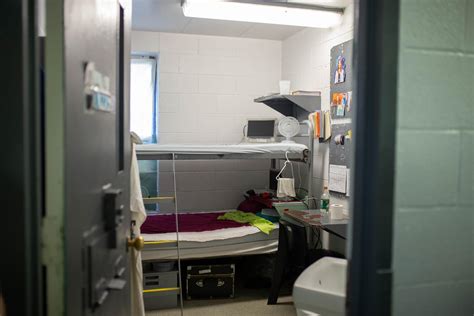
As I write this article, we are amid a week of 90-degree days and I’m thankful for air conditioning, ice cubes and shade that keeps me calm, cool, and collected.  However, most prison housing units in America don’t have air conditioning or even adequate ventilation.  The driving factor in prison design is control, not comfort.  In some places millage’s to build new jails specifically stated that air conditioning was not included as a way of gaining votes from people who think that inmates don’t deserve it.  There is a mentality that says that if some people in the general public can’t afford air conditioning then prisoners don’t deserve this luxury. 

True the electrical expense associated with cooling large buildings can be expensive, but this way of thinking fails to see the whole picture.  To prevent being an easy means of escape many windows in correctional facilities don’t open and the ones that do are either too small to allow an average sized inmate from climbing thru or have some type of grated cover on the outside.  This significantly limits the access to fresh air inside or the ability to create cross ventilation or breezes.  Some places compensate by adding commercial sized exhaust fans, ceiling fans, or personal fans to create any air movement.  But by and large these in my experience had little effect in hot weather.  In the Level I pole barns where I stayed the exhaust fans created such a significant amount of negative pressure that it required a lot of effort to open the exit door, even when all the windows in the unit were open.

Iowa inmates endure summer heat as lawmakers put off prison repairs

Headline of a July 2020 Iowa Capital Dispatch article by Linh Ta

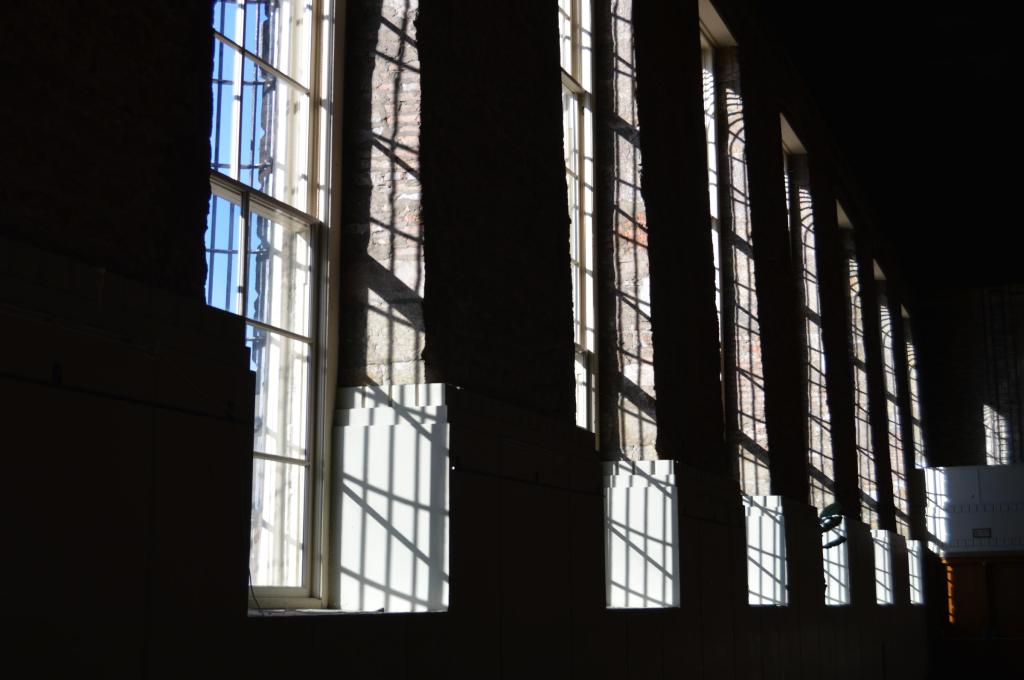
The primary construction materials for prisons are brick and steel.  These tend to absorb and retain heat in the summer adding to the building heat load.  Many prison buildings are over 35 years old, have poor insulation and lack thermal pane windows.  I have written previously about how cold it got in my county jail cell with not just frost but ice forming on the inside of the window.  Given their inability to heat the cells in the winter in the medical wing, how could they possibly cool them in the summer?  Quarantine in the MDOC utilizes part of the old walled Jackson prison complex.  Those housing units have 4 galleries of cells facing large windows many with broken or missing panes that let in plenty of light, bugs, weather, etc.  They also do little to regulate the heat or cold since they are made of individually glazed divided light single pane glass which comprise roughly 50 percent of the exterior wall.

In many parts of the country including Michigan, climate change has resulted in longer hotter summers that were not a consideration when many prison buildings were designed.  I recently read the account of a man who spent nearly 35 years in a north Texas prison.  He recalls how during the winter there was occasionally snow on the surrounding fields and that summer had relatively few days where the temperatures went above 90 degrees.  However, over time the winters got warmer and the summer heat lasted much longer.  The change in weather resulting in unbearable living conditions.  In fact, there have been several lawsuits brought against various states and the federal prison system claiming that the lack of air conditioning is cruel and unusual punishment. 

Inmates who are elderly, have medical conditions or take medication that place them at elevated risk for heat related illness are particularly likely to have serious and sometimes fatal reactions to building temperatures that can remain 10-15 degrees higher than the nighttime low.  The thermometer in one of my housing units would still be in the upper 80s at 11PM on summer nights after the daytime temperature soared into the 90s.  It could stay like this for several weeks at a time during July and August.    Like most lawsuits brought by inmates they have a difficult time prevailing in the courts and when they do the gains are either short lived when overturned on appeal or simply ignored by the prison administrators without some form of judicial oversight.  An aging prison population with a disproportionate number of inmates with chronic health conditions was also never factored into the building design.

How Global Warming Makes Overcrowded Prisons Even More Dangerous

Headline of a Bloomberg City Lab article written by Brentin Mock in September 2015.

Even as evidence of climate change mounts, little is done to address the problem except when the corrections officer’s union gets involved because it’s not just the inmates that contend with the heat but anyone who has to work in buildings without the benefit of air conditioning.  In Michigan prisons the administration, school, medical buildings, and the chow hall generally had air conditioning.  It was the housing units that were unconditioned, except for the housing unit counselor’s office.  One of the perks of my job as a tutor was spending seven hours a day in the school, where it was relatively cool.  I dreaded going back to the housing unit to endure the stifling hot air that left the aftertaste of BO in your mouth.

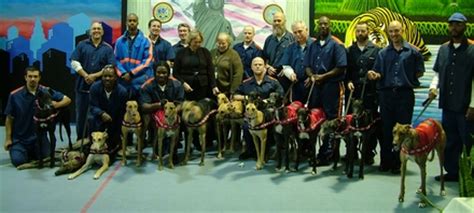
In 2008 Lakeland and Florence Crane correctional facilities partnered with Refurbished Pets of Southern Michigan (RPSM) to form a prisoner/dog foster care and training program.

It was difficult to imagine that due to the efforts of the Humane Society, dog pounds and many livestock barns are air conditioned while prisons are not.  I’m all for treating animals humanely but the very term involves the concept of treating other species in ways that we would treat people.  Yet the concept of humane treatment for prisoners doesn’t rise to that same level.  I wonder if the Humane Society realizes that all the Leader Dog for the Blind and Service Dog training programs that are being run in prisons expose the dogs to inhumane living conditions.  Also, there is irony in that prisons are a great place to socialize dogs but do little to socialize the inmates.

In many communities there are cooling centers set up to accommodate people who don’t have access to air conditioning during heat waves.  Libraries and community centers welcome people to come in and cool off.  In prisons there are also cooling centers of a sort.  Places like the chow hall are opened to those who have a potential to suffer from heat related illness to go and cool off.  This is only during times when the chow hall isn’t serving food and the inmates aren’t allowed to bring anything with them to occupy their time.  No playing cards or books, they can only sit quietly at the tables.  They are not free to come and go but must remain there until dismissed back to their housing units.  During the current Covid-19 pandemic many prisons aren’t running regular chow hall schedules to accommodate a limited form of social distancing, so using them as cooling centers may not be an option this year.  I’m not certain but using the visiting room might be an option at some facilities since visits are currently banned.

I have written previously about the relationship between the hot summer months and the increase in violence and suicides.  Hot weather brings out the worst in people and when the worst of the worst are forced to live in hot cramped living conditions things only get ugly.  You’d think from a security perspective the administration would want to keep the violence to a minimum and reduce the number of suicide attempts, however it doesn’t appear that this type of rational thinking applies. 

Hot and bothered: Experts say violent crime rises with the heat

Headline of a July 2012 CBS News article by Julia Dahl

It ultimately boils down to how inmates are viewed by not just corrections staff, but by the governor, legislature, and the general public.  Are inmates to be considered as people with certain human rights that the rest of society takes for granted or are, they somehow disqualified by virtue of their behavior which was deemed as inappropriate?  There seems be a dichotomy where inmates are expected to rehabilitate themselves, yet they are treated as being unredeemable.  We sentence people to serve time for their crimes in places that are as dystopian as Mad Max’s Thunderdome and then expect them to reintegrate back into society after their release. 

Summer Heat Kills Inmates in Prisons, and That Needs to Change

Headline of a Huffington Post August 2014 article written by Ariel Dulitzky, Director of the Human Rights Clinic at The University of Texas School of Law

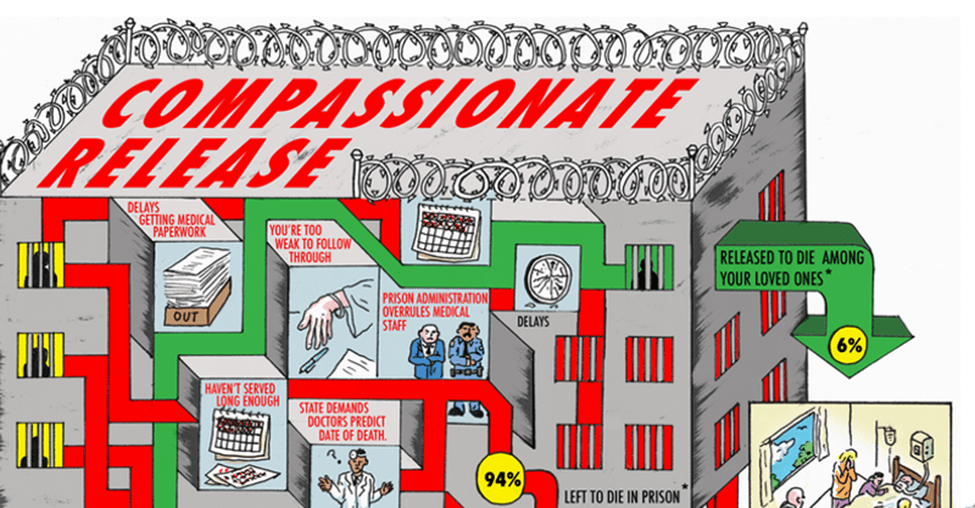
When inmates who are not serving life sentences die in prison, it is common to say that they weren’t given life sentences and shouldn’t have had to die there, which is ridiculously obvious.  But the system as it is currently operated doesn’t allow for different standards for inmate care based on their sentences.  Medical care is like that of third world countries where there are many needless deaths and pointless suffering.  In Michigan for example there is no early release program to reward prisoners for good behavior due to the Truth in Sentencing provisions of the Michigan constitution.  Compassionate release programs also don’t have much compassion since most who apply are denied or the considerations are so deliberately slow that the petitioner dies while waiting for an answer.  Much of this boils down to a lack of political will, indifference, and outright animosity toward those assigned to their care.  So why should something like air conditioning receive any consideration?  Because when you can’t get out of the kitchen there isn’t another option.


I first started to write this post in late June/early July when the summer heat was at its worst and the USA was just starting to venture outdoors after a prolonged period of quarantine.  My job had just called me back to work and I went from having too much time on my hands to working seven days a week.  In fact, my company had placed me into a machine shop where the indoor temperature was routinely in the mid to upper 90s.  While it was hot and uncomfortable at work, when I got into my car to go home, I could turn on the air conditioning.  It reminded me of how hot and uncomfortable it can get in prison and that for those incarcerated there is no break from the heat.  Now that it’s almost spring it may seem out of place, but it is still truth and is something worth blogging about since it will repeat itself in a few months.

This blog is an example of how I could feel that what I had to say might not be all that important at the time that I was writing it.  The first outbreaks of Coronavirus that triggered lockdowns in the spring seemed to be easing but by the time I was ready to post this essay cases were on the rise and only accelerated into the fall and winter.  I was stunned as I watched infection rates and deaths spiral out of control.  Prisons and jails were locked down and conditions only got worse for those trapped inside.  It felt trivial and insignificant to write about the heat, but I am certain in the context of the pandemic that the summer heat did add to the misery index.

Speech-less

“When Job’s three friends heard about all the trouble that had come upon him, they met together and agreed to go and sympathize with him and comfort him.  When they saw him from a distance, they could hardly recognize him; they began to weep aloud, and they tore their robes and sprinkled dust on their heads.  Then they sat on the ground with him for seven days and seven nights.  No one said a word to him because they saw how great his suffering was.”

Job 2:11-13

As the pandemic unfolded it became apparent that jails and prisons were going to face a horrific situation.  Visits and programs were suspended, activities canceled, routines were upended, and lives changed forever.  Many individuals were getting sick and dying alone as prison officials were either unwilling or unable to respond to the humanitarian crisis as the conditions worsened and suffering increased exponentially. As I watched the news, scoured the internet, and talked with others involved in prison ministry I struggled to put into words my frustration, sorrow and ultimately grief at what I saw happening in prison.  I became like Job’s friends, as all I could do was sit silently in solidarity with my brothers and sisters behind bars. 

For ten months I have been unable to write.  My prison experience was now so far removed from what the current conditions are like that it was almost as if my experience couldn’t possibly provide useful insight.  My words of encouragement while needed now more than ever couldn’t begin to empathize only sympathize with the plight of those incarcerated. My desire to write dried up to some extent and instead I found myself engaging in prayer taking my complaints directly to the throne of the Almighty. While I believe in the power of prayer, I’m not so sure about the effect of complaining. To my understanding God is inscrutable, as His ways are not our ways. My belief is that as Christians we are called to have faith that all things work to the good of those who love Him. Asking “Why” is not the question we as Christians should be focusing on but rather seeking discernment about what our role is in bring healing to a hurting world.

Ecclesiastes chapter 3 famously says in verse 1, “There is a time for everything and a season for every activity under the heavens.”  The writer goes on to list the activities contrasted with one another which do not frequently occur together including: “A time to be silent and a time to speak.”  I believe that my ability and desire to write are a spiritual gift from God and that the silence I have experienced wasn’t because I didn’t have anything else left to say about Christ, Crime and Punishment, but rather a time for me to mourn, to monitor, and to meditate.  The Lord has seen fit to once again open my mouth and I will faithfully trust that my words will honor Him, raise awareness of the plight of those who are incarcerated, and motivate others to likewise demand more from our leaders to address this humanitarian crisis.


As of March 2, there have been at least 386,765 cases of Covid-19 and 2,459 deaths reported among prisoners in federal and state prisons nationwide according to The Marshall Project in collaboration with the Associated Press. There have been at least 25,277 cases and 138 deaths from the corona virus reported among prisoners in Michigan. In the state of Michigan 2 out of 3 prisoners have tested positive, which is 10.2 times the rate in Michigan overall. Michigan was one of the first states to begin testing in prisons and there have been at least 713,430 total tests conducted for prisoners and staff according to the MDOC website. Reporting and testing requirements vary significantly among the prison systems, however it is still clear that infection and mortality rates are much higher than in the general population.

Close confinement and overcrowding make prison the ideal ‘breeding ground’ for infectious disease. Image credit: Sandy Huffaker / AFP.

Jails and prisons like other high density housing situations including nursing homes have been the hardest hit by the pandemic. Highly contagious diseases have always been a problem. Tuberculosis, norovirus, influenza, and the common cold virus rapidly spread when introduced into confined populations. What is different about COVID is that there were initially no effective treatments and the routine cleaning and disinfectants used in prisons did not work. In prison there are always tradeoffs- facility security and safety versus efficacious chemical use. The best disinfectant available for use in prison is bleach in a dilute form. Unfortunately alcohol that is at least of 70% concentration is the best agent for sanitizing and this is strictly forbidden in prison, therefor no hand sanitizer. Like in the general public it took several months for masks to catch on as a way of reducing transmission. Prisons which use inmates to make garments began to make masks for both the staff and inmates to wear.

There have been many calls for the humanitarian release of non-violent offenders and particularly those who have underlying health conditions that put them at greatest risk. Some states and the federal Bureau of Prisons did make some attempts to grant early and companionate release, while others like Michigan could not. Reducing over-crowding was also accomplished by prisons refusing to accept inmate transfers while at the same time paroling those who have been granted parole. Sick wards were established to quarantine those who tested positive or may have been exposed to the virus. Unfortunately these and many other efforts failed to prevent COVID from burning through prison populations like a western wildfire through dry grass.

While a lot has gone wrong with the pandemic response, a few things have changed hopefully for the better.  There will be finger pointing, data evaluation and legislation purposed for some years regarding the correctional systems response.  There will be second guessing, arm-chair quarterbacking, and persistent questions of responsibility and accountability for how those in positions of authority managed and cared for those in their care. Job’s friends ended their silence and began to speak after Job gave his assessment of the situation.  They made many unfounded, unfair, and unhelpful accusations and turned from supporting their friend.  Sometimes it is better to remain silent and to be thought a fool than to open your mouth and remove all doubt.  I’m going to let the future judge how we as a country handled the pandemic and specifically how prisons did. Pray for those who are incarcerated.


After 15 months of reporting on Covid-19 infection rates in prison the Marshall Project and the Associated Press ended their weekly update because the states and federal prison systems have stopped consistently reporting the data. As of July 1 the count of Covid-19 infections stands at 398,627. That total is a significant undercount. In the early months of the pandemic, testing was inconsistent in many prisons, leading to cases going undiagnosed. Reported cases first peaked in April 2020, when states such as Michigan, Ohio and Tennessee began mass testing of prisoners. Though later waves of the pandemic led to far higher numbers of cases, those initiatives suggested that the coronavirus had been circulating among people without symptoms in much greater numbers than previously known. Nationwide there were 2,715 deaths related to coronavirus reported among prisoners through June 2021. In Michigan 2 in 3 prisoners have tested positive, this is 7.0 times the rate in Michigan overall. 1 in 271prisoners has died which is 1.8 times the rate in Michigan overall. By the end of June, more than 54% of prisoners nationwide had received at least one dose of the vaccine. In Michigan 3 in 5 prisoners has been fully vaccinated and 1 in 3 prisoners has been at least partially vaccinated.

While visiting rooms and programming slowly start back up there have been significant changes. For instant the new rules for visitation make it very difficult for families to have meaning times together. Rapid Covid-19 testing and masks used to reduce the chances of transmission haven’t been successful in eliminating outbreaks associated with visits. A difficult to use on-line reservation system to schedule a limited number of visits during the available times which are limited to 2 hours have made arranging visits harder. Plexiglass barriers separate people and vending machines are not available. Video visits have been slow to roll out and are still not available at every prison. I recently spoke with a family that has had a in-person visit with their loved one and they concluded that regular phone calls were better than what they had to go through to be there in person.

Prison ministries and volunteers report that there isn’t a concrete plan in place to restart programs. In some prisons religious services have begun while in other prisons the chow halls are still closed. One concern expressed by the prison ministries is that after being out of the prisons for 15 months they have no idea how many volunteers will be able to enter. Early information indicates that the MDOC will be requiring that all volunteers must be fully vaccinated. This is something that they can’t even mandate for their own staff. It is also unknown if inmates who previously attended will return once programming is available. MDOC rules have prohibited outside volunteers from communicating directly with their program participants to maintain relationships.

As the pandemic eases and life returns to the “new” normal it is unclear whether the MDOC or any other correctional system has learned anything that will change the outcome of future infectious disease outbreaks. The return to secrecy instead of transparency so quickly in the reporting of Covid-19 infections doesn’t bode well for the future.

un-Happy Birthday

(When Milestones become Millstones)

I have previously written about celebrating holidays in prison.  Now I would like to focus on birthdays.  Unlike holidays in an average prison of 1000 people there is probably at least one being celebrated or ignored by at least one inmate every day.  Then you add in the birthdays for wives, children, parents, and siblings there are literally hundreds of birthdays being remembered. The separation caused by incarceration is most acutely and painfully felt on these most important days. Missing these milestones in the life of the family cuts deeply into the psyche of those who prided themselves on their ability to provide for their families.   Even those that did acknowledge their failings in this area often took pride in the accomplishments of their children.  While I don’t have any hard evidence to back it up, I believe that many men in prison would rather celebrate their family’s birthdays and completely ignore their own.  I came to this conclusion by listening to how men would talk about their families, even in some divorced or separated situations.  The number of photographs pinned to their head board showing wives and children backing up their talk. 

The difference between holidays and birthdays in prison is simple: Government holidays mean a break from the normal routine with programming cancelled and special meals served.  On your birthday if you are fortunate to have a visit you can eat vending machine food.  For those that choose to celebrate their birthdays in prison the occasion will be a low key event that might mean a cook-up of some sort with an associate or two.  For those who don’t value their liver, there is spud juice available in just about every prison housing unit.  The daily routine is pretty much the same as any other day.  Work and school assignments continue as usual.  Some luck few will receive a birthday card in the mail from family or friends.  I would get books from places like Barnes and Nobles delivered to me from my parents.  No surprise parties.  No birthday cake and ice cream.  No packages wrapped with festive paper, ribbons, and bows.  Many might call home if they have money on their phone account or people who would accept collect calls for the 15 minutes just to hear a familiar voice.

Birthdays are a personal event that are celebrated from our first to our last year except for some religious groups such as the Jehovah Witnesses.  In the western world they mark the passage of time and our developmental progress.  Some have special significance such as turning 16 and getting a driver’s license or 21 and getting to drink legally.  When I turned 18 it meant that I was eligible for the military draft.  Middle age is generally considered to be 45.  The standard retirement age is 65.  We often judge our success or failure in life by evaluating our progress on achieving goals by certain ages.  Getting married in our 20s.  Having children by our early 30s.   Having the kids out of the house by our 50s.  Having the mid-life crisis in mid-life.  If we achieve our goals by some certain age, we feel a measure of accomplishment and peace of mind.

But being sentenced to serve time in prison changes the math for many.  When the judge pronounces the sentence, the first thing you do is figure out how old you will be if/when you get out of prison.  All of the normal milestones are tossed out the window.  Now it is simply a matter of whether or not you will live long enough to see freedom.  The calculations are can be radically different, for example:  Person A is 17 and sentenced to 5 years and simply shrugs their shoulders, accepting that a few life goals will need to be postponed.  Person B is 17 and receives a life sentence and stands in stunned silence, knowing that life is over before it is truly begun.  Person C is 45 years old, receives a sentence of 25 years to life and realizes that by the time they are eligible for parole their parents will most likely be deceased.  Person D is 72 and receives 5 to 15 years and knows that it could be a death sentence.

I have met all of those people in prison.  About 95% of people who are sentenced to prison will be released at some point.  There is a revolving door of individuals serving 2 to 5 years for various mostly non-violent offenses.  If you are sentenced to serve less than seven years most likely you will do your time in a level I facility.  These short sentences for most people, especially those under the age of 30, are just a slap on the wrist which doesn’t do much to change their perspective on life.  For some coming to prison for these short periods of time was simply a vacation.  Level I facilities have the most freedom and access to the largest number of activities, education, and programing for inmates.  Time flies quickly when there is plenty to distract you from counting the years, months, and days until you will be free again.  Your life may be on hold for now but when you get home everyone will be there to greet you.

I suspect that those over the age of 30 tend to count even these shorter sentences as lost time.  While in the prime of life the disruption to earning power can be catastrophic.  It can mean separation from the wife and kids.  It can mean the lose of careers, homes, cars, and other items of value to the individual.  These losses could be due to having to pay court costs, fines, and restitution.  It could be the result of a prison divorce.  It hurts and for some they may never recover.  When you lose so much of what you identify as part of your self-identity, gaining your freedom again comes at such a high cost that you wonder if it is really worth it to be free.   These thoughts can take a person into some very dark places.  It is not just the ones who are serving a life sentence that consider or commit suicide in prison.

At age 44 I was sentenced to prison for 8 to 12 years.  My career and 20-year marriage ended.  I was separated from my life, my family, my friends.  I found myself in a very scary place for which I had no prior experience to prepare me for.  When I was served with divorce papers while I was in the country jail, the first question they asked me was whether I felt like harming myself.  I said, “No Sir” and went back to my cell clutching the divorce papers from my soon to be ex-wife’s lawyer.  I cried myself to sleep many nights, all the while hiding any emotion behind a blank facade.  I had no interest is spending time in the “Bam-Bam Room” where they took away your clothes and gave you a garment made out of carpet-like material and Velcro that looked like it was designed for the Flintstones, and kept you under 24-hour observation.

After Quarantine I was sent to Level IV.  I was locked down, restricted from having many necessities or very many luxuries including privacy, and time just seemed to stop.  I had to serve nearly 2900 days to reach my earliest release date.  The thought of not being free until I was 52 and then still on parole and not really free was mind boggling.  From that perspective it was all up hill, like climbing Mt. Everest by starting your trek from the shore of the Indian Ocean.  You can’t even see the mountains, let alone the summit.  I had spent 6 years attending college and graduate school but there was no comparison for what I had to endure in prison.

Roman Milestone Marker

Jails and prisons are specifically designed to break a person’s spirit, their will, their stiff-necked stubbornness.  The goal is to control you in such a way that you will be unable to fight back and thereby be more easily managed.  While I can’t put an exact number on the percentage, it is certainly in double digits the ones that resist, fight, and struggle against the system defying the officers and rules.  They are ones that find themselves serving time in isolation and if/when they leave prison, they are far worse off than when they went in.  It leaves me wondering if instead of breaking their spirit’s, it simply broke the person. 

The thought of missing X number of Christmas’, Independence Days, or birthdays never factors into the equation when a person thinks about committing a crime and is therefor not a deterrent.  There may be however some truth to the idea that it might cause a person to hesitate when thinking about committing another crime.  There is also a quality factor to consider in addition to the quantity of time when looking at prison time.  Serving time in college to get a degree, while living in dormitories, going to class, the library, the gym or track, and working on campus just isn’t in the same league with doing time in prison.  In prison there are only two options: Either you do your time, or Your time does you. 

Some of the most well-adjusted inmates I knew were the natural lifers in Level II.  When sentenced to life without the possibility of parole you are sent to Level V maximum security and you must work your way down to Level II.  They won’t take shit from anyone that would interfere with their ability to enjoy their little bit of freedom and access to luxury goods.  They won’t hesitate to put someone in their place, even if it means going up to level IV or V again.  They’ve got nothing but time.  My level II Bunkie was a lifer.  A little old man who had been down since the 1970s.  He didn’t care who you were or how much time you were serving, the odds were it wasn’t anything compared to what he had already done.  Life was simple for him: Detroit Tigers baseball and coffee.  It used to include cigarettes until they took them out of the penal system in Michigan in 2008. 

For those whose sentence looks more like a basketball score, prison can be a life sentence by another name.  When serving a sentence of 50 to 75 years the odds are against you seeing your freedom again.  If you are sentenced as a young adult, it is theoretically possible that you will be paroled but the world and people that you knew will be long gone.  I served time with guys who had never used a computer or a cellphone.  They only saw these technological marvels on the TV and it scared them.  The already knew that they would be lost and unable to adjust to the alien world that awaited them.  Prison doesn’t prepare you for life in the free world.  There are no classes on how to use the internet to find a job, get services and goods, or look up information.  Being paroled at an age that automatically qualifies you for Social Security when you’ve never paid into the system means that you will get the lowest amount possible.  An amount that it will be impossible to live on when you have no one left to live with.  Once you have lived your adult life as a ward of the state it is impossible to live any other way.  I’ve seen grown men purposefully get a misconduct in order to keep from being paroled.

For me, the time I spent in prison was more of a marathon than a sprint.  I kept close track of the mile markers.   Four months for time served in the country jail; One month in Quarantine; Seven months in level IV- One year down and 7 to go.  I worked, I read books, I walked the track and worked out as I could.  I immersed myself in religious studies and the church.  I set up schedules to ensure that I occupied my time.  I counted the missed holidays and birthdays by writing letters home and cherishing the visits and phone calls.  I learned what it was like to be lonely even when you are never alone.

I was promoted to level II having served more than six months ticket free in level IV.  I might have served longer than seven months but for a chance meeting with the Resident Director who was filling in for the Unit Councilor.  Level IV housing is at a premium and when he found out I had been there 7 months ticket free; I was moved the very day that the councilor got back from vacation.  I packed all my worldly possessions into a duffle bag, slung it over my shoulder and carried my TV in my arms, clutching my transfer pass to level II.

I spent 2½ years in level II, with the same Bunkie, in the same cell.  I was fortunate that we got along so well.  From being locked down 22 hours a day or more for the last year to only being confined to my room for count time was a major change.  I was able to acquire things like gym shoes and art supplies.  I could spend hours outside in the fresh air.  After being on the waiting list for a year I got a job as a tutor in the GED program.  Time really started to speed up.  I still didn’t feel like I could see the light at the end of the tunnel yet, but I felt like I was moving forward.   I wouldn’t describe myself as artistic but rather as creative.  I began to make my own greeting cards to send home for holidays and birthdays.  Each one uniquely crafted for the recipient.  The only gift that I could give to my family was to share with them my life, as strange and limited as it was.  My prayers and dreams were filled with the past and the longing they expressed to have it back.  From my reflections I learned how ungrateful I had been for what I had and vowed that if given the chance I wouldn’t make that mistake again.

One rainy afternoon I was called to the officer’s podium and told to pack up.  My bed was needed for someone coming back from the hospital and since I had a bottom bunk detail, they couldn’t move me to a top bunk, so I was being moved to level I.  I had hoped to spend at least another year in level II since everyone told me that it was far better than level I.  I went from a 2-man room with my own room key to an 8-man cubical in a pole barn.  I went from bright lights and a window to a dark dungeon lit but the glow of television screens.  I had 4½ years left to my ERD and I found myself in gangland.  Where level II was controlled by the lifers who managed to keep a lid on the violence and theft that threatened their way of life, level I was like the wild west.

I still had my job as a tutor, my library and church call outs, but the quality of life decreased significantly.  It was like going back to elementary school complete with playground bullies.  I found that I didn’t have as much time to reflect on my past because I was too busy watching my back.  Some guys couldn’t hack it and would get misconducts just so they could get sent back to level II or rode out to some other prison hoping for greener pastures.  When I reached the halfway point of my minimum sentence it wasn’t like a roller coaster reaching the peak of the first hill where the ride would get interesting real fast.  I could tell you at any giving time how many months I had left.  However, from the trench warfare perspective that I had at the time it didn’t fill me with hope.  I still couldn’t see the light at the end of the tunnel.

I turned 50 in level I.  Notice I didn’t say celebrate.  Turning 50 is one of those milestones that people like to celebrate.  For my 40th birthday we had a party at the Toledo Mudhens stadium with my family and closest friends.  I don’t think I even bothered to tell the guys that I associated with that it was my 50th birthday.  I don’t remember if I had a visit on my birthday or some other day that week, my parents were very faithful about visiting me so I’m sure they came to see me then.  My life goals were no longer attainable, and I had no idea what the future would hold for me.  I trusted God had a plan for me.  I knew that my parents were there for me and would help in any way that they could.  I just had far more questions than answers.

When I reached 2 years left to my ERD I began to think about parole and what would be required of me.  I had to take programming that unless it was waved could result in an automatic flop by the parole board.  I took all of the self-help programming I could in the absence of the required programming.  I even had the help of a consultant who worked with me to prepare for the parole interview.  I put together a parole plan which listed my goals for housing, work, and successful reentry into society.  That is about the time that I started paying attention to what was happening to others as they went to the parole board and received their decisions.  You know what they say about plans, that they never survive contact with the enemy.  What seemed like good solid plans with family support, waiting jobs and completed programming would crash and burn in an instant based on the oftentimes seemingly capricious whims of the parole board.  They only provide canned language to categorize their decision that wouldn’t explain or justify why you did or didn’t get a parole.  Appeals seldom if ever work to get a reconsideration. 

After doing all that I could I entrusted my future into God’s hands.  And with six months left to my ERD I met with the member of the parole board assigned to conduct my video conference parole hearing.  Hearings generally last no longer than 30 minutes but you have to spend hours in the waiting room before it’s your turn.  The suspense and anxiety were palpable in that little room crowded with others that also have no idea if today meant freedom or failure.  The best you could hope for was when a guy would come back to the waiting room before being sent back to his housing unit and let you know if they thought their hearing went well or not.  Parole board members are appointed by the governor to serve a specific term.  While I had been in prison there had been two different governors that had made changes to the parole board.  Decisions that were made during my plea bargain had been based on the recent history of the parole board at that time, but what I was facing was very different from back then.  My representative was herself a prior parole board member from a decade previous and while she felt confident that the hearing had gone well, all we could do was wait.  So, I waited on pins and needles to hear the decision that would tell me if the light at the end of the tunnel was an oncoming train. 

It takes about a month for three members of the parole committee to issue their decision.  It comes to you either from the hand of your housing unit counselor or “under the door”.  If it comes from the counselor then it is good news.  If the unit officer passes it out with the mail, then it is bad news.  Mine was good news and it was like I returned to my bunk by floating on a cloud.  After 7½ years my nightmare was coming to an end.  There was light and life at the end of the tunnel.  But as they say, “it was all over except for the shooting.”  Having learned that I had received my parole I wanted to shout out for joy, but I knew better.  The day I got my parole somebody else got a flop, and in their anger might try to get you to lose yours.  There were also guys that had a long way to go to see the parole board and might figure that getting a misconduct wouldn’t hurt them 3-5 years down the road, so they wouldn’t hesitate to harass someone who now couldn’t afford to fight back.  Prison is a twisted place where a lot of inmates would rather rain on your parade than wish you well.

The advice I had gotten from an associate was to not tell anyone there that I got a parole and definitely don’t let them know your release date.  So even while the burden has been lifted, I had to keep it inside.  While I eagerly made plans with my family and waited for them to be approved by my parole officer, I had to continue living the same life I had been.  The only difference was that the time was really flying now.  Nearly 8 years of patience, perseverance, pain, and prayer came down to just a matter of weeks, then days, then hours.  Believe me, I did the math and kept it current in my head.  What started as out as journey that was up hill all the way was finally coming to an end.  I had made it.  I had reached the door.  No turning back, I was going to be free at last.  Well, almost, sort of free.  I had to serve 2 years on parole, which is the standard in Michigan.  I just figured that anywhere was better than being in prison. 

I never did understand why guys would rather max out than take a parole.  I think they were just afraid that they couldn’t trust themselves to follow the rules and would come back to prison due to a parole violation or catching a new case.  Some guys are like that.  Given their freedom that they don’t know what to do with they waste it on stupid things and go back like the 10 Israelite spies and give a negative report of the promised land.  Serving a flop is tough but serving a parole violation is tougher.  Michigan has an indeterminate sentencing system.  Most felonies are given a minimum and maximum release date.  When you get a flop, it is generally for 12-24 months.  Sometimes you will get called back early for another hearing, generally because you’ve completed required programming.  When you are returned to prison for a parole violation you will see the parole board and they will make a decision about how long the additional sentence will last, but no longer than the max date.  If you are PV-New Bit, then you have committed a crime for which you will have to serve time for that case plus additional time for the parole violation.

Coming back to prison may either serve as a wake-up call to say, “Hay Stupid, what were you thinking?” or self-condemnation, “You are a fuck up and you got what you deserved!”  How a person deals with adversity says a lot about their character.  When you get knocked down do you get up or give up?  Do you re-evaluate your plan and make the necessary changes or do you keep going thinking that it will somehow be different this time?  Admitting mistakes is hard for a proud man and prison is full of them.  Truly pride does come before a fall. 

My 55th birthday was a celebration.  I had completed my parole and was discharged from my sentence with the MDOC.  After 10 years I could bask in the sun.  My life will never be what it was before I went to prison and I don’t want it to be.  I’ve moved on; I’ve grown; I’ve healed; and I’ve learned to be content.  I’ve got my ministry; a new job, which might become a career; a new relationship; and my God who is faithful.  That is truly a milestone.