Nothing New Under the Sun

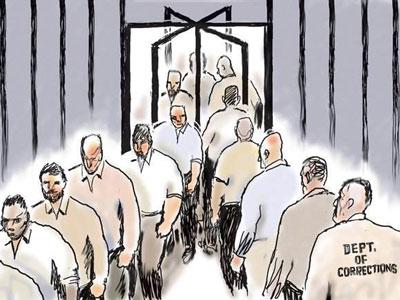
(cartoon by J.D. Crowe/Press Register) SC 1 ST Berkeley News – UC Berkeley

King Solomon famously stated in Ecclesiastes 1:9 that “there was nothing new under the sun.”  Three thousand years ago man’s folly was already tending to repeat itself.  Patterns of behavior and the propensity to do evil were well documented back then.  Man’s inhumanity to man is the same old sad tale repeated over and over, unfortunately it is not limited to those who choose to do evil.  While researching for the writing of this blog I have read a number of prison memoirs and research papers and it is apparent that the observations that I make about prison and prison life cross both space and time.  From a World War II German Military prison to 1970s Great Britain; from California to Texas to Michigan and prisons in between; from the 1930s until today, written by theologians and PhDs to the uneducated, unifying themes regarding prison life and treatment of prisoners demonstrate that my observations of life inside the MDOC in many ways are both honest and disturbing.

Ones does not expect in the twenty-first century to encounter ideas and practices discredited long ago to be the standard operating conditions.  That America and all it claims to stand for has been set aside in one area of governing a civil society is both disturbing and alarming.  As I was writing this essay there were images of yet another police shooting of an unarmed black man on the news and an advertisement for a new TV drama about a group of criminal investigators whose job was to ensure that the innocent were not wrongly convicted.  The abuses of the criminal justice system are finally making headway against the “tough on crime” agenda of the politicians, police, and corrections agencies in this country.  Grass roots organizations are cropping up in every state of the union calling for reform.  Even the president, whether you agree with his polices in general or not, has gone against the conventional wisdom of his political party and seeks to introduce some reforms into the federal corrections system.

A recent news article put a spotlight on the fact that we are not talking simply about convicted felons, but that a much larger number of people accused of misdemeanors that don’t even carry jail/prison time are serving time simply because they can’t afford bail.  According to a 2016 report by the Department of Justice over 11 million people pass through 3000 jails in the US every year.  People are even dying in jail from lack of urgent medical care and proper oversight in over-crowded and antiquated facilities.  During the recent arctic cold blast, a jail in Brooklyn, New York was plunged into darkness and freezing cold for several days when the electric and heating service to a portion of the facility was interrupted by an electrical fire.  The inmates were apparently tapping S.O.S on the windows of their cells calling for help.  The warden of the facility denied the severity of the problem even while inmates were calling the defenders office and pleading for help.  My own experience in jail was a cell so cold that frost formed on the inside of the window, no extra blankets and only a thin cotton jumpsuit for warmth in a room so cold you could see your breath.  So, I can empathize with the desperation of the situation and believe that it is true contrary to the official statements of the warden.

George Bernard Shaw once said “Some men see things as they are and ask why.  Others dream things that never were and ask why not.”   I find myself falling into the first category.  Don’t get me wrong, we need dreamers but after living through the nightmare of prison I don’t sleep very well at night.  Change must happen and the longer it is put off the higher the cost both financially and in human terms.  That is the point of prison reform.  Not just the recognition that there is a problem but there needs to be action taken to address the issue.  Not studies to determine the severity of the problem or pilot programs to explore alternatives.  The experts have already done these.  It is up to the people to demand that those in leadership of our government stop denying or minimizing the problem but take the advice of those whose occupation and preoccupation is focused on the problem.  It is like global warming.  People look at the cold winter and ask where is this so-called “global warming?”  The problem is that global warming is a poor term often used out of context when the issue really is “human activity induced climate change.”  A short catchphrase doesn’t properly encapsulate the issue.  The use of the phrase “prison reform” has the same sort of problem.  People look at crimes reported on our 24/7 news cycle and think that our society is less safe than it once was.  FBI crime statistics have shown that crime rates for all major categories have decreased steadily since the 1980s.  They then give credence and credit to the stricter laws and harsher penalties for causing this trend.  Research has shown that other factors have had a greater effect on crime reduction and that the stricter laws and harsher penalties have actually hindered what would have been even larger reductions to crime rates.

Prison reform is about addressing the underlying causes of crime and taking a reasonable approach to punishment.  Broken homes, single parent families, education, addiction, and poverty are at the core of prison reform.  Shutting off the street to prison pipeline that is responsible for the severe overcrowding, and all the problems that come along with that is what we are talking about.  The racial disparities in incarceration rates among the minorities from urban environments.  The aging infrastructure of prisons and jails that our society can’t afford to maintain let alone build more.  The erosion of respect for others different from ourselves that allows us to justify treating them not just poorly but as subhuman.   As somehow not deserving of basic human rights even thought they are enshrined in the Constitution.  This is was prison reform is about.

To know about a crime either before or after it occurs and failing to do anything with that knowledge is to be considered an accessory and makes one guilty by association.  So, wouldn’t it be true then that to ignore the advice of experts regarding the urgent need for prison reform could rise to the level of criminal negligence at the very least, or a gross misconduct in office and breach of trust by politicians who cling to alternate facts or decry reporting on prison problems as fake news?  For once I would like to see Solomon proved wrong that there is something new under the sun.  I pray that the logjam will be broken, and long overdue reforms will be instituted to our criminal justice system.  This will only happen when the people hold their representatives accountable and demand better treatment of our brothers and sisters, our sons and daughters, our friends, neighbors and aliens.

House Arrest

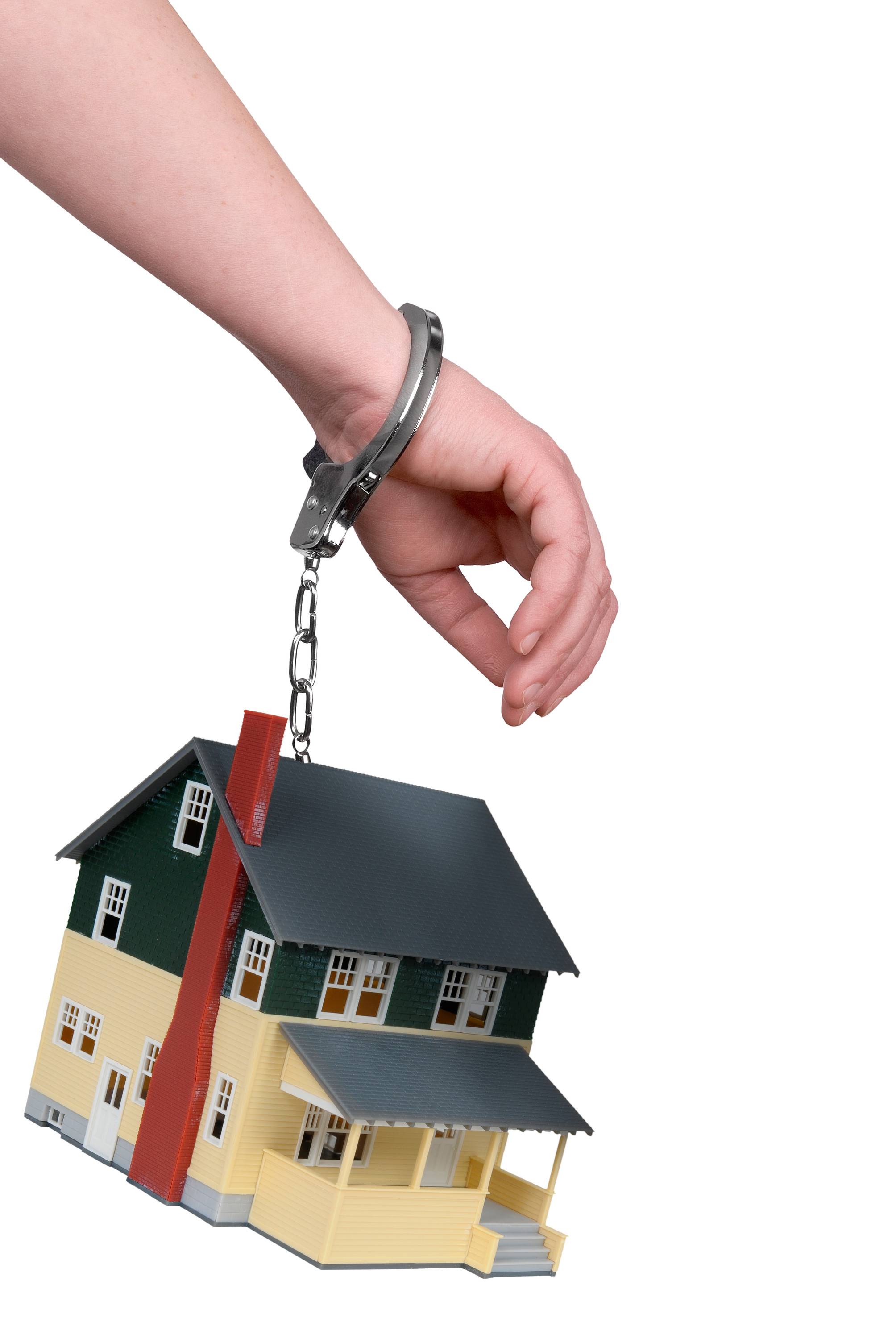
house arrest

Being on parole is not freedom.  Too many guys coming out of prison think that having received a parole that they have earned their freedom, that their sentence is complete.  But that is not the case.  While on parole you are still under the control of the MDOC.  Parole is prison without the razor wire.  You have a parole agent who keeps track of you, meeting regularly to monitor your compliance with the stipulations of your parole specified by the Parole Board.  They have absolute control over whether you stay out or return to prison for any parole violations.  On parole you must successfully complete some specified term living in the community, sometimes with severe limits on where you can go and what you can do.  This varies from person to person and is based on the crime committed and other factors.

A typical parole can last up to 24 months.  The stipulations of the parole generally require that the parolee maintain regular employment.  You must also pay a supervision fee and any outstanding debts incurred during incarceration in addition to any unpaid court costs, fines and restitution associated with the felony conviction.  Frequently programming such as AA or NA may be required for those with a history of alcohol or drug abuse.  Additionally, some receive their paroles with program requirements waved while they were in prison because they were classified as “low risk” to re-offend during a psychiatric examination but must now take programming from an approved vendor as a condition of parole.  Failure to successfully complete programming will result in a revocation of parole.

After the conditions of sever deprivation, loss of personal control and decision making in prison some are so focused on redressing the privations that they quickly violate the terms of their parole.  For some it is satisfying the urge to indulge in their addiction for alcohol or drugs.  For others it is about hustling to get the money together to resume their lifestyle.  However most of these hustles are illegal.  Once a person has been in prison the odds of them returning are greater that they will return to prison than the odds for a person who has never been going for the first time.

tether-e1552099483450.png

To address this problem the MDOC has tightened the conditions of parole in some instances so that it is in actuality “house arrest.”  All excursions from the residence must be approved in advance.  Many are paroled on GPS tether to prevent cheating.  At this level of control, the parolee is practically helpless and becomes reliant on family and friends to take care of many of the tasks that they would like to do for themselves, thus continuing to experience the conditions they experienced in prison.  With this level of control those without a support network are at a severe disadvantage.

Housing itself is a problem.  Transitional housing is in sort supply and in many communities is non-existent.  Those coming out of prison may only have a matter of weeks to find employment and permanent housing before being forced to leave the Parole halfway house.  Then there is the problem of finding affordable housing for those with a felony conviction, especially sex offenders.  Many apartment complexes and landlords will not rent to felons.  In some places such as Oakland Co there are a few rental companies that will but not in every community and not in sufficient numbers to address the current level of demand.

Employment is not as much of a problem as it used to be given the present economic environment.  However more needs to be done to train felons for jobs that pay a living wage.  Many are forced to take minimum wage jobs without benefits or career potential.  The MDOC has made changes to its Employment Readiness initiative over the last few years by revamping their vocational programing but much more needs to be done to ensure that people coming out of prison are employable.  Movements to “Ban the Box” have gained traction in the last few years to at least give felons an opportunity to interview for a job before they are eliminated from consideration for a position in some places like the city of Detroit.

While commendable movements like this are just the tip of the iceberg.  So many are coming out unprepared to hold steady employment due a lack of a basic education or even basic literacy skills.  As a tutor I saw it every day first hand, the lack of interest or desire to join mainstream society.  The smug satisfaction on many of my students faces knowing that they could simply wait out any requirement to earn a GED let alone make satisfactory progress toward earning one and still get a parole.  No thought toward a living a life as a productive member of society.

For many who have served long prison sentences returning to society has significant challenges.  Technology has changed everything: smart phones, the internet, shopping, the workplace, even cars.  Nothing looks familiar to someone who last saw the free world in the 1980s or 1990s.  Life is far more complex than it was, especially from the perspective of someone who has lived a very simple and highly controlled life.  The ability to learn and adopt technology can have a very steep learning curve for someone who isn’t familiar with it.  Then to make it more complicated parole stipulations may prevent the parolee from accessing technology.  Sex offenders are prohibited from having smart phones or computers with internet access.  Some convicted of financial crimes are prevented from having bank accounts.  A convicted murderer on parole has fewer restrictions than many other felonies.

One thing that is certain is that no one really wants to go back to prison but for some it is easier than reintegrating back into society.  What is needed are advocates and mentors; either family, friends or strangers willing to help parolees make the transition.  There are faith-based organizations, church and para-church ministries and other not-for-profit organizations out there that have programs to help.  The problem is that there are not enough organizations, people and resources available in all the places that they are needed.  Secondly, the information available to prisoners preparing for parole is often out of date and incomplete.  Inmates aren’t able to communicate with these organizations easily or effectively to make the necessary arrangements.  Since many don’t have someone on the outside to make arrangements for housing or employment in advance when they are paroled it becomes an immediate crisis.  The last thing a parolee needs is more stress.

Many inmates when preparing for their parole hearing make a Parole Plan in which they lay out what support is waiting for them upon release.  Unfortunately for many it is ‘pie in the sky.’  What looks good on paper in order to impress the parole board may not be worth the paper it is written on.  For example, the employment opportunity that I listed in my Parole Plan was voided by one of the stipulations of my parole.  For some, they are forced to parole back to the county in which they were convicted rather than being allowed to choose a location with more access to resources because they don’t have family there.

Something else to note about parole is that the conditions stipulated by the parole board remain in effect for the duration of the parole.  There is no easing of restrictions based on the completion of certain milestones such as completion of required programing or finding gainful employment.  Parole agents may in some cases have fewer contacts with the parolee but can at anytime show up unannounced to check on you.  For the most part parole is stick and no carrot, there is no reward for cooperation and good behavior.  No graduated easing of restrictions to allow for a true transition back into society.  In some cases, parole officers will make it even more difficult for their parolees by denying requests to approve housing, employment or other activities for reasons that seem mercurial at best.  They may also actively seek to find reasons to revoke a parole or to at least scare the parole with threats of incarceration-the scared straight approach.

While there have been changes to parole in recent years to reduce the number of parole violators being sent back to prison, still more needs to be done.  The MDOC needs to do a better job of preparing the 95% of their inmates that will return to society.  There should be more Reentry programming that focuses on linking those soon to be paroled with agencies and organizations that will be able to provide access to services, programs, resources in the area where they will be paroling.  Access to employment services including in-prison hiring interviews, pre-enrollment for Social Security, Veterans benefits, and Medicaid would go a long way to preparing parolees for success.  Parole should be a transition, not more punishment.  A way to help put the parolee on the right track rather than a revolving door back to prison.


A report published by the PEW Charitable Trust entitled “Policy Reforms Can Strengthen Community Supervision – A Framework to Improve Probation and Parole” was published on April 23, 2020. This report documents many of the issues that I identified in my article and some of the new ideas being incorporated by some agencies to address the problems that lead to re-incarceration. A PDF copy of the report is attached if you would like to learn more about this issue.

Two Sides of a Coin

Two Sides of A coin
photo by Jamie McCaffrey

Think of a coin.  The image that is stamped on the head and tail is just a thin facade on the surface.  Forever bound together yet separated by the vast bulk of the material. Likewise, victims of crime and those accused of committing crime have one thing in common, both take issue with the criminal justice system.

Victims are made to relive their traumatic experience over and over.  They may be made to feel like they are somehow at fault for having something bad happened to them.  From their perspective the system is slow to move, and all too often denies them the justice they seek.

The accused feel that there is a rush to judgment, that facts don’t matter, and their side of the story is irrelevant.  They believe they are being railroaded into taking a plea agreement to avoid extremely long sentences because of the fear that even without physical evidence or multiple eye witnesses that they will be convicted.  Guilty until proven innocent.

In our modern democracy with guaranteed rights one wonders how either perspective could possibly be true, let alone both, yet they are.  It is the system that is the problem. Crime has been part of our society from the dawn of time but the way we deal with it is prehistoric.  Modern society has applied science to evidence collection; psychology to profile criminal behavior; trained investigators evaluate information and identify suspects; and the media spreads the word and enlists the public’s assistance to track down the perpetrator.  Then the lawyers and courts get involved and everything goes sideways.  Truth doesn’t matter only procedures and precedence.  Under the law, black and white have taken on new definitions the only have meaning in that context.

Humans are the ones who makes decisions about the charges; humans weigh the evidence; humans reach a verdict; humans pass judgment; and humans carry out the sentence.  It is the human factor that thwarts, short circuits, circumvents, or stymies the rules and regulations set in place to safeguard the process.

Evidence is planted, missed, or ignored.  Witnesses are coerced, intimidated, or discredited.  Police brutality, corruption, racial profiling, entrapment, illegal interrogation, false confessions.   Political agendas, prosecutorial misconduct, ineffective assistance of counsel.  Fallibility of witness memory.  Victim statements manufactured and manipulated by leading questions.  The wrong person picked out of a lineup. Innocent people are convicted in sent to prison.  Guilty people get off on technicalities. The real perpetrators get away with murder even.

Humans with their prerogatives and passions; their intelligence and ignorance; their biases and beliefs; their motivations and methodologies; their dedication and dispositions are the cause when the prosecutor brings charges or decides to close the case; the jury gets the verdict right or  gets the verdict wrong; when a person is convicted by a judge or when another judge overturns a conviction; when the parole board grants a parole or when they deny it.

You see it is all connected and yet disconnected at the same time.  Both functional and dysfunctional; both transparent and opaque; both fair and biased.  The one thing it is not is perfect.  It may be the best we have, but we need to see it for the flawed system that it is and take that into account when preparing to cast stones.  In John 8:7 Jesus said, “Let he that is without sin cast the first stone.”  Studies have shown that in the state of Texas more than 5% of those put to death for murder were later found to be innocent.

So, what are the odds that someone convicted of a lesser crime might be innocent? Maybe we should save our vitriol for someone who truly deserves it rather than applying a liberal dose to every case.  In a previous century tar and feathering was carried out by a mob of angry citizens. Today it is a virtual tar and feathering that happens in the media and on the Internet.  As a society we have become quick to judge and condemn others while demanding grace and mercy for ourselves.

The problem is that we can’t judge ourselves, we are at the mercy of the court.  Maybe, just maybe if we took a little more time and care in our decision making; looking before we leap; thinking before we act; putting ourselves in the other persons shoes; and “doing unto others as we would have them do unto us,” occasionally we wouldn’t find ourselves in such a messed-up situation. You can’t undo harm and there are no take backs in punishment.  Saying “I’m sorry” or “My bad” can’t put things right. As the nursery rhyme says, “All the Kings horses and all the Kings men couldn’t put Humpty Dumpty back together again.” And this is true whether he was pushed, jumped, or fell.  Regardless of whether you are the victim, or the accused just remember that we’re all in this together for better or worse.  Blaming others, excusing ourselves, or sticking your head in the sand can’t fix the problems in the criminal justice system.  Be part of the solution rather than the problem.  Hold the system accountable.  Don’t let a few bad apples spoil the whole barrel.  Demand better treatment for both victims and the accused, or someday when you find yourself in the system it will be too late.


Brush Strokes

vincent_van_gogh_prisoners_walking_the_round
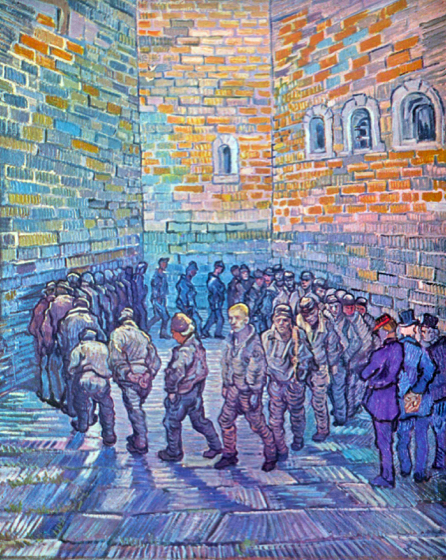
Vincent Van Gogh’s “Prisoners Walking The Round” also called “Prisoners Exercising” painted in 1890.

It is really easy to paint everyone in prison as being the same.  Hardened criminals who are as monochromatic as the walls surrounding them with black hearts and dark thoughts that only know destruction.  But that like most popular perceptions about prison is not just an over-simplification, it is wrong.   Prison is a microcosm of society with people from all walks of life, many of whom I’ve tried to describe in this blog.  There are colorful, creative people who have done some terrible things and are paying the price.  However, rather than letting darkness consume them they are taking the proverbial lemon and making lemonade.  They do this pouring out their creative energy in painting or writing.  The University of Michigan Prison Creative Arts Project has for more than two decades hosted an exhibit of art by Michigan prisoners and for ten years have published an annual volume of creative writing.  The annual art exhibit and reading are held in Ann Arbor and Detroit and are open to the general public.

Works of art and writing are submitted to a selection committee at the U of M Humanities School.  Those that are accepted cover a wide range of subject matter from real life to flights of fancy and from poetry to non-fiction.  Many of the works of art are available for sale with the proceeds going to the artist.  The creative writing is published in book form that is available for sale by U of M.  At the reading, mainly family and friends are invited to read on behalf of the incarcerated author.  I was one of the rare authors who had paroled between the submittal and the reading and could present my own poem “Ode to Ramen.”  A humorous but truthful analysis of the importance of Ramen Noodles to prisoners.

It is fascinating to see how others view their life behind bars in color or black and white.  The diversity of perspectives and experience is showcased nicely through this program by U of M.  So much of life behind bars is a mysterious secret that very few get a glimpse of first hand.  There should be more programs like this that provide an outlet for inmates than can be witnessed by the public.

Here is the poem that I wrote regarding one aspect of prison life that was published in “Concertina Maze” The Michigan Review of Prisoner Creative Writing, Vol. 9. 2016


Ode to Ramen

Like many prison inmates I own my very survival to your savory, salty goodness.  The MRE of the penitentiary.  You are always there when the chow hall lets me down to satisfy my hungry longing for sustenance.

Your noodley presence is the only constant in a place where no one knows what tomorrow may bring.  More enduring than a Bunkie, waiting patiently in my locker to be called upon in a time of need.

Honeybuns and bagels may come and go, but your pasta lasts forever.  You never grow old or mold, having a half-life rather than a shelf life.  Meant to be crushed yet you are indestructible.  Immortality incarnate.

Haute cuisine you may not be, yet comfort food you are.  A staple ingredient in every dish, the most versatile of wonder foods.  You inspire me to new heights of cookery as master chef of the microwave.

Flavor is your claim to fame.  Packets of hot spicy intensity or meaty mellowness that travel far and wide beyond the expectations of ordinary condiments, to lift the spirits of diners in desperate need of taste enhancement.

Your value transcends your caloric content to become the currency of the land.  Exchanging hands to pay our debts, you wander far before you spend your last to ensure that I will make it ‘till the dawn.

Hail to the noodle!

Care Less

The old adage is that “people don’t care how much you know until they know how much you care” is never truer than in prison.  I have encountered very few employees of the MDOC that I could honestly say cared about anything more than their jobs.  Not doing their jobs well, just keeping them.  Actions speak louder than words and the way some of the COs yell that’s saying something.

An example of a CO that is not treating inmates with respect is when they get on the PA and call for you by saying, “Hay get up here!”  They use profanity and humiliation to publicly denigrate inmates.  Using strong arm tactics, such as tearing up a person’s property when doing a shake down and taking property such as TVs as contraband in retaliation for a perceived slight.

Food service workers that would rather throw food away then feed a little extra to the inmates that work in the chow hall.  Supervisors that refuse to write work reports with a perfect score, on the principle that we’re convicts.  Medical staff that put company profits ahead of providing life-saving health care service. Vendors that make huge profits off of those who can least afford it.

From the inmates’ perspective it is really easy to be cynical about attitudes when those who have been entrusted with the care and feeding of inmates treat them worse than dogs at the pound.  People who are always looking for an angle are jaded about the motives of others.  Respect and the lack there of is a central premise of the prison culture.  Inmates can spot a fake a mile away. Sincerity, truth, and information are of great value and in short supply.  The few MDOC staff members that have these elusive qualities are respected.  For the rest animosity, antagonism, a never-ending game of cat and mouse, with scores to settle and vendettas that result in guys going to the hole and COs getting hurt.

What is needed most by people who have received so little of it in their lives is having someone care about them as a person.  To see them as more than a number and a pay check.  To see them succeed, to go home and never come back.  Once that happens, then maybe inmates will listen a little more carefully to what they are being taught in school and programming.  Maybe they’ll be more cooperative with the system instead of being hell bent on destroying it from the inside.

I am not naive to think it will cure all the problems and that the hostility of people being held against their will, will go away. But would it really hurt those who work for the MDOC to start treating inmates as people?  To do their jobs conscientiously with the goal of treating inmates as customers or patients instead of merchandise that is simply warehoused and shipped from place to place.  We may be damaged goods, but we need help to put us back together, not to be thrown on the junk pile and discarded.

As human beings we are composed of bodies, souls, and spirits that require a lot of nurturing.  The resources required to this are not cheap, but the fact is that prison as it currently exists causes more harm than good.  It is failing to do the one job it is entrusted to do- that is to protect society by rehabilitating those who have been deemed unfit for a civil society.  It is unfortunate that people end up in prison.  An ounce of prevention is worth more and certainly costs less than a pound of cure.

But until the legislature and the general public are willing to pay the true cost of meeting the goal of reducing crime by addressing the root causes they are stuck instead paying for the cure.  Don’t let it be money just flushed down the toilet, but rather well spent by corrections professionals who act the part and take their jobs seriously and care about making a difference.

A Bird In The Hand

Deseases of Cannaries Looking Outwards

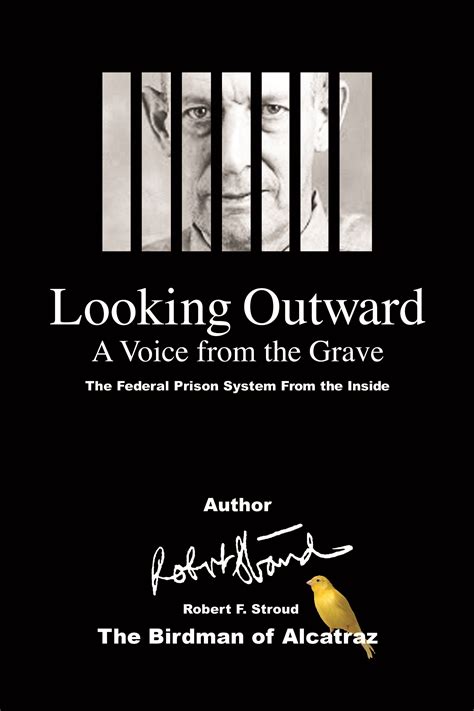
 Books by Robert Stroud are still in print today.

The Birdman of Alcatraz, Robert Stroud raised and studied birds while he was incarcerated at Leavenworth.  A convicted murderer, he published Diseases of Canaries in 1933, which was smuggled out of prison and sold.  He even ran a successful business from inside prison.  While not allowed to keep birds at Alcatraz he instead wrote a history of the penal system.  He was incarcerated for the last 54 years of his life and spent 42 of those years in solitary confinement.  A dangerous, violent man who eventually became one of the best-known examples of self-improvement and rehabilitation in the federal prison system.

While no one is raising birds in their cells for sale in the MDOC, I’ve seen a few that had the birds feeding out of their hands in the big yard.  Prisons are generally not located in heavily populated areas and are surrounded by farms, fields and forests.  The result is that there is a fair amount of wild life present.  Deer, wild turkeys, muskrats, foxes, opossum, raccoon, skunk, chipmunks, and dozens of species of birds.  It is the small animals and birds that can come and go as they please through the perimeter, obviously the larger critters will only be visible outside of the fence, but a deer did get inside the fence one time.

I’ve watched guys hold out their hand and feed birds with crumbs of bread taken from the chow hall.  Standing still with their arm outstretched near a bird perched on a fence or bench.  The bird will hop onto the hand and feed for seconds at a time.  Red Winged Black Birds, Chickadees, and other song birds that to some extent have become accustomed to humans can be coaxed from feeding nearby to feeding out of hand.  No sudden movements, no noise, just patience.

Birds perch on fences, however in prison that can be dangerous since there is usually razor wire involved. I’ve seen countless one-legged birds hopping about. That’s a high price to pay for hanging out in prison just for the sake of a free meal.

Chipmunks are another species that benefits from inmate’s willingness to feed the animals, which is of course against the rules.  Chipmunks hide in holes and are nervous by nature but can be coaxed out with a few peanuts.  I’ve never seen one feed from a hand, but there was a game to see how close you could get to one.

Prison being prison, not every story is cute and cuddly. While I was at my first level I facility, several inmates got into trouble for catching, killing and trying to cook a duckling in the microwave.

Large open grassy areas tend to attract geese and ducks, especially if there are even small temporary bodies of standing water nearby.  The big yard may look like a tempting location to raise a family.  Inmates will step aside and allow the mother duck to lead her ducklings from one location to another across the yard.  Ducklings grow fat from all the bread crumbs tossed their way.  Free from predators 1ike foxes, hawks become the greatest threat.  The ducks are closely watched and any loss to the family group is noted.  Some guys find great joy in in watching the ducklings mature and are saddened when they fly away at the end of the summer.  I think a part of these inmates who have invested their time and emotions into these ducklings flies away with them when they leave.  You can see it in their eyes as they watch the ducks experience freedom that the inmates can only dream about.

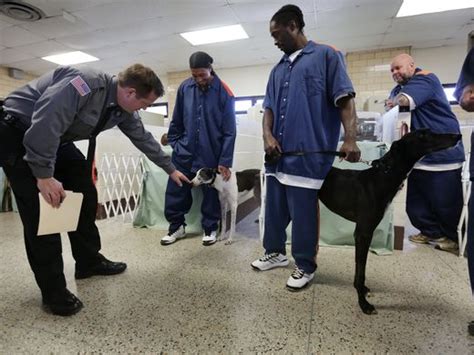
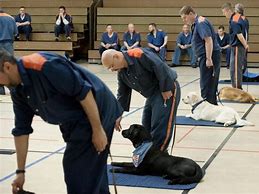
Unlike Hogan’s Heroes or Shawshank Redemption the MDOC doesn’t use guard dogs.  I’ve heard of dogs being brought in from the state police to search for drugs but that is about it. There are however several facilities that have begun raising puppies for the Leader Dogs for the Blind program. Writeups in the newspapers speak highly of these programs and the success rate that these dog programs have. They were going to set one up at my last level I facility but the new warden changed his mind.  The inmates had already been selected and moved into a housing unit and the kennels had been built in the housing unit, but no dogs. There was one dog that came to live in the prison however.  An officer had passed away after an extended illness and her dog was brought in in anticipation of the dog program.  While not actually part of the program the dog was to be looked after and cared for by the inmates.  It became the most popular individual on the compound. I would see it sometimes being taken for walks around the track during yard time.  In the winter someone even made it a winter coat by cutting up a prisoner coat to make one with little sleeves for the front legs and an orange stripe across the shoulders just like the rest of the prisoners had.  Doted on and spoiled rotten with lavish attention the dog was the center of attention everywhere it went.  It became a sort of therapy dog for everyone at that prison. No one would dare to abuse or in any way hurt the dog or they would suffer the wrath of several hundred dog lovers.

Mich Dog
Photo: Romain Blanquart/Detroit Free Press

They say that dogs are man’s best friend and that they don’t judge us but give unconditional affection.  For many in prison that type of attention is exactly what prisoners need.  In a place where there is so much negativity to find something as relentlessly positive as a wagging tail.  To have something to care for and about when it feels like you’re forgotten and alone.  To have a reason to do something for someone besides yourself.  To be responsible for the well-being of another creature when your own is under duress.  If one dog could do that what would 20 dogs do? The fact is that dogs make a positive contribution to the facilities that have them.

Mich Dog Program
Photo: J. Scott Park / AP

There is a tremendous demand for these dogs and it would seem that while having the dogs would make for more work the dividends paid by the positive mood they bring that every warden should be clamoring to get a program at their facility.  Unfortunately, that is not the case and you need to ask why.  Just like Robert Stroud who benefited from a warden who saw the value in his bird research and gave him a second cell to house all his birds only to lose it all when a new warden came and didn’t see the value and thought that he only deserved punishment and harsh treatment.  It all goes back to the question: Is prison only about punishment or should rehabilitation be the focus?

Education Connection

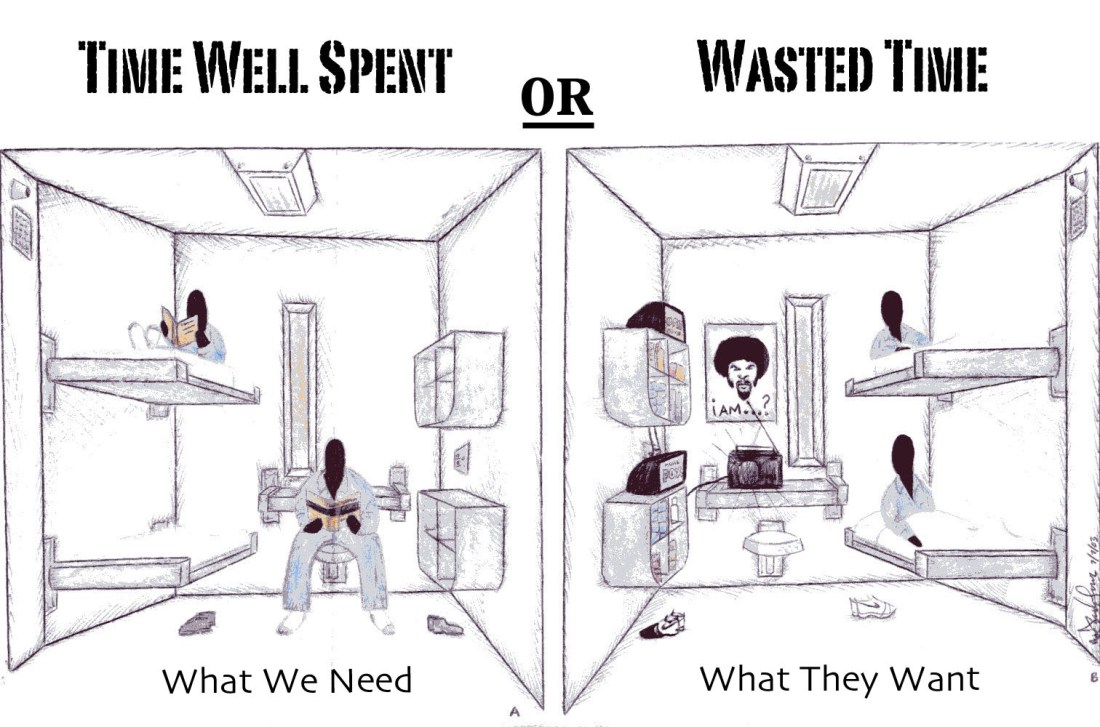
thebroken system

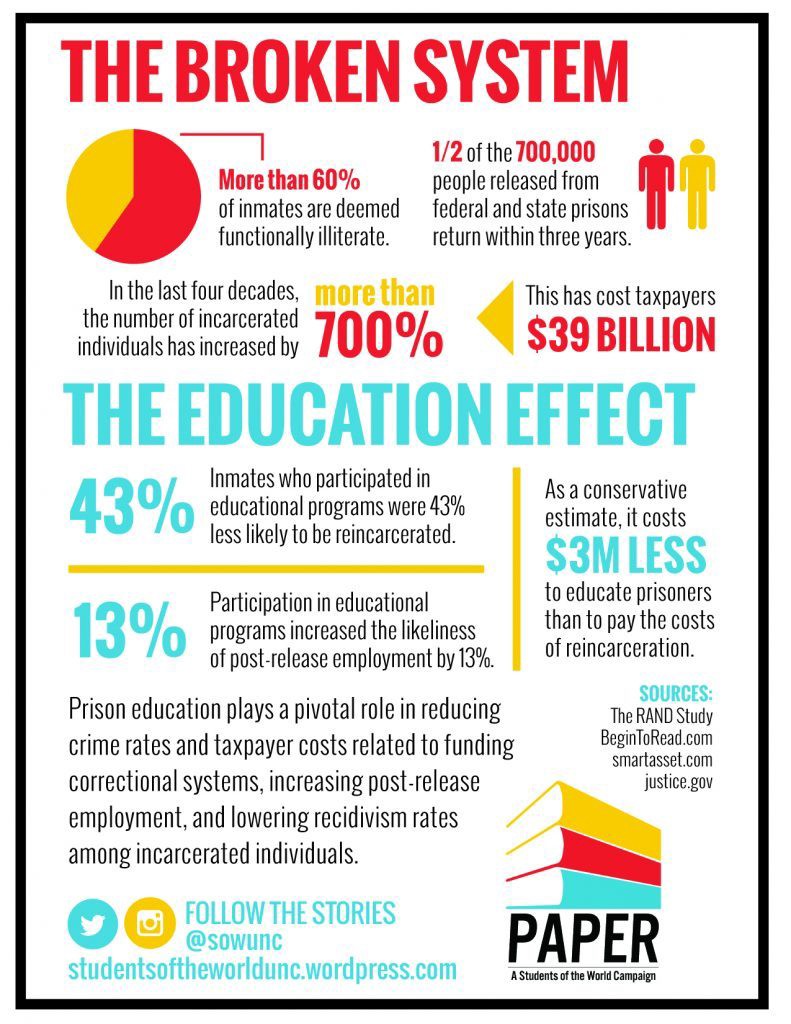
One of the strongest correlations in predicting whether or not a person will end up in prison is the lack of a high school education.  This fact has been known for many years and has been codified into a law that requires inmates without a high school diploma or a GED to attend GED classes.

Even before there was a GED program in the MDOC there were primary and secondary education programs with Jackson Public Schools at the old walled prison in Jackson that allowed inmates to earn a high school diploma.  In fact, until the Pell Grant for prisoners was eliminated under President Bill Clinton there were college classes taught by institutions such as Spring Arbor College, where inmates could earn a B.A. degree.

I worked as a tutor in the GED program for 5 years and had the privilege of working a long side two old timers who had earned their B.A. degrees from Spring Arbor College. They were bright, articulate, knowledgeable, and earnest in communicating their passion for helping men earn their GED.

In the MDOC the inmates who work as tutors are the key to the program.  The reason is both simple and shocking.  First is that peer to peer learning has been shown to be an effective adult learning tool.  Inmates teaching inmates removes the power dynamic from the situation.  Also, there is the ability to establish relationships that would be inappropriate for correction’s staff.

During my time as a tutor I worked directly for three different teachers at two different facilities.  I knew 10 teachers      well enough by interaction with them and their tutors to know about their classroom environments to say that what I am about to share is not atypical.

The first teacher I worked for knew my former employer from a previous career in medical equipment sales.  All teachers in the MDOC GED program are certified educators and all that I am acquainted with had worked in public schools.  My teacher, who I will not name, was no exception.  He worked in primary education for Detroit Public Schools.  In fact, he had been fired by them.  The old saying is “Those who can’t do, teach.”  In prison it goes a step further, “Those who can’t teach, teach in prison.”  Teachers like many others who work in prison are there because they couldn’t make it in the free world.  Like COs that couldn’t make it as police officers, there are those “teaching” in prison who couldn’t teach.  This isn’t the case for all teachers, just like there are good COs, it is just that there are more than a few bad apples.

The second teacher I worked for was the Felix Unger to my first teacher’s Oscar Madison. They were in appearance the “Odd Couple.”  One was nattily dressed and a stickler for organization, the other unkept and easy going.  But being a snappy dresser didn’t make up for his inability to manage his class.  I got along great with him until I made the mistake of correcting him in front of the class, when he incorrectly described how to solve a math problem.  I went from getting a perfect work evaluation to ‘barely meets expectations.’  I had organized his filling system, written standard operating procedures to ensure that all future tutors would be able to maintain the system.  The tutors took attendance, graded work, assigned student testing, maintained educational files, and worked one-on-one with students, while the teacher chatted with students and wrote more tickets than any other teacher.  He did not have the respect of his students and did not have control of the class room.  The result is that the class room did not provide a learning environment for those who wanted to learn.

My second teacher was the complete opposite.  Wild hair and sloppily dressed, but he had a kind and gentle demeanor that commanded the respect of his students. His class room was a quiet, stress-free learning environment, where men succeeded in earning their GED.  It was in this class that I earned my greatest compliment.  I was on a visit and one of my students pointed me out to his family and said, “That man is helping me get my GED.”  And he did.  Just as the COs set the tone for what goes on in the housing units, the teachers set the tone for the class room and it makes all the difference when it comes to educational success.

The third teacher I worked for was not like either of my previous bosses.  He worked for 20 years as a teacher in the MDOC, he had seen it all.  He held court in his class room.  He told stories in a folksy style.  Nothing got under his skin except students that squandered the opportunities given to them.  He wanted the best for his students and did more to help them succeed.  He also saw to the needs of his tutors who he didn’t treat as inmates so much as co-workers.  The respect was mutual.

Education is supposed to be a priority for the MDOC, yet year after year budget cuts to education have reduced the number of teachers in the class room and the resources available.  When the new GED standard came out in 2014 the MDOC was not prepared to change over until 2016.  Even then they still did not have the text books available in all subject matters in sufficient quantities for all students in all classes.  They had bought new computers that were supposed to run new educational software for the students to prepare them for the computerized GED exams. Unfortunately, the computers sat unused for two years and when the new programs were implemented the servers and other hardware purchased were inadequate.

Language arts Math Science Social Studies

Examples of GED textbooks used by the MDOC.

The old GED standard was said to be about equivalent to an eight-grade education. The new GED based on the new high school graduation requirements significantly raised the bar.  Many students who had passed some but not all subject areas were given several opportunities to complete their GED, but when push came to shove the lack of staff to administer the additional tests resulted in some students losing out and having to start over with a significantly elevated bar. This was a real blow to moral and I watched a number of students give up and throw in the towel, resigning themselves to the reality that the new GED standard was unattainable. The new GED was designed to be high school equivalent, while prisoners are anything but.

The old models of self-teaching by students with assistance from the teachers and tutors didn’t work that well under the old GED.  With the significantly higher educational requirements the MDOC needs to rethink how it operates its classes. Self-learning only really occurs after fifth grade because students up to that point lack the necessary vocabulary and learning skills to effectively study on their own. When all you were asking was about three grades of learning many could get by with their life skills to bridge the gap and earn their GED.  Under the new system it is asking too much for inmates, many of whom are functionally illiterate to self-study.  What is needed is a structured class room environment where teachers actually teach and students are expected to learn.

Participation in the GED program was a parole board requirement, but because there weren’t enough teachers or class room space there were waiting lists based on ERD at each facility.  The result was that inmates serving short sentences would go to the head of the list, but if they didn’t have an interest in learning thought that they could wait out their time.  The result was that those who actually wanted to earn their GED and would write kite after kite asking to get into school would have to wait.  And due to their longer sentences were further down the waiting list were prohibited from working in the interim.

In addition to the GED program the MDOC also offers vocational training programs intended to provide marketable job skills to aid inmates in gaining employment upon release. Programs like Carpentry, Electrical & Plumbing, Masonry & Concrete, Horticulture, and Food Service were popular.  These programs were available to those who had a vocational training requirement from the parole board because they had no prior history of employment before coming to prison.  These programs required a GED or high school diploma as a prerequisite.

I knew a guy who was hired to be a tutor in the Masonry & Concrete program as they were setting up the program.  He was a masonry contractor in the free world and knowledgeable in all aspects of the trade.  He was not impressed with the training curriculum and I would trust his judgement on this.  What he also told me made me sick and it should make you angry.  The facility where we were located was very limited in the available class room space.  In fact, the GED class that I was a tutor for was relocated to a much smaller classroom that had previously been used for other programs such as AA, in order to give the larger classroom to the Plumbing & Electrical class.  The room across the hall from my smaller class room was the technology room where the GED testing was held.  They were displaced to make room for the Masonry class. Before the masonry class could begin a secure tool crib needed to be built along one wall of the room to store the tools to utilized by the class.  When they brought the brand-new tools that had been ordered for the class to put them in the tool crib it was apparent that they would not all fit.  With no other storage options available the teacher had his tutors throw thousands of dollars of brand new tools in the trash compactor rather than deal with the situation.  After the class started one day I watched as they tracked cement dust all over the hallways in the school building. the utility closet was half way down the hall and they made a huge mess making mortar for a brick laying project.

The level of incompetence displayed is hard to grasp but it really happened.  My teacher saw it coming and tried to warn them but like every other good idea proposed in the MDOC it was ignored.  They tried to set up this program quickly and on the cheap and then forced it into a facility that could not accommodate it.

I understand that in recent years new programs have been introduced such as Asbestos Abatement for which I have no first-hand knowledge, just what I’ve seen on the news or read in the paper.  It makes a great sound bite but if it is anything like the vocational education classes I’ve seen first-hand then it will be worse than useless and potentially dangerous to the students.

Many of the inmates participating in these programs selected them based on availability at the facility they were housed at, not on what they saw as a potential career that they would actually be interested in.  They are just checking off a parole board requirement to increase their chances of parole.  Given how these programs are run it is a pretty obvious and safe to say that the inmates aren’t the only ones going through the notions when it comes to educational programs.

Disconnected

I was surprised by how many guys I met in prison paid no attention to what was going on out in the world aside from popular culture.  News programming was never on the in the day room.  The only current events discussed were the rumors regarding issues pertaining to the MDOC.  The only politicians that were talked about was the sitting governor and attorney general, usually in connection to a 4-1etter expletive.  In the classroom I encouraged guys to read newspapers and would cut out articles on various topics.  About the only ones I got them to read were the articles about crime or pop culture.  The reality is that the typical inmate was already disconnected from the greater society and only focused on their subculture.

When you are in prison you don’t get much say into who your cell, cube or bunk mates are.  If you don’t get along your option is to lock up.  In an ideal world people can work through the vast majority of their differences, however prison is not ideal.  The divide between an old white guy who never had a run in with the law before coming to prison and a young black man who started on a life of crime at age 12 when he caught his first juvenile case is vast.

There is no love lost between these two, the only thing they have in common is that they were convicted in the state of Michigan.  More than likely they look down on the other and their crime with contempt.  Without knowledge, exposure to others different from ourselves, and acceptance of the differences there will be continued strife.  Not a good thing is a place where might makes right, and violence is the first and, in some cases, the only alternative considered.

Inmates are a captive audience.  So what better place to provide diversity and civics training?  Education is the proven solution to bridging the gap that divided us.  More over by proactively front loading the training the inmates could be held responsible for their behavior in relation to the material.  Outbursts and incidents could be used as teachable moments and remedial training to reinforce the importance of applying the material.  The parole board would have more information to evaluate in regards to the expectations set out for inmate behavior. Raising expectations for behavior sets the bar higher.  Well behaved inmates make for better behaved returning citizens.

In Michigan while on parole, parolees have the right to vote, but most don’t.  They didn’t participate in the electoral process before, failing to engage in the basic rights and responsibility of the democratic process as the center of our society.

Programming in prison currently tries to educate inmates why committing crime is wrong.  What is clearly lacking is teaching inmates about doing the right thing. They hold you responsible but don’t teach you responsibility.  They say “ignorance is bliss,” but in this case we should make an exception.

Deaf, Blind and Dumb

humpty dumpty

While I was in Level II I lived in a handicap accessible housing unit.  Seeing wheelchairs, white canes, TTY telephones, special showers and toilet stalls were the telltale signs that people with disabilities were present.  With the aging population in Michigan prisons it’s not unexpected that there would be physically infirm seniors that required walkers or wheelchairs for mobility, but there were also single and double leg amputees.  While not surprising that there are people from all walks of like, I wondered how those who couldn’t walk got there.

Prison is a place full of people seeking to exploit even perceived weaknesses to their advantage, so it doesn’t help to have those weaknesses clearly advertised. There also isn’t much in the way of empathy from the officers and staff, it is prohibited by policy and tends to be lacking by disposition for those who work in a place like this.  This combination of inmates and staff makes a dangerous environment even more difficult for those who struggle with the basic, necessary activities of life.

One of the men I met there had lost both of his eyeballs to a childhood cancer.  It was incredible enough that he was convicted of a heinous crime but to see what a blind man had to contend with in prison was heartbreaking.  He was a person who had overcome his disability by learning to read Braille, college educated, and lived relatively independently.  I watched him navigate from his cell across the yard to the chow hall, the school building, or medical with little or no assistance. The issue wasn’t what he could do for himself but what he wasn’t allowed to.  He was actively fighting his conviction and the conditions of his incarceration.  In the world he had access to technology that would allow him to process information.  In prison he was forced to rely on an inmate to read his mail, including his legal mail that contained sensitive information regarding his criminal case.

The law library could not accommodate him because they would not provide legal text in Braille.  In essence he was denied the ability to fully mount his appeal, which is a denial of his civil rights.  He wasn’t one to take his setbacks lying down, so he fought the librarian and the administration tooth and nail for both the basic tools he needed and his own dignity.  The courts have ruled that the Americans with Disabilities Act (ADA) applies to prisons with considerations of safety and security limitations.  However, in a place where logic and reason don’t apply it shouldn’t be a surprise that federally guaranteed rights like the ADA would be denied.

He contacted the Department of Justice ADA division in Washington D.C. and they tried to send him the relevant statutes in books on tape format.  The mailroom would not deliver the tapes because they didn’t come from an approved vendor. They also claimed that the letter head on the enclosed documents was fake!  Over and over they found any excuse they could to deny this man.  He fought back by filling grievances, escalating to Step 2 and Step 3, as they were denied and dismissed repeatedly, going all the way to the Ombudsman in Lansing.

I have noticed that those who complain about their incarceration the most are singled out for retribution, abuse, and neglect.  Rather than take the complaints seriously it is easier to dismiss the messenger, saying “they” are only inmates.  I don’t know what happened to this blind crusader, but I’m sure that where ever he is he is still fighting the good fight.  Why would anyone want to make life more difficult for someone who already has more to overcome than just being a felon. All he wanted was a fair hearing.

Being deaf poses a different set of difficulties.  There were two guys, one who was hearing impaired but could function with hearing aids and was fluent in sign language. The second was deaf and could only communicate through signing. While I was in Level II with them the pair was inseparable for obvious reasons.

The officers and staff communicate verbally and relied on the first inmate to communicate with the second.  For official communication there was a state translator, just as when a Spanish speaking inmate needed someone to translate at hearings.  This person wasn’t on site but had to be brought in special for hearings like parole interviews or disciplinary hearings.  One day after I had been moved to Level I, I ran into the first hearing impaired innate.  I asked him how the second deaf inmate was doing.  He just shook his head.  When they moved him, there wasn’t anybody to take his place looking out for the deaf man and we both understood how difficult his situation was.

When you are deaf you can’t hear the CO calls your name over the PA system to come to the officer’s podium, or at count time to get on your bunk.  Unless the officer was a regular unit officer aware of his situation he might be ignored or mistreated.  In prison you have to look out for yourself since no one else will. But when you have a disability you don’t have that ability.  In a place where you learn not to trust others, they are forced to.  And when by some miracle you find someone you can trust to help you and the system takes that assistance away, it is a cruel and unfair punishment.

Not long ago I read in the news that legislation had been put forward that provide a mechanism for elderly and severely infirm inmates that posed no risk to the community to be transferred to a nursing home facility.  I’ve been saying this for several years and it would seem like a no-brainer.  There is a geriatric facility for these inmates, but I understand the conditions there are really bad and they have a hard time recruiting inmates to go there to serve as care givers to assist the inmates sent there to die.  I really can’t imagine a tougher position to fill.

I was also not surprised to read the negative response this legislation received from the Attorney General and victim advocates who claim that any early release, regardless of the reason was an injustice.  All of this just goes to prove that prison isn’t about handing out punishment to suite the crime, it is about vengeance. Inmates are not seen as individual human beings but as numbered animals that don’t have any civil or human rights.  Whether the sentence is 2 years flat or life without the possibility of parole we are still talking about basic standards of care. The burden of support to maintain that level of basic care is placed upon the state. There are only two valid options: Either the state is committed to bearing that cost burden and fulfilling its obligation to care for those wards placed into its charge. Or let some go and only hold on to those who truly are a danger to society.  Not everyone in prison is, not even those who are convicted of a violent crime are. Inmates must be individually assessed and then treated fairly according to a plan, not just lumped into a faceless mass where it is easy to overlook their humanity. The MDOC has chosen a 3rd way which is unacceptable and outrageous. They cling to discredited and outdated policies and procedures that threaten the wellbeing of those they claim to be rehabilitating.

—————————————————————————————————–

As an update to this essay, an article published in the February 26, 2017 Detroit Free Press stated that a Federal Judge in Detroit has ruled that the MDOC for years has violated the ADA.  Specifically, a lawsuit brought by Michigan Protection & Advocacy Service representing deaf and hearing imparted prisoners proved that the department routinely violated the prisoner’s rights under ADA.  It only took the incarceration of a blind social worker who wrote letters to legislators and others regarding the situation to gain traction.  Then the MDOC as it always does in a too little too late attempt to avoid the looming lawsuit issued a policy directive and started to institute changes to avoid the inevitable.  While the court has not yet finalized the consent judgement it is likely that the department will have a federally appointed monitor for two years to oversee the necessary changes that must be implemented in order to bring the department into compliance with the ADA.

This was not the first lawsuit brought against the MDOC in relation to violations of the ADA.  It was simply the first successful class action.  The MDOC is no stranger to having a federally appointed monitor, there has been one in place since the 1980’s when a class action lawsuit regarding prison health care showed how poorly prisoner health was being managed by the department.  This really does raise the question, why is it so difficult to get people to believe when prisoners make claims about the abuses that they suffer at the hands of their captors?

Prison, Paranoia and PTSD

Prison is a dangerous place and it requires a certain set of skills to survive.  A sixth sense of danger, eyes in the back of your head, and acute powers of observation are necessary to avoid the pitfalls and snares of life on the yard.  Prison is full of predators looking for easy targets.  In spite of attempts by the administration to weed out the most dangerous individuals from general population, violence occurs on a daily basis.  If you are blessed to be 6 5″ and 275 pounds there are not going to be very many that will test you. However, those of us with more meager statures need to be wary at all times.  As Kenny Rogers sings, “You’ve got to know when to fold them, know when to walk away, and know when to run.”

It all starts with the arrest.  Some people turn themselves in, some are captured peacefully, and some resist arrest.  All of them end up in jail.  After a stripe search, mugshots, and finger printing the process of incarceration begins with the sound of a slamming door.  Freedom becomes a memory and a hope.  You are no longer in control the decisions are made for you.  This is a traumatic and stressful situation for everyone whether it is your first time in jail or your tenth.

The reality of the situation is that the behavioral characteristics that make for model inmates are the same ones that keep the majority of people out of prison to begin with. Conversely, those with behavior that is not appropriate for a civil society frequently end up in prison and it is where they need to be.  However, their behavior becomes amplified when placed in confinement and surrounded with other like themselves.

When you live a criminal life, you know that others are out to get you; either the police, rival gangs, or a desperate loner.  You never know who or when, just that someone is gunning for you at some time so you must remain hypervigilant at all times.  The streets of the inner city have much in common with the jungles of southeast Asia or the wild, wild west.  Nighttime drive by shootings and raids cause them to sleep in the back of the house with multiple deadbolts on the door and a loaded gun in the nightstand or under the pillow.  During the daytime they always sit with their backs to the wall, always travel in packs, and never go unarmed.

Many of these same patters continue in prison because the same people who were on the streets with them are in prison too.  Turf wars, endless cycles of revenge attacks, arguments, personal slights, and theft leads to confrontation.  A healthy dose of paranoia is not necessarily a bad thing in prison.  The fight or flight instinct has kept man alive for thousands of years.

There are a lot of people in prison today that didn’t grow up on the street and never experienced the criminal lifestyle.  They committed white collar crimes, suffer from addictions, or made poor choices in the heat of the moment that brought them to prison. Many never had any previous police contact or seen the inside of a jail before.  To them prison is a scary place with danger lurking around every corner.  The stress of the criminal justice system can break you easily and many are.  Isolated, alone, and many without support.  They are easy to recognize by the “deer in the headlights” look on their faces.  These people are forced to sink or swim.  They have literally been thrown to the wolves and the survival skills of the zebra need to kick in quickly.  Unfortunately, not everyone learns to have a healthy fear, their paranoia has a deeply profound and long-lasting effect on them.

Psychiatrists have found that long prison sentences under stressful conditions results in Post-Traumatic Stress Disorder (PTSD) the same as those who have been the victims of violent assaults or combat survivors.  Living with stress triggers certain chemical changes in the brain which can have a short-term benefit such as heightened awareness, quicker reflexes, sharper hearing and eyesight.  There are side effects to stress.  Stress is not good for the heart, it disrupts the appetite and also deprives sleep.  It is like being nervous and jittery without drinking the coffee first.  Doing time is emotionally draining.

The difficulty with long term incarceration is that this physical, psychological, and mental stress doesn’t automatically go away when you are released from prison.  I have heard a story about a guy that paroled to his nephew’s house which was right behind the prison and across a farm field.  Every time the emergency count siren was blown he went back to his bedroom and sat on his bed, like Pavlov’s dogs associating the bell with feeding time.

Many people who parole from prison never truly leave it behind.  For those who lived in fear and trepidation find themselves unable to return to a state normalcy that they had before prison.  Relationships that were once open and carefree are now reserved and cautious.  Strangers represent danger and the police are to be avoided.  You evaluate everyone in terms of angles and opportunity, threats and alliances.

While the waking nightmare is over, the night terrors may last for years.  The brain has difficulty processing the present without the filter of past experience, and when that experience is traumatic in nature nothing is simple or safe.  Moving in crowds, such as malls or stadiums is difficult.  Making decisions over a large selection of options in a grocery store can be over whelming.  Driving in unfamiliar areas or to new destinations becomes confusing.

PTSD is a recognized mental condition that many combat veterans have to deal with 10, 20 or even 30 years after the fighting stops.  Research has confirmed that the same is true of ex-offenders.  The experience of prison life leaves a lasting impression that seriously impacts the individual’s ability to function in society, the workplace, or the home.  The dream is that life will go back to normal, while the reality for many is far different.

Counseling and drug therapy will help some, but most will suffer in silence alone and isolate from support groups.  Many will only have basic health insurance and will not be able to afford expensive mental health coverage or high out of pocket expenses.  Self-medicating and destructive behaviors only lead back to prison and further damage.  A vicious cycle that repeats itself.  In some instances, the result is an overdose or suicide. Unlike the soldiers there is no Veterans Administration to serve the formerly incarcerated to help them deal with the symptoms. Prisons don’t take responsibility for those no longer in their custody.  So, who will look out for those in need of help?