He is Risen! A bold statement made regarding the resurrection of Jesus Christ that was echoed by more than 500 witnesses according to I Corinthians 15:6. Jewish law required 2 or 3 witnesses to give matching testimony to establish the facts in a case. At Jesus’ trial the prosecutor had to resort to twisting Jesus own statements in order to gain a conviction since the witnesses could not agree.
So what would it be like to have 500 people agree? People from all walks of life, different social casts, men, women, free, slave all saying the same thing? While some like the disciples could be said to have a vested interest, in a group this large that certainly wasn’t the case for everyone. The modern equivalent would be like 500 people agreeing on a particular UFO sighting. The evidence is hard to ignore, even in the absence of physical proof.
Sitting where you’re at you know better than most the importance of witness testimony. First hand accounts are accepted while secondhand accounts are treated as hearsay and inadmissible in court. Truth is sometimes hard to hear but can’t be denied in the face of overwhelming evidence.
So why don’t people believe you when you share the Gospel of Jesus Christ? Based on the above discussion I think several reasons are obvious. First, after 2000 years we are not even secondhand witnesses, countless generations of believers have passed on their testimony. Many skeptics are quick to discount what you say because they think it is just a fairy tale that has been somehow changed in the retelling so that the factual persons involved couldn’t possibly be responsible for such miraculous occurrences. Like the factual St. Nicholas being morphed into Santa Claus.
Secondly is the content of our testimony. Do we agree with one another? Our greatest testimony is the way we live our lives before men. How often are Christians called hypocrites because our words and actions don’t align with each other, let alone others who call themselves Christians, and even less with the Scriptures?
To be taken seriously let alone believed, we as Christ followers coming from different denominations, walks of life, men, women, free or prisoner must be united. Not just speaking the same words of Scripture, but with our own firsthand account of what Jesus Christ has done for us as our Lord and Savior.
Jesus explained this in the simplest way possible in the Sermon on the Mount in Matthew 5:16, “Let your light so shine before men, that they may see your good deeds and praise your Father in Heaven.” You are in the darkest place imaginable, so turn on your light so that not only you can see but those around you can see where they’re going.
The ancient church had a call and response that is still used at Easter and I will close with it: He is Risen! He is Risen Indeed!
You are in my thoughts and prayers. Your Brother in Christ.
Thanks for the notice on your parole board hearing. I’ve marked my calendar and will be praying for you. I know that you have done all that you can to prepare and will interview well.
My thoughts and prayers are with you and your brothers as you prepare for the upcoming KERYX* weekend. What will happen will be life changing for everyone involved. The lost will find what they are looking for. The spiritually hungry will be fed. Servants will get better at serving. Spiritual mentors will meet new disciples. Leaders will have their leadership tested.
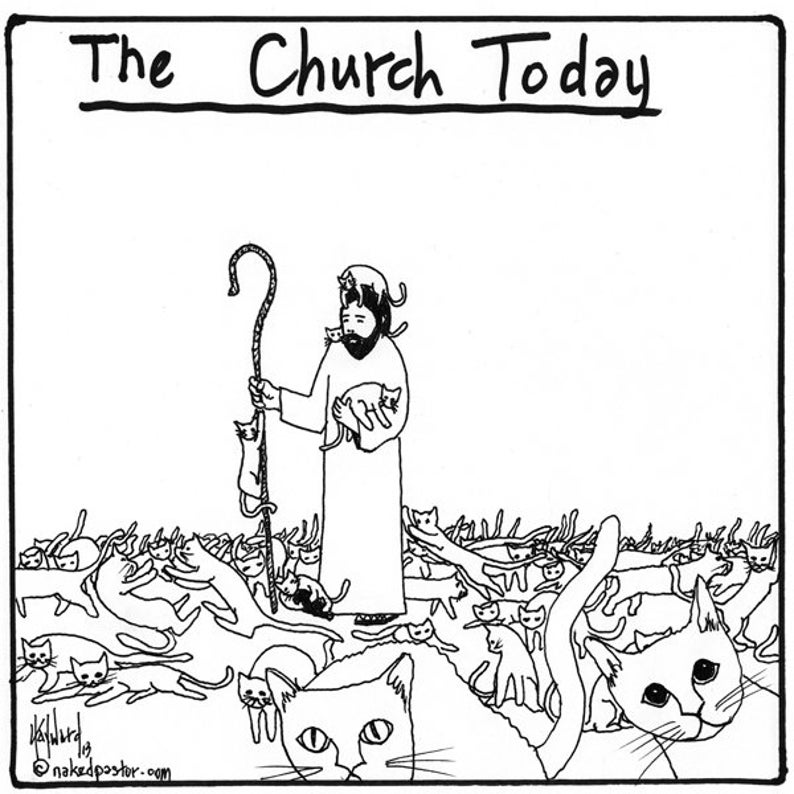
Funny how that works. That’s probably why the Apostle Paul cautions those who would aspire to be leaders in I Timothy 3. My observation is that leadership is often a thankless task that involves the arcane skill of herding cats. Christian leaders do it from their knees with their hands firmly clasped together and their heads bowed. While this sounds like a Zen thing it is really a Sinai thing. Moses is the archetype of a Christian leader. His leadership ability was recognized in the Old Testament in Psalms 106, the New Testament in Hebrews 11:23-28, and in the Apocrypha in Sirach 45:1-5. (Yes, I really did reference the Apocrypha.) The characteristics of Christian leadership that he modeled include:
Standing in the gap for your flock.
Speaking only the words given to you by God.
Leading only where God’s Spirit guides.
You will take heat for your leadership from the people, it’s about how you handle the heat.
Leaders are called by God to serve.
Believe in miracles.
Fast and Pray!
Not all leaders will make it to the promised land.
A leaders responsibility is to prepare the next generation of leaders.
Use your final months wisely. Leave your mark on prison rather than letting prison leave it’s mark on you. Even while you are looking forward, don’t forget to keep you head on a swivel.
Your Brother in Christ
*Keryx is a lay-led, non-profit, interdenominational, Christian ministry using the Cursillo method, designed to be conducted in any correctional institution without substantive change in format or procedure.
The purpose of Keryx Ministries is the Christianization of the correctional institution or community through the actions of small apostolic prayer support groups, trained and encouraged by Keryx volunteers, working within their environment. Through a systematic, structured program, the participants are given the opportunity to experience a religious renewal and to accept God’s call to a life of Christian witness and service to one another .
Keryx has been called the most effective program at changing basic attitudes of the incarcerated currently offered in prisons. This statement has been said over and over again by prison administrators where the ministry has been active long enough for its impact on the institution to have been evaluated by correctional staff.
Keryx is a highly structured program that promotes solid Christian life-skills. The program builds a positive and loving environment. Keryx calls upon a spirituality that has long been dormant in many of the resident leaders within the institution.
I don’t often get distracted from listening to the pastor’s sermon while sitting in the church service. I take notes and engage as an active listener to hear what God has for me as the Word is preached. However, this week it was the congregational prayer that got me thinking. As I listened to Pastor Sheila bringing forth specific needs and then leading us to the throne of grace, thoughts began to coalesce and take shape in my mind about the nature of prayer. In my recent devotions I have been reading the collected works of Andrew Murray on prayer. According to him prayer is every Christian’s responsibility and that regular, routine prayer is both the sign of a healthy spiritual life and the source of a believer’s power.
Meditation for me is the process by which
I take information gathered from various sources and my life’s experience and
organize them into a coherent form by which I can understand a topic by the
inspiration of the Holy Spirit in order to incorporate the concepts into my
life. As the concepts came to me I
jotted them down in the back cover of my sermon notebook. They came in no particular order and as with
all meditations have needed some time to organize and flesh out from bullet
points to complete statements. My
initial meditation lasted only 20 minutes and while it was very productive in
laying out my thoughts, I know it is nothing compared to those like Andrew
Murray who are far wiser than I and have spent their lives contemplating
prayer. But I share it as an exercise to
stimulate your own contemplation on what prayer means to you.
As I wrote my reflections I identified 3 major aspects that describe the relational nature of prayer as I’ve experienced it. Prayer is often intercessory, it is an act of two-way communication, and incorporates both the attributes of humanity and divinity. For each of these aspects I identified characteristics to describe them. I am not talking about the actual parts of a prayer, the mechanics of how to pray, or the different types of prayers. Rather this is a look at the relational aspects of prayer between us and God, us and man, and God and man.
We pray to God on behalf of others (and ourselves), God speaks/acts towards us, and God also speaks/acts towards others. We have concerns for others and others often ask us to pray on their behalf. This reflects the way Jesus taught the Disciples in the Lord’s Prayer in Matthew 6.
Prayer is…
A. An Intercessory Act that encompasses the:
International, national, and local communities we live in.
Public and private aspects of life.
Secular and sacred circles in which we interact.
Physical, mental, emotional, and spiritual dimensions of individuals.
Expression of both spoken and unspoken needs, wants, and desires.
Time frame for actions that are both contemporary and eternal in scope.
First act of hope and the last act of desperation in times of trouble.
Passionate desire and compassionate intent to see God’s kingdom.
Action of man in reaction to situations beyond our control both in the reality of today and our expectations for tomorrow.
B. Two-way Communication:
Between humans and the Divine.
Involving a call and response.
Whether it is cried out loud, spoken in a whisper, or uttered in silence.
That is occasionally eloquent but frequently tongue-tied.
Regarding things asked for and received.
Often asking questions and seeking answers.
In which we remember the past and envision the future.
Of ideas hidden in our hearts and yet already known to God.
Best described as a child speaking to a parent and a parent speaking back to a child.
Acknowledging our weakness and God’s strength.
Expresses our heart broken condition and our heart-felt plea.
C. The intersection between Man’s attributes and God’s character:
Man is broken and downtrodden by the cares of the world. God’s joyful response heals and uplifts us.
Man’s desperate cry for help is heard by God whose peaceful Spirit comforts us.
Man is powerless in his situation and reaches out to an all-powerful God for assistance.
Frequently faithless man needs the reassurance of a faithful God.
Man’s foolishness is often the source of his trouble and wisdom from God is the solution.
Finite man is impatient for answers from the infinite God who is perseverant in responding.
Uncertainty is the way of life for man while God is confident in all his ways.
Man’s ignorance is far from blissful and only God’s knowledge can bring a state of contentment.
Isolated and lonely man craves God’s familial relationship.
Man’s sinful nature can communicate with a perfect God only by His grace.
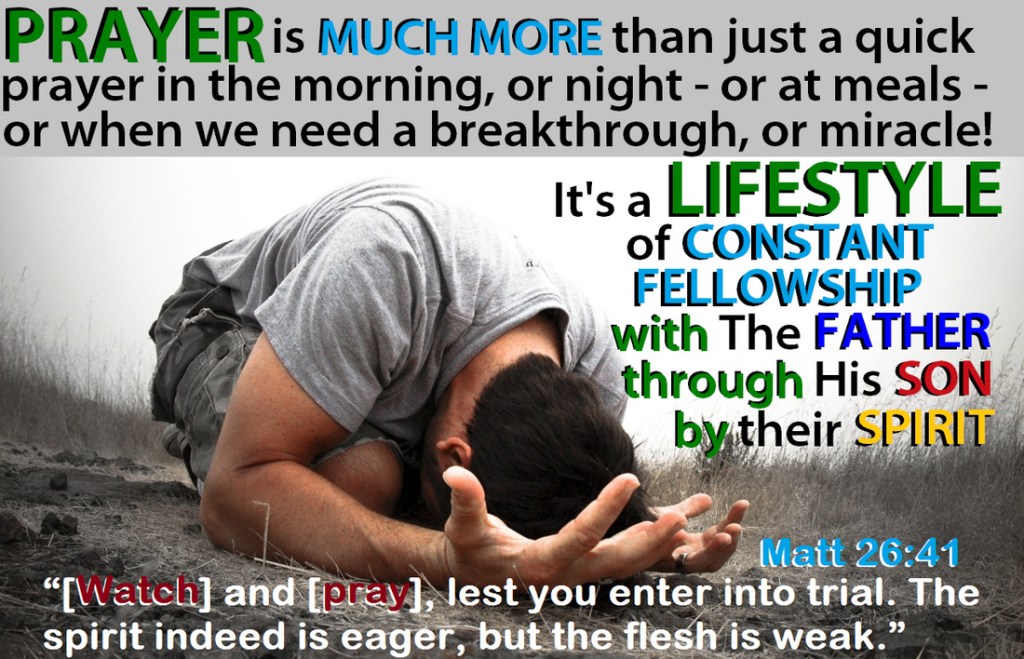
Prayer is a personal experience, no two people will have exactly the same encounter with God. Our own experiences change over time as our spiritual health and maturity are not static. Only God never changes. Periods of spiritual dryness and silence in response to our prayers is a well-documented fact for even the most devote believers. But Scripture is clear that this is only our perspective. God will never leave us or forsake us. We just need to trust and obey the admonition to pray without ceasing.
It is officially summer so it is time for my summer letter. As the weather heats up I pray that cooler heads will prevail and that there will be peace where you are. The last thing I am sure that anyone wants is to be both hot and bothered by others who aren’t dealing well with the heat. Stay frosty my friend. Staying cool even under pressure never makes the situation worse, only better for everyone.
I just celebrated my 54th birthday. I blew out the candles in one breath. However, there was probably more wax than frosting on the cake. My annual physical finds me in good health. Praise God! I’ve ridden my exercise bike so much this year that I had to replace the ball bearings in the crank shaft and the tension wheel. The bike was so loud I couldn’t hear myself think. It sounded like nuts and bolts in a blender and it got louder the harder I peddled. Now it is whisper quiet. I find great satisfaction in being able to take things apart, successfully repairing them, and then putting it back together.
How often in life have we found ourselves in a place where we can’t fix what we’ve broken? Why can’t relationships be as easy to fix as a toaster? Is it because there is no manual? Actually there is: the Bible. The problem is we don’t study it enough. We also fail to understand that it’s not about fixing others but our own part in relationships. Sure, you can lead others to Christ but you can’t save them. They must enter into relationship with Jesus of their own free will.
The same is true in our relationships with other people. We are only responsible for our part. Whether it is our parents, siblings, spouse, children, friends, coworkers or anyone we interact with, we can’t control them. Control is an illusion. Only God in in control. We have to accept others with the same unconditional love that we ourselves desire.
For Believers prayer is the key to relationships. Every situation and person looks different when seen in the light God’s mercy and grace. So if your cell mate is driving you crazy or you’re having problems on the home front, set the issues before the throne of the Almighty and let Him reveal the answer. Persevere in prayer. The answers may not come automatically. Keep on praying and seek the direction of the Holy Spirit to make sure that you are praying for the right thing. In other words, ask for direction to ensure that what you are seeking is in God’s will. The Bible will provide direction for many things in general and for specific issues listen for the still small voice. The one that can only be heard when we stop talking and truly listen for the voice of God.
Know that I am praying for you and you are not forgotten.
My pastor has been preaching this summer on the concept of Joy. James 1:3 says, “Consider it pure joy when you face trials of various kinds.” The Apostle Paul wrote a lot about joy too. In Philippians 4:4 he said, “Rejoice in the Lord always. I say it again: Rejoice!” He wrote these words from prison. He didn’t have a sick sense of humor or a masochistic streak, he truly believed it.
Joy is a feeling of gladness and rejoicing is the expression of that feeling. Trials build Godly character and we should be thankful to be counted worthy. It is thankfulness that brings joy. The problem is that we humans have such limited perspective that when we are going through trials we have a hard time seeing the big picture. We lack the eternal perspective. We just wish we weren’t considered so special. Well, I’m here to tell you that you are special. Like it or not.
We have reached the dog days of summer. Around my house the cicadas are buzzing in the trees, the grass is brown and if I wasn’t watering every couple of days the flowers would be dead. With the Labor Day holiday upon us serving as the warning that summer is almost over. Or for your sports fans football season starts!
It’s funny how we use events to mark the passage of time in our lives. Some are trivial like sports, others are earth shattering like the death of a loved one, or the one that we are all most familiar with is going to prison. The important thing is that the events must have a personal meaning. The times in our lives that are a blur are the ones that don’t have any memorable events to provide a time frame. As I heard it expressed once, “Life isn’t measured by the number of breaths we take but by the moments that take our breath away.”
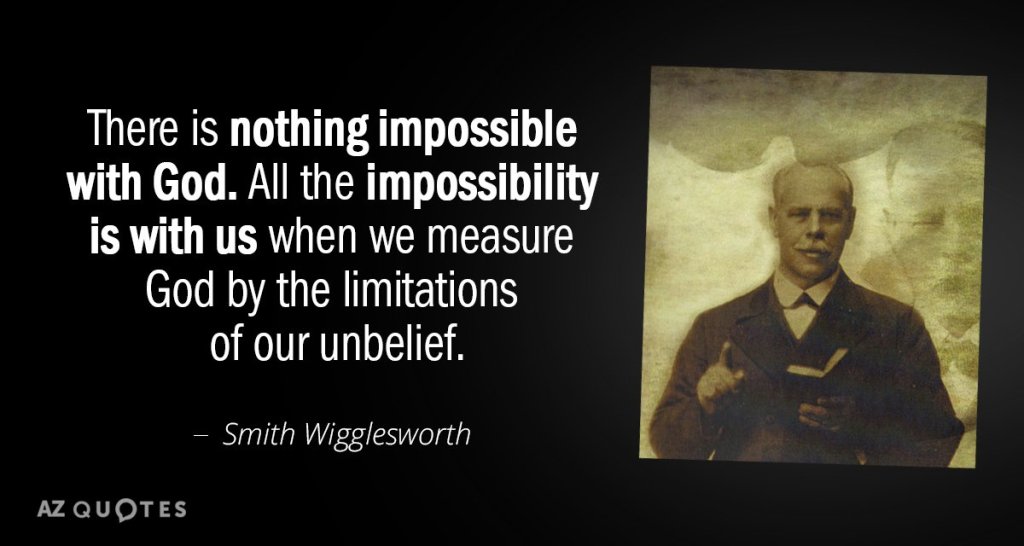
The question becomes what are you doing to create those all important milestones? In a place where the daily routine is monotonous by design what can you do? My friend Daniel would say you can do an in-depth Bible study or book by a classic Christian author like C.S. Lewis, Bonhoeffer, or Wigglesworth. Spending time to study word by word, line by line, concept by concept until you have absorbed it. Savor the time spent with the material, take notes, meditate on it, memorize passages that have special meaning. Let it permeate your being and it will transform you.
I always recommend doing something for others. Whether it is for someone cl0se to you or a stranger. By serving others you not only make a milestone for yourself but also for the other person. This may or may not require you to get outside your comfort zone. There doesn’t need to be a financial cost. Most times it is just our time that we can give to help another person. I like to say that we are “blessed to be a blessing.” It doesn’t take much to look around and see the needs of others. The key is this only happens when we aren’t focused on ourselves.
Ecclesiastes 3:1 says, “For every thing there is a season, and a time for every matter under heaven.” Every season will end. Life moves forward whether we want it to or not. Life is change. Whether for better or worse is often how we interpret it, either optimisticly or pessimisticly. If life gives you lemons make lemonade, otherwise the sour look on your face has no up side. Trust God to be faithful. He is in control even when we feel like life is out of control.
Proverbs 3:5-6 says, “Trust in the Lord with all your heart, lean not on your own understanding. In all your ways acknowledge Him and He shall direct your paths.” E.M. Bounds says, “Trust is faith that has become absolute, approved, and accomplished.” So I encourage you to keep the faith, and make the most of this season in your life. Know that you are not alone and not forgotten. I’m praying for you.
Psalms
51 has always been my favorite prayer of King David. It is the most honest prayer of repentance
that I have ever heard. It is the model
by which we should craft our own prayers asking for God’s forgiveness. According to Old Testament law adulterers
were to be stoned. Murder to cover up
the adultery also would have been a crime with a death penalty. Now no one in Israel would have ever
seriously considered stoning the king. But
being above the law of man is not the same as being above the law of God. When the prophet Nathan confronted David as
recorded in 2 Samuel 11-12 David showed why God had made him king in the first
place. Unlike Saul who blamed others for
his personal failings David accepted responsibility for his actions and
immediately repented. In the era of the
#METOO movement not one of the celebrities or politicians that has been accused
has admitted responsibility in any way let alone given more than a token
apology.
C.S.
Lewis in “On Forgiveness” from The Weight
of Glory says: “Real forgiveness means looking steadily at the sin, the sin
that is left over without any excuse, after all allowances have been made, and
seeing it in all its horror, dirt, meaness, and malice, and nevertheless being
wholly reconciled to the man who has done it.
That an only that is forgiveness, and that we can always have from God
if we ask for it.”
There
are three parts to this statement. First
is the internal perspective in which you as the perpetrator must come to terms
with your own actions and rather than excusing or discounting them accept them
as wrong and commit to making the necessary changes to move forward. The second is the eternal perspective in
which you as the person who has committed the offense must see it as it really
is and seek reconciliation with God through repentance. Many people fail at this step. It is one thing to admit a personal failing
to yourself. It is another thing
entirely to kneel before God and make a solemn plea for forgiveness. The third part is the external perspective in
which you must extend the same forgiveness to others as you seek for yourself
with God. This step is not even possible without God’s grace.
In
the Lord’s Prayer in Matthew 6:12 Jesus instructs the disciples to pray “And
forgive us our trespasses as we forgive those who trespass against us.” If you can’t forgive others for the hurt they
have inflicted on you how can you expect God to forgive you for what you’ve done? This is what separates Christians from other
people. Forgiveness is the cornerstone
to reconciliation. Without
reconciliation there can be no relationship between two people separated by the
gulf of hurt, shame, anger, and retribution.
Reconciliation is a foreign concept in todays legal system and the
reason why it has failed. Most 12-Step
programs have a step in which you need to seek forgiveness from those you’ve
wronged (if possible). But they also go
on to say that even if the other person won’t forgive you that’s their
choice. You must move forward in your
life. If the other person choses not to
forgive then they are choosing to live in the past and continue to give someone
else power over them. Forgiveness breaks
the bonds that are holding a person back from healing and moving forward.
Psalms
51:10-13 says “Create in me a clean heart, O God, and put a new and right
spirit in me. Do not cast me away from
your presence, and do not take your holy spirit away from me. Restore unto me the joy of your salvation and
sustain in me a willing spirit.” My
prayer for you is that you would have a spirit willing to do whatever it takes
to hold onto the joy that only a relationship with God can provide.
This is the 3rd annual Christmas letter. I can’t believe that time has gone by so fast for me. I pray that it has gone quickly for you as well. As always you remain in my heart and prayers. This year has seen 2 more of my pen-pals parole. I recently had the opportunity to visit one of last years parolees. He is doing very well and is working in church ministry. It was a great afternoon spent catching up. Even after leaving prison I continue to pray for and correspond with men who need a friend or counselor. I will try to do anything within my power to help. Unfortunately receiving a parole and leaving prison doesn’t guarantee success while on parole. In response to a request I have written an article about surviving parole which will be coming in January when I have time to finalize it.
The other day I made 10 dozen Christmas
cookies for a local rest home where my church held a Christmas carol and cookie
evening. I used a store-bought sugar
cookie batter that I rolled out and cut into various shapes with cookie
cutters. The cookies looked good going
into the oven but many of them looked misshaped when they came out. They lost their distinct shapes and did not
closely resemble the molds they were made from.
Then I spent hours meticulously applying
frosting. Candy canes, Angles,
Gingerbread men, Snowflakes, and other forms emerged as I carefully drew in
colored icing. In a process opposite of
a young child I colored inside the lines with a boarder of cookie around the
edges. Candy canes with red and white
stripes, angles glowing radiantly, stars shinning, and many other now
recognizable shapes emerged. Some of the
cookies were plain sugar cookies, some were gingerbread and others were
peppermint. The icing was flavored like
cream cheese, peppermint or plain and paired specifically with the dough to
compliment the flavor.
When I was done, they sat in straight rows
on my kitchen table as the icing dried.
Hours later they were packed in boxes awaiting delivery. The people at the rest home raved about the
look of the cookies and helped themselves to lots of cookies. But it wasn’t the look that brought them back
for seconds it was the taste. Those
misshaped cookies were not too soft, not too hard, but just right to give a
good chew. The flavors were strong
enough, but not too strong to deliver a satisfying compliment to a cup of
coffee or tea. These homemade cookies
were chosen preferentially over the store-bought varieties. They were the hit of the party. One of the pastors even asked if I could make
more for her to take to another church event next week.
Now I did not tell this story to brag
about my cookie baking (which is legendary) or to tease you with food
porn. Rather I want to draw a comparison
to life and the true meaning of Christmas.
Life does not always turn out
the way we expect it to. While we were
shaped uniquely sometimes under the heat of life’s events, we come out looking
nothing like we did before. Unattractive
and unadorned most people would not find us appealing at all. But the baker who formed us, shaped us,
watched over us while we were in the oven and when the time was right brought
us out, wasn’t finished with us yet. We
serve a higher purpose. The baker took
us in his hand and began to bring out our character much like a sculptor works
stone. We become little masterpieces. Each one unique, yet all have an overarching
theme- the birth of Christ, the savior come to earth who has changed us. We are no longer misshaped and unattractive
but our lives now reflect the intent of the God who made us.
Jesus our Savior has come into our lives
and our past has been overwritten by a new and glorious future. We become the center of attention for those
around us who see in us something that is so different from the world. We aren’t Oreos, Vanilla Wafers or Fig
Newtons we are something that can’t be bought in any store. We are made to serve others with our
lives. We give ourselves selflessly to
bless others. We don’t choose who we
will bless but rather by making ourselves available God will lead us to those
who need us. The fragrant aroma of our
lives living out the will of God will attract those who hunger to know God.
Christmas cookies are only around for a
short while each year, but we as Christians keep alive the spirit of the season
all year long. We live our lives just
the like the cookies, not for our own selves but for the good of others. No cookie wants to be left on the tray to be
discarded when they get stale. We also
fulfill our purpose when we give ourselves away as we reflect the story of the
one who made us. Like the angles that appeared to the shepherds in Luke 2:8-15,
we point the way to Christ so that others will seek him for themselves.
My prayer for you this Christmas is that
your life will reflect the message of salvation to those around you. “For unto you is born this day a Savior who
is Christ the Lord.”
Paraphrasing my
friend Daniel at Daniel and the Lion’s Den ministry who sends me daily text messages
of encouragement: My goal in these
letters is to uplift by giving you something positive to meditate on and think
about, something that draws you closer to GOD.
I try to be led by the HOLY SPIRIT with prayer. My formula, to use a math metaphor, starts
with an idea or even a dream. I first divide
the problem or thought into smaller pieces and then address or find ways to
overcome them one by one. Then I multiply
all the possibilities I can think of. Next,
I subtract the negative thoughts.
Finally, I add together enthusiasm, the Bible, and my faith in order
to proclaim GOD’s truth. My desire is to
give and for you to attain hope, to help you have true joy and peace in life. E=mC2 (Enthusiasm = my Christ squared). It’s not meant to bore but to enlighten, not
to preach but to share what I’ve learned.
After all, “Christianity is one beggar telling another beggar where he found bread”
– D. T. Niles.
My hope and prayer is that this letter finds you well. I pleased to say that I had the opportunity to meet with another one of my brothers who recently paroled. We spent a wonderful afternoon together catching up and renewing our friendship. It is amazing the work that our Lord Jesus Christ is accomplishing through his servants whether bound or free. It has been proven over and over that the Lord stays faithful to those who stay faithful to Him.
A Familiar Story
The death and
resurrection of Jesus Christ is a central tenet of the Christian faith. Everyone knows that the Easter story presents
an account of the events leading up to and following the darkest day in human
history and the brightest day in God’s history.
What follows is an analysis of those events from the prisoner’s
perspective. This is not intended to be
a theological discussion but rather a paraphrase using language from modern
criminal justice. Simply a way of
looking at the parallels that can be drawn between what Jesus went through and
what a convict goes through. Jesus was
said to be both fully God and fully human, that He experienced all aspects of
life, including temptation, yet never sinned.
Only by both living and dying could He fully experience the human condition. In an act of selfless love that fulfilled the
holy writ Jesus became the perfect sacrifice to atone for our sins.
Beginning in Matthew 26:3-5
and John 11:57 the Prosecutor and the Grand Jury determine that a warrant for
Jesus’ arrest was merited because He was disturbing their peace and was a
threat to the establishment. An APB was issued
and a reward for information regarding the whereabouts of the suspect was posted. From Matthew 26:14-16 and Luke 22:1-5 Judas
Iscariot decides to become a snitch in order to claim the reward, since he
didn’t like the direction this Messiah’s kingdom was heading. As the treasurer for Jesus’s organization he liked
to take a little off the top for himself and all the talk of giving everything
to the poor and Jesus predicting his own death was bad for business (John 12:1-7).
According to Luke 22:3-6, the
authorities concerned about public relations and their ability to control the message
sought to arrest Jesus away from the public eye.
Judas knowing that Jesus would be with only his inner circle of disciples in a secluded location after dinner led an overwhelming force of armed officers to arrest Jesus. Matthew 26:47-56, Mark 14:43-50, Luke 22:47-52, and John 18:8-12 describe the scene as one of barely controlled chaos, with fear and confusion on all sides. Officers sent by the authorities behaving like a small mob of thugs, seeking to intimidate and overpower any resistance, wait for Judas to positively identify the suspect. Once identified, they move in to arrest Jesus. As they take him into custody the disciples flee into the night, running for their lives.
Jesus was taken to the
Sanhedrin for a preliminary hearing. Matthew
26:57-68, Mark14:53-65, and John 18:12,13,19-24 recount the hostile encounter
between Jesus and the High Priest who served as prosecutor. Witnesses are brought in, yet none could
agree on the facts in their testimony. In
the end the exasperated prosecutor seizing on one statement from 2 witnesses
confronts Jesus about his true nature and identity. Up until this point Jesus has remained silent
choosing to not say anything, but now breaks his silence to answer the prosecutor’s
final question. Jesus cannot deny who He
is. It causes a near riot as the Sanhedrin
serving as the Grand Jury erupts in a frenzy over Jesus statement. They pronounce him guilty of blasphemy and
call for the death penalty. There was no
defense attorney brought in to act as public defender for Jesus, no cross
examination of the witnesses, and no council to avoid self-incrimination.
Now Israel was subjugated
by the Roman Empire and as such the High Priest and the Sanhedrin could not
impose the death penalty themselves.
They had to take the death penalty case to the Roman governor for final
judgment and sentencing. Matthew
27:11-26, Mark 15:2-15, Luke 23: 2,3,18-25, and John 18:29-19:16 contain the
accounts of this hearing. Pilot, the governor
was a shrewd politician and could see the politically motivated nature of the
charges and did not find that the charges brought against Jesus merited the
death penalty. He tried to avoid making
a ruling in the case by initially determining that the prosecutor had brought
the case to the wrong court. Since Jesus
was from somewhere else, Pilot ruled that he should be tried in Herod’s court.
According to Luke 23:8-12
Herod was initially interested in hearing from Jesus, since he had heard of
Jesus reputation as a miracle worker.
But he quickly tired of listening to the prosecutor pressing his demands
for a death sentence while Jesus stood silently, refusing to answer any
questions. So, Herod and his officers mocked
Jesus by dressing him up as a king and then returned Jesus to Pilot’s court in
a classic perp walk.
Pilot now faced with a
dilemma tried to bargain with the crowd that had gathered to watch the court
spectacle. He offered the crowd, which
had been whipped up into a mob by the High Priest, the choice to either release
Jesus or Barabbas who had been convicted of murder and insurrection. The prosecutor and the crowd shout for
Barabbas’ release and for the death of Jesus.
Pilot concerned that the situation was rapidly getting out of control, acquiesces
to their demand. In a final theatrical gesture
Pilot washes his hands to signify that Jesus blood was not on his hands.
Now of course things
would never get this far out of hand in a modern American courtroom, but the
Roman Empire was a vastly different place, held together with brutal oppression
of the forces seeking to tear it apart. Crucifixion
was an integral part of this policy. In
today’s society it was the equivalent of mass incarceration, but far more cost
effective than locking people up for years.
Death by crucifixion was slow and painful, it was also very public. In some places, crucifixions were carried out
by the thousands to send a message to the populace that resistance was futile.
Matthew 27:33-44, Mark
15:22-32, Luke 23:33-43 and John 19:17-24 contain the accounts of the
crucifixion. Pilot ordered that Jesus be
flogged and then crucified. Many people
would have likely died from the flogging alone.
Because of the brutal, savage beatings he had already received and then
the flogging Jesus was unable to carry his own cross to the place of execution.
A random stranger was taken out of the crowd and forced to carry the cross for
him. No appeals process, no ACLU, no
Innocence Project, no reprieve, no last meal, no option for an alternate form
of execution.
Most of Jesus disciples
had run and hid. Peter had denied him, three
times! (Matthew 26:69-75, Mark 14:66-72, Luke 22:55-62, and John
18:16-18,25-27) Jesus felt the weight of the entire world on his shoulders as
he was raised up on the cross. His
accusers continued to mock him, the officers gambled for his clothes, the crowd
watched expectantly to see if God would save him. Even with his own impending death he offered
eternal life to the thief dying on the cross next to him. At the end he cried out “It is finished”
(John 19:30). When he died there was an
earthquake and the veil in the temple that separated the Holy of Holies was
torn in half (Matthew 27:51). Even the
Roman officer moved by the scene exclaimed that “surely he was the Son of God!”
(Matthew 27:54)
On the darkest day in
human history an innocent man was convicted and executed for the petty motives
of jealousy, political expediency, and betrayal for 30 pieces of silver. But death isn’t the end of the story. Jesus was buried in a rich man’s tomb
(Matthew 27:57-61, Mark, 15:42-47, Luke 23:50-56, and John 19:38-42). He was wrapped in a burial shroud and the
tomb was sealed to prevent anyone from taking the body and officers were posted
to keep watch (Matthew 27:62-66), but on the third day he arose. Death could not keep him in the grave. Jesus overcame death and sin to rise
victorious over Satan (Matthew 28:1-8, Mark 16:1-8, Luke 24:1-10, and John
20:1-8). On the greatest day in God’s
history his son Jesus defeated Satan once and for all. Not just to end the war between heaven and
hell, but to provide a way for man to once again commune with God, as he had so
long ago in the Garden of Eden. Jesus
became the High Priest and now he sits at the right hand of his Father in
Heaven interceding on our behalf (Hebrew 4:14-16).
Jesus Christ experienced
the Criminal Justice system of his day and went from a free man to a dead man
in 24 hours. Never once did he complain
about his treatment at the hands of abusive officers, a prosecutor with a
political agenda, a judge that didn’t have the courage to follow his convictions,
or a fickle populace that in one week went from a joyous throng hailing him as
a king to a blood thirst mob demanding his execution. Instead he said, “Father forgive them, for
they do not know what they are doing,” even as his life was ebbing away (Luke
23:36).
Looking at Easter from
this perspective should first of all show that criminal justice has always been
dysfunctional. The MDOC did not invent
nor has it cornered the market in inhuman treatment, unfair rules and
regulations, or bureaucratic officials.
Jesus endured the suffering, even though it had been within his power to
end it, in order to give us an example to follow. By his suffering we have a Savior who can
relate to our situation. We can see that
he was willing to place himself in our position to show us how to live by God’s
grace and mercy. He showed us the true
meaning of forgiveness and that there are no exclusions to the command to
forgive others. With his dying breath he
trusted his Father and so should we. John
3:16-17 says it all, “For God so loved the world that he gave his one and only
Son, that whoever believes in him would not perish but have eternal life. For God did not send his Son into the world
to condemn the world, but to save the world through him.”
I welcome your letters to
talk about my meditations on scripture or what is going on in your lives, or
anything else. I pray for you daily and
I want you to know that you are not forgotten.
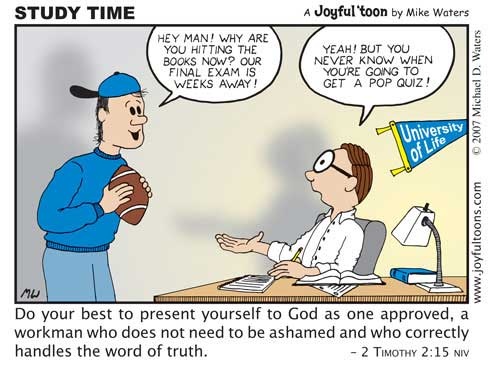
Yesterday I took my girlfriend and her brother to the local park to see the fireworks display. We showed up and saw the signs everywhere, the barricades and porta-johns, but no people. It turns out the website that I had read about the fireworks on had the wrong date published on it. The fireworks were launched the night before. It contained second-hand information that was inaccurate. If I had gone to the city’s website, I would have found the correct information. This could be a metaphor for our lives as Christians. Many preachers talk about and many authors write about the Gospel. Their observations and insights might sound good and may even be close to the truth, but close only counts in horseshoes and hand grenades. We must always check with the original text, God’s words recorded in the Bible to find out if what we heard or read lines up with the truth. In I Timothy 4 the apostle Paul warns young Timothy (and us) to beware of false teachers that teach things that are contrary to scripture. Further, we must study to show ourselves approved (2 Timothy 2:15). We must be able to rightly understand the scriptures so that when something fishy comes along we don’t swallow it hook, line and sinker. (Or show up a day late for the second coming.)








 Christ, Crime and Punishment