
Penitent Man

Penitent man by Gobi
“The penitent man shall pose” by Gobi 2007

In Indiana Jones and the Last Crusade, Indy faces a series of challenges he must solve in order to find the Holy Grail and save his friend’s life.  The clue to overcoming one of the deadly obstacles was the penitent man”. Looking around he saw a number of decapitated bodies and quickly surmised that he needed to humble himself in a hurry or share their fate.  The same happens to people who come to prison.

Another synonym for prison is penitentiary.  In 1787 the Philadelphia Society for Alleviating the Miseries of Public Prisons developed a prison system where they believed some criminals could be reformed through hard work and meditation.  Many members of the society were Quakers, who considered the moral/religious aspect of meditation a key to reformation.  They knew that the repentance that comes from the realization of the wrong one has done will lead to lasting change.

People who commit crimes by and large are selfish people who have placed their wants and desires above the needs of others.  Many are proud and unashamed of what they have done.  When you fill up a prison full of these people, sparks will fly.  When two proud people clash there can be only one winner.  Like the decapitated bodies in Indiana Jones, heads will roll, unless one of these proud men will humble them self.

Humility comes as the result of awareness regarding one’s selfish, prideful condition and the willingness to admit that this form of behavior is what brought the person to prison. However, some in prison will double down and try to make themselves into the biggest, baddest, toughest, meanest, orneriest, foulest, strongest, most ruthless SOB in the Big House.  They lift weights compulsively to strengthen their bodies, they harden their hearts until all empathy for others is gone, and they live only to satisfy their lusts for food, sex, and drugs.  They think the way to live is to die to what separates us from the animals, and in the process become animals.

When a person in prison learns to humble them self, they become more sensitive to those around them, which allows them to react quickly, like Indy, to duck out of the way when the violence starts.  A humble person has a quiet spirit which allows them to put others before themselves even when they know of the other’s selfish intentions, thereby avoiding the wrath of the proud.  We are talking about meekness here, which some confuse for weakness.  Meekness is the combination of the character traits of patience and humility.  Not exactly something that one would expect from inmates.

So how does one learn humility in prison? The Quakers coming from a Judeo-Christian world view would not have seen meditation as an Eastern Zen Buddhist self-contemplation practice, but rather as a Biblical contemplation practice.  They would not expect a person to change on their own, but by the conviction of the Holy Spirit, not by self-revelation, but by illumination of the moral standard revealed in God’s Holy Scriptures.  Humility is both the inward and outward manifestation of the change in a person’s world view when they acknowledge God the Father and Jesus Christ His Son for who they are.

James 4:6-10 says, “But He gives more grace. Therefore, He says; God resists the proud, but gives grace to the humble. Therefore, submit to God. Resist the Devil and he will flee from you.  Draw near to God and He will draw near to you.  Cleanse your hands you sinners; and purify your hearts, you double minded.  Lament and mourn and weep!  Let your laughter be turned to mourning and your joy to gloom.  Humble yourselves in the sight of the Lord; and He will lift you up.”

Prison is a place of stark contrasts and nothing exemplifies this concept better than the contrast between the proud and the humble.  The proud are arrogant and unteachable. They will not learn the lessons of correction and if they ever get out of prison will keep coming back, doing life on the installment plan.  Those who are humbled are teachable, they will learn the lessons of correction, and when they get out of prison will never come back.

While the original model of a penitentiary failed for a number of reasons, the concept of active participation by faith-based ministries remains a vital and necessary part of the correction system. Rehabilitation cannot be accomplished by a person in isolation, but rather only in the context of Christian community, both in prison and out.

Organizations such as the Salvation Army and Prison Fellowship are well known by the general public for providing social and moral training for those incarcerated.  But there are in the U.S. literally hundreds of faith-based ministries dedicated to bringing the gospel into prison.  On any given day of the week there are thousands of paid and volunteer workers in prisons and jails across the country, meeting with hundreds of thousands of men and women.  From full church services to Bible studies to social/moral education these groups work with prison/jail chaplains to provide resources, programming and counseling that makes rehabilitation possible.  No other religion provides this much capital and man power to assist the state in reforming the lives of so many that society has already written off.

Studies have shown that without programming recidivism rates can exceed 75%. With programming provided by the state such as educational, vocational, or psychological, recidivism rates drop to 50%. Faith-based programs reduce recidivism to less than 35%. When combined with additional programs and resources on the outside for when an individual is released from incarceration recidivism rates drop even further.  One study even suggested that the first 72 hours out of prison are the key to success.  If there is a person/organization there to provide mentoring and assistance and get the individual involved in a church, the recidivism rate falls to less than 10% in some studies.

Over the last two hundred years there have been numerous attempts at prison reform. In each case there was an acknowledgment that the current system was broken and that changes needed to be made. However, each one failed to live up to the expectations and did not result in accomplishment of the stated goals.

In each case the failures could be directly related to three causes: inadequate funding, over-crowding, and poor staff training.  Prisons are expensive to operate and since they generate little revenue are a continuing drag on government budgets.  Human societies for all of recorded history have failed due to the inability to pay the full cost of maintaining the society, whether it be defense, infrastructure, or social programs.  At some point the costs exceed the economic strength of that society.

In the U.S., political parties and their candidates campaign on the ideas of lower taxes and being tough on crime.  The two concepts are mutually exclusive, you can’t do both. Being tough on crime means more police, more prosecutors, and longer sentences which translates into significant cost increases.  Lowering taxes means that the revenue to pay for government programs becomes scarce, which leads to reductions in services since the elimination of programs can be political suicide.

In corrections this means that every year prisons must do more with less.  Costs for food, clothing, services, facilities, and staffing increase.  And yet as incarceration rates increase, budgets have been held constant or even reduced.  Even the best, most successful rehabilitation programs will be affected by this and will ultimately fail.  The result is that prisons and jails become nothing more than warehouses or cattle pens where humans are contained until they must be released to once again wreak havoc on society.  The worst possible outcome with the lowest return on investment.

Since the evidence of rehabilitation is incontrovertible and human lives matter, what are we as a society willing to pay to see our sons, daughters, brothers, sisters, husbands, and wives returned to us in a condition where they no longer pose a threat to society or themselves?  What are we willing to spend to end the cycle of poverty, violence, and broken homes that results from locking people up?  What does it say about a society that claims to be a beacon of freedom and hope, yet incarcerates more people than any other country on earth?  When is enough, enough?

There must be more to corrections than retribution.  An eye for an eye was Old Covenant philosophy. At least some portion of the church understands that we are now under the New Covenant and that forgiveness and redemption are the philosophy to live by.  There should always be repercussions for violating the laws that hold our society together but hate the sin not the sinner. We have all sinned and fall short of the glory of God.

Faith-based prison ministries get this and that is why we need more of them participating in the correction system.  These organizations raise their own money from their supporters to fund their prison ministries.  This is like free money to the fiscally strapped prisons.  In the day and age where outsourcing services is seen as cost effective, what could be more cost effective than free?  Sure, there needs to be coordination and oversight and that is where the chaplain comes in.  But why turn down programs that have a positive effect on the prison environment and can significantly reduce recidivism?

Moreover, since it is that critical time immediately upon release from prison that is the major decider on whether or not a person will go straight or fall back into a life of crime, the MDOC should be actively recruiting organizations to provide after care, housing, employment/job placement services in addition to mentoring and counseling services. The vast majority of people coming out of prison have lost everything while they’ve been away and most have nowhere to come home to.  The state needs to take more responsibility to help these people that they were so zealous to lock up in the first place.

There was a program called the Michigan Prisoner Reentry Initiative (MPRI) whose original goal was to partner with non-profit organizations to help fund and coordinate these types of programs.  Yet after only two years the external portion of the MPRI program was cancelled and the funding redirected back into the MDOC, due to claims of misappropriation of funds and mismanagement by these outside groups.  Given the history of the MDOC there is more than a little irony in that allegation.  There should be considerations made to revisit this decision and encourage more faith-based organizations to come to the aide of these returning citizens.

Given human nature, not everyone can or even wants to be rehabilitated, but that is a minority of the people in prison.  A sad but true fact is that those serving life sentences, after a period of adjustment are the best-behaved inmates.  Those doing short determinate sentences, such as two years for a gun are almost completely unmanageable.  Which takes us right back to my original point about the Penitent Man: those who are willing to humble themselves can be rehabilitated.  It is up to the people in society to demand more from their representatives in the legislature and the legislature to demand more from the MDOC and the MDOC to demand more of its staff, contractors and inmates.


Go Fish

fish

The term used for new inmates is “fish.”  The length of time one is considered a fish varies. It depends on the individual and how quickly they integrate into prison culture.  It also depends to a great extent on who is passing judgement.  An old timer doing life might judge another’s level of integration harsher than someone doing two or five years.

It used to be really easy to pick out the fish because of the number on the back of their uniform.  A few years ago, the Quartermaster stopped painting numbers on the backs of shirts and pant legs as a cost saving move.  Uniform pants, shirts, coats, and athletic shorts are reissued over and over.  By not painting numbers they also don’t have to cover them up.

In the eight years I was in prison the ID number count went up 200,000 numbers and was about to exceed 1,000,000.  Each number represents a new felon being enrolled in the MDOC system, even those who don’t actually serve time in prison.  My lifer level II bunkie had a 200,000 number from the late 1970s and a friend who came to prison around the year 2000 had a mid-600,000 number.  Clearly the number assignment is accelerating.  Lots of fish.

A saying about those who hadn’t served a year in prison yet is that “they’re still sh*#ing Burger King.”  A reference to the amount of time it takes to completely flush meat from the colon.  Not a pleasant thought but I heard it over and over.  Another case of the philosophy, “If you say something often enough it must be true.”

Now there is a steep learning curve for those coming to prison for the first time.  Prison isn’t like the free world and it takes longer for some to figure that out.  The basic principle of prison is that someone else makes all the major decisions for you.  This concept if very difficult for control freaks to grasp.  The rules of the MDOC are printed in black and white in the form of a Prisoner Handbook.  While this establishes the expectations of the administration there isn’t a guide for how to interact with other inmates in reality.

When a person first comes to prison they literally arrive with just the clothes on their back and then those are taken away.  They gave me a tooth brush and a tiny tube of toothpaste that wouldn’t last a week.  I had to write a kite to the Chaplin to get a Bible.  If I hadn’t arrived with a check from the county jail for deposit into my inmate trust account I would have been unable to go to the commissary for weeks.  Fish have nothing, no personal clothing like sweats or athletic shoes, no radio, MP3 player or TV, no food or coffee.  The Protestant church in prisons that I was incarcerated in had a “love box” where inmates could donate hygiene items like toothpaste, deodorant, or soap specifically to help the new arrivals and the indigent.

Besides having nothing, fish don’t know the rhyme or rhythm of prison.  Where and when to go for callouts.  What time is count.  They have a lot of work to do to establish a daily routine.  Routine is the key to making your time in prison both productive and pass quicker.  It takes time to get a job or school assignment.  Depending on your classification and the waiting list it could be weeks to months or even years before you are called.

I was a tutor and it took about a year both times I was on the waiting list.  To be a unit porter I started work in less than a month.  The lower qualification jobs have a higher turnover rate.  Both because of the transient nature of prison and guys being terminated for various reasons.

Fish make mistakes.  Either they are too zealous to make a name for themselves by resisting authority or they are too eager to please.  There is a lot to learn trying to fit in. There is an uneasy path between cooperation, capitulation and defiance to either the jailers or the inmates

Determining who you can trust and who you need to keep an eye on is an important lesson.  It can be very expensive when you chose poorly.  Personal agendas, gang affiliation and debts can affect a person and make them act in unpredictable ways.  I had several bunkies steal from me to pay their debts.  They were fairly normal and we got along fine but under pressure their behavior changed and they did something I could not anticipate.

You need to have a healthy paranoia, develop a sixth sense of danger to keep you out of trouble.  Fish are thrown into a sink or swim situation and find themselves in over their heads, which is ironic.  They need to learn to feel the energy in the room and sense the mood of the crowd.  Being new they haven’t had the chance to tap into the gossip network to find out who’s who and what’s what.

What a fish needs is a mentor.  Someone who is willing to take the time to educate them. I was fortunate to have a couple of bunkies that helped me through the process.  They introduced me to others that I could hang out with.  Being able to surround yourself with people you can get along with is very important.  There is safety in numbers and it really helps with the loneliness and isolation of being in prison.

Expectations

low expectations

Prison is the one place where the question, “What is wrong with you?” should be asked sincerely and with the intent of receiving an answer rather than an exclamation of exasperation.  From my experience, prison is short on introspection and long on intransigence.

Prisoners are crowded together so tightly that the background noise of daily living is loud enough that you can’t hear yourself think.  Low expectations of how you serve your time result in high recidivism rates.  I read that the goal of the MDOC is to reduce free time to 5%, which is a far cry from the current reality of 95%.  A porter detail to clean in the housing unit may be listed for 8 hours, but only 15 minutes of work may be performed and that only by a conscientious worker.  GED students may be expected to attend class for 1½ hours, 5 days a week, but except for a very few, don’t count on any textbooks being opened or any learning occurring.

For the vast majority of inmates, prison is like school recess all day instead of classroom instruction.  Gym callouts, weight pit, yard time for softball, basketball, volleyball, horseshoes, handball, floor hockey and soccer; television and poker tables in the housing units. Few are those who can read and even fewer still practice the art.

Programs that once lasted six months are now completed in six weeks, because the graduation rates were too low.  Lowered expectations have resulted in lower achievement.  Inmates are smart, they will keep doing anything they can get away with and avoid doing anything they are told they have to do for as long as they can, and then only do a halfhearted job.  If they put as much effort into their work as they put into trying to get out of working, they might actually accomplish something.

For many in the GED program it is simply a matter of outlasting the government’s law that they go to school in prison.  They may spend years or even decades in school and not make any progress in getting an education, because they know that getting a parole is not contingent upon getting their GED.  I’d bet that they would find the motivation to study and earn their GED if their parole depended upon it.

Many people in prison are “happy” with the way they are.  They don’t see the need to change and so they don’t.  As a result, they leave prison much the same as when they came in.  Prison should be about providing alternatives and creating the conditions under which constructive change can occur.  Maintaining the status quo is neither cost effective or socially responsible.  Somethings got to change.  Coming back to prison should be considered a failure of the system, not just the individual, and certainly not the norm.

The People I’ve Met in Prison

Mitch Album once wrote a book about people he would like to meet in heaven.  Here are some of the types of people I’ve met in prison.  You may have met some or all of them on the streets because they are no different except for the circumstances.

The first person is almost a stereotypical persona, the Jail House Lawyer.  Now everyone who has ever encountered the criminal justice system may want to see either their defense attorney or the Prosecutor behind bars, but I’m not talking about professional lawyers.  The Jail House Lawyer has no formal education in the law.  They have learned their craft by working on their own appeals.  They spend long hours in the prison law library researching legal precedence.  Dedicated to winning their freedom they will go to almost any length to exploit any perceived loophole in the law.


Jail House Lawyers are a close-knit group and pass around any trick that seems to work, such as specific case law, particularly effective verbiage or legal reasoning.  They also trade what few law books and legal writer’s guides that are owned personally.  However, by and large they must rely on the incomplete, outdated, and difficult to use law library resources as they duel with the prosecutors and Attorney General.

Many of these Jail House Lawyers have gone into business for themselves by selling their services to other inmates.  They are confident that your case has merit and would be glad to pursue your case for you for a fee.  Many inmates are indigent or nearly so with families that are unable to afford professional legal services.  To these the Jail House Lawyers may be the only alternative.  With the low education and IQ level of many inmates, conducting their own legal defense is beyond their ability.

Typically, the Jail House Lawyer will require you to pay up front by having your people put money in his trust account. They don’t work for Zum-Zum’s and Wam-Wam’s.  In prison there is no guarantee that you will be in the same housing unit let alone facility from one day to the next, so there is a great risk in using their services.

There is also a matter of trust.  You must bare your criminal soul to another inmate. You must give them access to your legal documents and hope they don’t end up hanging from the fences for everyone to see.

Wherever there are lawyers there are politicians, and in prison these are called Block Representatives.  Each housing Unit elects a “White” and “Non-White” Block Rep to serve a six- month term on the Warden’s Forum.  The Warden’s Forum is a mechanism by which inmates may have some limited input into prison life.

The Warden’s Forum is comprised of various subcommittees which meet to discuss issues such as chow hall food, commissary, Prisoner Benefit Fund fundraisers, and health care.  A representative staff member is appointed to meet with the subcommittee to respond to the issues presented.  The Warden then responds to the items that are reported out of each subcommittee.

What looks good on paper may not function so well in reality.  Wardens tend to be autocratic and many items of business that would appear to be legitimate are denied on specious grounds.  The Warden’s favorite word is ‘No’ citing security, policy, or perniciousness.  From the inmate’s perspective when the Warden says ‘No’ it is because the Block Rep didn’t do his job.  He didn’t explain or defend their position properly. There are neither Republicans or Democrats in prison only Libertarians.  There is always someone who thinks he can do a better job than the Block Rep currently in office.

Voting for Block Rep is often a popularity contest, and what they say about politicians in the real world is also true in prison: “Those most qualified for the job are too smart to run for office.”  The reality of the situation is that those Block Reps that raise the most fuss or fight the biggest battles are frequently branded as trouble makers by the administration and rode off the compound.  Being a Block Rep can be a thankless job that only earns you a certificate of participation for your file.

Another person I’ve met in prison is the Rap Star.  They provide their own soundtrack wherever they go.  With or without accompaniment they are continuously rapping lyrics out loud. Sometimes it is a whole song, sometimes just a phrase.  They may be living in their own little world, but they like to share it with everyone.

Don’t get me wrong, some of these Rap Stars could be legitimate musicians, with incredibly gifted voices, and possess musical talent and the soul of a poet.  It is unfortunate that the majority of these wanna be rap stars do not.  One detractor of the Rap Star put it this way: “I’m not going to know what to do in the bathroom when I get home because there won’t be someone in the next stall rapping.”

Someone who is frequently found in association with the Rap Star is the Foley Artist.  The Foley Artist provides the beat by banging on any surface that resonates, such as table tops and desks.  They also provide the laugh track to any conversation.  They laugh out loud just like a studio audience. Boisterous at all times they do not have an indoor voice and can be heard clearly across a crowded room or the yard.

Foley Artists can also be crude and obscene in their language, making catcalls after females either live or on TV.  They are marked by a distinct lack of social grace, having been raised on the streets.  Roused by sex and violence, in large numbers they become a mob.

Someone else I’ve met in prison is the Hustler.  Their goal is to become a millionaire. They have no starting capital, no outside support, and no formal education.  Some Hustlers have long term plans and identify under-served markets which they can exploit. Others are just chasing a dream hoping that whatever they do will make money.

In prison, most Hustlers are involved in illicit activity.  Morals are distinctly lacking in those seeking easy money.  They work hard to avoid working a regular job.  Hustles may involve stolen food from the chow hall.  Black market goods are big business and generally involve organized groups rather than individuals to move large quantities of goods including: sugar, orange juice, meat, cheese, peanut butter, drink mix, onions, peppers and spices.  Lax security and staff willing to turn a blind eye make it possible. Just about anything from the chow hall is available for sale on the yard, except for potatoes which nobody wants.

Bulk quantities are broken down for sale in smaller amounts such as kool-aid shots, or what can be quickly consumed.  For items such as sugar and orange juice the bulk quantities are necessary to create ‘spud juice.’  Spud juice is prison alcohol and contrary to its name rarely contains potatoes.

Pricing is directly related to the risk factor.  Items like drink mix and peanut butter have equivalent items on the commissary list and by repackaging can be held safely, therefor the cost will be relatively low.  Items like sugar and orange juice are converted into a high demand high risk product that requires time to produce and carries a significant penalty if caught in your possession, therefor the cost will be higher.

Other hustles may be of a legal or quasi-legal nature such as selling coffee shots or cutting hair.  Coffee is a must have for many inmates and when your supply runs out you look for someone selling coffee shots.  Coffee is an item available on the commissary, so the coffee hustler must purchase his supply and turns a profit by selling it one cup at a time for more than the bag cost to purchase.

While there is a barbershop on the compound, many inmates prefer to use a freelance barber or hair braider.  This entrepreneur uses their talent to make money by providing a service.  Generally, a decent haircut in the barbershop you are going to have to pay the barber anyway, so the quasi-legal practice of cutting hair in the unit or on the yard is widely practiced, even if it is against policy and depending on the facility may or may not be enforced.

In prison many people undergo some form of religious conversion.  Jail house religion is a hot topic for debate.  While it may be a life changing experience for some, for others it may only be a cultural experience that is quickly forgotten when they go home.  One thing is for certain, on every compound you will run across a Preacher.  I’m not referring to the chaplain or an inmate who is an ordained minister. I’m referring to a religious zealot.  Someone who loudly proclaims their beliefs. Preachers can be Protestant, Catholic, Muslim, Moorish Science, or Nation of Islam.  They hold firmly to their religious beliefs and will debate any and all comers.

Preachers may or may not be active in the leadership or body of their religious affiliation. Sometimes their beliefs have brought them into conflict with other believers and they may be ostracized from the group.  They are unique individuals clearly identified by their manor of speech and willingness to speak boldly about their faith.

The Bible says that no man can judge the heart, only God can, so I can say nothing about their motivation.  Many speak of going into ministry when they get out, even when they have a history of being in and out of prison repeatedly.  Some are thought of as hypocrites because their words and lifestyle don’t align or because of their criminal conviction.  Prison Preachers are not well thought of by the general population and are often singled out for abuse.  While earnest in their attempts at proselytizing they can do more harm than good on behalf or representing their religion.

Someone else I’ve net in prison is the Graphic Artist.  This person was probably a graffiti artist on the streets and generally has some true artistic talent.  Their skills are generally expressed in one of three ways, they are either into tattoos, painting, or greeting cards.

Those Graphic Artists that want to pursue tattooing in prison are taking up a high risk, high reward occupation. To be caught tattooing is a major ticket and will send you to the hole.  However, it is very profitable and is in high demand.  Prison tattoos for many inmates are a rite of passage or symbols of gang affiliation.  For some they are addictive as the turn their whole bodies into works of art.  Tattooing requires equipment that is not legal to possess including needles and body ink.  Electric beard trimmers are often stolen to be turned into tattoo guns.  Body ink must be manufactured and subsequently varies widely in quality.  Prison tattoos can be distinguished from street tattoos because the ink color often fades quickly.  Many people with prison tattoos talk about getting them touched up when they get out.

The problem with permanent art is that there can be no room for mistakes.  Tattooing must be conducted in secrecy and is frequently performed in short bursts of activity between officer rounds in the housing unit.  Large projects may take weeks to complete. More than one person is walking around in prison with incomplete tattoos because they got caught or rode out before it was done.

Example of a prison tattoo gun.

Without all the accouterments of a tattoo parlor it is easy for a design to be poorly placed or sized, words can be misspelled or designs look like they are drawn by a kindergartner. What looked good on paper may not look so good on skin.  Very few people think about what a tattoo will look like on their body 20 or 40 years from now.

Then there is the whole issue of disease.  Hepatitis, HIV, MERSA and other diseases can be spread easily through shared needles or open wounds.  Hygiene and medical supplies that are available are not adequate to safely minimize the risk of infection, yet there are always inmates willing to take the risk.

The painter is the truest form of Artist.  There are even art shows in which drawings and paintings can be exhibited for cash prizes and sale to the public.  Additionally, they will take commissioned projects from inmates who want a photograph of their loved ones turned into a portrait.  The painter can legally sell their works and transfer ownership so the only risk is that of the art critic.

The Graphic Artist that specializes in greeting cards can have a good little hustle.  For a modest investment in art supplies they can feed themselves by selling a card a day for $1 in food.  Everyone has a Hallmark holiday or family occasion that needs to be commemorated.

HB Card pg1HB Card pg2HB Card pg3HB Card pg4

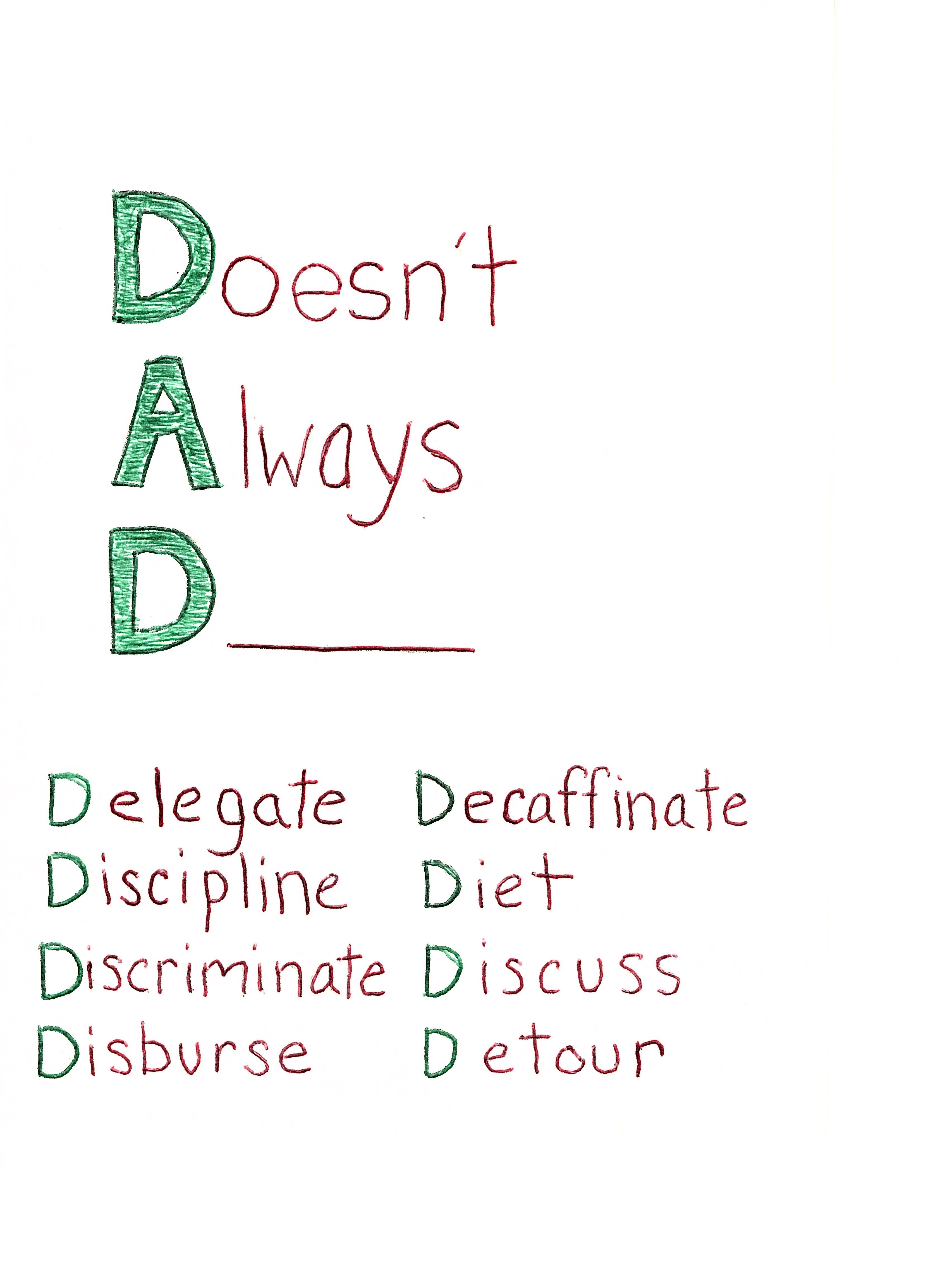
Fathers day card1 Fathers day card  Fathers day card3

These are poor examples of what a prison greeting card might look like.  By no stretch of the imagination would I consider myself an artist.  I could never make a living at drawing, but I know a number of guys who do.

These artists ply their trade in the day room and on the yard, displaying their works in a cash and carry business.  Most will take commissioned works to customize a card with names, colors, and special designs.  The quality and variety of cards varies greatly from artist to artist.  But with all greeting cards “it is the thought that counts.”

Another person that I’ve net in prison is the Dramatic Actor, always playing the tough guy. They portray themselves to be “Dirty Harry”, a mob boss, or a gangster.  Their favorite saying is “coming to prison is no time to get scared.”  Violence is their solution to every problem they encounter.  Possessing only a limited vocabulary and no coping skills, they are angered easily and rapidly escalate to fighting.  Intimidation works for them frequently when the person they have confronted has better sense than to engage them.

The Dramatic Actor plays the role of the stereotypical inmate.  They refuse to cooperate with staff on principle.  They have the “us” versus “them” mentality.  They will ridicule those who do cooperate and seek to punish those inmates who they perceive are enforcing the rules or won’t look the other way.  An example of this is when the Dramatic Actor comes to the chow hall and demands that the line server put an extra serving or cookie on his tray.  If the line server complies and gets caught it will cost him his job.  On the other hand, he will face verbal abuse- threats and possibly even physical abuse on the yard later if he doesn’t comply.  For some working in the kitchen is not an option simply because they have no desire to be beat up over a cookie or a hot dog.

These Dramatic Actors typically don’t perform in private, only in public.  One-on-one they may actually be congenial, but when they are in front of their homeboys they always act tough.

I can’t help but go back to their favorite saying about coming to prison is no time to get scared, because that is what many of them are.  They find safety in numbers by joining a gang.  By acting tough many are hoping they can bluff their way through any situations that arise.

Another actor that I’ve encountered is the Comedian.  Rather than violence, the Comedian seeks to defuse the situation with humor or attack with sarcasm. The Comedian is more intellectual than the Dramatic Actor, however it is still just an act. Rarely do you ever see the real person, just the persona.

The Comedian always has a joke or funny story to tell, but for some reason I’ve encountered very few that make puns.  This may be related to the lower overall level of education and command of the subtler aspects of the English language.  There are two types of Comedians- those that use self-deprecating humor and act like the clown and those that are insult comics wielding humor like a weapon.

The Clown will use humor as a way of making themselves less threatening.  They try to lighten up the mood of any situation with a humorous insight, observation, or speculation.  They want people to laugh with them and if necessary at them to avoid conflict.  The Clown tends to be more of a loner or hangs out with a small group of like-minded individuals, just trying to go home.

The Insult Comic has a dark side.  They see the negative in everything or anyone.  Their vocabulary can be caustic and foul.  Their subject matter is generally not suited for mixed audiences.  To them humor is an instrument of war, as cruel as a knife or club, every blow is a low blow and every cut draws blood.  They tend to hang out with the Dramatic Actors and are just another member of the gang.

The last type of person I’ve met in prison is the Invisible Man.  The ghost who just passes’ through unnoticed.  They are anonymous, quiet as a church mouse and seek to stay out of the way.  Nobody knows their name, let alone who they are.  They don’t make friends and have few associates in prison.  They keep a low profile and have no interest in leaving their mark.  Being incarcerated is not a badge of honor but rather a deep shame that can’t end soon enough.

The Invisible Man may have been the exact opposite out in the world.  A successful business man, a family man, outgoing and carefree.  However, they have been profoundly affected by the criminal justice system.  For some this is only a temporary condition, while for others they will be changed for the rest of their lives.  For most prison is like a nightmare and when they wake up it will be just a bad memory that fades.  For a few it will haunt them for years to come.

There are certainly other types of people in prison, but by now you’ve noticed the trend. Not everyone is who they portray themselves to be.  Prison is a microcosm of the free world.  The only difference is that these people have been caught and convicted, while for others it is only a matter of time.