OLD SCHOOL

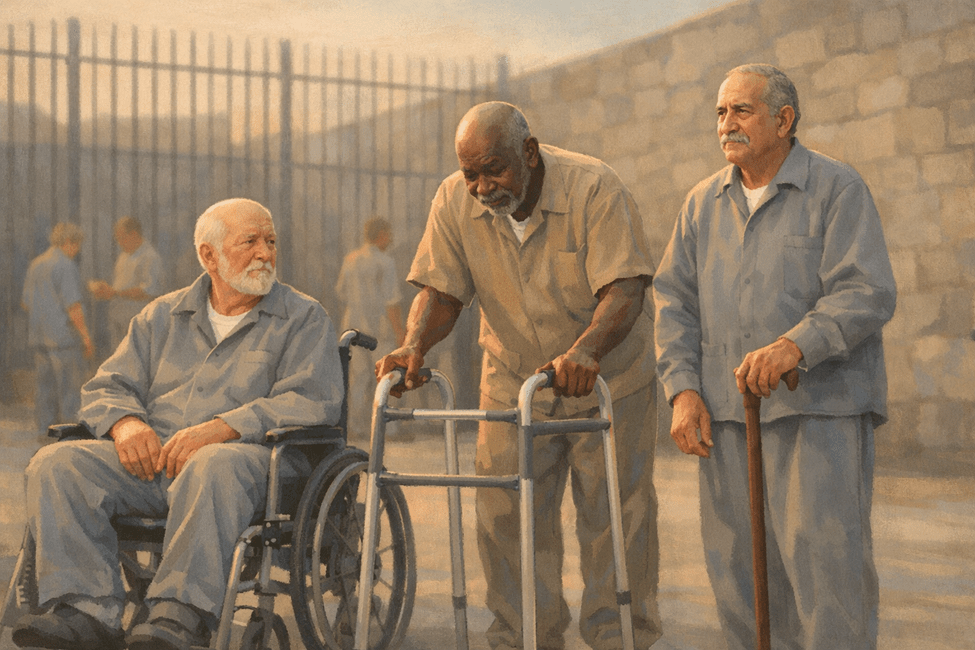
While in prison I met a lot of men that required assistance in the form of wheelchairs, walkers or canes to get around. Most of these had chronic, debilitating conditions requiring daily trips to medical to receive restricted medications and frequent offsite medical appointments. Life behind bars is tough and there isn’t any sympathy or relief from the extra challenges of getting around in a large prison compound. Come rain or shine med line callouts meant waiting outside in long lines to receive medications.  Wheelchair bound inmates were assigned a wheelchair pusher to assist them with getting to appointments and meals. (Whether they showed up to do their jobs is another story.) Those with walkers or canes were on their own.

Going out of the facility for transfers or medical appointment meant belly chains and wrist & leg shackles regardless of whether you might be considered a flight risk.  I had to go to the prison hospital in Jackson several times for doctor’s appointments and witnessed first-hand the pain and suffering that the sickest, frailest inmates endured to receive health care. In many ways I was blessed and fortunate to avoid illness or injury that resulted in permanent disability. For some it was a never-ending nightmare.  In prison inmates have no control of their situation, and access to medical services doesn’t guarantee treatment. 
I knew several inmates who had suffered medical emergencies like strokes or heart attacks.  Some I knew had received traumatic injuries in fights or sports.  One guy I met was suffering from liver failure and after completing his sentence with the MDOC was being held on a detainer from another state.  He was looking forward to going to Ohio because there he would be eligible for a liver transplant. Prisoners in the MDOC are not allowed on the waiting lists for organ transplants. Most of the handicapped inmates I knew didn’t arrive in prison that way. I have watched a bunkie go from being an able-bodied lifer working in the kitchen to being wheelchair bound in a matter of weeks because of a change of medication ordered, not by his doctor but by a bureaucrat because there was a cheaper but less effective COPD medication available. Having life threatening conditions may not necessarily mean that you will receive treatment or that it might be changed to a lower cost, less effective treatment with devastating effects.

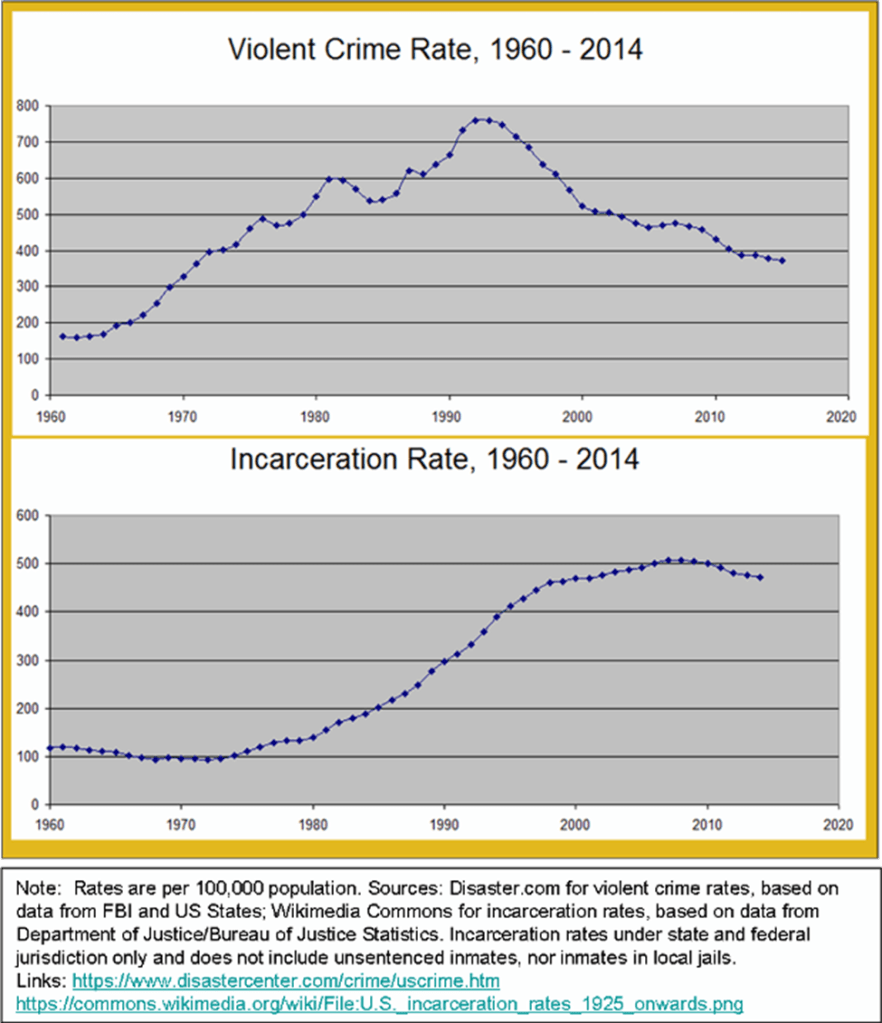
Much of how prisons operate today is based on systems developed over 100 years.  Change is always slow in coming to large systems designed around a single concept-  Inmates are in prison in order to “protect” the public.  Prison sentences have grown longer in the last 50 years in response to public outcries and political rhetoric. Social and medical science have had little impact on these often secretive and deliberately cruel institutions.  Lawsuits have had more impact on changes in prison policy and procedure than enlightened public opinion or governmental policy.  “Tough on crime” legislation increased sentence guidelines and in very few cases have they been reduced, regardless of the nearly universal agreement of researchers that it hasn’t achieved the desire effect.  That the human and financial costs to society are far higher than the return on investment.
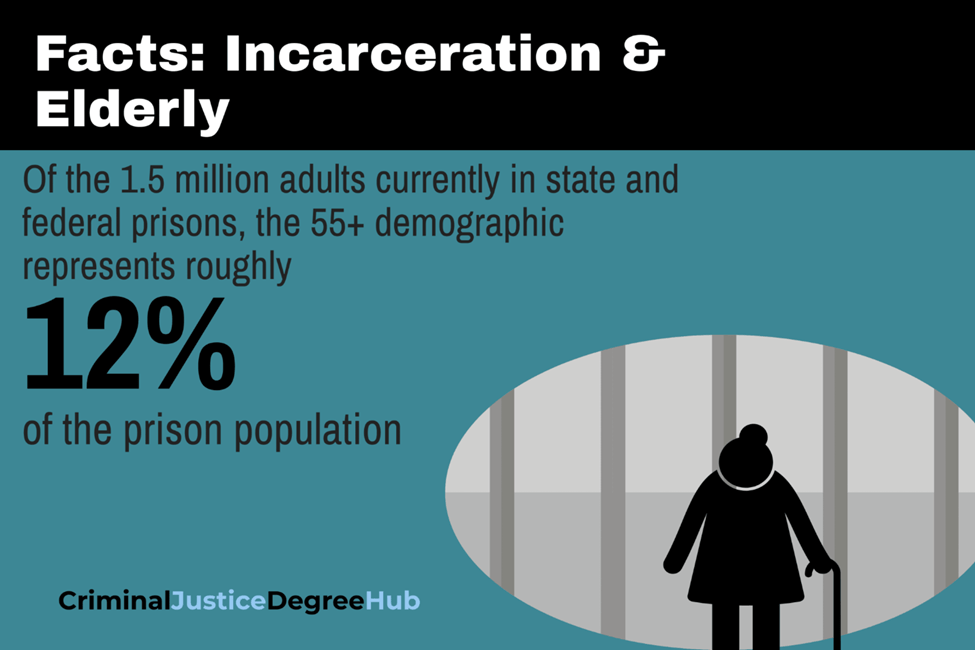
Going to jail and prison are very stressful events. In my mid 40’s when I was arrested, I did not have gray hair.  By the time I completed my sentence in my early 50’s my hair was turning gray. Incarceration means more than just losing your freedom, it is a complete loss of control.  You no longer have a say about what happens to you. Isolation, confinement, poor nutrition, sleep deprivation, and violence all play a role in breaking you down mentally, physically and spiritually, Hours turn into days. Days turn into months. Months turn into years. Everything you once had is lost. The present is dark and scary.  The future is so far away that it is unknowable. In Prison time moves slowly but inmates age faster than on the outside.
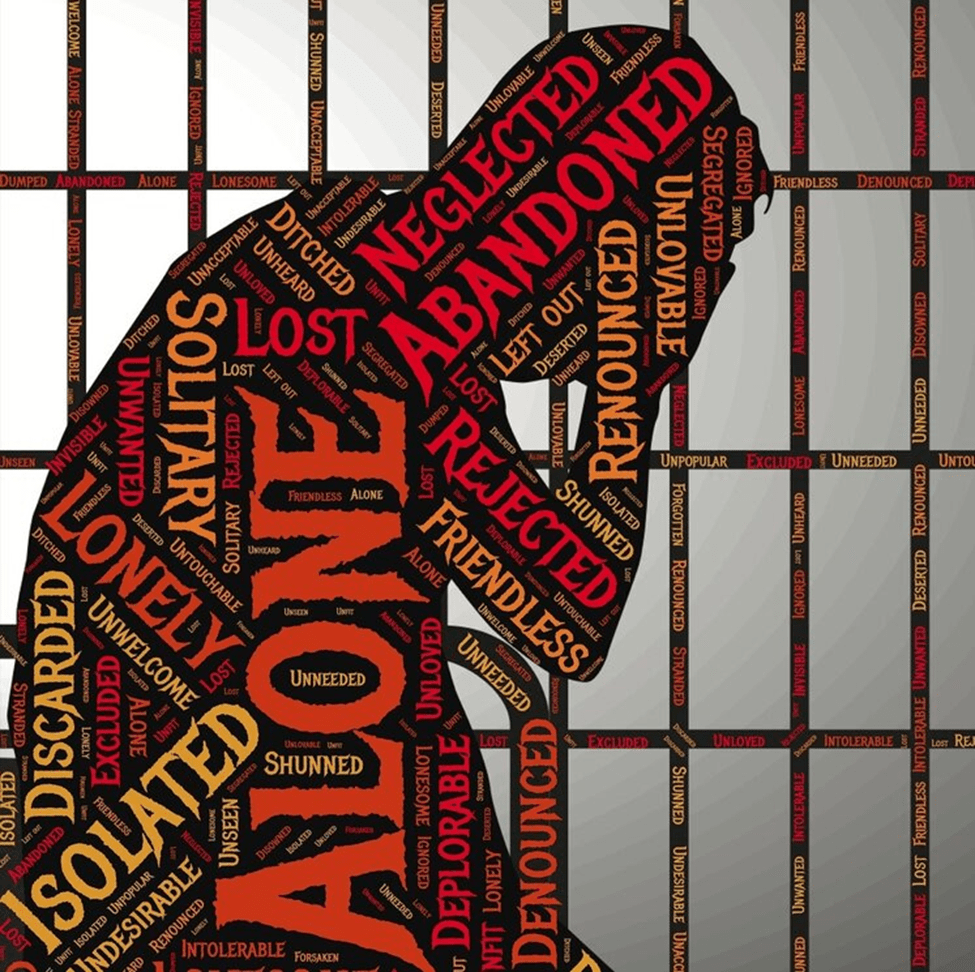
While in prison I walked the track, even ran and worked out in the weight pit some.  There were sport leagues for softball, basketball and volleyball.  We got out of our cells and cubes as often as we could to get fresh air and exercise.  I read books from the library in order to allow my mind to visit far away places, study new ideas or work on my self improvement and spirituality. I looked forward to weekly calls home and wrote letters and created my own greeting cards. I participated in any available programming offered that I thought would look good to the parole board. But while all those things did help with the daily stresses of life behind bars, it wasn’t enough.

Prison food is legendarily awful.  Most people lose a lot of weight while in jail and prison because of the inadequate portions and poor nutritional quality.  Supplementing caloric intake from the store is expensive and the options are not healthy, mostly carbs and sugar. While I was at Mid-Michigan Correctional in St. Louis, MI, I even had to contend with polluted drinking water.  Reports of cancers, kidney failure and other health issues that did not exist in individuals before going there have been reported, due to exposure to contaminated well water that the prison used. There have been lawsuits brought against the MDOC for food and water, but there has been little if any positive change.

That being said there are a few items worth mentioning regarding legislative changes both recent and proposed here in Michigan, that are reflective of the conclusions drawn by researchers both in the US and internationally regarding the effects that incarceration has on individuals serving time.  With the help of AI I have compiled the following overview regarding the effect that prison has on the aging of those incarcerated.  To put this in context.  Prison populations in Michigan and across the nation have risen dramatically since the 1980s because of longer prison sentences that legislatures enacted.  Now many of those incarcerated are serving indeterminate sentences that we refer to as basketball scores.  Sentences that amount to life without the possibility of parole by another name.


Accelerated Aging in Prison: Michigan in National and International Context

A substantial body of medical, gerontological, and social science research demonstrates that incarceration is associated with accelerated aging. Each year spent incarcerated is associated with an estimated two‑year reduction in life expectancy. Incarcerated individuals experience earlier onset of chronic disease, functional impairment, cognitive decline, and reduced life expectancy compared to the general population. As a result, people in prison are often considered physiologically 10–15 years older than their chronological age. ¹ ²

This phenomenon has direct relevance for Michigan, where a growing share of the prison population is older and medically complex, and where recent policy reforms acknowledge—though only partially address—the implications of aging behind bars.
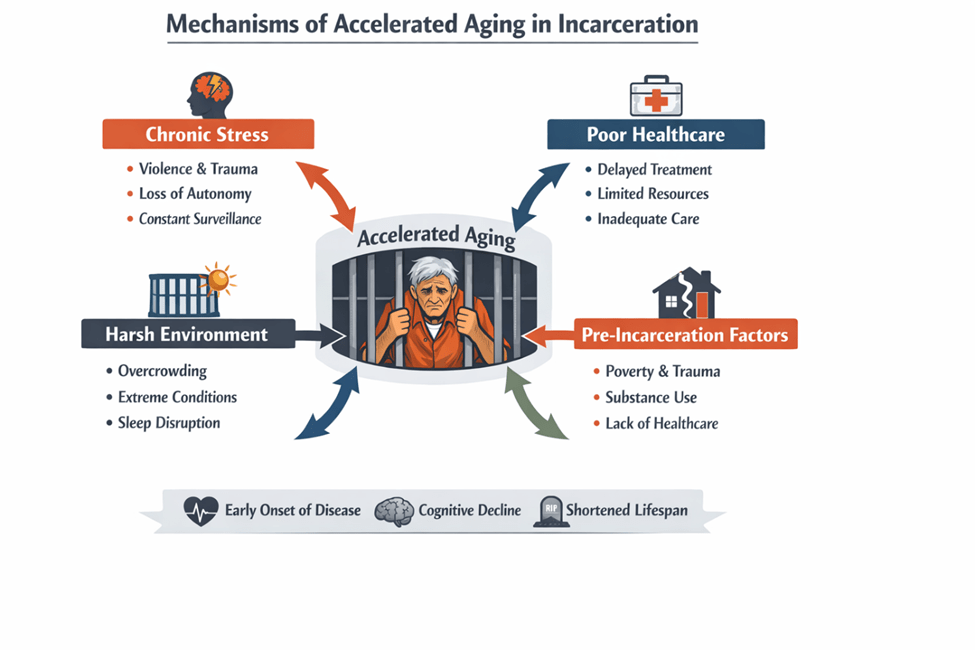
Health and Aging in Prison

Across U.S. and international studies, incarcerated adults show:

  • Earlier onset of geriatric conditions, including mobility limitations, sensory impairment, incontinence, and cognitive decline. ³
  • High levels of multimorbidity at younger ages than seen in the general population. ⁴
  • Elevated mortality risk and reduced life expectancy associated with time spent incarcerated. ⁵

Researchers consistently identify several drivers: cumulative life-course disadvantage prior to incarceration; chronic stress, deprivation, and loss of autonomy during imprisonment; delayed or inadequate healthcare; and prison environments designed for younger, able-bodied populations. ² ³

Michigan’s Policy Response

Michigan has explicitly recognized the challenges posed by an aging prison population and has enacted limited reforms.
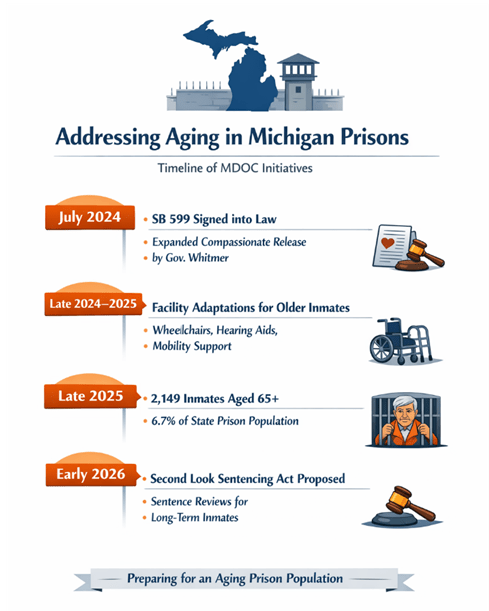
Medically Frail Parole (Senate Bill 599, Public Act 111 of 2024):

  • Expanded eligibility for parole is based on serious medical conditions, terminal illness, or severe functional impairment.
  • Permits release to any parole-board–approved placement, including private homes or hospice care, rather than only licensed medical facilities.
  • Retains restrictive criteria focused on medical severity, low assessed risk, and minimal threat to public safety. ⁶ ⁷

Proposed Second Look Sentencing:

  • Would allow judicial review of long sentences after substantial time served.
  • Remains under consideration and has not yet been enacted. ⁸

Assessment:

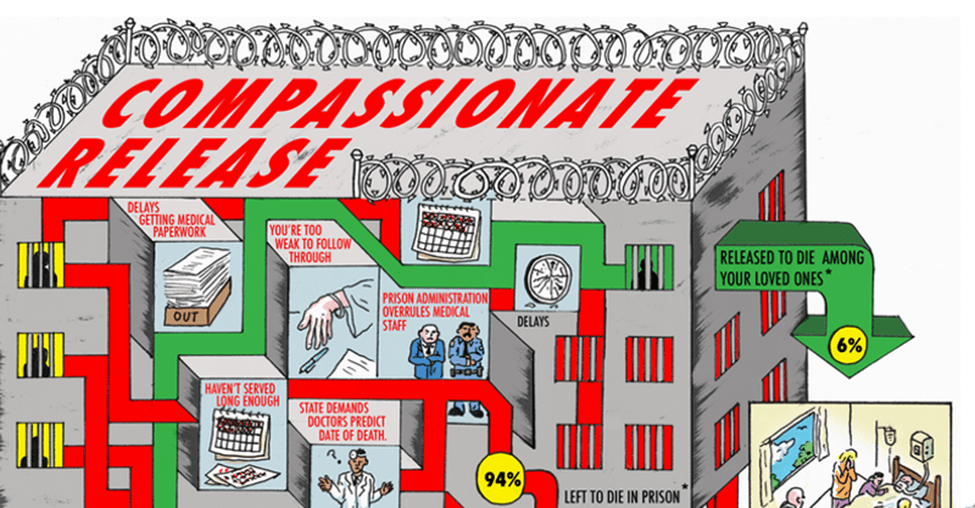
Michigan’s approach reflects a narrow, medicalized model. While SB 599 improves access to compassionate release for the most seriously ill individuals, the state largely continues to manage aging inside prison rather than broadly reassessing long sentences for older adults. I knew several inmates who tried to apply for compassionate release due to the diagnosis of terminal diseases.  Only one received his compassionate release, but still died in prison before he could be released.

Comparison with Other U.S. States

State approaches to aging in prison vary considerably:

  • More expansive models (e.g., California, New York):
    • Provide “elder parole” or age-plus–time-served eligibility.
    • Do not require terminal illness or profound disability. ⁹ ¹⁰
  • Restrictive models (including Michigan historically):
    • Rely primarily on medical or compassionate release with narrow eligibility and low utilization. ⁷

Michigan’s position:

Recent reforms move Michigan away from the most restrictive end of the spectrum, but it remains closer to “medically frail only” systems than to states that treat advanced age and lengthy incarceration itself as grounds for sentence review. One issue that I am aware of is that while there is a process in place to make the determination of whether or not compassionate release is warranted there was no timeframe required to make the determination, which allows MDOC staff responsible for making the determination to sit on the paperwork until it becomes a moot point.
Michigan does not have “good time” or any other behavior-based system to shorten sentences to less than the Earliest Release Date.  Therefore, it is not possible to go before the parole board for consideration of mitigating factors that could be taken into account in determining whether an inmate would pose a risk if paroled back into the community. Much has been said about “aging out of crime” research that shows that as people age, they tend to take fewer risks and are less likely to commit crimes in their 30s than when they were in their teens or 20s. So, for those that received long sentences based on sentencing guidelines may actually become less of a threat to society as they mature.  This was acknowledged in the “juvenile life without possibility of parole” controversy where courts were ordered to resentance juvenile lifers taking their prison records into account.
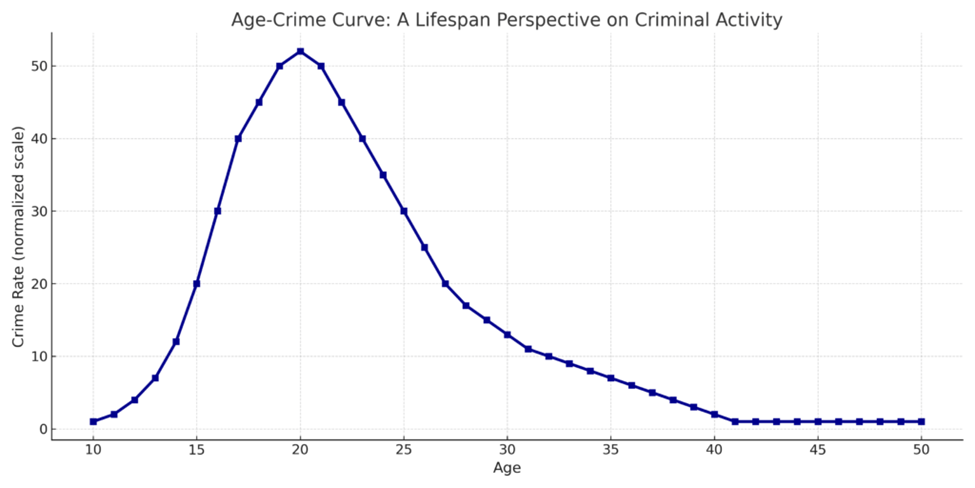
Prison is a dangerous place and being older can make an inmate a target for theft, exploitation, extortion and violence. This can be especially true for older or handicapped inmates serving time for sex offenses. Sex offenders are seen as the lowest of the low and are singled out for abuse for no other reason.  While sex offenses are by definition violent crimes, that doesn’t mean that the perpetrator is a violent person capable of defending themselves from gang members.  Most inmates are in General Population where both violent and non-violent offenders are housed together.  It isn’t possible to segregate inmate populations based on which ones are serious about going home and those that are only there on “vacation.” The violence in prison follows the same age related curve as in society. Having been assaulted twice I know how that can affect a person. Prison is no place for the weak and defenseless but there are too many there that are just that. People to weak to pose a threat to society but are unable to be considered for any type of “unfitness for prison” designation as some other countries have.

International Comparison (United Kingdom and Europe)

International research and policy frameworks generally adopt a different orientation:

  • Aging in prison is framed primarily as a human rights and dignity issue, not solely a healthcare problem. ¹¹
  • Release decisions often focus on whether continued detention is compatible with frailty, severe disability, or cognitive impairment, rather than on diagnosis alone. ¹²
  • Greater reliance on shorter sentences, non-custodial sanctions, and compassionate release reduces the number of people aging in custody. ¹¹
  • Universal or integrated healthcare systems facilitate continuity of care following release. ¹³

Compared with these models, Michigan—like most U.S. states—places greater emphasis on managing aging within prison rather than structurally limiting long-term incarceration of older adults.

Comparative Approaches to Aging and Release from Prison

DimensionMichigan (MDOC & State Law)Other U.S. StatesInternational Models (UK / Europe)
Primary mechanism for older or infirm prisonersMedically frail parole under SB 599 (Public Act 111 of 2024); proposed but unenacted Second Look Sentencing¹²Mix of medical parole, geriatric/elder parole, resentencing, and executive clemency; scope varies widely by state³⁴Compassionate or medical release combined with generally shorter sentences and broader use of non‑custodial sanctions⁵⁶
Trigger for releaseSerious or terminal medical condition, severe functional impairment, dementia, minimal public‑safety risk¹Often age plus time served (e.g., 50–65 years old with 10–25+ years served), sometimes without terminal illness requirement³⁷Terminal illness, severe disability, or determination that continued detention is incompatible with dignity or human‑rights standards⁵⁸
Placement after releaseAny parole‑board–approved placement, including private homes or hospice (expanded by SB 599)¹Some states require placement in licensed medical facilities; others allow home or community placement³Typically home, hospice, or community care settings, often integrated with national health systems⁶⁹
Definition of eligibilityNarrow and medicalized: diagnosis‑ and impairment‑based; age alone is insufficient¹²Highly variable; some states recognize “geriatric” status by age, others rely almost exclusively on medical criteria³⁴Often framed as “unfitness for imprisonment” or disproportionate punishment, rather than age or diagnosis alone⁵⁸
Overall policy orientationIncremental and restrictive; focuses on releasing only the sickest individuals while most age and die in prison¹²Patchwork system: ranges from expansive elder‑parole frameworks to rarely used medical release mechanisms³⁴Greater emphasis on proportionality, dignity, and limiting long‑term incarceration of frail or elderly people⁵⁶

Key Takeaways

  • Research consensus: Prisons are aging-accelerating environments.
  • Michigan: Acknowledges accelerated aging but relies on narrow, medically driven release mechanisms.
  • Other U.S. states: Offer a patchwork ranging from restrictive medical parole to broader elder-parole systems.
  • International models: Emphasize proportionality, dignity, and reduced reliance on incarceration for older and frail individuals.

Bottom line:
Michigan has made incremental progress but compared with more expansive U.S. reforms and international approaches, it continues to prioritize selective medical release over broader reassessment of long sentences and the appropriateness of incarcerating older adults.

The research also shows that the effects of aging in prison are not easily mitigated after parole.  These are life expectancy shortening, quality of life issues that are the unintended consequences of incarceration.  In a society solely focused on retribution rather than rehabilitation and reconciliation there needs to be more discussion, not based on emotions but rather on scientific evidence to guide decision making.  There needs to be less of a proscribed one-size-fits-all approach to sentencing guidelines and more of an individual evaluation of whether or not a person is still considered a threat to society.  Give the parole and clemency boards the ability to determine if the time spent in prison has resulted in meaningful and measurable reform.  Provide more structural support during parole to ensure the successful reintegration back into society.  All of these things together would reduce prison populations and minimize this aging effect, thereby reducing long term costs associated with incarceration and medical care.

Footnotes

  1. Berg, M. T. et al., Losing Years Doing Time: Incarceration Exposure and Accelerated Biological Aging, Journal of Health and Social Behavior (2021).
  2. Doherty, E. E. et al., Examining the Relationship Between Incarceration and Healthy Aging, Journal of Developmental and Life‑Course Criminology (2025).
  3. Prison Policy Initiative, Graying Prisons: States Face Challenges of an Aging Inmate Population (2018).
  4. American College of Physicians, Health Care Implications of the Rapidly Aging Incarcerated Population.
  5. ACLU & Prison and Jail Innovation Lab, Trapped in Time: The Silent Crisis of Elderly Incarceration (2025).
  6. Michigan Legislature, Senate Bill 599 (Public Act 111 of 2024).
  7. Michigan Allows More Releases for Medically Frail Prisoners, Prison Legal News (2025).
  8. WCMU Public Media, reporting on proposed Second Look Sentencing legislation.
  9. National Conference of State Legislatures, analysis of elder parole statutes (cited in The Marshall Project, 2026).
  10. Davis Vanguard, Debate Grows Over Elder Parole Bill in New York (2026).
  11. Prison Reform Trust, Growing Old in Prison (UK).
  12. UN Office of the High Commissioner for Human Rights, submissions on older persons deprived of liberty.
  13. Gavin, P. et al., Healthcare and Social Care Needs of Older Prisoners in England and Wales, Social Sciences (2025).

Table Footnotes

  1. Michigan Legislature, Senate Bill 599 (Public Act 111 of 2024), amending medically frail parole eligibility.
  2. Michigan Allows More Releases for Medically Frail Prisoners, Prison Legal News (2025).
  3. National Conference of State Legislatures, surveys of elder‑parole and geriatric‑release statutes (cited in The Marshall Project, 2026).
  4. How States Are Grappling With an Aging Prison Population, The Marshall Project (2026).
  5. Prison Reform Trust, Growing Old in Prison (UK).
  6. Gavin et al., Healthcare and Social Care Needs of Older Prisoners in England and Wales, Social Sciences (2025).
  7. Davis Vanguard, Debate Grows Over Elder Parole Bill in New York (2026).
  8. UN Office of the High Commissioner for Human Rights, submissions on older persons deprived of liberty and compatibility of detention with human‑rights standards.
  9. Penal Reform International, Global Prison Trends and European prison‑health integration analyses.


What’s in a name?

William Shakespeare asked that question in Romeo & Juliet. “What’s in a name? That which we call a rose by any other name would smell as sweet.” Juliet was not allowed to associate with Romeo because he was a Montague. If he had any other name, it would have been fine. She was complaining that his name is meaningless. If the rose had any other name, it would still be the same. So, with Romeo- he would still be the same beautiful young man even if he had a different name.1

Our name is how we are identified from birth.  It represents us conceptually to others.  Hearing someone’s name that we know often brings their face, personality, or character to mind.  We can remember conversations, funny anecdotes, or life encounters that inform our opinion of who they are. When we hear a stranger’s name it is just a name until we have information to associate with it.  Information may come in the form of gossip passed along from another person, social media viewed online, or news reports. 

Back in the day before the internet, employers would review applications and resumes to screen for potential job candidates.  Calls or letters would be sent to verify employment history.  References would be contacted to gain information necessary to inform the hiring process.  Businesses routinely run background checks on job candidates and active employees to determine if they should be disqualified from employment opportunities. Once I was fingerprinted because the FBI had to check to ensure that I did not have any mafia connections when I applied to work as the lab manager at a landfill.

Modern hiring practices have changed significantly because of the potential of litigation regarding the release of information that could be considered negative regarding a former employee.  Your previous employer will now only confirm that an individual worked for the company.  To get information, many employers have turned to third party companies that collect massive amounts of information about individuals from a wide variety of companies and government agencies that have commoditized their vast databases.  Information about credit worthiness, social media posts, along with court filings and criminal convictions are available instantaneously. 

I was recently fired from a job after 6½ years because of a change in hiring policy.  When I was first hired the policy was that you could not have a criminal conviction in the last 7 years.  A new change to the policy specified that you could not have certain specific convictions period. My employer knew who I was based on years of interaction- a hardworking, intelligent, dedicated, and loyal employee. Yet based on a single entry in a background check I was dismissed without any opportunity to explain.

The issue with computer data has always been “Garbage In, Garbage Out”.  The information is only as good as the source.  While it may be useful in this age of information overload to get information in small, overly simplified bites, context is everything, as it is in life.  When we spend our lives with a person, we will have a much better image of who they are than if we only read the sensationalized headlines about what might be the worst day in someone’s life.  And yet it is those snapshots, those life events presented without context by which our society makes life altering decisions about other people.

Case in point is SORNA, the Sex Offender Registration and Notification Act.  In 1994 the Wetterling Act established baseline standards for states to register sex offenders.  Megan’s Law in 1996 mandated public disclosure of information about registered sex offenders and required states to maintain a website containing registry information.  The Adam Walsh Child Protection and Safety Act, which includes SORNA, created a new baseline of sex offender registration and notification standards.2 The registering and tracking sex offenders went from being a tool useful to law enforcement to a modern-day Scarlet Letter.  It is the public shaming, disenfranchising and discrimination of people who, in addition to many serving long jail/prison sentences, now face additional civil penalties including restrictions on where they can live and who they can live with.

In July of 2025 President Trump signed an executive order entitled “Ending Crime and Disorder on America’s Streets”.3  In Section 3 the order zeroes in on registrants who are homeless, instructing the Department of Justice to “substantially implement and comply with” the Sex Offender Registration and Notification Act (SORNA) for individuals with no fixed address. It calls for mapping and monitoring the locations of homeless sex offenders, effectively treating poverty as a risk factor warranting heightened surveillance.

The order goes even further. If a homeless individual is arrested for a federal crime, they may be evaluated under 18 U.S.C. § 4248, a statute that allows for indefinite civil commitment of individuals deemed “sexually dangerous”—even after they’ve completed their sentence. That’s not rehabilitation. That’s preemptive detention.

This isn’t about protecting the public or preventing new offenses. It’s about maintaining a narrative that portrays registrants as permanent threats, regardless of evidence. And it comes at the expense of people who are already marginalized—those struggling with mental illness, addiction, or simply trying to survive without stable housing in a system designed to push them out.

Supporters of the executive order may argue it’s a step toward restoring order. However, safety rooted in fear and endless punishment is not justice; it’s containment. What this order reveals isn’t reform, but the further cementing of a system that punishes for life, with no offramp, no redemption, and no demonstrated public benefit.4

In the Old Testament King Solomon wrote in Proverbs 22:1 “A good name is more desirable than great riches; to be esteemed is better than silver or gold.” This verse emphasizes the importance of a good reputation and the value of being respected over material wealth.  It suggests that a good name reflects one’s character and integrity, which are more enduring and impactful than material possessions.5  This is a lesson that anyone who has been to prison learns the hard way. Not everyone that gets convicted is a “hardened” criminal.  And once your good name is gone, it is impossible to get it back.

Many people that I met in prison were there because of one bad choice that was not in line with who they are, how they were living or their belief system.  The downfall of Adam and Eve in Genesis chapter 3 was that they believed the lies of the Satan and ate of the forbidden fruit.  Romans 3:23 says that “all have sinned and fall short of the glory of God.” Yet the Bible is a narrative on redemption.  In both the Old and New Testaments God used people that went to prison to do great things. I have a tee shirt that says, “All my role models went to prison: Joseph, Paul, Peter, John, Daniel and Jesus.”  God used ordinary people, fallen people, people who sinned.  He redeemed them, he changed them, and he used them for His glory.

In our society we have lost this prospective.  Forgiveness has been replaced by Condemnation.  Restoration has been replaced by Punishment. Redemption has been replaced by Damnation. There were two other people crucified on Golgotha with Jesus. Their choices are the same ones that we must all make.  Either we choose to believe or we choose to reject the promise of eternal life.  Yet it is the crowd surrounding the condemned that were jeering, hostile and calloused to the barbarous, gruesome execution taking place. These people are the true face of evil.

“There but for the grace of God go I” is an old proverbial phrase used to express empathetic compassion and a sense of good fortune realized by avoiding hardship. An early version was ascribed to the preacher John Bradford who died in 1555. 6  The Keryx volunteers that go into prisons say the same thing.  There isn’t much that separates them from those in prison, just that they did not get caught.  What our society needs today is more John Bradford’s and more Keryx volunteers.  Men and Women of faith that acknowledge the saving grace of Jesus, not just in their own lives but in the lives of others.  People that get involved, get to know people for who they are, not a stereotype or a caricature. 


End Notes
1          ‘What’s In A Name’: Phrase Meaning & History✔️

2          Legislative History of Federal Sex Offender Registration and Notification | Office of Sex Offender Sentencing, Monitoring, Apprehending, Registering, and Tracking

3          Ending Crime and Disorder on America’s Streets – The White House

4          Trump’s Executive Order Confirms the Registry Machine Isn’t Going Anywhere – Women Against Registry

5          What does Proverbs 22:1 mean? | BibleRef.com

6          Quote Origin: There But For the Grace of God, Go I – Quote Investigator®

Second Chances

There has been much said about whether or not those convicted of committing a crime should be given a second chance.  A wide variety of voices in our culture have made their opinions perfectly clear.  “Tough On Crime” was a political approach that emphasizes strict enforcement of laws and harsher penalties for offenders, often associated with policies aimed at reducing crime rates through increased policing and incarceration. This strategy has been a significant part of political discourse, particularly in the United States, and has seen a resurgence in recent years among various political leaders. But does it really work? 

The Southern Poverty Law Center reports that Mandatory minimums effectively shift the power of sentencing from judges to prosecutors, resulting in less objective and more politicized outcomes. Although they are largely used for drug and other nonviolent crimes, mandatory minimum sentences can apply to a wide range of offenses. When mandatory minimums are in effect, the ultimate sentence will be based on the specific offense charged. This means that prosecutors have enormous, unchecked power because by choosing which charges to bring, they are also selecting the sentence the person will receive if convicted. This results in an imbalance of power and a high risk of unfair outcomes. For example, regardless of guilt, the threat of specific charges that carry stiff mandatory minimums may encourage people to plead guilty to a different crime with lower penalties. Furthermore, the exploitation of mandatory minimums effectively prevents judges from considering the totality of the circumstances when determining an appropriate sentence after a person has been found guilty of a crime. Historically, one of the roles of judges was to adjudicate an appropriate punishment. Usurping the judges’ role is especially problematic considering 98% of federal convictions are the result of guilty pleas over which prosecutors completely control the terms; very few people resolve their case with a trial.

A primary rationale behind mandatory minimum sentences was to deter crime. Today, the average federal sentence for people convicted of a mandatory minimum offense is 151 months; when the mandatory minimum is for drug offenses, it is 138 months.  Contrary to the notion that these sentences will have a deterrent effect, ample research demonstrates that mandatory minimums do not decrease crime and, in fact, they likely generate more crime. Ample research concludes that imprisoning people not only does not lessen the likelihood that people will reoffend, but it can actually increase it. This may be for a multitude of reasons: Prisons are a place of trauma, people released from prison face stigma and economic hurdles, and people may struggle to return to families and communities after being away for so long. A policy of seeking harsh sentences will not improve public safety, but it will certainly destroy communities.1

There’s a growing movement to replace the tough on crime approach with a more evidence-based, data-driven, and compassionate approach to criminal justice. This “Smart On Crime” approach seeks to reduce the number of people behind bars, while still protecting public safety, by focusing on evidence-based policies that have been proven to be effective at reducing crime and recidivism.

One of the key components of the smart on crime approach is a focus on rehabilitation and reentry. This means investing in education, job training, and mental health and substance abuse treatment programs to help people who’ve been incarcerated successfully reintegrate into society and avoid reoffending. By investing in these programs, we can reduce the number of people who end up back in prison, while also improving public safety.2

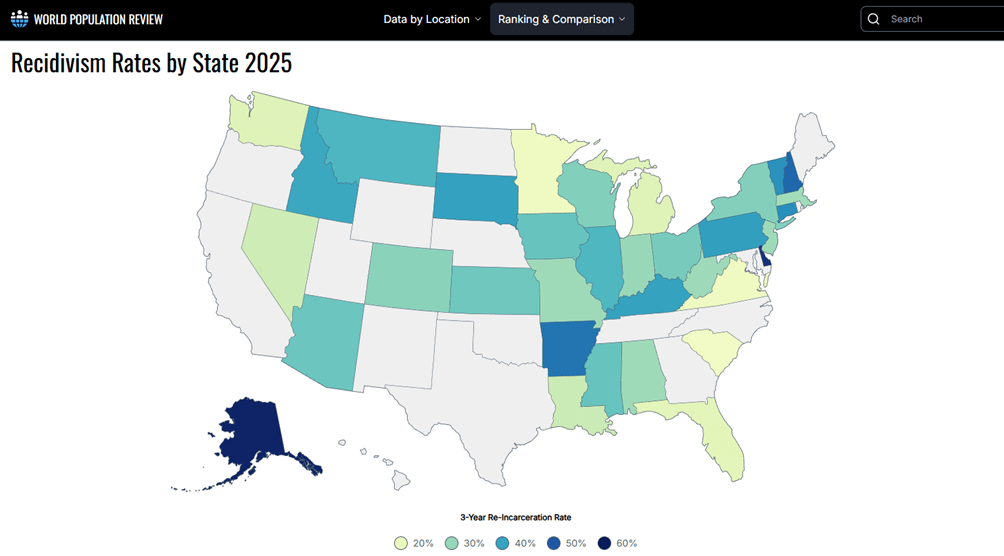
Recidivism is the tendency of a convicted criminal to repeat or reoffend a crime after already receiving punishment or serving their sentence. The term is often used in conjunction with substance abuse as a synonym for “relapse” but is specifically used for criminal behavior. The United States has some of the highest recidivism rates in the world. According to the National Institute of Justice, almost 44% of criminals released, returned before the first year out of prison. In 2005, about 68% of 405,000 released prisoners were arrested for a new crime within three years, and 77% were arrested within five years.

Factors contributing to recidivism include a person’s social environment and community, their circumstances before incarceration, events during their incarceration, and one of the main reasons, difficulty adjusting back into normal life. Many of these individuals have trouble reconnecting with family and finding a job to support themselves. Incarceration rates in the U.S. began increasing dramatically in the 1990s. The U.S. has the highest prison population of any country, comprising 25% of the world’s prisoners. Prisons are overcrowded, and inmates are forced to live in inhumane conditions, even those who are innocent and awaiting trial.

The United States justice system places its efforts on getting criminals off the streets by locking them up but fails to fix the issue of preventing these people from reoffending afterward. This is why many believe that the U.S. prison system is greatly flawed. Recidivism affects everyone: the offender, their family, the victim of the crime, law enforcement, and the community overall. Crime can affect anyone in any community. If a previously incarcerated person is released only to repeat an offense or act out a new crime, there will be new victims. Furthermore, taxpayers are impacted by the economic cost of crime and incarceration as the average per-inmate cost of incarceration in the U.S. is $31,286 per year.

Steps can be taken during incarceration to decrease recidivism. First is assessing the risks for reoffending and the criminogenic needs that contributed to breaking the law, such as a lack of self-control or antisocial peer group. The second is to assess their individual motivators, followed by choosing the appropriate treatment program. The fourth step is to implement evidence-based programming that emphasizes cognitive-behavioral strategies, coupled with positive reinforcement that can help them recognize and feel good about positive behavior. Lastly, the formerly incarcerated need ongoing support from a good peer group, as repeat offenders who were in gang culture have the greatest challenge to stay away from that behavior.3

The Second Chance Act, officially known as H.R. 1593, was enacted on April 9, 2008. Its aim was to improve the reintegration of formerly incarcerated individuals into society. The Act provided federal grants to state and local governments and nonprofit organizations to support reentry programs.

Goals of the Act

Reduce Recidivism: The Act focuses on lowering the rates of reoffending among released individuals.

Enhance Public Safety: By supporting successful reintegration, the Act aims to improve community safety.

Support Services: It provides funding for various services, including:

  • Employment assistance
  • Substance abuse treatment
  • Housing support
  • Family programming
  • Mentoring services

Nationally

Since its passage in 2008, the Second Chance Act has invested $1.2 billion, infusing state and local efforts to improve outcomes for people leaving prison and jail with unprecedented resources and energy. Over the past 15 years, the Bureau of Justice Assistance and the Office of Juvenile Justice and Delinquency Prevention have awarded funding to 1,123 Second Chance Act grantees to improve reentry outcomes for individuals, families, and communities.1 And critically, the Second Chance Act-funded National Reentry Resource Center has built up a connective tissue across local, state, Tribal, and federal reentry initiatives, convening the many disparate actors who contribute to reentry success.

The result? A reentry landscape that would have been unrecognizable before the Second Chance Act’s passage. State and local correctional agencies across the country now enthusiastically agree that ensuring reentry success is core to their missions. And they are not alone: state agencies that work on everything from housing and mental health to education and transportation now agree that they too have a role to play in determining outcomes for people leaving prison or jail.

Community-based organizations, many led or staffed by people who were once justice involved themselves, are contributing passion and creativity, standing up innovative programs to connect people with housing, jobs, education, treatment, and more. Researchers have built a rich body of evidence about what works to reduce criminal justice involvement and improve reentry outcomes, allowing the National Reentry Resource Center to create and disseminate toolkits and frameworks to support jurisdictions to scale up effective approaches. And private corporations that once saw criminal justice involvement as fatal to a candidate’s job application are now using their platforms to champion second chance employment as both a moral and business imperative.

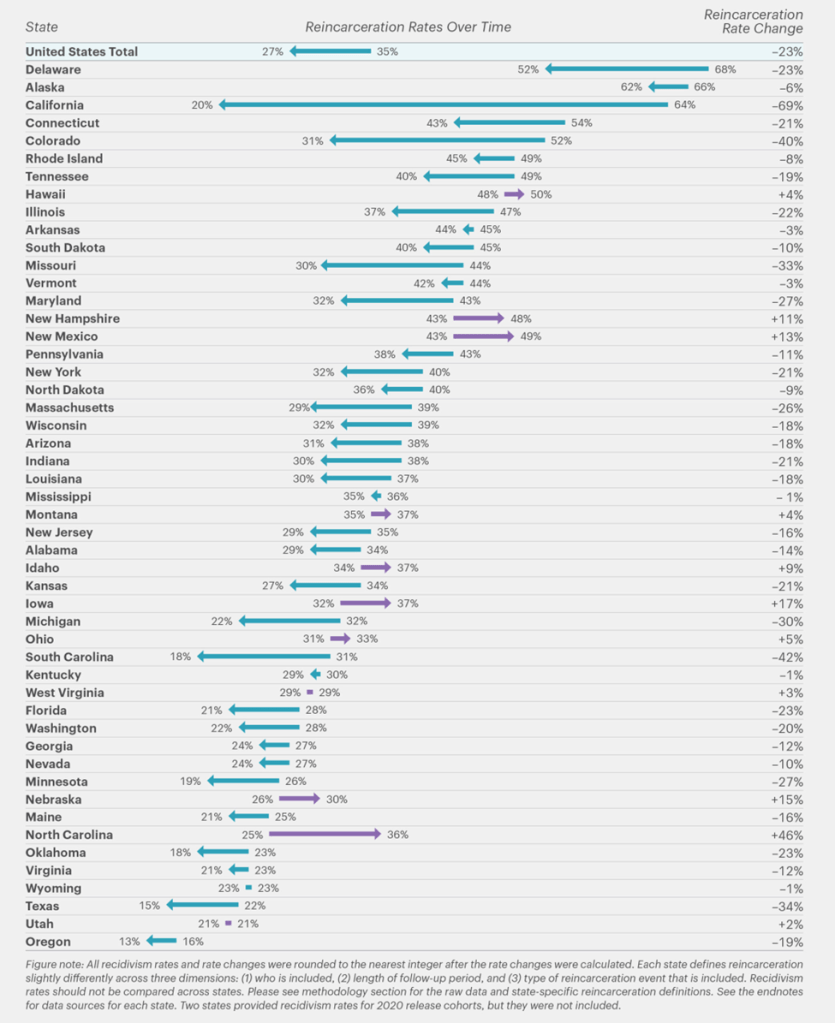
The efforts of these key stakeholders are bigger, bolder, and better coordinated than ever, and they are producing results. Recidivism has declined significantly in states across the country, saving governments money, keeping neighborhoods safer, and allowing people to leave their justice involvement behind in favor of rich and meaningful lives in their communities.4

Closer to home

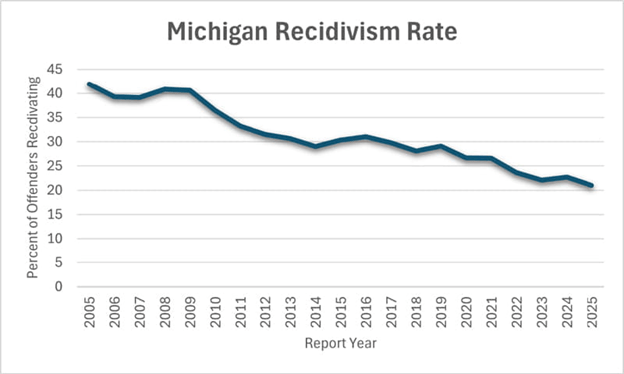
Michigan currently has a recidivism rate measured at 21.0%, the lowest rate on state record. The rate measures those who are three years from their parole date and records how many individuals have reoffended and returned to prison within that timeframe. The latest report shows a 79.0% success rate of those paroled not returning to prison.

MDOC has undertaken numerous evidence-based programs to continue reducing the state’s recidivism rate including supporting access to vital documents, housing, and recovery resources; job placement assistance; and effective supervision and care while individuals are incarcerated and on parole.

Prison educational programs have been seeing significant success with thousands of graduates since their inception. There are now 14 skilled trades programs and 12 post-secondary education programs operating in correctional facilities across the state, with additional programs expected to be added next year.

“This report shows that when we provide a full circle support system to those reentering our communities, they are less likely to return,” Director Heidi E. Washington said. “I am proud of our dedicated MDOC staff, and appreciate the support of our partners, all of whom help motivate and lift up those we are welcoming back into our communities. With increased support for reentry programing, we are very likely to see the state recidivism rate continue to decline.”

This report connects directly with a recently released MDOC prison population report which showed the lowest prison population since 1991, with 32,778 incarcerated individuals statewide, down from a peak of 51,554 individuals in 2007, illustrating success in rehabilitating offenders.5

Why this matters today

The Second Chance Act is up for reauthorization again this year.  It has not attracted much public attention with all the other actions taking place in Washington that have overshadowed this crucial piece of legislation. The Second Chance Reauthorization Act of 2025 (H.R. 3552/S. 1843) aims to enhance rehabilitation efforts for individuals transitioning from incarceration back into their communities.

Key Provisions

Grant Programs

  • Reauthorization: Extends grant programs for five additional years.
  • Support Services: Provides funding for reentry services, including housing, employment training, and addiction treatment.

Focus Areas

  • Substance Use Treatment: Enhances services for individuals with substance use disorders, including peer recovery and case management.
  • Transitional Housing: Expands allowable uses for supportive housing services for those reentering society.

Impact and Importance

  • Recidivism Reduction: Research indicates that effective reentry programs can reduce recidivism rates by 23% since 2008.
  • Community Safety: By supporting successful reintegration, the Act aims to improve public safety and reduce the burden on the criminal justice system.

The Senate passed the Act on October 9, 2025, as part of the National Defense Authorization Act, and it is now awaiting consideration in the House of Representatives.  Tell your Representatives to pass this bill and see it enacted in law so that the progress made in reducing recidivism and US prison populations will continue.

Find Your Representative | house.gov


End Notes

1 https://www.splcenter.org/resources/guides/trump-tough-on-crime-memo-faq/

2 Why the Tough on Crime Approach is Failing and What We Can Do About It – LAMA

3 Recidivism Rates by State 2025

4 50 States, 1 Goal: Examining State-Level Recidivism Trends in the Second Chance Act Era – CSG Justice Center