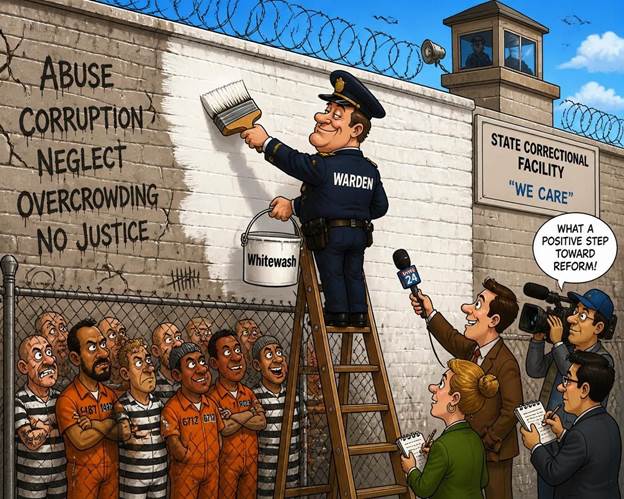
Whitewashed

There are at least two kinds of prison neglect in America. The first is visible: leaking ceilings, blackened grout, rusted pipes, brown water, air vents caked with dust and fungus, showers that smell rotten, cells that never fully dry out. The second is administrative: the memo that says conditions are “within expected parameters,” the grievance rejected as untimely, the inspection narrowed to avoid the worst areas, the spokesperson who insists that what people can see with their own eyes is not really there. That second form of neglect: the bureaucratic whitewashing of danger, is what makes the first so durable. And nowhere is that pattern more vividly exposed than in Michigan, where incarcerated women at the Women’s Huron Valley Correctional Facility have spent years describing black mold, failing ventilation, medical neglect, and retaliation, while jail and prison officials elsewhere in the state have faced scrutiny over unsafe drinking water and environmental contamination.[1][2][3]

This is not merely a story about old buildings. It is a story about power. Incarcerated people cannot move away from contamination, open a different tap, hire their own environmental assessor, or take their children elsewhere for the night. They are captive to the state not only in the legal sense, but in the most literal physical sense: captive to its walls, air, plumbing, and maintenance decisions. When correctional systems minimize mold, suppress water concerns, or bury evidence of environmental exposure behind procedure, they are not just failing to maintain buildings. They are converting confinement itself into a public-health hazard.[4][5]

The national template: Deny, Delay, Deflect

Across the United States, reports of toxic mold, contaminated water, sewage leaks, vermin, failing ventilation, and dangerous heat are often framed by correctional agencies as isolated maintenance issues rather than structural failures. Yet the pattern is remarkably consistent. The Marshall Project, Prison Legal News, and the Equal Justice Initiative have all documented how understaffing, deferred maintenance, overcrowding, and weak oversight create conditions where environmental hazards are not accidental side effects but recurring features of incarceration.[6][7][8]

When those conditions are challenged, institutions tend to respond with a familiar playbook. First comes denial: officials characterize mold as dirt, mildew, staining, or mere discoloration; they describe foul water as temporary discoloration after plumbing work; they insist that air-quality complaints are exaggerated. Then comes procedural deflection: incarcerated people are told to file grievances, only to have those grievances rejected, delayed, lost, or declared defective. Finally comes reputational management: public statements are carefully worded to acknowledge “concerns” while denying systemic danger. The result is that prison officials minimize the severity of the situation and a bureaucratic coat of paint is applied over rot.[2][6][7]

The legal structure of incarceration helps sustain this dynamic. The Prison Litigation Reform Act requires incarcerated people to exhaust internal grievance procedures before bringing many federal claims, which means prison administrators often control the gateway to outside review. Courts can and do intervene, but only after years of filings, dismissal motions, evidentiary disputes, and appeals. In the meantime, people keep breathing the air, drinking the water, and sleeping under the leaks.[3][9]

Michigan’s mold crisis: the Women’s Huron Valley Correctional Facility
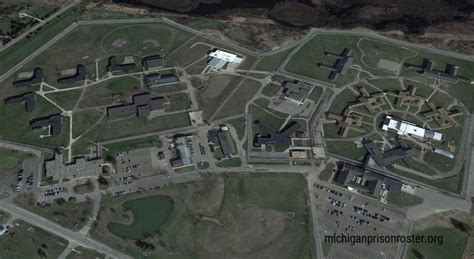
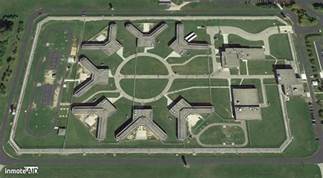
MDOC Women’s Huron Valley Correctional Facility

If the national story provides the template, Michigan supplies one of its starkest case studies. The Women’s Huron Valley Correctional Facility in Ypsilanti is the state’s only women’s prison and has become a symbol of how environmental danger can be normalized inside a correctional institution, even while evidence accumulates in plain sight. For years, incarcerated women, family members, whistleblowers, advocates, and journalists have described a facility with leaking roof, excessive moisture, failing ventilation, and widespread black mold in showers, vents, ceilings, and other living areas. Those reports eventually coalesced into the long-running federal litigation known as Bailey v. Washington, which alleges that prison officials knew of dangerous conditions and failed to remedy them.[1][3][10]

The allegations are not vague. Court filings and reporting describe mold falling from air vents, spreading across shower seams, eating through painted surfaces, and flourishing in an environment of chronic dampness. In 2025, federal rulings allowed substantial portions of the case to move forward, rejecting key defenses by the Michigan Department of Corrections and concluding that plaintiffs had plausibly alleged unconstitutional conditions and deliberate indifference. In another significant ruling, the court faulted the grievance process itself, finding that the system had serious flaws and that plaintiffs had not simply failed to complain, they had been functionally blocked from meaningful relief.[9][10][11]

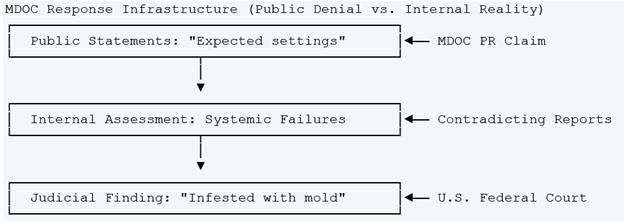
What makes Huron Valley especially revealing is the gap between internal reality and public posture. Reporting in 2025 and 2026 described lawmakers visiting the prison and being shown areas where obvious mold or black staining was brushed off as harmless residue, paint, or ordinary wear. At the same time, internal assessments and litigation records pointed to persistent infrastructure failures and ventilation problems. This is what “whitewashed” means in practice: not just literal paint over damage, but the official reclassification of danger as something benign, expected, or not worth urgent action.[2][11][12]
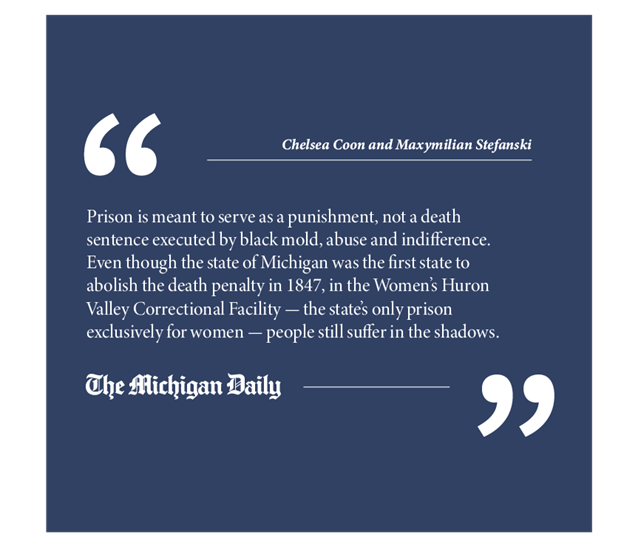
The human cost has been devastating. One of the best-known women associated with the case, Krystal Clark, has publicly described years of respiratory distress, swelling, and worsening illness that she and her advocates link to mold exposure inside the prison. In 2025 and 2026, local and statewide reporting amplified concerns that mold and inadequate medical care were part of a broader crisis at Huron Valley, especially after multiple deaths at the facility heightened public scrutiny. No responsible account should collapse all illness at the prison into a single environmental cause; prisons are complex places, and causation can be medically and legally contested. But it is equally irresponsible to ignore the pattern: repeated reports of mold, repeated denials, repeated claims that women were not being heard until judges and public pressure forced the issue into the open.[1][10][12][13]

How the coverup works

The concealment of environmental hazards in prisons rarely looks like a single dramatic conspiracy. More often, it operates through ordinary administrative habits. A warden reframes mold as cosmetic discoloration. A facility applies patchwork maintenance rather than replacing the failing system producing the moisture. A grievance is rejected on a technicality. A spokesperson emphasizes that findings are typical for a “large institutional setting.” A court deadline stretches months into years. Each act may appear minor in isolation; together, they create a machine for institutional disbelief.[2][9][11]

In Michigan, that machine has been visible in both the mold litigation and public oversight hearings. Critics have described a double standard in which officials reassure the public while staff and insiders privately acknowledge serious problems. The essence of whitewashing is not that nothing is known; it is that too much is known, and the system’s first reflex is to manage perception rather than eliminate the hazard.[11][12]

Contaminated drinking water: Michigan’s other prison health scandal
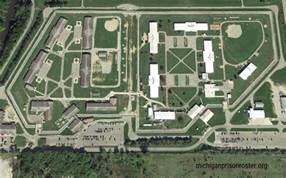
Central Michigan Correctional Facility- Level I 
St. Louis Correctional- Level IV


Black mold is only one half of Michigan’s prison environmental story. The other is water: unsafe, discolored, chemically tainted, or otherwise distrusted water in jails and prisons where those confined have no meaningful ability to refuse it. Michigan has seen multiple flashpoints. Some are historic, like the water contamination associated with correctional facilities in St. Louis near the Velsicol Chemical Superfund site. Others are immediate, like the 2026 revelations about copper and lead concerns at the Kalamazoo County Jail. Taken together, they show that the same logic of minimization extends from air and buildings to the most basic necessity of all.[4][14][15]
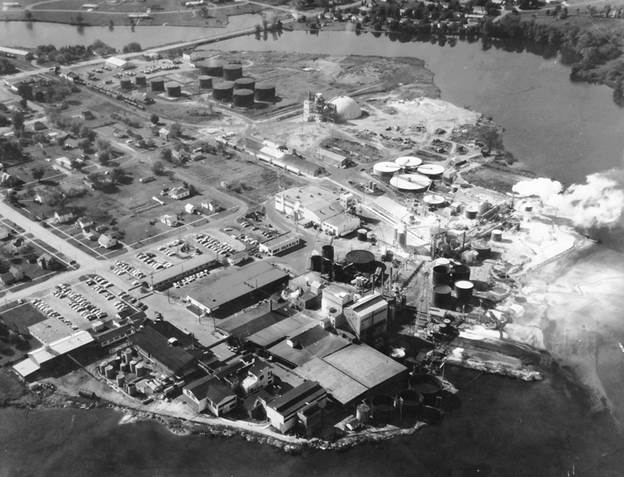
An aerial photo of the former Velsicol Chemical Co. factory along the Pine River in St. Louis, Mich. The company made chemicals like DDT and PBB. The property is now a Superfund site.

The St. Louis prison water story is especially haunting because it ties correctional exposure to one of Michigan’s most notorious industrial contamination legacies. Scholars and advocates have pointed to the Central Michigan and St. Louis correctional facilities’ proximity to the former Velsicol site and to contamination involving p-CBSA, a byproduct associated with DDT manufacturing. Reports and litigation have alleged that incarcerated people were forced to drink and bathe in contaminated water for years while staff members avoided it by relying on bottled water or other alternatives. Whether every claim has been adjudicated in the way plaintiffs hoped is beside the point for this broader pattern: once again, captive people described environmental danger while institutions insisted that the situation remained acceptable.[4][14]

The situation in St. Louis hits close to home for me.  I was there in 2013 when the water was brown and had a strong solvent smell.  I would boil water that came from the tap to try and make it drinkable. Brand new white t shirts turned brown in the wash.  We had to bathe in it, brush our teeth with it, and our food was prepared with it. It was the only prison in the state where you could buy bottled water in the commissary.  Originally water had been donated to the prison for the prisoner’s consumption, but the MDOC decided to profit from it.  Prison staff didn’t drink the tap water they were given bottled drinking water by the administration. When the city of St. Louis was connected to another water system and no longer used the ground water, the water in the prison got better.  If I come down with cancer I will be filling a lawsuit too.

The same structure appears in local jails. In Kalamazoo County in 2026, officials acknowledged that bottled water was necessary after testing revealed elevated copper levels and some lead exceedances in parts of the jail’s water system following plumbing failures. Yet the administration’s public statements remained hedged and shifting saying bottled water was supplied “out of an abundance of caution,” the jail remained safe to occupy, cooking and showering could continue, further testing was underway, and filtration measures would be installed. Those statements may all be true within the narrow language of public health guidance. But from the perspective of incarcerated people who reported brown water, nausea, headaches, or fear about what they were consuming, the effect was familiar: partial acknowledgment without full transparency, and reassurance before clarity.[15][16][17]

Flint, Genesee County Jail, and the carceral version of environmental abandonment
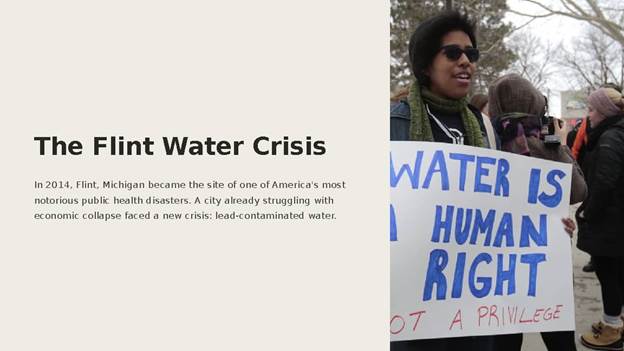
Michigan also offers a brutal example of what water neglect looks like when a community-wide catastrophe enters a jail. During the Flint water crisis, lawsuits by former Genesee County Jail detainees alleged that incarcerated people were forced to continue drinking contaminated tap water even after the dangers of Flint’s water system were becoming widely known. According to reporting on the litigation, bottled water brought by families or donors was sometimes rejected or restricted, while detainees—who could not leave, install filters, or seek a safer source—were left to bear the exposure. If Flint demonstrated how governments can fail whole cities, the jail lawsuits demonstrated how incarceration intensifies that failure: it traps people at the point of exposure and removes the ordinary survival options everyone else still has.[18][19]

That is the through line connecting mold at Huron Valley, contaminated prison water near St. Louis, and the recent concerns in Kalamazoo. Carceral institutions do not merely contain the consequences of broader environmental neglect; they concentrate them. The people inside are politically weak, geographically fixed, and administratively silenced. They can be made to live with exposures that no school, hospital, office building, or suburban neighborhood would tolerate for long. And because the suffering occurs behind secure perimeters, the public often encounters it only after a lawsuit, a whistleblower, a death, or a spectacular equipment failure.[4][6][15]

What accountability would actually require
The single argument that I am trying to make is that environmental hazards in prisons and jails are not side issues. They are core civil-rights issues. Mold is not simply a maintenance problem when people are forced to inhale it for years. Contaminated water is not simply an infrastructure problem when people cannot choose a different source. And official denial is not simply bad messaging when it delays medical care, blocks legal relief, and normalizes dangerous conditions. The law already recognizes that incarceration does not erase the state’s duty to provide humane conditions. The problem is that enforcement often arrives late, after exposure has become routine.[3][8][9]

Real accountability would require more than promises of renovation or improved communication. It would mean independent environmental testing that is not controlled solely by corrections departments; public release of air- and water-quality data in forms families and advocates can actually use; stronger protections for incarcerated whistleblowers and staff who report unsafe conditions; medical review that treats environmental exposure as a serious risk rather than an inconvenience; and oversight bodies willing to regard chronic mold, contaminated water, and failing ventilation as constitutional emergencies rather than public-relations nuisances. It would also require a cultural shift: away from the reflexive assumption that incarcerated people exaggerate, and toward the recognition that they are often the earliest and most accurate witnesses to the conditions around them.[6][8][15]

For Michigan, the lesson is already written. Women at Huron Valley said the mold was real. Prisoners in St. Louis said the water was dangerous. People in Kalamazoo reported brown water and fear long before the issue settled into official language about mitigation and sampling. Former detainees in Flint said captivity turned a public utility disaster into something even more coercive. Again and again, the state’s first instinct was not to remove the hazard but to manage the story. That is the real whitewash: the attempt to paint over evidence until the public looks away. The burden of proof then falls on the people with the least power to carry it.[1][4][15][18]

But the record is no longer hidden. It is in court rulings, local journalism, advocacy reporting, medical complaints, and the testimonies of the people who lived through it. The question now is not whether these hazards exist. The question is how long the public will accept a correctional system that responds to black mold, contaminated drinking water, and preventable exposure with the same old institutional shrug and another coat of paint.

Endnotes

  1. Michigan Public, “Inmates at Michigan’s only women’s prison sue state over black mold exposure” (Aug. 14, 2025).
  2. Detroit Metro Times, “New push for accountability at Michigan women’s prison” (Feb. 23, 2026).
  3. Civil Rights Litigation Clearinghouse, Bailey v. Michigan Department of Corrections case materials.
  4. Environmental Justice at Western, “Prisons: Environmental Injustice, Toxic Exposure, and a Lack of Humanitarianism” (May 23, 2023).
  5. Equal Justice Initiative, materials on prison conditions and environmental dangers in prisons.
  6. The Marshall Project, reporting and analysis on prison mold and unsanitary jail conditions.
  7. Prison Legal News, “It Smelled Like Death: Reports of Mold Contamination in Prisons and Jails” (Apr. 2, 2019).
  8. Equal Justice Initiative, “Prison Conditions.”
  9. Michigan Advance, “Federal judge dings Corrections director in new ruling as toxic mold lawsuit continues” (May 30, 2025).
  10. Michigan Advance, “Federal judge: MDOC not entitled to qualified immunity in women’s prison toxic mold case” (July 7, 2025).
  11. Bridge Michigan, Metro Times, and related 2026 reporting on legislative visits, internal assessments, and conditions at Women’s Huron Valley Correctional Facility.
  12. WEMU, “Michigan Department of Corrections director visits Women’s Huron Valley Correctional Facility amidst calls for her resignation” (May 26, 2026).
  13. Local and statewide 2025–2026 reporting on deaths, medical concerns, and mold-related allegations at Women’s Huron Valley Correctional Facility.
  14. Reporting and commentary regarding contamination concerns linked to St. Louis and Central Michigan correctional facilities near the Velsicol site.
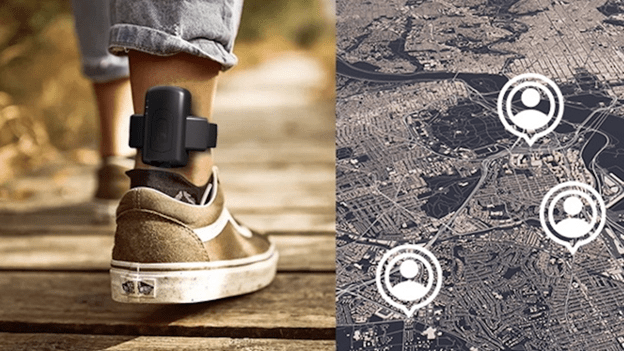

GPS Monitoring and Parole: Safety Tool or Lifetime Burden?

I have previously written about my experience wearing a GPS Tether while on parole in an article called Tether Ball and Chain that was published back in December of 2018. Since then, as part of my ministry, I have spoken with other people who have had to wear a GPS tether as a condition of parole and a surprising number of them who must wear it for life.  I thought it was time to revisit the topic with up-to-date information regarding electronic monitoring as used by the State of Michigan, with context about how this practice is used in other states and by the federal government.

Electronic monitoring has expanded significantly across the country, with an estimated 564,000 Americans currently monitored on an active electronic tracking program at any given time. This footprint is heavily driven by federal surveillance programs: including Immigration and Customs Enforcement (ICE), which tracks roughly 180,000 individuals through its Alternatives to Detention programs, alongside state and local criminal justice systems. The impact of this technology is particularly visible in the Midwest, which holds the nation’s highest concentration of state-level community surveillance. In Michigan alone, the Department of Corrections monitors 5,700 parolees and probationers daily, a statistic that expands even further when accounting for county-level pretrial programs and roughly 400 individuals sentenced to the state’s strict lifetime GPS monitoring laws. As there is no centralized reporting system for electronic monitoring for pretrial programs it is not possible to determine the total number of individuals on tether in Michigan.  A report from 2020 specifically focused on 2018-19 FY data from the Wayne County jail listed the number of individuals on pretrial electronic monitoring on a daily basis at 416 and a total of 1991 for the year. It is therefore likely that the total number of pretrial individuals on tethers in Michigan is very high for people who are under electronic supervision having only been charged with misdemeanors or lower-level felonies and are considered legally innocent.[28][29][30][31][33]

Michigan has used electronic tethering for decades, and today the Michigan Department of Corrections relies on GPS monitoring as one of several community-supervision tools for parolees and some other supervised individuals. Supporters describe GPS as a way to track movements, enforce exclusion zones, and respond quickly to violations without sending every high-risk person back to prison. Critics argue that the same technology can become a costly and punitive form of perpetual surveillance, especially when it is imposed for life. The real question is not whether GPS monitoring sounds tough, but whether it actually improves public safety enough to justify its financial cost, privacy intrusions, and long-term human consequences.

How Michigan’s GPS Tether Program Developed

Michigan’s electronic monitoring program did not begin with today’s always-on GPS anklets. Earlier community-supervision systems relied on curfew monitoring and radio-frequency technology, which could confirm whether a person was at home during required hours but could not map their movements throughout the day. Over time, the state expanded its approach. Michigan Department of Corrections policy now identifies several forms of electronic monitoring, including curfew monitoring, alcohol monitoring, and GPS monitoring.

Legislative and policy materials from the early 2010s show the Department had moved away from passive GPS and was using active GPS that continuously monitored offender movement and generated alerts for boundary violations. Those same materials described GPS as a routine supervision tool for some parolees, while a separate statutory framework created lifetime electronic monitoring for certain criminal sexual conduct convictions committed on or after August 28, 2006. [1][2][3][4]

How The Technology Works

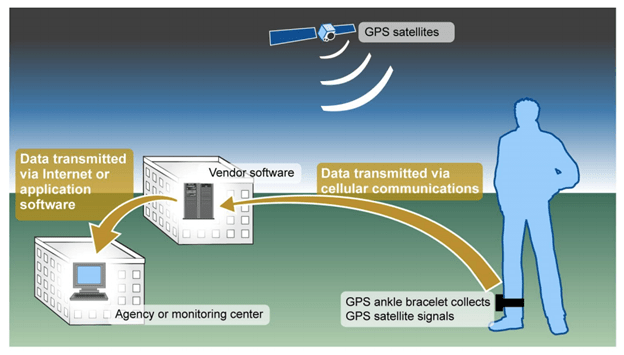
In practical terms, GPS monitoring uses an ankle-worn device that communicates with satellites to estimate location and with cellular networks to send data back to a monitoring center. Michigan policy describes GPS as one approved electronic monitoring technology, and state materials about tether alerts show how the system can flag low battery conditions, loss of GPS signal, strap tampering, communication failures, and geographic rule violations. In other words, the system does not merely record where someone has been; it can also create alerts when a person enters an exclusion zone, leaves an approved area, breaks curfew, removes the strap, or fails to keep the device charged. For lifetime monitoring, Michigan law requires the program to track movement and location from release until death, both in real time and recorded time, with information retrievable by courts or law enforcement. That makes GPS tethering both a supervision tool and a long-term data-collection system. [1][3][5][6]

Why Place Matters in GPS Monitoring

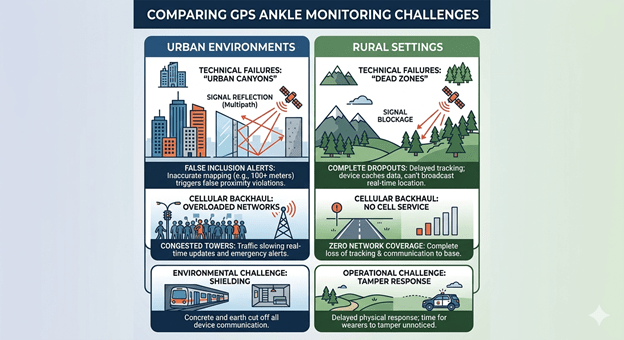
Location accuracy problems do not look the same everywhere. In dense urban areas, tall buildings, narrow streets, parking structures, and reflective surfaces can create an “urban canyon” effect in which satellite signals are blocked or bounce before reaching the device, producing location drift or jumpy tracking. A person may appear on the wrong side of a street, just outside a building, or briefly inside an exclusion zone when the problem is really signal reflection or weak satellite visibility. Indoor settings can make this worse, especially in apartment buildings, basements, factories, hospitals, and courthouses, where both GPS reception and cellular transmission may be impaired. Rural areas present a different set of problems. They usually have better open-sky satellite visibility, but they may have weaker cellular coverage, longer dead zones between towers, and more rugged terrain, all of which can delay uploads or create communication-loss alerts even when the device is still attached and the wearer is where they are supposed to be. In short, cities tend to create accuracy problems, while rural areas more often create connectivity problems, and both can generate misleading alerts if agencies treat every signal anomaly as deliberate misconduct. [15][18][19][20]

This urban-rural divide matters in Michigan because the state spans very different supervision environments. Metro Detroit and other built-up areas can produce the urban canyon, indoor, and multi-story housing problems that make exclusion-zone alerts harder to interpret with confidence. At the same time, northern and western rural counties can present sparse carrier coverage, long travel distances, and weather-related or terrain-related communication problems that slow transmission and complicate response. A GPS system that seems highly precise in policy language may therefore behave very differently depending on where a person lives, works, receives treatment, or travels. That inconsistency is important when violations can lead to jail, prison, or new supervision sanctions. The practical lesson is that a statewide tether program should not assume that one device setting, one alert threshold, or one response protocol works equally well in downtown Detroit, a suburban warehouse corridor, and a remote rural area of the Upper or northern Lower Peninsula. [15][18][19][20]

The Claimed Benefits and the Real Drawbacks

The strongest argument for GPS monitoring is that it gives parole agents more information than ordinary supervision. It can help enforce victim-related exclusion zones, document curfew compliance, and provide a record when someone absconds or tampers with a device. Research outside Michigan suggests electronic monitoring can reduce some forms of recidivism for some groups, particularly when it is paired with structured supervision and support rather than used as a stand-alone punishment. But the drawbacks are substantial. GPS is not a form of prevention itself; it mostly detects movement and rule violations. It cannot stop a new crime in real time unless staff are actively watching, capable of responding immediately, and focused on the right alerts. It also produces false or low-value alerts caused by dead batteries, weak cellular service, signal gaps, or device malfunctions, which can burden both staff and monitored individuals. More broadly, critics argue that tethering can widen the net of punishment by turning technical missteps such as charging failures, late arrivals, or ambiguous zone entries into violations that trigger incarceration, even when there is no new victim and no new crime. It can also interfere with work, housing, medical care, family life, and mental well-being, especially when the device is visible and stigmatizing. [5][7][8][9][10]

What It Costs and Who Profits

The cost question is harder to answer with precision than the rhetoric around GPS monitoring might suggest. Michigan law is clear on one point: a person on lifetime electronic monitoring must reimburse the Department or its agent, and after discharge from parole the statute sets the rate at $60 per month. Department policy also states that offenders are required to pay electronic monitoring fees under the supervision-fee policy, and Michigan’s supervision-fee framework sets a higher monthly rate for people supervised with an electronic monitoring device than for those without one. What is less transparent in public-facing sources is the full cost structure borne by the state, including equipment procurement, monitoring-center staffing, maintenance, data services, and vendor contracts. That opacity matters, because GPS monitoring generates revenue for private equipment makers, monitoring contractors, telecommunications providers, and any state or local systems funded partly through user fees. Public Michigan materials tied tether alerts to 3M electronic monitoring equipment, showing at least one major corporate player in the technology chain. More broadly, the profit model is straightforward: the longer a person remains on a device, the longer equipment, monitoring, service, and fee streams continue. Even if GPS is cheaper than incarceration, that does not mean it is cheap, fair, or free from financial incentives that reward prolonged surveillance. [1][3][5][6][11]

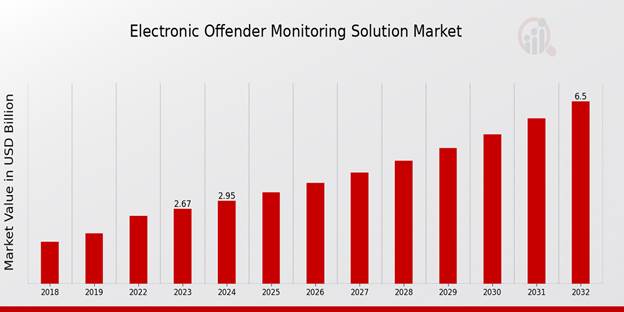
While the amount spent on GPS monitoring is not readily accessible, industry sources project eyepopping revenue growth world-wide. The market value is staggering. In 2024 the market value was pegged at 2.95 Billion US Dollars globally. By 2032 the projection is a market value of 6.5 Billion USD. There is a tremendous financial incentive to grow the use of this technology even in the face or ethical, moral, social or technical critiques.[32]

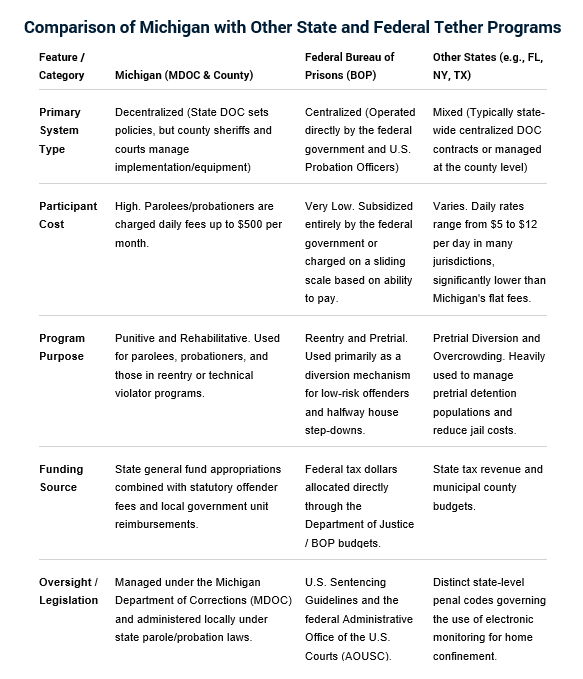
How Michigan Compares with Other State and Federal Tether Programs

Michigan sits in the more punitive wing of state tether policy because it combines ordinary discretionary electronic monitoring for some parolees with a separate mandatory lifetime electronic monitoring scheme for certain criminal sexual conduct convictions. That is not how every state operates. Across the country, electronic monitoring is a patchwork: some states use GPS mainly as a short-term supervision tool for pretrial release, probation, or parole; some authorize it broadly but leave most decisions to judges, parole boards, or supervising agencies; and some, like California and Florida, built especially aggressive sex-offender GPS systems after high-profile legislation in the mid-2000s. In that broader landscape, Michigan is not alone in imposing very long monitoring terms on some sex offenders, but it is distinct in the rigidity of its statutory lifetime model and in the way the requirement attaches automatically to certain convictions rather than turning primarily on an individualized finding of current risk. That makes Michigan less flexible than states that allow periodic review, narrower tailoring, or greater judicial discretion. [3][4][12][13][14]

The federal system offers an especially useful contrast. Federal courts generally refer to this as location monitoring rather than tethering, and they treat it as a court-imposed supervision tool that can include radio-frequency monitoring, GPS, or other technologies. But the federal model is more individualized and, at least on paper, more restrained. Judges impose it case by case as a condition of pretrial release, probation, home detention, or supervised release, guided by risk and supervision goals rather than by a broad, offense-based lifetime mandate. Federal guidance also expressly states that location monitoring is not a guarantee against new crime and is not a substitute for supervision, and federal materials indicate officers are not watching every movement in real time around the clock. Recent federal oversight reports emphasize alert fatigue, staffing burdens, connection failures, and employment obstacles for monitored individuals. Compared with that framework, Michigan’s lifetime tether regime looks more categorical, more permanent, and less tied to ongoing reassessment of whether the person still needs round-the-clock tracking years or decades after release. [12][15][16][17]

State and Federal Regulatory and Judicial Activity

Michigan is currently experiencing more judicial and adjacent legislative movement than direct statutory reform of the tether program itself. On the legislative side, Senate Bill 424 of 2025 would revise parts of the Sex Offenders Registration Act, including review procedures and treatment of some out-of-state convictions. That bill does not directly rewrite the lifetime electronic monitoring statutes, but it reflects ongoing pressure to make Michigan’s broader sex-offense supervision system more reviewable and more legally durable. On the judicial side, litigation has continued to test whether lifetime electronic monitoring can survive modern constitutional scrutiny when it is imposed automatically, without individualized risk findings and without a meaningful mechanism for removal. Earlier Michigan cases treated lifetime monitoring as a required part of the sentence, but more recent constitutional litigation has pressed the questions of proportionality, punishment, and unreasonable search with greater force. [3][4][21][22][23]

At the federal level, the picture is different because SORNA is primarily a registration and notification framework, not a national GPS tether mandate. Federal law, regulations, and SMART Office guidance create minimum national standards for who must register, what information must be reported, how often people must appear, and how jurisdictions share and disclose information. But those standards do not establish a uniform federal lifetime ankle-monitoring program for all covered offenders. Instead, federal location monitoring remains largely a supervision tool used case by case in pretrial services, probation, and supervised release. Recent federal activity has therefore focused less on expanding tethering and more on administering SORNA, tracking implementation across jurisdictions, and improving the management of federal location monitoring programs. Oversight materials from the Government Accountability Office have emphasized staffing strain, alert management, and data quality, while proposed supervised-release reforms would move the federal system further toward individualized assessment and earlier termination when continued supervision is not necessary. [12][15][16][24][25][26]

The gap between Michigan’s lifetime tether regime and the federal model is, at least for now, growing rather than shrinking. Michigan still relies on offense-based lifetime monitoring rules that can operate automatically and indefinitely, while the federal system is moving rhetorically and institutionally toward individualized supervision, workload triage, and periodic reassessment. At the same time, the gap between states remains wide because SORNA standardizes registration far more than it standardizes tethering. That leaves a major policy vacuum: two people with similar histories may face radically different GPS burdens depending on the state in which they live. There is a strong argument for more uniform baseline regulations regarding tethering, especially if electronic monitoring is going to be justified as a public-safety measure rather than simply an add-on punishment. Those baseline rules should include clear accuracy and alert standards, transparency about fees and vendor contracts, due-process protections for technical violations, periodic individualized review, and a meaningful path off lifetime monitoring when risk demonstrably declines. A uniform framework would not require every state to impose the same level of surveillance, but it could prevent the current patchwork in which the federal SORNA system promotes national consistency in registration while leaving electronic monitoring to fragment into dramatically different and sometimes constitutionally vulnerable state regimes. [3][4][15][21][24][25][26]

Does It Make Anyone Safer? And Does Lifetime Tether Cause More Harm Than Good?

The most defensible answer to whether GPS monitoring makes anyone safer is: sometimes, but only under limited conditions. It can improve supervision by making some kinds of noncompliance visible, helping agents enforce boundaries, and possibly deterring some people from violating rules or approaching prohibited locations. In that narrow sense, it may improve safety for some victims and communities. But the evidence does not support treating GPS as a magic shield. A bracelet does not create housing, treatment, employment, accountability, or meaningful rehabilitation. Safety improves most when monitoring is targeted, temporary, proportionate, and combined with human support and careful judgment rather than used as a substitute for them. [1][7][8][10]

As for lifetime tethering, the case against it is stronger. A sanction that follows a person until death, without an individualized off-ramp tied to demonstrated rehabilitation and actual risk, can easily become more punitive than protective. Lifetime monitoring may create ongoing stigma, recurring fees, technical violations, employment barriers, and psychological strain long after the period of highest risk has passed. It can consume public resources indefinitely while offering diminishing returns. For a small number of people in narrow circumstances, long-term GPS may still be defended as a precaution. But as a blanket or near-automatic policy, tether for life risks confusing surveillance with safety. If Michigan wants a system that truly protects the public, it should ask harder questions about proportionality, reviewability, transparency, cost, and whether permanent tracking is solving a real danger or simply extending punishment by electronic means. [3][4][8][9][10][11]

References

  1. Michigan Department of Corrections, Policy Directive 06.03.105, Electronic Monitoring of Offenders.
  2. Michigan Department of Corrections, Policy Directive 06.04.100, Lifetime Electronic Monitoring of Sex Offenders.
  3. Michigan Compiled Laws 791.285, Lifetime Electronic Monitoring Program.
  4. Michigan Compiled Laws 750.520n, Lifetime Electronic Monitoring.
  5. State of Michigan, GPS Tether Violation Alert Definitions, including alert and zone categories for GPS monitoring equipment.
  6. Michigan Department of Corrections, Policy Directive 06.02.110, Supervision Fees; see also MCL 791.236a regarding parole supervision fees with and without electronic monitoring devices.
  7. National Institute of Justice, Electronic Monitoring Reduces Recidivism (2011).
  8. Bales, Mann, Blomberg, Gaes, Barrick, Dhungana, and McManus, A Quantitative and Qualitative Assessment of Electronic Monitoring, National Institute of Justice final report (2010).
  9. Pew Charitable Trusts, Policy Reforms Can Strengthen Community Supervision (2020).
  10. George Washington University Law research summarized in Electronic Prisons: The Operation of Ankle Monitoring in the Criminal Legal System (2021), as reported by GW Today.
  11. Fines and Fees Justice Center, Electronic Monitoring Fees: A 50-State Survey of the Costs Assessed to People on E-Supervision (2022).
  12. United States Courts, Federal Location Monitoring, and Location Monitoring Reference Guide.
  13. Vera Institute of Justice, People on Electronic Monitoring (2024).
  14. International Association of Chiefs of Police, Tracking Sex Offenders with Electronic Monitoring Technology: Implications and Practical Uses for Law Enforcement (2008).
  15. U.S. Government Accountability Office, Pretrial Supervision: Actions Needed to Enhance Management of the Location Monitoring Program, GAO-23-105873 (2023).
  16. California Department of Corrections and Rehabilitation, Division of Adult Parole Operations, Electronic Monitoring and related sex-offender parole materials.
  17. California Office of the Inspector General, Assessment of Electronic Monitoring of Sex Offenders on Parole and the Impact of Residency Restrictions (2014).
  18. Heaton, Harold I., GPS Monitoring Practices in Community Supervision and the Potential Impact of Advanced Analytics, National Institute of Justice (2016).
  19. Brown, McCabe, and Wellford, Global Positioning System (GPS) Technology for Community Supervision: Lessons Learned, National Institute of Justice / Noblis (2007).
  20. Research on GNSS performance in urban canyon environments, including signal blockage, multipath, and reduced satellite visibility in dense city settings.
  21. Michigan Senate Bill 424 of 2025 and related Senate Fiscal Agency analysis.
  22. Michigan Supreme Court and Court of Appeals materials concerning lifetime electronic monitoring, including People v. Kardasz, People v. Martin, and People v. Hallak.
  23. Michigan Courts benchbook materials on lifetime electronic monitoring, including statutory scope and sentencing treatment.
  24. SMART Office, SORNA; U.S. Department of Justice, Criminal Division, Sex Offender Registration and Notification Act (SORNA).
  25. 28 C.F.R. Part 72, Sex Offender Registration and Notification.
  26. SMART Office, Case Law Summary and implementation materials concerning legal challenges, federal standards, and jurisdictional compliance.
  27. Federal supervised-release reform proposals, including the Safer Supervision Act of 2025.
  28. Reference 1: National Electronic Monitoring Figures from Berg Insite, Electronic Offender Monitoring Solutions (4th Edition), 2026.
  29. Reference 2: Immigration and Customs Enforcement (ICE) Surveillance, Transactional Records Access Clearinghouse (TRAC) ICE Alternatives to Detention: Latest Data Tracking, 2024
  30. Reference 3: Regional Density and Monitoring Impacts, Electronic Frontier Foundation, : Street Level Surveillance: Electronic Monitoring, 2023
  31. Reference 4: Michigan State Tracking Statistics, Michigan Department of Corrections,  Electronic Monitoring Center Program Operations Overview, 2022
  32. https://www.marketresearchfuture.com/reports/electronic-offender-monitoring-solution-market-35874
  33. https://www.vera.org/jail-incarceration-in-wayne-county-michigan/reducing-the-use-of-pretrial-electronic-monitoring