Satanic Psalms

In prison, rap lyrics are the only style of music that you hear being recited endlessly without the aid of a radio or MP3 player.  People don’t just sing along, they have memorized the words and meditate on them: “get money”; “bitches” and “ho’,”: “nigga”this and “nigga” that; Steal, Kill, and Destroy.  Rap lyrics are satanic psalms.

A friend once said that he didn’t think he’d be able to go to the bathroom out in the world because there wouldn’t be some guy in the next stall rapping.  There are wanna be rappers in the housing units, the chow hall, the school, waiting in lines-everywhere, not just on the yard.  They speak out loud into the air, but mostly to themselves.  Some original pieces, but most what they have learned from commercial artists.

Like your home town or gang affiliation, there are certain artists that are liked and others that are disliked.  Most have studied intently the biographies of their favorite artists and follow them on TV, radio, and in print.  When the next song comes out they gotta have it and discuss it among themselves like theologians or philosophers seeking to get all of the nuanced meaning out of the lyrics.

When a person spends their time, hour upon hour, meditating on, thinking about, internalizing and identifying with the ideas, lifestyle and morality expressed in music, it penetrates down deep into the bones and psyche. The old adage is true “you are what you eat.”  By saturating yourself in rap music you become enamored with violence, sex, drugs, gangs, selfish and self-gratifying behavior.  It is all you know, destroying any desire to learn about anything else.

By allowing rap music into prisons by way of TV, MP3 downloads and television, the MDOC allows the perpetuation of these errors in thinking: the dysfunctional and dystopian world view, the depraved and denigrating view of women, the glorification of violence and drugs as a way of life that brought so many to prison in the first place and keeps returning them in through a revolving door.

By living in an isolated sub-culture that has no redeeming value, no positive contribution to the greater society, fails to provide for itself through legal means, fails to utilize government programs as they are intended but rather uses the resources to perpetuate the lifestyle from generation to generation. The result is that 25% of the American population which identifies itself as African-American represents 50% of the incarcerated in the U.S.

Proverbs 23: 7 says, “For as a man thinks in his heart, so he is.”  Prison is intended to take a person out of a society in which they committed the offense and be rehabilitated so that they can be released without exposing the society to further risk.  As long as rap music is allowed to remain in prison, with its sub-culture, then it is undermining attempts at rehabilitation by singing its siren song.

Psalms 1:1-5 says, “Blessed is the man who walks not in the counsel of the ungodly, nor stands in the path of sinners, nor sits in the seat of the scornful; but his delight is in the law of the Lord, and in His law, he meditates day and night.  He shall be like a tree planted by rivers of water, that brings forth its fruit in its season, whose leaf also shall not wither and whatever he does shall prosper.”

Psalms 1 makes it clear that if you do the right things and think about the right things, you will be successful in life.  Prison needs to be about training those who have broken the law, not only to do the right thing next time, but to think in positive, constructive ways.  Education, both vocational and moral must be taught to those who do not have socially acceptable job skills or behavior. Raise the expectations for those in prison to change their behavior, to acquire the knowledge and skills required to make a legal living.  In some cases, it may need to be looked at like trying to deprogram someone who has spent time in a cult.  You have to remove them from the environment and then present compelling reasons to change, coupled with new information to overwrite the old.  Intensive programming like that must occur not only in the classroom or therapy group, but in the housing unit as well.

It doesn’t do to give the kids a bath when they are muddy and then let them go out and roll around in the muddy backyard.  You need to plant grass and provide other activities for them to participate in if you want them to stay clean.  The MDOC is only just beginning to understand this concept. Vocational students are being placed in housing units together with the intent of fostering a living environment that will make the learning process more effective.  If you don’t create an environment where you go to bed at a reasonable time and get up ready to work in the morning, the vocational training will not be placed within the context of developing good work habits or work ethics.

Sex offender programming is being conducted in sex offender housing units. This is a step in the right direction, however, if you don’t remove pornography and sexually explicit materials from the unit or block overtly sexual images from TV you are not going to help the person with a sexual addiction.  The same is true of violence and drugs.  Violent people need to be removed from conflict and drugs and alcohol need to be removed from the grasp of the addict.

If the MDOC can’t control the environment in prison then they aren’t really in control, the inmates are.  Very few people will successfully be able to change with help, let alone on their own in a negative environment.  It is the exception, not the rule, for a person to rise from poverty to wealth from illiteracy and ignorance to knowledge and comprehension, or from addiction to health.  You have to take the person out of the place where the problems allowed to flourish or fix the place before you can begin to address the problem effectively.

A simple place to start with is rap music.  It is not an attack on any specific ethnic group or race, but a necessary step to take control of undesirable sub-cultural influences that have a negative effect on the prison environment and is contrary to the departments goals for rehabilitation and correction.

Prisonisms

Prison:

  1.  A place where persons convicted or accused of crimes are confined; a penitentiary or a jail.
  2. A place or condition of confinement or forcible restraint.
  3. A state of imprisonment or captivity.

While prison is a physical place made up of buildings with barred windows, locked doors, and surrounded by fences intended to keep people securely and safely away from society; it is also a state of mind that imprisons the spirit in ways that no parole can ever free them from.

-ism:

  1. Action, process, practice.
  2. Characteristic behavior or quality.
  3. State, condition, quality.
  4. Distinctive or characteristic trait.
  5. Doctrine, theory, system of principles.
  6. An attitude of prejudice against a given group.

ism is a suffix added to the end of a word which transforms the root word.

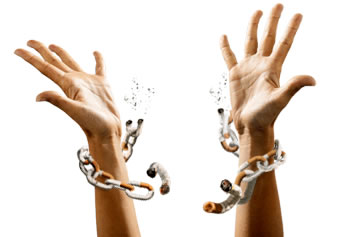
breakfreechainPrisonisms are the shackles that bind the mind and spirit that can only be unlocked from the inside.  They are the prisons of our own making that we have confined ourselves within, often for a life sentence.  Only God has the power to commute your sentence.  No amount of education or re-education, counseling, or religious programming can set you free.  A popular Bible in prison is the “Free on The Inside” Bible published by Biblica explains in simple English how God can set you free, but it all starts with you.  You have to take the first step.  For many people fear is what keeps them bound.  Fear of change, fear of the unknown, fear of being ridiculed or ostracized by their associates, fear of being alone.  Prisonisms are often the root cause of recidivism.  Errors in thinking that cause an individual to slip back into a pattern of criminal behavior, if they ever left it.

Alcoholism: Psychophysiological dependence on alcoholic beverages.

Substance abuse is a major underlying factor in crime.  Studies report up to 90% of crime is related to or committed under the influence of drugs or alcohol.  This continues to be a problem for those who are incarcerated. “Spud juice” prison home brew is readily available and consumed in amounts sufficient to get drunk, as often as a prisoner can afford to. Brewing alcohol in prison is big business and an organized crime.  Teams coordinate the theft of ingredients from the chow hall and individuals steal from other initiates to pay their bar tabs.  Half-hearted attempts by custody staff to prevent theft from the kitchen and lax security in the housing units makes this possible.

AA/NA groups are held in every prison, but too many attend these groups for the wrong reasons.  They want to look good for the Parole Board rather than change their ways.  For those individuals, coming to prison wasn’t hitting rock bottom and they are not prepared to admit that they are powerless over their addictions.  They are dying for a drink.

Barbarism: An act, trait, or custom characterized by ignorance or crudity.

The corrections officer’s union advertises that their job is the most dangerous job in the state, which propagates the stereotype.  Violence in prison is accepted by far too many as being part of the sentence.  The price you pay for committing a crime against society is to serve time in the “Thunderdome”.  Some prisons have the reputation of being gladiator schools.

Coming to prison is a rite of passage for being a gang member and a fertile ground for recruiting new members. “There is safety in numbers” is the recruiters mantra. “Us” versus “Them”, predators versus prey, CO’s versus inmates, black versus white, gang versus gang, strong versus weak, young versus old.  The old wild, wild west idea of an armed society is a polite society is propagated from one generation to the next.  Defy authority; rules are made to be broken; stupid is as stupid does; ignorance is bliss; life imitates art imitates life.  A vicious cycle of depravity.  Life is cheap.  Only the strong survive.

Some people say that capital punishment is barbaric.  I can tell you from first-hand experience that it’s not the only thing barbaric about the criminal justice system.

Dogmatism: Arrogant, stubborn assertion of opinion or belief.

In prison there is no mutual cooperation because everyone believes that they’re right and everybody else is ignorant. “I’ll see it when I believe it” describes the state of unreality many prisoners live in “LaLa Land”. Students arguing with teachers over school rules and policy.  Everyone is convinced that they have the best, most accurate insight into human behavior.  They know the best way to get things done whether it be cooking, cleaning, or jailing.  Life could be so much better if everyone else did it their way.  They deny your reality and substitute their own.  They rearrange and reinterpret the facts to fit their own conclusions.  “I’m right and you’re wrong.”  When something doesn’t work out or they get caught it must be somebody else’s fault.  There must be a snitch, “I’m too slick to get caught.” Conspiracy theories; slavery; white power; “sex, drugs and rock-n-roll”; reality television is real; sports and hip hop will make you a millionaire; easy money; every woman wants what I’ve got; Orange is the new black; Next time I won’t get caught; I’m a bad man; A tough guy; A gangster; A fighter and a lover.  “I’m never gonna change, but I’m never coming back to prison.”

Until attitudes change, lifestyles will not change.  Dogma blocks any attempts to enlighten through the willful disregard of truth.

Hedonism: Pursuit of or devotion to pleasure.

“If it feels good, do it.”  Impulse control is an issue for many people in prison.  Their daily pursuit is pleasure: food, TV, alcohol, sex and not necessarily in that order.  They don’t worry about others, they are the most selfish people on earth, only concerned about themselves.  They look for ways to “get over” on people.  Their idea of work is doing nothing for something.  They always look for the easy way out, getting someone else to do it for them.

They trade the main course for an extra dessert.  Up all night, sleep all day; Party animal; Eating machine; Rap star; Pop culture trivia expert.  They have multiple baby’s mamas, none of which is their current wife or girlfriend.

They have never worked a day in their lives (legitimately).  They never have a dime in their trust accounts because they owe restitution, but always go to the store.  They live on coffee and honey buns (the breakfast of champions) and nacho do’s.  They deny themselves nothing today and put no thought towards tomorrow or how their actions impact others.  “Eat, sleep and be merry for tomorrow die” is their mantra.

Fatalism: The doctrine that all events are predetermined and unalterable.

For some, coming to prison was inevitable.  They see themselves as the product of their environment.  The child of poverty, growing up in a broken home, raised by their grandmothers because their addicted mothers were unfit, never knowing their fathers. Running wild on the streets; never having anything of their own except a record; state raised.

Entitlement mentality: Bridge Cards; Welfare; Cash Assistance; Unemployment; No education, can’t get a job, but why bother?  They take no responsibility for anything.  The system is broken, the cards are stacked against me.  The cops are out to get me.  A felon can’t get a job, so I’ll keep selling dope on the corner and see how long I can stay out of prison before I get caught or killed. Dropped out of school to hustle, doesn’t see any value in earning a GED.  Book learning can’t prepare you for a life on the streets. Life is hard so I have to be hard too.  Life is painful so I take drugs to dull the pain.  Life is a bitch and then you die.  There isn’t anything else, no after life – no god would be so cruel as to make us live this way.

Without the good news of the gospel of Christ the people parish.  Fatalistic people need a compelling reason to live life as if life – both theirs and others – really matter.

Institutionalism: Use of public institutions for the care of those who are mentally disabled or who are criminally delinquent, or incapable of independent living.

In the 1980s two things happened to cause an explosion in prison populations: Mental hospitals closed leaving the mentally impaired no place to go except the streets which in turn lead them to prison.  The second was the imposition of longer prison sentences. Prison became a maze with no way out for many people.

Prison is a highly structured place: set times to eat, work, study, and play. This is something that many in prison couldn’t change on their own.  The state provides three meals a day, shelter and clothing.  No responsibility to do anything for yourself.  For those who lived on the streets, it doesn’t get much better than that.  Also, for those with mental issues, they are getting some mental health care such as counseling and medication to help regulate their mood or to help them sleep.

For some spending long periods of time behind bars leaves them behind. Family and friends move on or die, technology advances put them at a disadvantage and leave them so lost that the world they return to is foreign to them.  They simply seek to return to the security of the simple life that they’ve come to an accommodation with in a love/hate relationship.

Puerilism: Childish behavior in an adult.

Many men in prison are literally and figuratively in a state of arrested development. Grown men who are very immature.  They throw temper tantrums, act out to get attention, and have no self-discipline.  Gray hairs acting like teenagers: following youth culture, music, and dress styles.  They insist on having their way and will make a scene to get what they want, when they want it.  Many have the attention span of a humming bird. Afflicted with ADHD or other mental disorders, they are unable to focus long enough to learn anything from their required programming.  Forced to sit through classes without the benefit of medication that would allow them to concentrate, they are disruptive to others and have disciplinary problems.  They run the yard like they ran the streets and are unable to lay down when they receive tickets and have to serve LOP (loss of privilege) which only compounds the problem.  Unable or unwilling to follow directions or obey rules, they can’t complete a program or a parole.  Self-medicating to try and regain a “normal” feeling only compounds the issue. They are more like the pirates than the Lost Boys living in Neverland.

Diabolism: Devilish conduct or behavior.

While the barbarians are sociopaths, the truly diabolic are psychopaths. They have no conscience.  You can see the predatory look in their eyes, like the big cats eyeing the wildebeest.  They test the fences always looking for weaknesses to exploit.  They know exactly where all the security cameras are.  They are loners who are never alone.  They surround themselves with minions that aspire to be like them.

They hate the world they live in and anyone who is not like them.  They judge everything and condemn what they determine to be soft.  They despise those who have prosperity and happiness, just like the Grinch. They are distrustful of any authority.  They live life by their own rules. They demand respect but rarely give it.  They value no life but their own.

When given a choice between a legal or illegal opportunity, they always choose the illegal one. They see themselves not just as living on the fringe of society, but outside it as true outlaws.  They are rebels without a clue.  They are truly a menace to society.  They are pathological liars who believe their own lies.  The truly unrepentant and unremorseful. The only thing they regret is getting caught.

These are the ones that Christ died for because nobody else would.  They are filled with legions of demons that only Christ can excise.

Defeatism: Acceptance of or resignation to the prospect of defeat.

Many people who come to prison proclaim their innocence and mount a boisterous and rigorous appeal.  There are others, however, who arrive beaten up and broken down by the criminal justice system.  These people have resigned themselves to the end of their lives as they know it. Whether they are actually guilty or not doesn’t matter at this point. They have lost everything: family, friends, jobs, assets and just want to get their prison sentence over with.  Emotionally and spiritually drained, they have lost faith in society and the government bureaucracy that they thought once cared for them and have now given up hope of a happy ending.

These people are more or less law-abiding citizens who ended up in prison after their first encounter with the criminal justice system and never imagined that they’d be on the inside looking out.  Facing long prison sentences, they are ill prepared for life behind bars.  They are not hardened criminals, but someone who made a mistake, a lapse in judgment and will pay for it with the rest of their lives even after they are released.  They have gone through a life altering experience and it has broken them.  They have no energy, the has gone out of their eyes.  They don’t feel like they have anything left to life for.  They feel abandoned by God and their prayers go unanswered.

These are the least of these that Jesus said we should give a cup of water to. They need to know that Jesus hasn’t left them or forsaken them.

Parasitism: The characteristic behavior or mode of existence of a parasite.

There are two types of parasites in prison.  Those who live life vicariously through others and those who are a financial drag on society.

Social parasites are busy bodies, gossips, rumor mongers, ear hustlers, nosey neighbors. They don’t have a life of their own so they are in everyone else’s business.  They can’t keep a secret and don’t really try.  They are information brokers.  They butt in where they don’t belong, join in conversations uninvited.  By focusing on everyone else around them they never address their own issues.  God is the only one they should be listening to and he would gladly use their talents to spread His gospel among all men.

Financial parasites live off the largess of others.  They borrow from family and friends, bunkies, cubies, and the “store man.”  They may be either too lazy to work or enjoy living far beyond their means.  They have an entitlement mentality and believe that someone will take care of them: parents, spouse, significant other, or the government.  They don’t adequately monitor their spending habits or cash flow and have frequent confrontations with their debt holders.  Their solution to their financial problems in prison is to lock up and ride out, then start over someplace else.

In the world foreclosure, repossession, calls from collection agents and bankruptcy are familiar events.  Payday lenders, pawnshop brokers, welfare, cash assistance and SSID are their way of life. They won’t do anything to jeopardize these by getting a GED or job training.  The only debt they don’t have is a debt of gratitude.

Parasites need to learn that the only one we should be dependent upon is God.  He wants to provide all they need if they would only agree in return to be generous to others.

Here are a few more –isms that can be used to describe some facet of prison and the prison experience. If you aren’t familiar with the word look it up in a good dictionary:

  1. Absurdism
  2. Activism
  3. Adventurism
  4. Antagonism
  5. Aphorism
  6. Chauvinism
  7. Classism
  8. Criticism
  9. Cronyism
  10. Despotism
  11. Determinism
  12. Egotism
  13. Elitism
  14. Empiricism
  15. Escapism
  16. Euphemism
  17. Exhibitionism
  18. Existentialism
  19. Externalism
  20. Favoritism
  21. Idealism
  22. Indeterminism
  23. Individualism
  24. Inerrantism
  25. Infantilism
  26. Instrumentalism
  27. Intellectualism
  28. Intuitionism
  29. Irrationalism
  30. Legalism
  31. Mannerism
  32. Materialism
  33. Narcissism
  34. Nepotism
  35. Obscurantism
  36. Obstructionism
  37. Opportunism
  38. Optimism
  39. Paralogism
  40. Particularism
  41. Passivism
  42. Paternalism
  43. Patriotism
  44. Pauperism
  45. Perfectionism
  46. Pessimism
  47. Pragmatism
  48. Privatism
  49. Professionalism
  50. Prohibitionism
  51. Racism
  52. Recidivism
  53. Relativism
  54. Sadism
  55. Sexism
  56. Skepticism
  57. Solecism
  58. Stoicism
  59. Terrorism
  60. Vandalism
  61. Vulgarism


Penitent Man

Penitent man by Gobi
“The penitent man shall pose” by Gobi 2007

In Indiana Jones and the Last Crusade, Indy faces a series of challenges he must solve in order to find the Holy Grail and save his friend’s life.  The clue to overcoming one of the deadly obstacles was the penitent man”. Looking around he saw a number of decapitated bodies and quickly surmised that he needed to humble himself in a hurry or share their fate.  The same happens to people who come to prison.

Another synonym for prison is penitentiary.  In 1787 the Philadelphia Society for Alleviating the Miseries of Public Prisons developed a prison system where they believed some criminals could be reformed through hard work and meditation.  Many members of the society were Quakers, who considered the moral/religious aspect of meditation a key to reformation.  They knew that the repentance that comes from the realization of the wrong one has done will lead to lasting change.

People who commit crimes by and large are selfish people who have placed their wants and desires above the needs of others.  Many are proud and unashamed of what they have done.  When you fill up a prison full of these people, sparks will fly.  When two proud people clash there can be only one winner.  Like the decapitated bodies in Indiana Jones, heads will roll, unless one of these proud men will humble them self.

Humility comes as the result of awareness regarding one’s selfish, prideful condition and the willingness to admit that this form of behavior is what brought the person to prison. However, some in prison will double down and try to make themselves into the biggest, baddest, toughest, meanest, orneriest, foulest, strongest, most ruthless SOB in the Big House.  They lift weights compulsively to strengthen their bodies, they harden their hearts until all empathy for others is gone, and they live only to satisfy their lusts for food, sex, and drugs.  They think the way to live is to die to what separates us from the animals, and in the process become animals.

When a person in prison learns to humble them self, they become more sensitive to those around them, which allows them to react quickly, like Indy, to duck out of the way when the violence starts.  A humble person has a quiet spirit which allows them to put others before themselves even when they know of the other’s selfish intentions, thereby avoiding the wrath of the proud.  We are talking about meekness here, which some confuse for weakness.  Meekness is the combination of the character traits of patience and humility.  Not exactly something that one would expect from inmates.

So how does one learn humility in prison? The Quakers coming from a Judeo-Christian world view would not have seen meditation as an Eastern Zen Buddhist self-contemplation practice, but rather as a Biblical contemplation practice.  They would not expect a person to change on their own, but by the conviction of the Holy Spirit, not by self-revelation, but by illumination of the moral standard revealed in God’s Holy Scriptures.  Humility is both the inward and outward manifestation of the change in a person’s world view when they acknowledge God the Father and Jesus Christ His Son for who they are.

James 4:6-10 says, “But He gives more grace. Therefore, He says; God resists the proud, but gives grace to the humble. Therefore, submit to God. Resist the Devil and he will flee from you.  Draw near to God and He will draw near to you.  Cleanse your hands you sinners; and purify your hearts, you double minded.  Lament and mourn and weep!  Let your laughter be turned to mourning and your joy to gloom.  Humble yourselves in the sight of the Lord; and He will lift you up.”

Prison is a place of stark contrasts and nothing exemplifies this concept better than the contrast between the proud and the humble.  The proud are arrogant and unteachable. They will not learn the lessons of correction and if they ever get out of prison will keep coming back, doing life on the installment plan.  Those who are humbled are teachable, they will learn the lessons of correction, and when they get out of prison will never come back.

While the original model of a penitentiary failed for a number of reasons, the concept of active participation by faith-based ministries remains a vital and necessary part of the correction system. Rehabilitation cannot be accomplished by a person in isolation, but rather only in the context of Christian community, both in prison and out.

Organizations such as the Salvation Army and Prison Fellowship are well known by the general public for providing social and moral training for those incarcerated.  But there are in the U.S. literally hundreds of faith-based ministries dedicated to bringing the gospel into prison.  On any given day of the week there are thousands of paid and volunteer workers in prisons and jails across the country, meeting with hundreds of thousands of men and women.  From full church services to Bible studies to social/moral education these groups work with prison/jail chaplains to provide resources, programming and counseling that makes rehabilitation possible.  No other religion provides this much capital and man power to assist the state in reforming the lives of so many that society has already written off.

Studies have shown that without programming recidivism rates can exceed 75%. With programming provided by the state such as educational, vocational, or psychological, recidivism rates drop to 50%. Faith-based programs reduce recidivism to less than 35%. When combined with additional programs and resources on the outside for when an individual is released from incarceration recidivism rates drop even further.  One study even suggested that the first 72 hours out of prison are the key to success.  If there is a person/organization there to provide mentoring and assistance and get the individual involved in a church, the recidivism rate falls to less than 10% in some studies.

Over the last two hundred years there have been numerous attempts at prison reform. In each case there was an acknowledgment that the current system was broken and that changes needed to be made. However, each one failed to live up to the expectations and did not result in accomplishment of the stated goals.

In each case the failures could be directly related to three causes: inadequate funding, over-crowding, and poor staff training.  Prisons are expensive to operate and since they generate little revenue are a continuing drag on government budgets.  Human societies for all of recorded history have failed due to the inability to pay the full cost of maintaining the society, whether it be defense, infrastructure, or social programs.  At some point the costs exceed the economic strength of that society.

In the U.S., political parties and their candidates campaign on the ideas of lower taxes and being tough on crime.  The two concepts are mutually exclusive, you can’t do both. Being tough on crime means more police, more prosecutors, and longer sentences which translates into significant cost increases.  Lowering taxes means that the revenue to pay for government programs becomes scarce, which leads to reductions in services since the elimination of programs can be political suicide.

In corrections this means that every year prisons must do more with less.  Costs for food, clothing, services, facilities, and staffing increase.  And yet as incarceration rates increase, budgets have been held constant or even reduced.  Even the best, most successful rehabilitation programs will be affected by this and will ultimately fail.  The result is that prisons and jails become nothing more than warehouses or cattle pens where humans are contained until they must be released to once again wreak havoc on society.  The worst possible outcome with the lowest return on investment.

Since the evidence of rehabilitation is incontrovertible and human lives matter, what are we as a society willing to pay to see our sons, daughters, brothers, sisters, husbands, and wives returned to us in a condition where they no longer pose a threat to society or themselves?  What are we willing to spend to end the cycle of poverty, violence, and broken homes that results from locking people up?  What does it say about a society that claims to be a beacon of freedom and hope, yet incarcerates more people than any other country on earth?  When is enough, enough?

There must be more to corrections than retribution.  An eye for an eye was Old Covenant philosophy. At least some portion of the church understands that we are now under the New Covenant and that forgiveness and redemption are the philosophy to live by.  There should always be repercussions for violating the laws that hold our society together but hate the sin not the sinner. We have all sinned and fall short of the glory of God.

Faith-based prison ministries get this and that is why we need more of them participating in the correction system.  These organizations raise their own money from their supporters to fund their prison ministries.  This is like free money to the fiscally strapped prisons.  In the day and age where outsourcing services is seen as cost effective, what could be more cost effective than free?  Sure, there needs to be coordination and oversight and that is where the chaplain comes in.  But why turn down programs that have a positive effect on the prison environment and can significantly reduce recidivism?

Moreover, since it is that critical time immediately upon release from prison that is the major decider on whether or not a person will go straight or fall back into a life of crime, the MDOC should be actively recruiting organizations to provide after care, housing, employment/job placement services in addition to mentoring and counseling services. The vast majority of people coming out of prison have lost everything while they’ve been away and most have nowhere to come home to.  The state needs to take more responsibility to help these people that they were so zealous to lock up in the first place.

There was a program called the Michigan Prisoner Reentry Initiative (MPRI) whose original goal was to partner with non-profit organizations to help fund and coordinate these types of programs.  Yet after only two years the external portion of the MPRI program was cancelled and the funding redirected back into the MDOC, due to claims of misappropriation of funds and mismanagement by these outside groups.  Given the history of the MDOC there is more than a little irony in that allegation.  There should be considerations made to revisit this decision and encourage more faith-based organizations to come to the aide of these returning citizens.

Given human nature, not everyone can or even wants to be rehabilitated, but that is a minority of the people in prison.  A sad but true fact is that those serving life sentences, after a period of adjustment are the best-behaved inmates.  Those doing short determinate sentences, such as two years for a gun are almost completely unmanageable.  Which takes us right back to my original point about the Penitent Man: those who are willing to humble themselves can be rehabilitated.  It is up to the people in society to demand more from their representatives in the legislature and the legislature to demand more from the MDOC and the MDOC to demand more of its staff, contractors and inmates.

Reconciliation vs Retribution

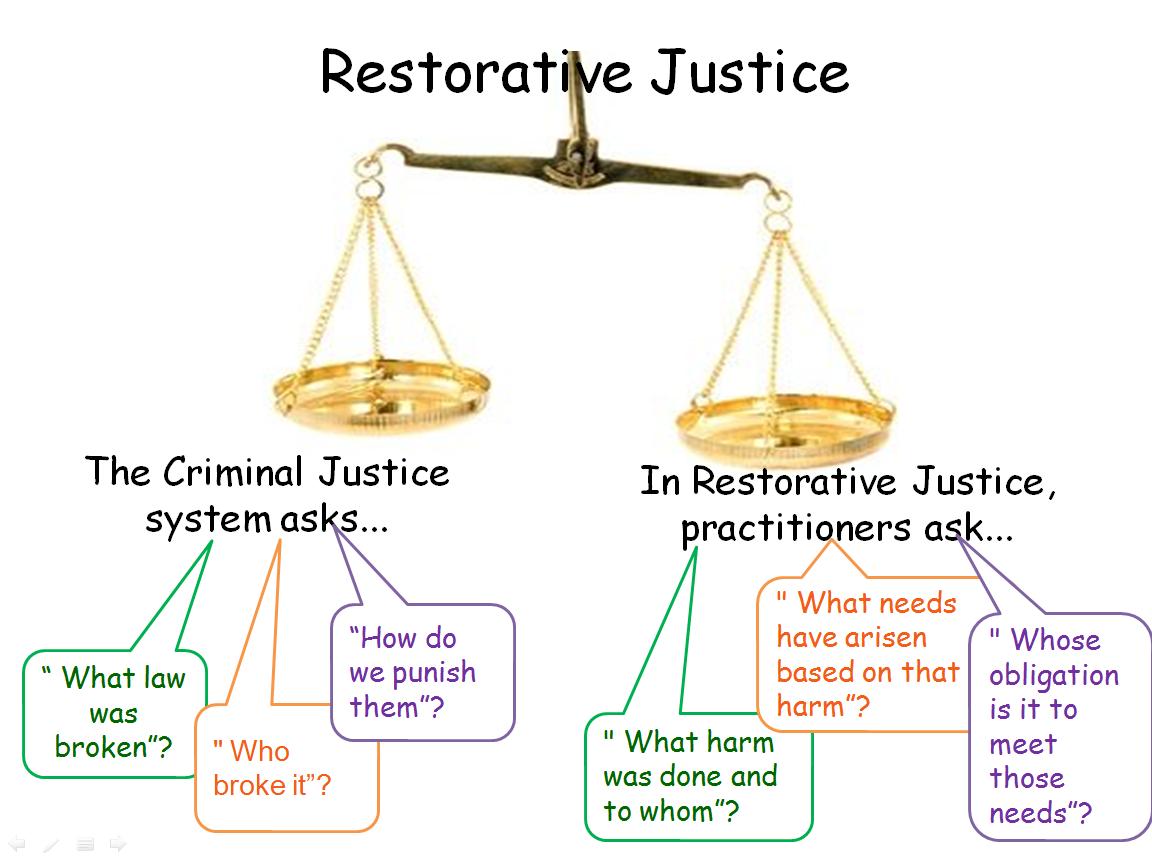
Restorative Justice

“The light shines in the darkness, but the darkness has not understood it. ”
-John 1:3

The Christian concept of forgiveness and reconciliation are incomprehensible to a society where retribution is the response to breaking the law.  A law which ironically traces its roots back to the Commandments of the Judeo-Christian God.  In modern society, those who break the law are subject to harsh punishment and even after it is over continue to ostracize and marginalize the offender.

We can see this in the change of language used to describe a person coming out of prison. Fifty years ago, this person would have been referred to as an “ex-con”.  As a former convict they have fulfilled all the requirements of punishment placed on them for the crime they committed, and returned to society, hopefully to be a productive member.

Today we refer to those coming out of prison as “ex-offenders” and continually punish them in the form of hiring and housing discrimination, track them in databases, and restrict their freedoms by laws targeted specifically at those who have been convicted of a felony.  This is retribution.  Revenge for violating the societal covenant.  It precludes the idea of reformation.  It goes from trust but verify to skepticism and hatred.

Contrast this with the Biblical model of forgiveness, restitution, and reconciliation.  The victim and the offender have a relationship and certain steps must be taken in order for the relationship to go forward.  12-Step programs teach that without being able to forgive those who have hurt us, we are only hurting ourselves.  We keep ourselves in bondage to another by maintaining the bitterness and anger.  We have bound ourselves in a way that prevents healing and keeps us trapped in time, unable to move forward with our lives.  By forgiving others we let go of the hurt and grow spiritually and emotionally.  Forgiveness allows us to move forward.

When we move forward can have closure on the past.  The world just doesn’t get this at all.  They speak of re-victimization, that old hurts will be reopened when the offender gets out of prison or when the past offense is revisited in the courts or the media.  If the offender should ever encounter the victim or their family it’s like the movie “Ground Hog Day” having to relive the crime over again.  Revictimization occurs because the hurts haven’t healed.  The relationship was suspended at its lowest point and the trauma has not been dealt with by the types of counseling the world utilizes.

The Apostle Paul wrote in Philippians 3:13 “Forgetting what is behind I press on towards the goal.”  We must put the past behind us.  “To err is human, to forgive is divine.”  As Christians we are called to take on the character of God, so must forgive others just as God forgave us.  We are called to look to the future where there will be “no more sorrow, nor crying, nor pain.” (Revelations 21:4)

The world just doesn’t get this just as the darkness doesn’t comprehend the light.  They are two different natures.  The Christian response of forgiveness is incomprehensible to the worlds concept of retribution.  A victim that doesn’t hate their offender doesn’t fit into the world’s view.  The talking heads on television become confused when trying to talk about the revictimization of a victim who refuses to be revictimized.  Those like Nancy Grace can feel confident when speaking to or about a victim or victim’s family who wants to see the harshest penalty applied or see the offender kept in prison well past their Earliest Release Date (ERD).  They will speak vehemently about victim’s rights, so long as they remain the victim.  But what happens when the victim no longer wants to play the part?  When the victim expresses forgiveness to the offender?  Then they becomes the offended.  The vitriol with which they will demonize the perpetrator of a crime rings hollow when forgiveness instead of retribution characterizes the relationship.

It’s easy to demonize someone you don’t know personally.  You can read the “facts” as stated by the prosecution, discount any attempt by the defense at humanizing the offender and speak based on your “professional opinion” without taking time to get to know either party involved.   They can pontificate with righteous indignation.

But forgiveness and reconciliation require communication and communication is the basis for relationship.  Both parties in a relationship need to have some skill to effectively communicate and that may be where counseling may be of actual benefit. Communication requires a set of mutually comprehensible points of reference.  A common language requires all parties to agree on the definitions of the words and standard forms of usage.  Counseling can help both parties reach the stage where effective communication can take place so both sides can understand one another.

To genuinely forgive someone is a supernatural act where the offended lays down their “rights” to vengeance and instead following God’s example choses to restore the relationship with the offender, as if the offense never happened. When the offender seeks forgiveness, there is an implied promise that the offense will never happen again. Trust which was broken must be restored.  It may take time to earn that trust by demonstrating commitment to not reoffend.  Given time, trust can be re-established and the relationship will grow stronger.

With retribution there is no trust only suspicion.  The underlying premise is that people can’t change, that once trust has been broken it can never be restored.  Retribution serves to widen the gap between people, separating them by time, distance, and experience.  In no way can retribution undo the harm done. It can’t replace what was lost.  It only serves as a way of communicating the level of displeasure towards an individual because of their actions.

Reconciliation doesn’t preclude punishment for breaking the law, but it takes away the vengeance component and focuses more on discipline.  Discipline is the correction of unacceptable behavior with the intention of changing the perpetrator’s attitudes and actions into those which are acceptable to society.  Correction involves education in an environment conducive to learning.  This is something that is severely lacking in today’s prisons.  Over the course of time I intend to explore what prison conditions are like based on my experience and raise points for further public discourse.  Crime and Punishment are difficult issues for which there are many perspectives and few viable solutions to what appears to be an intractable problem.  I don’t claim to have the answers but want to focus on raising public awareness of issues for which we all have a vested interest.