The summer is
nearly over. Hot days and warm nights
will soon be replaced with falling leaves and frost. 2019 is two-thirds over already. Ecclesiastes 3:1 says, “There is a time for
everything and a season for every activity under the heavens.” The seasons change and so does life. As much as things appear to be the same day
after day, forming endless routine, change happens, often without our notice
and certainly without our permission. People
come and go from our lives, jobs change, housing situations change, finances
change, health issues, family issues. Often,
we have no control over change and that leads to stress.
When you live out
of a footlocker, you’d think life would be simple, yet somehow it isn’t. Anything lost, stolen, or broken can’t be
easily replaced. When you don’t have
much to start with, anything you lose becomes a big deal. How often does your reaction to a situation
become an over-reaction? Are you a
control freak? To quote Dr. Claire
Lewicki from the Tom Cruise movie Days of Thunder, “Control is an
illusion you infantile egomaniac. Nobody
knows what’s going to happen next: not on a freeway, not in an airplane, not
inside your own body and certainly not on a racetrack with 40 other infantile
egomaniacs.” Or do you complain about
something even if it might be better in the long run simply because of the
“unknown” factor? It could be better; you
just don’t know. It is true that we would
rather deal with the devil we know.
I have a different
suggestion on how to handle change.
First, start by trusting the one who doesn’t change. Hebrews 13:8 says, “Jesus Christ is the same,
yesterday and today and forever.” You
will always know where He stands. The
red letters don’t change and apply today the same as they did 2000 years ago. Jesus understands what it means to be human,
yet He sees a much bigger picture. We
suffer from tunnel vision and need his perspective. He is the rock upon which we can stand. How much better can we handle the storms of
life when we have our feet firmly planted on solid ground.
Second, we don’t
have to go through anything alone. In
Deuteronomy 31:5 God says, “I will never leave you nor forsake you.” He is always with his children. Jesus told the disciples in John 15:26 that
the Heavenly Father would send us his Holy Spirit to be our guide and
companion. In John 16:33 Jesus said, “In
this world you will have trouble. But
take heart! I have overcome the world.” Furthermore in 2 Kings 6 is the story of the
prophet Elisha and his servant. They
were in a city surrounded by the enemy and the servant was in a panic. The prophet’s response was “Don’t worry. Those who are with us are more than those who
are with them.” Pray to the Lord to open
your eyes like those of the servant so you can see that you can see the
chariots of fire all around us.
Third, no matter
how bad it seems, God has a plan. Romans
8:26 says, “In all things God works for the good of those who love him, who
have been called according to his purpose.”
Our good and his purpose are the issue.
When we are going through difficulties, we rarely think about how this
might be good for us. Like building
character or learning patience, our good will only be revealed later. God isn’t out to punish us; His purpose is to
see everyone saved. As hard as it may
seem to believe, our difficulties might be for the benefit of others and we are
God’s messenger. We might be there
simply to tell someone else about Jesus because we were the only one who could
reach them. Like Peter we have to get
out of the boat in the middle of the storm.
The key to success is keeping our eyes on Jesus.
Lastly, Obey God’s
Word and the direction of the Holy Spirit.
Psalms 18:30 says, “The Lord’s word is flawless; he shields all who take
refuge in him.” Even when it doesn’t
make sense. In Isaiah 55:9 God reminds
us that “As the heavens are higher than the earth, so are my ways higher than
yours and my thoughts than your thoughts.”
We don’t have to understand everything.
In fact, the older I get the less I understand. Wisdom is knowing enough to realize I don’t
know it all, accept that God does and be willing to learn from Him.
This summer has
been a challenge for me. Instead of
getting my dream job I spent the summer as a care giver for my mother and my
girlfriend. It wasn’t the change I was
looking for, and I definitely wasn’t in control of the hiring decision or the
medical crisis’s that required major surgery.
I brought in a little cash by doing odd jobs but had to put my goals
aside to make sure that my family was taken care of. Now that they are able to function again,
it’s time for me to look for work. I
simply praise God that I could be there for them and that He provided exactly
what I needed to get by.
I have learned by
experience everything that I write about before I write it. My words to you are lessons that God has
taught me. It is humbling to think that
God would use me, but I pray that my words encourage you to keep the
faith.
I continue to pray
for you, seeking God’s favor on your life and that he will open doors for you. God hears and answers prayers, especially our
cries for help. That simple four-letter
word means more to our Heavenly Father than the best speech, when it comes from
the heart. Because he already knows what
we need, He just wants us to reach out in faith and ask.
I always enjoy
hearing from you. If you need anything,
I’ll do what I can to help. You are not
forgotten.
The
Prisoner Benefit Fund, or PBF for short, plays an important role in the daily
life of prisoners in the MDOC. The PBF
pays for things like:
Office
supplies and materials for approved prisoner organizations;
Approved
self-help programs such as hobby craft, Alcoholics Anonymous (AA), and
religious activities;
Prisoner
compensation for verified property losses where the prisoner was not negligent;
Escort
costs for prisoner funeral or sick bed visits;
Recreational
equipment and supplies (e.g., athletic equipment);
Special
maintenance and capital outlay projects;
Entertainment
events;
Cable/satellite
television services.
In
practical terms the PBF is responsible for prisoners having any luxury items like
weightlifting and exercise equipment; baseball, basketball, soccer equipment
including the fields; musical instruments and sound equipment; coffee for AA
meetings; basic cable television
programming and selected DVD movies.
The
money to fund these programs mostly comes from the prisoners themselves. Profits from the prisoner store and vending
machines; pop can deposit refunds; photo tickets; confiscated prisoner funds; donations
from outside organizations; interest from invested funds; and fund raising are
the sources available to the PBF.
According
to Policy Directive 04.02.110 FUND RAISING ACTIVITIES Section D states:
“A PBF may be permitted to conduct fundraising activities through which funds may be solicited and collected from other prisoners at that institution. To do so, the PBF must submit a written fundraising proposal to the Warden for review. The proposal must include the proposed use of the funds, a detailed description of the fundraising activity, and supporting documentation if the funds are to be used for a charitable donation. If the Warden supports the fundraising activity, s/he shall forward the proposal to the CFA Deputy Director or designee for final approval. The Warden shall be notified of the final decision and shall ensure the PBF is notified. If approved, the Warden shall designate a staff person to supervise the fundraising activity.”
Fund
raising is a very popular idea while I was incarcerated. The minutes from the Warden’s Forum were full
of proposals by inmates to raise money. Most
of these had noble causes like donations to various charities as the basis for
the request, while others were a bit more self-centered. Most fundraising revolved around the sale of food. Pizza, burgers, donuts, and the like were the
typical items. Since fundraisers are
specific to a prison the sources for goods was generally local as well. Venders like the one that supplied food for
the visiting room vending machines were easier to work with because they
already have contracts and financial systems for payment already in place. It was much more difficult to try to arrange
for other businesses such as a local pizza or sub shop to navigate the bureaucracy
for what might be a one-time event.
It
was routine for these fund raiser proposals to be shot down by warden. It could be simply that the proposal lacked enough
details or that recent behavior by inmates did not merit the privilege. Whatever the reason fund raisers were not a common
event. When one was approved it big news.
The news would travel through the
housing units like wildfire. Gossip
always travels faster than facts so it would often be that misinformation would
take days to be corrected, as the block reps are besieged by an endless line of
inmates seeking clarification. When the official
posting went up and the details were finally made known it was never as good as
the promise, such as the selection might be less or the prices higher. Inmates can always manage to find something
to complain about. But without fail
inmates by the hundreds would scrape together enough money in their trust account
to fill out the order form and the disbursement.
It
would be like having an extra holiday when the big day finally arrived. Like the
anticipation of Christmas morning the thoughts of treats that haven’t been
tasted in years dance in their dreams.
Some see an opportunity to make a little profit by selling these rare items
at a premium to those who didn’t have funds in their trust accounts at the
order time. A similar phenomenon happens on Super Bowl
Sunday when sack lunches are served for dinner with a sub sandwich, chips, carrots
& celery, cookies, fruit, and juice.
Movement
in prison is controlled. The higher the
level the more restricted, so it isn’t as simple as setting up a table in the
gym and letting everyone line up. There
needs to be order and security. Whenever
there are goods involved, they will be targets for theft. The delivery was handled several different
ways that I recall. At the multi-level facility,
the individuals who had placed orders were called by the housing unit to go
pick up their purchase. And if memory
serves me correct, at the level 1 facility it was on the daily itinerary call-out
sheet. Either way there would be extra
officers posted to oversee the distribution.
It seemed that every time some little old man who ordered goods would be
robbed before he managed to make it back to his bunk. You needed to travel in packs and with bodyguards
at times to ensure your safety the same way you would pickup a Secure Pack.
The
all-time best idea for a fund raiser that I thought of would be to sell Girl Scout
cookies. You might as well back up the
semi-truck to the sally port. I can guarantee
you that they would break records for fund raising for both the inmates and the
Girl Scouts. If there was a downside, I
really couldn’t see it. I’m not advocating
to send the girls into prison to sell cookies, parents sell cookies for their
girls all the time in the workplace. All
that would be needed is a very big stack of order forms. The cookies sell themselves; they would remind
many in prison of a taste of freedom. The
idea for this fund raiser would be that all the prisons would participate with
the proceeds distributed to the local Girl Scout organizations. Nothing beats Girl Scout cookies and it would
be a great opportunity for those in prison to give back.
But
like a lot of great ideas I’m pretty sure the wardens would never go along with
it. Luxury items or comfort foods for
prisoners aren’t very high on their priority list. They don’t have to give a reason all they have
to say is “NO” and dismiss it like yesterday’s trash. While I’m sure that there are a few reform
minded wardens in the system who would approve of such a fund raiser most would
rather not be bothered since they follow the “all stick and no carrot” philosophy
of prisoner management.
Reloadable Green Dot VISA online shopping cards and Money Pak cards are for sale at many convenience stores. (Kim Hairston, Baltimore Sun)
It sucks to be poor. Some who are in prison were accustomed to having the finer things of life when they were out in the world. Some had enough to get by and get a few luxury items too. Some lived hand to mouth, scrambling to keep cash flowing in the absence of a steady paycheck. And some had nothing living on the streets, sleeping in homeless shelters, and eating at soup kitchens. This is also a good description of what life in prison is like. In prison there are the “haves” and “have nots.” Everyone comes to prison with nothing but the clothes on their back and then those are taken away, but after that…
Prison starts with quarantine at the Charles Egeler Reception & Guidance Center (RGC) which according to the MDOC website, “serves as the facility responsible for intake processing of all male offenders who are adjudicated adults sentenced to a term of incarceration with the Michigan Department of Corrections. Prisoners with new commitments, parole violators, and youthful offenders are received at RGC for assessments, screening, and classification prior to their placement in general population prisons throughout the agency.”
“Prisoners receive a variety of psychological, medical, educational and security classification evaluations upon arrival at RGC. Prisoners are all medically screened by professionally trained correctional health care staff during the intake process. Prisoners are subjected to twelve days of intake processing prior to being classified for transfer to a general population facility capable of meeting their medical, program and security needs. The average length of stay at RGC is 30 to 45 days. Prisoners with significant medical needs or prisoners involved in parole revocation hearings are held at the facility until their medical or due process concerns are resolved.”
While at RGC there is a limited commissary available for those who have money in their trust account. I was fortunate enough to bring a check with funds left over from my county jail stay, so I had funds available to order basic hygiene items, shower shoes and postage stamps. For those that don’t come to prison with financial resources they must reach out to family and friends via collect phone calls to try to secure funds. For first time offenders or those who are PV-new bit there are no job opportunities available in quarantine, so no source of earned income. Most will have to wait until they are transferred to another facility to get funds to acquire the basics, let alone creature comforts.
Money cannot be sent directly to prisoners since they are not allowed to have access to currency while in prison. While I was incarcerated the MDOC changed the procedure by which those in the public could put funds into a prisoner’s trust account. Instead of sending the money to an MDOC address, the funds must be sent to a third-party company called JPay which managed the process by accepting credit cards through their website or by money orders to their PO Box. JPay works with most state corrections departments and the Federal Bureau of Prisons to offer a variety of services some of which have been adopted by the MDOC.
Not everyone who wants to send money has a credit card. For those who need a credit card because a traditional debit card won’t work there are companies like Green Dot. Green Dot offers a prepaid pinless debt card that functions like a credit card that is widely used especially in urban communities. The practice is so common among prisoner’s family and friends that Green Dot is not just a noun, but it is also used as a verb referring to the process of transferring money.
Green Dot is used to go beyond transferring money into an inmate’s trust account but is also used as a way of transferring money on behalf of one inmate to a party designated by another inmate. Usually this is done to get around having funds garnished to pay restitution, fines, and outstanding court costs when sent to an inmate with outstanding court debts. An inmate will find someone who doesn’t have their funds garnished and have money placed in their account to so that they can use that inmate as a straw purchaser for their commissary. Green Dot is also commonly used to pay off gambling debts, drug & alcohol purchases, and store-man tabs. Additionally, it might be used to pay for jailhouse law services, tattoos, and protection/extortion.
This obviously only works for those who have connections to financial resources on the outside. Many in prison simply don’t have connections to family or friends that can or are willing to send money. For instance, drug users may have already burned their bridges to family and friends by previously stealing from them to support their habit. Something I heard of happening was that some guys, even some who were married would develop relationships with several women who they would get to send money to support them in prison. They would call and send JPay emails regularly to all of their women requesting money and then dump them when they didn’t get it. They would even schedule visits so they could get that fine vending machine cuisine. One time a guy was having a visit with his girlfriend when his wife showed up unannounced. From what I heard it was quite the scene in the visiting room. The COs had to separate the women when blows were exchanged. A risky business, but one that continues to be played out in prisons all over.
I read recently that a graduate student published his finding that Raman Noodles are now the primary currency in prison. I got a good laugh about that. It wasn’t a state secret and anyone who has been in prison in the last decade could have told him that. But that covers the small stuff, and there are only so many bags of coffee that you can stick in your locker for the bigger stuff. The more items like that you have the greater a theft target you become. Stacking up cash either in your trust account or somewhere else out in the world is far safer.
Green Dot or its financial equivalent is what many of the “haves” use to maintain their lifestyle while in prison. By purchasing these cards with cash at grocery stores they can be difficult to trace but as good as cash to settle debts. Easy to acquire and use, it serves a purpose that its creator never envisioned. It is true that “money makes the world go ‘round,” and since the world doesn’t stop even though it feels like it for those in prisons, access to money is crucial. Like the old VISA commercial said, “It’s everywhere you want to be.” In this case however it might be more accurate to say, “It’s useful even in places you don’t want to be.”
The MDOC requires inmates to work while they are incarcerated unless they are medically unable to or in the GED program. As with so many other things the reality is far different from the policy. Inmates do a lot of waiting and that includes on lists to get into school or a job. I wanted to be a tutor as my first choice from day 1 in prison and since there were no Level IV tutors at my facility I had to settle for a job as a Unit Porter cleaning bathrooms and mopping floors. When I got to Level II, I was able to get on the waiting list for a position in the school to open up. In the interim I again worked as a Unit Porter. When I was moved to another facility, I choose to simply go on the waiting list for a tutor job. It took a year for a position to open up. I knew guys who would purposefully choose jobs with long waiting lists simply to avoid working. The Parole Board couldn’t hold it against you if you didn’t work so long as you were on the waiting list. It was all part of the game.
The MDOC is exempt from the minimum wage law for paying inmates. It might be fair to call it slave labor since without inmates working to perform so many functions from food service to facility maintenance, the cost of incarceration would be far more expensive. According to the Policy Directive 05.02.110 prisoners who are assigned to work and/or school shall be paid and/or receive stipends for the assignment. Pay rates for most positions range from approximately $0.74 to $3.34 per day depending on the classification of the job as unskilled or skilled. Students get paid a stipend of $0.54 per day to attend GED classes. With a satisfactory performance score the rate increases to $0.59. This translates into a monthly stipend of approximately $10.50 – $12 a month. With no other source of outside financial support that level of compensation is comparable to those who are indigent.
According to the PD, Unskilled Entry Daily Rates start at $0.74 and rise to $0.84 after 2 months. Semi-skilled rates start at $0.94 and are eligible for a 15% increase if the inmate possess the related certification, such as a porter who has completed the Custodial Maintenance Technology program on their current prefix. In other words, if you earned a CMT certificate the last time you were in prison you won’t be eligible to take the program again and won’t get credit for having taken it previously if assigned a position as a porter on your new bit. In other words, you’re qualified for the job but won’t be compensated for your knowledge because you were dumb enough to come back to prison. This is a major disincentive to working, but obviously not enough of a disincentive to keep a person from coming back to prison in the first place. It seems to me that the rules have been written in a way to exclude the maximum number of inmates from earning the higher pay scales in almost every job classification.
Skilled positions such as Tutor start at $1.24 per day with higher pay rates for having a college degree resulting in a maximum daily rate after two months of $3.34. Or least it used to be this way. In October 2018 the department changed its policy so that only college degrees in the specific field qualified for the higher rate. In other words, only those with a teaching degree who worked as a tutor would get the higher rate. My double major in Chemistry and Biology might no longer afford me the higher rate of compensation and I have no plan on returning to prison to find out.
The PD also has a few exceptions where inmates who have been in certain positions such as Food Service could continue to receive pay and bonuses if they started the work assignment prior to April 2008 when the pay structure was changed to eliminate the bonus. The catch is you must remain in the same assignment at the same facility and earn above average performance reviews. If the inmate is transferred to another facility, they would no longer be eligible for the bonus. The departments work around for this in 2008 was to transfer a significant number of Food Service workers. I came to prison after this happened, but I heard about how unhappy it made the workers to lose a bonus which allowed them to earn over $100 a month in some cases. My Level II bunkie was one of the few lucky ones who was still on the job and earning a bonus. He earned around $90 per month wiping down tables and mopping floors in the chow hall. He actually made more than I did working as a tutor with my college degree.
In February 2019, the clause in the Advanced Education/Training Pay Scale was applied to inmates working as clerk/facilitators for programs such as Sex Offender Programming (SOP). The result was that some of these inmates went from earning $3.34 to $1.77 per day. This is nearly a 50% pay cut. The PD does not provide the rationale behind the decision to reduce pay by specifying such a narrow definition of acceptable college credit as those “in a field of study related to the position.” Anyone that has completed an Associates or Bachelor’s Degree should have more than enough knowledge of basic reading, writing, arithmetic, science and history to work effectively as a GED tutor or serve as a clerk and perform the required tasks and responsibilities at a higher level of competency than those with a GED or high school diploma. I’m not sure how many library majors end up in prison but it’s good to know that they will be compensated at a higher rate for their knowledge of the Dewey Decimal System.
Pay scales for Braille Transcribing and MSI are not included in the PD but from what I remember the inmates working MBTF were paid piecemeal for the projects they work on. Different types of projects required certifications in different areas such as educational transcription, graphics, mathematical or musical notation and several other specific areas. The guys in my unit that worked at MBTF earned over $200 per month and could max out with the maximum annual MDOC allowed compensation. Not only that but many banked projects for when they were to be released from prison so that they could be paid at even higher rates so they could have money for their transition back into society. Not only that they would then be eligible for work as a professional braille transcriber out in the world. I wanted to apply for this program, but it required a minimum of 8 years before your ERD to even apply for the program and take the entrance exam. I believe that there were less than 20 jobs available in MBTF, so they account for less than a tenth of one percent of inmates. Right on the MBTF website they cite the low cost of prison labor as one of the reasons for their success.
MSI factories make everything from clothes to mattresses to printed forms and eyeglasses. There were factories making many various products at 10 prisons located all over the state. There was a factory at my first prison and those inmates could earn up to $200 per month. If there were large orders, there was also overtime on the weekends in order to complete them on time. The number of inmates employed by MSI is small, but I don’t know the number but it’s probably less than 2,000. MSI sells its products to jails and prisons across the country in addition to the MDOC facilities and the low labor cost is no doubt a competitive advantage over commercial companies they are in the market with.
All of this begs the question: Why when the cost of living always goes up is the MDOC reducing compensation for inmate labor? Commissary prices go up and many inmates can’t even afford basic hygiene items on what they are paid. Many don’t have outside support or owe so much in restitution, court costs, and fines that the department takes most of what their people put into their accounts. For some even their prison earnings are garnished if they have more than $50 in their account, so it doesn’t even pay to work. For the rest prison pay doesn’t buy much. The maximum amount that can be spent in the commissary is $100 every two weeks, which doesn’t mean anything if all you have is $12 to show for a month’s stipend as a student.
In some other states’ inmates are employed by private corporations and paid a living wage. A portion of their earnings are placed into a trust account to help them after they’re paroled. Another portion goes to paying down restitution, court costs, and fines. The rest is available to the inmate to spend. Prison is a pretty miserable place and being able to purchase a few items beyond the basic necessities goes a long way towards a positive mindset. And a positive mindset goes a long way toward rehabilitation. Low wages encourage theft since they have nothing to lose. Low wages mean hardship and deprivation that wear down the body and the mind which can lead to long term mental, emotional and physical problems that will last long after they are released.
Wages paid to inmates should not be a way for the department to make budget. That would literally be “penny wise and Pound foolish.” Cost of living is a factor in determining pay for everyone else, why shouldn’t it apply to inmates. If you want to send a message and “correct” inmates, then teach them the value of honest work. Nothing speaks to a person’s self worth more than compensation that respects the individual’s service. I don’t mean that inmates should be paid the state’s prevailing minimum wage but maybe bring in more factory jobs that pay like MSI and follow the model used by other states that allow inmates to save for the future. For in-house positions acknowledge the value of higher education, training, and experience to create a new pay scale that more adequately compensates inmates for the necessary functions that they perform. Being a miser and a cheapskate is not the way to rehabilitate human beings.
This is a reasonable representation of what Butt Naked Fish looks like in comparison to a regular breaded fillet.
Not much needs more to be said about food service in the MDOC than to mention “Butt Naked Fish.” This will elicit a visceral response from anyone who has served appreciable time as a prisoner. BFN is an unbreaded fish fillet that has more in common with particle board than Van de Kamp’s. Most prisoners would describe it as a square white hockey puck made from fins and scales. It wasn’t seasoned yet the flavor is indescribable. Generally, it was served on the Diet Line for people with a medically restricted diet like diabetics however, from time to time it would make an appearance on the menu for the regular food service when there was a shortage of the breaded baked fish normally served.
I heard stories from the old timers about getting giant cinnamon rolls and coffee for breakfast. Pork chops, fried chicken, beef liver and other real protein sources were served as a regular part of the menu. At one time the MDOC had its own dairy, slaughter house, and farms that provided the majority of the food stocks for the chow hall. Prison work camps supplied the labor. Then a series of unfortunate events involving prisoners resulted in the closing of the work camps and the elimination of the prison farms back in the early 1980s. This corresponded closely in time with the “tough on crime” movement that more than doubled the number of people behind bars and put a significant strain on the department’s budget. Food service was severely impacted, and the goal was put in place to feed inmates for $1 per day.
There have been a number of changes in food service in the last few years as the department sought to reduce costs further under Governor Snyder. Food service was outsourced to Aramark a national vender that provides meals to a number of state prison systems, in the attempt to reduce cost by leveraging increased buying power. When the contract was put out for bid none of the original bids met the targeted cost savings. On rebid Aramark was awarded the contract. In what I would describe as a rocky relationship, Aramark replaced union food stewards with minimum wage inexperienced personal. The officer’s union lost something like 350 staff positions and was bitter and resentful about that and went out of its way to ensure that privatization of the food service failed. They didn’t care about the impact it would have on the 40,000+ inmates.
After several years of struggling to hire and retain sufficient staffing to provide oversight of the inmates working in the kitchen, contraband smuggling, illicit sexual relationships between staff and inmates, and fines for failing to meet contract obligations, Aramark decided to give back the contract. Trinity was then given the contract at several million dollars above what Aramark had been paid. Trinity basically took the Aramark employees and the problems continued the same as before. Articles appeared in newspapers across the state detailing issues involving the food service and calls by many to return it to department control. In 2017 it was announced that Trinity would be leaving, the food service returned to the department, and jobs returned to the union.
What is lost in all this is the effect it had on the inmates. Food quality and quantity decreased meaning that there were many times when inmates went hungry and not by choice. Hungry natives are restless natives. Back in the day it was understood that one of the ways to keep the prison population under control was to make sure that they got fed. Today though prison is all stick and no carrot. In the roughly 30 years that the department tried to limit the food cost to $1 per day for each inmate, food and labor costs have increased significantly. The only choice was to buy cheaper meal alternatives and reduce portion sizes. For instance, instead of fried chicken breasts baked leg quarters were served and over time they shrank in size. I once observed that on days when chicken was being served that there were fewer pigeons to be seen on the yard. Ground meats like hamburgers or meatballs that looked and tasted like there was more filler than beef or turkey caused many inmates to ask, “Where’s the beef?” like the old lady in the Wendy’s commercial. The Hot dogs and Polish sausage had the consistence and taste of a rubber hose.
Pizza was served by the single slice that were the size of a 3×5 index card. For a guy that used to eat a whole medium and sometimes a large pizza all by himself, this just didn’t satisfy me at all. One time the pizza would be so over cooked that it was as stiff as cardboard with burnt cheese on it, and the next time the dough would still be raw in the center of the pan. This sometimes occurred in the same meal service, it was just luck of the draw if you got an eatable piece.
Calories from other sources such as potatoes, which are a starchy carbohydrate, make up a sizable portion of the meal. Mashed potatoes, Garlic mashed potatoes, Oven browned potatoes, Cheesy potatoes, Potato salad, Baked potatoes, Tater tots, and Potato wedges. Potatoes were served on average four days a week and sometimes for both lunch and dinner. I heard that at one facility the food service director owned a potato farm and sold his crop to the MDOC at his facility. There were an unusual number of food substitutions where potatoes replaced the scheduled rice or pasta, go figure. Now I like potatoes, but when they are cooked in such a way that they are uneatable, they provide no nutritional value and simply end up in the trash.
Boiled collard greens, spinach, and cabbage; canned green beans, mixed vegetables, and corn; cooked beets (not the pickled ones); and carrots that looked like they came from a deer hunters bait pile, were cooked until they are flavorless and devoid of nutritional value. When a menu change introduced peas to the rotation a friend of mine exclaimed, “I thought these had gone extinct!”
In recent years meals like Turkey ala King and Turkey Tetrazzini were added alongside old staples like Chili Mac as ways to stretch the budget further. Why is it that on every menu there is always one meal that doesn’t look good on paper let alone in reality? Back in the day it might have been Chipped Beef on Toast, which was affectionately called “S#*t on a Shingle” or a modern dish like Turkey Teriyaki (Turkey Teri-yuk-e) or Salisbury Patty (Salisbury’s Mistake). There were those who didn’t, wouldn’t or couldn’t eat the main dish with the beef, chicken or turkey included, so at lunch and dinner there would be a meatless alternative offered. It would sometimes be the same dish with soy substituted for the meat, at other times it was beans. Occasionally the alternative was better than the primary offering like when they served Spinach Au Gratin. But like everything else in the chow hall it depended on who cooked it, so some days it was a lose-lose situation with no clearly better choice.
The best part of the meal was the 2 slices of wheat bread and the desert. The bread was store bought, so it was hard for them to ruin it. I would take it back to my bunk to make a peanut butter sandwich. Desert was either a cookie or a piece of sheet cake. They used to serve ice cream before Aramark took over. At one facility we used to get ice cream donated by a local dairy company when they had a manufacturing hiccup and mixed in the wrong type of nuts or something. In fact, a number of Michigan food manufacturers donated or sold off-spec but still eatable food products at significantly reduced prices to the MDOC. The practice of accepting these ended when Aramark took over.
Breakfast was a rotation of oatmeal, grits, or Ralston (Cream of What?) or All Bran as a cold cereal alternative. Older menus offered waffles and sausages once a week. Newer menus mixed in coffee cake, gravy and biscuit or French toast bake (the French don’t take credit for this). Most inmates didn’t even bother getting up for breakfast. Generally, food service started too early and offered little incentive to go, unless they were serving peanut butter, which we would bring back to save for that peanut butter sandwich later. Eggs, even powdered eggs were not served at all during my time in prison. I had a diabetic roommate one time that got hardboiled eggs in his snack bag. He didn’t like them and would trade them to me for what ever I had in my locker that he could eat when his blood sugar got too low.
Coffee wasn’t part of the meal service like it was back in the day. The options were milk or a juice like apple or orange for breakfast, and for lunch and dinner a Kool-Aid like drink, or water. The serving size was listed as 1 cup, but the plastic cups were small, and I don’t think could hold 8 ounces without spilling.
If you look at the published menu included below you will see that it looks a lot like a public-school lunch menu. The menu had a 6-week cycle where the lunch and dinner meals were switched, so the reality was 3 weeks of menu variety. While it looks good on paper, I can assure you that the paper tastes better. As I have described elsewhere theft was a major problem, especially after it was turned over to Aramark and Trinity. This had a significant impact on the meal preparation. For instance, when a recipe called for spices, the required amounts would be issued to the inmate cook. If he decided to steal the spices and sell them on the yard, then the dish he prepared would be bland. Likewise, the Kool-Aid drink mix came in powdered form and if the person preparing it decided to take some of it then the drink would taste watery. Many guys would take the seasoning packs from Raman Noodles that they would purchase in the commissary to season the meals in the chow hall. I did that on a regular basis, but I also noticed that the food served in the chow hall was like a flavor blackhole. No matter how much seasonings or hot sauce I put on some dishes it didn’t seem to make a difference.
On several special occasions when volunteers from a faith-based organization came into the prison and shared a meal with us in the chow hall, I got to observe first-hand the reactions of people who had never tasted prison food before. The experienced volunteers who knew better than to eat the meal would stick to the fruit, but there was always one rookie who would try the meal. Without fail we would hear the next day that the brave volunteer who tried the food ended up sick overnight. To say that prison food is an acquired taste would be an understatement. Conversely, I heard from more than one guy who had returned to prison that there would be a period of adjustment when I went home as my body got used to real food again. The only good thing that I can say about prison food is that it is better than what they serve in the county jails.
A guy with a parole in his pocket gets caught with spud juice. (Happens more often than you would think.) His “friends” tried to talk him into closing his brewery, but he told them that he needed to stack up coffee bags since he was going to Detroit Reentry Center (DRC) for a residential substance abuse program and he needed to be able to buy heroin while he was there. His friend’s comment was I guess he didn’t really want to go home.
Guys on parole are sent back to prison for violating the terms of their parole because of drinking or drugs all the time. Equally as often it is something else like staying out after curfew, missing work or meetings with their PO or having police contact because they got into a fight or were out joy-riding. This happened to a guy I know, and the observation of another parolee was “I guess he didn’t serve enough time.”
Whether in prison or on parole some guys have their eyes on the wrong prize. Instead of focusing on gaining and keeping their freedom they are seeking other things. You’d thing they would know better than to play with fire, but it’s obvious that they didn’t learn their lesson from being burned the first time. For some it takes a long time to figure out what is truly important. There is statistical proof that people age out of crime. People in their forties and fifties are significantly less likely to commit crimes than people in their teens and twenties. Prison has a revolving door for those who continue to commit minor felonies and receive sentences from 2-5 years in length. Three strike laws were enacted to address these habitual offenders by increasing the length of their sentences in the hope that they would learn their lesson.
According to recidivism rates those who committed major crimes such as murder or rape and served long sentences are less likely to reoffend and return to prison than those who committed crimes like domestic abuse or selling small quantities of drugs who received shorter sentences. You never hear of someone who spent two 10 to 20-year sentences in prison going back with a third sentence which is basically a life sentence. So, it is true that with age comes wisdom. Even the most stubborn, hard-headed, strong-willed outlaw learns that if they stay in the game too long there are only two options, either be carried out in a pine box or hauled off in handcuffs. The older they get the better retirement looks.
For those in prison eagerly looking forward to their parole there is another form of sabotage that happens. Sometimes other people in prison, who may have years to go before they will even be considered for parole or have already been denied parole will try to get someone else’s parole revoked. You might say that misery loves company. There are those in prison who would go out of their way to do this for any number of reasons. They could be bored, racist, malicious, vindictive, or simply sadistic by getting pleasure from causing pain to another person. For this very reason I know a guy who didn’t tell anyone in prison that he got his parole, let alone his parole date. The morning he paroled, he got up early, dressed in his street clothes, packed his stuff, and went to the officer’s station. He didn’t say a word to anyone.
In prison kite writing is a way of life for some. Kites are notes written to the administration. There is a mailbox in every housing unit, and it is easy to write the warden or unit counselor. Most do this by signing someone else’s name in order to remain anonymous. They make allegations about another individual which may or may not be true, but sufficiently provocative to draw the reaction of staff. This is known as “dry snitching.” It is a passive aggressive tactic that works well enough that it’s not going away any time soon. Claim that someone is threating you, that so-n-so is doing such-n-such, or that your bunkie has a cellphone, shank, drugs, or other serious contraband, then sit back and wait for the show to start. Nothing can ruin your day like being called off the yard to see the Inspector to answer questions about an allegation that you sexually assaulted another inmate.
Getting a Class I Misconduct after receiving your parole and prior to release will result in the loss of your parole and earn you a 12 to 24-month flop. It might even raise your security level or get you rode off the compound. At the very least you will have your property tossed like a fruit salad, be forced to prove your innocence, and lose sleep trying to figure out who wrote the kite. In a place where you are guilty until proven innocent the threat is real, and you need to constantly watch your back.
I had a cubemate that started stealing from me the last month prior to my parole. I had started to sell off my possessions that I wasn’t going to take home. Prison is not like death, you can take your personal property with you, but why would you? I would come back to the cube after work and find something small missing like my earbuds. We both knew that I wouldn’t do anything about it and risk my parole, so every couple of days something else would turn up missing. Then this guy who didn’t have anything was able to get a black market TV. I’m sure my other cubemates knew what was going on, but nobody said anything. On the morning I left prison I slipped under his bed and used my padlock to secure the TV’s power cord to the bed. This would force him to cut the cord in order to move the TV. There were a number of sweeps through the housing unit at that time looking for TV’s that weren’t on the inmate’s property card and securing the TV to his bunk would make it impossible for him to hide it. I hope that there is a special place in hell for prison thieves.
Of course, it is those that sabotage themselves like in my opening example that is the primary problem. Prison isn’t about rehabilitation. Programs like the Phase I and Phase II substance abuse classes that are required for those whose crime involved alcohol or drugs or for individuals who have a history of substance abuse, but from what I’ve seem most people treat the class like a joke. For more serious cases there are residential treatment programs where more in-depth programming and counseling is available. With the demand for bed space in these programs there tends to be a mentality on the part of those running these programs to simply push the inmates through so that many of the participants come out unchanged. Change doesn’t happen unless the individual wants to and for many going to prison wasn’t hitting rock-bottom yet. Intellectual arguments, reciting facts and figures, or telling horror stories about others isn’t enough to persuade many who are happy in their addictions to want to change. They have learned to say the right things to convince the powers that be that they have changed. They get their long-awaited paroles but can’t fly straight long enough to get out or complete their parole. In the end the only person they have fooled is themselves.
I worked as a tutor in the GED program for nearly 5 years, under three different teachers at two different prisons. There isn’t much that was more rewarding than when one of my students would point me out to his family in the visiting room and say, “That man is helping me get my GED.” And there wasn’t much that was more frustrating than seeing a student who could get his GED fail to apply himself and leave prison with nothing to show for his time. Unfortunately, the later occurs far more frequently than the former. A significant percentage of the inmates in prison failed to graduate from high school and most tuned out long before they dropped out. They put no value on gaining a formal education, the streets were their school. Many are functionally illiterate, barely able to write their own name or complete simple arithmetic calculations.
While a few of these men may truly have a learning disability, more however have damaged themselves through drug abuse. Some of my students had received Social Security Disability payments before the came to prison because at some point in time they had been diagnosed with a learning disability when they were in school out in the world. Now they refuse to make any attempt at completing their GED because they would lose their SSD and have to go to work. As adults they are clearly intelligent enough but lack the motivation.
Conditions such as ADHD go untreated in prison and these students are disruptive to those around them in the classroom. Unable to focus they are constantly engaging others in conversation, sometimes even from across the room. They don’t have an indoor voice or even the awareness of how loud they are. More interested in what is going on around them than the assignments they are supposed to be working on, they are like bees buzzing around whatever attracts their attention for a moment before moving on to the next thing. It only frustrates the teacher, the tutors, and the other students who are trying to learn to have them in the classroom. However, only under extraordinary circumstances will these students receive an exemption from the requirement to attend school. It is more likely that the teacher will write a ticket regarding their disruptive behavior and eventually expel them from the classroom. This will almost guarantee that the parole board will flop them. They will be put back on the waiting list to attend school, be assigned to another classroom where they once again be disruptive and repeat the cycle of expulsion and flop again.
There are critical shortages of text books and other teaching materials. The result is that in most prisons the books must stay in the classroom making it difficult for students who do try to apply themselves to do homework and complete their GED quickly. Textbooks are generally in poor condition. One of my tasks was to periodically clean textbooks of graffiti and answers that had been penciled in. I also made repairs to damaged covers and bindings in order to keep the textbooks in circulation for as long as possible. Even after the new GED standard came out the decision was made to continue to use the old textbooks even though they did not contain the new concepts added to the curriculum. The question formats and language changed significantly with the new standard and the result was that students taking the new test were not adequately prepared.
I found this graph of graduation rates published by the Kentucky DOC which reflects the decrease in graduation rates that resulted from the implementation of the new GED requirements. I could not find a similar graphic for Michigan but I suspect the results to be similiar.
To address the issues of test preparation for the new computerized testing format the MDOC did invest a significant amount of money into new computers and servers capable of running educational software. After several false starts additional resources were allocated to fix the problems, and new programs were just beginning to be introduced around the time I left prison. I don’t know for certain whether this made any improvement in graduation rates, but I suspect not. We only had four computers in a classroom with an average of 18-20 students so relatively few had any significant opportunities to practice. For some that had never used a computer this could actually influence how well they performed on the test.
At the prisons where I was a tutor the classes each ran one hour and thirty minutes a day, Monday through Friday. There were four periods, two before lunch and two afterwards. When I was at a multi-level facility the level IV students were able to mix with those from Level II or I in school. This and in medical were the only places that inmates of the higher security level were able to. The rest of the time whether in the gym, library, or yard separation was strictly maintained. At level IV-only facilities I would have been able to serve as a tutor however, in the multi-level facility I had to wait until my security level was down-graded to Level II.
The qualifications for being a tutor were that you had to have attained at least a GED and achieved a grade level of at least 11.5 on a standardized test of Reading, Math, and Language skills administered to potential tutor candidates. Most of the tutors that I knew held college degrees. At one facility where I was, a certain well-known, disgraced former mayor of a major Michigan city was working as a tutor. There were usually 3-4 tutors in a classroom. The pay for tutors was one of the highest paying jobs for inmates. With a college degree I made around $3.60 per day for 6 hours of work. Duties and responsibilities varied depending on the teacher. At times I had students waiting in line for help or we worked in small groups. At other times I read all the books, newspapers, and magazines I could get my hands on to keep from being bored.
Some teachers tried to maintain a classroom environment that would be conducive to learning with library-like silence where students worked independently on assignments. It was in these classrooms that the disruptive students tended to be the biggest problem. Other teachers ran their classes more like a daycare were students engaged in non-academic discussions and little if any learning occurred on a daily basis. While I’m sure the statistics such as graduation rates or student progress on the quarterly standardized tests could be generated on an individual teacher basis, to the best of my knowledge teacher performance in terms of academic success is not a factor in their job performance evaluations.
Principles and school psychologists are generally overseeing schools at several facilities. This meant that the principle was generally in the school office at each facility one day a week. There was a school secretary and they generally over saw an inmate clerk to manage the day-to-day activities. Inmates seeking to contact the principle unfortunately rarely got a response to kites submitted for a range of inquires from requesting a change of classroom into one that was more conducive to learning to requests to get into or out of school for whatever reason. The psychologist was the one that could make an evaluation of whether a student was sufficiently impaired to qualify for an exemption do a true learning disability or whether students with learning disabilities qualified for more time or helps while taking exams. The criteria they used was clearly different from the criteria used by schools out in the world because so many students had been previously diagnosed with a learning disability but were neither exempt from school or given extra time or helps on exams.
The school secretary and clerks were vitally important. They maintained records on every inmate on the compound. When inmates were transferred to another facility their school records also had to be transferred. The Classification office would need to verify inmate records like whether they had a GED, high school diploma, or college degree to determine whether inmates met the qualifications for positions like tutors or clerks, and the pay grade associated with each level of education attained. By records I am of course referring to paper files. The MDOC is archaic in its systems. I once had to fill out a paper form to request a college transcript to confirm my college education. This form was then faxed to a phone number that was looked up in a large book listing the contact information of every school and university in the state. It took three tries to get my transcript and it only happened because the teacher I was tutoring for was a fellow alumnus, who took it upon himself to follow-up on the request with the university. An original certified copy of the transcript submitted by my family was unacceptable because it had not come directly from the school or university to the principle’s attention at the school office. Since the certified copy of my college transcript had been accepted by the MDOC when compiling information for the Pre-Sentence Investigation report and placed in my permanent record this really made no sense.
While the classroom was supposed to be maintained as an environment where students could study, the same could not be said for the housing units. The typical Level I housing unit is crowded, noisy and dark. In the typical cubical setting what started out as one bed, locker, and desk per inmate in a four-man cubical has been changed to eight men. To make room for the extra bunk beds some of the desks were removed leaving little space for someone to study even if it wasn’t noisy and dark. In Level II the two-man cells provided each inmate with a desk and light. By closing the door, you could get some quiet in order to study. The problem being that in the higher security levels inmates were there for only one of two reasons, either they were serving long sentences with many years until their ERD or they were unmanageable in the lower levels. In either case they were more likely to be at the bottom of the waiting list to get into school. The number or inmates waiting to get into the GED program is greater than the number of students enrolled. The waiting list is based on prioritizing those who are closest to their ERD.
Once an inmate is in school, he will remain there until he completes his GED, paroles or is kicked out due to behavioral problems. I have known students who were fortunate to get into the GED program with many years to go before their ERD. They got into school because the facility had a short waiting list at some point. Once in the program they remained there because they couldn’t or wouldn’t put in the effort to study and pass the GED exams. There is no time limit in which to complete the program except for parole. I have known men who spent over ten years in school without making any progress towards or completing any of the GED test subjects. Students take quarterly standardized tests to measure their progress or the lack of progress. The teachers are supposed to write regular progress reports and generate educational plans for each student to monitor their progress and set goals to help them achieve. Unfortunately, like so many other things in the MDOC it isn’t worth the paper it’s printed on. The students most motivated and capable of earning their GED will do so in six months to a year. The rest will be stuck in a form of purgatory, either hoping to win the lottery and pass the GED exams by luck or they are simply waiting out their time until they parole.
Students in the GED or Vocational education programs are paid $0.56 per school day to attend class. Students aren’t eligible to hold other jobs except in cases of institutional need, which I never saw. On average a student makes $12 a month. Just enough to keep them above indigent status, but unable to afford even the basic necessary hygiene items in the commissary. If a student gets expelled from school, he is not eligible to work. So, unless the student has some form of family support he must survive by hustling, theft or simply try to survive on nothing but chow hall food and state soap.
Some men that were required to attend school had worked for many years without an education maintaining steady employment or even a career prior to incarceration. I have also known older men who were over the age of 65 that would be eligible to Social Security retirement benefits out in the world that were forced to attend class. Policy clearly stated that both of these circumstances made the men eligible for exemption, but as with so many other situations in the MDOC policy and procedure were not the same.
The prison GED classes are not like traditional primary or secondary school classes. There is a mishmash of individuals at different places in their educational journey randomly placed into classrooms. Teachers don’t actually teach but rather take attendance, process paperwork, and try to keep the peace while trying not to be stolen blind. The GED program is a learn at your own pace, self-taught program where teachers and tutors work with students to develop a course of study, however it is solely up to the student whether or not they will do any work. The tutors are available to help one-on-one for those who would avail themselves of the service. Many students choose to attempt to go it alone and never seek assistance even though they have only elementary school grade levels in reading and math skills and are completely unable to be self-taught. I think that in some cases it was pride. Men who wouldn’t ask for help because they thought of themselves as “grown assed men” and not kids who could take care of themselves preferring to fail on their own than ask for help from anyone.
Only a small percentage of the students who come into the classroom with an early elementary grade level education will complete the GED. Most students who complete the GED already score in the Middle/High school level on standardized TABE (Test of Adult Basic Education) tests which are administered quarterly to all students in school. These students may only be in school for 1-2 years and graduate. The result is a very limited turnover rate and the accumulation of poor students clogging up the limited number of available slots in the GED program.
Just as a school must maintain a proper learning environment to encourage students to excel the MDOC needs to create a proper learning environment if they expect to have success with its educational program. This goes beyond the school environment, if the home environment does not support and encourage education then no amount of school effort will be sufficient. Likewise unless the MDOC addresses the environment in the housing units, no amount of programming effort will succeed. Desks, lighting, noise, access to educational resources, distraction from non-students all are issues in the housing units. At some facilities the MDOC has begun a program of placing vocational education students into designated housing units. The intent is to create a better living environment that will compliment the learning environment. The same should be done for ABE/GED students because they need to study outside of the classroom to be successful. One and a half hours a day in class is not enough time dedicated to academics. They need mandatory study halls equal to class time or at the least a housing unit environment in which they can study. Classes need to be taught, not self-taught for Adult Basic Education (ABE) students with reading levels below the 6th grade. Separate ABE and GED into separate classrooms. Place more emphasis on reading. Inmates can’t get anything out of the parole board mandated programing if they can’t read and write. Do not disrupt class time with other call-outs to medical or other programs by blocking out times in the morning/afternoon for class/study.
While this may sound harsh coming from a former inmate, I believe the MDOC must stop playing games when it comes to inmate compliance with programming requirements. Good faith effort must be demonstrated by inmates in required programming to achieve parole. Flop a few guys for trying to skate on their education and more of them will get the message. Anyone who resists cooperating with required programming is not fit to be released back into society. While having a zero-tolerance policy for slackers, this must be balanced with the MDOC doing a better job of identifying the truly learning disabled and providing resources for their required programs.
(Update to this post on April 25, 2019)
The 2019 National Teacher of the Year was awarded to a Social Studies teacher who works at a juvenile detention center in Virginia. He has been studying the school to prison pipeline problem for several years and has published a number of articles and educational curriculum through Yale University. Among his discoveries he found that empathy not sympathy was an effective way to reach his students. He encouraged the other teachers and corrections staff to help him create a positive learning environment. He utilizes materials that include curriculum on race, culture and punishment to help his students understand the system and circumstances that led to their incarceration, and better understand how to avoid future incarceration. For the next year he will be traveling the country advocating for students and teachers and is looking forward to share the story of his students. The MDOC needs thinking outside of the box like this to address the deficiencies in its educational programming.
(cartoon by J.D. Crowe/Press Register) SC 1 ST Berkeley News – UC Berkeley
King Solomon famously stated in Ecclesiastes 1:9 that “there was nothing new under the sun.” Three thousand years ago man’s folly was already tending to repeat itself. Patterns of behavior and the propensity to do evil were well documented back then. Man’s inhumanity to man is the same old sad tale repeated over and over, unfortunately it is not limited to those who choose to do evil. While researching for the writing of this blog I have read a number of prison memoirs and research papers and it is apparent that the observations that I make about prison and prison life cross both space and time. From a World War II German Military prison to 1970s Great Britain; from California to Texas to Michigan and prisons in between; from the 1930s until today, written by theologians and PhDs to the uneducated, unifying themes regarding prison life and treatment of prisoners demonstrate that my observations of life inside the MDOC in many ways are both honest and disturbing.
Ones does not expect in the twenty-first century to encounter ideas and practices discredited long ago to be the standard operating conditions. That America and all it claims to stand for has been set aside in one area of governing a civil society is both disturbing and alarming. As I was writing this essay there were images of yet another police shooting of an unarmed black man on the news and an advertisement for a new TV drama about a group of criminal investigators whose job was to ensure that the innocent were not wrongly convicted. The abuses of the criminal justice system are finally making headway against the “tough on crime” agenda of the politicians, police, and corrections agencies in this country. Grass roots organizations are cropping up in every state of the union calling for reform. Even the president, whether you agree with his polices in general or not, has gone against the conventional wisdom of his political party and seeks to introduce some reforms into the federal corrections system.
A recent news article put a spotlight on the fact that we are not talking simply about convicted felons, but that a much larger number of people accused of misdemeanors that don’t even carry jail/prison time are serving time simply because they can’t afford bail. According to a 2016 report by the Department of Justice over 11 million people pass through 3000 jails in the US every year. People are even dying in jail from lack of urgent medical care and proper oversight in over-crowded and antiquated facilities. During the recent arctic cold blast, a jail in Brooklyn, New York was plunged into darkness and freezing cold for several days when the electric and heating service to a portion of the facility was interrupted by an electrical fire. The inmates were apparently tapping S.O.S on the windows of their cells calling for help. The warden of the facility denied the severity of the problem even while inmates were calling the defenders office and pleading for help. My own experience in jail was a cell so cold that frost formed on the inside of the window, no extra blankets and only a thin cotton jumpsuit for warmth in a room so cold you could see your breath. So, I can empathize with the desperation of the situation and believe that it is true contrary to the official statements of the warden.
George Bernard Shaw once said “Some men see things as they are and ask why. Others dream things that never were and ask why not.” I find myself falling into the first category. Don’t get me wrong, we need dreamers but after living through the nightmare of prison I don’t sleep very well at night. Change must happen and the longer it is put off the higher the cost both financially and in human terms. That is the point of prison reform. Not just the recognition that there is a problem but there needs to be action taken to address the issue. Not studies to determine the severity of the problem or pilot programs to explore alternatives. The experts have already done these. It is up to the people to demand that those in leadership of our government stop denying or minimizing the problem but take the advice of those whose occupation and preoccupation is focused on the problem. It is like global warming. People look at the cold winter and ask where is this so-called “global warming?” The problem is that global warming is a poor term often used out of context when the issue really is “human activity induced climate change.” A short catchphrase doesn’t properly encapsulate the issue. The use of the phrase “prison reform” has the same sort of problem. People look at crimes reported on our 24/7 news cycle and think that our society is less safe than it once was. FBI crime statistics have shown that crime rates for all major categories have decreased steadily since the 1980s. They then give credence and credit to the stricter laws and harsher penalties for causing this trend. Research has shown that other factors have had a greater effect on crime reduction and that the stricter laws and harsher penalties have actually hindered what would have been even larger reductions to crime rates.
Prison reform is about addressing the underlying causes of crime and taking a reasonable approach to punishment. Broken homes, single parent families, education, addiction, and poverty are at the core of prison reform. Shutting off the street to prison pipeline that is responsible for the severe overcrowding, and all the problems that come along with that is what we are talking about. The racial disparities in incarceration rates among the minorities from urban environments. The aging infrastructure of prisons and jails that our society can’t afford to maintain let alone build more. The erosion of respect for others different from ourselves that allows us to justify treating them not just poorly but as subhuman. As somehow not deserving of basic human rights even thought they are enshrined in the Constitution. This is was prison reform is about.
To know about a crime either before or after it occurs and failing to do anything with that knowledge is to be considered an accessory and makes one guilty by association. So, wouldn’t it be true then that to ignore the advice of experts regarding the urgent need for prison reform could rise to the level of criminal negligence at the very least, or a gross misconduct in office and breach of trust by politicians who cling to alternate facts or decry reporting on prison problems as fake news? For once I would like to see Solomon proved wrong that there is something new under the sun. I pray that the logjam will be broken, and long overdue reforms will be instituted to our criminal justice system. This will only happen when the people hold their representatives accountable and demand better treatment of our brothers and sisters, our sons and daughters, our friends, neighbors and aliens.
No one in prison likes a thief. They target those they perceive as weak or look for targets of opportunity. When lockers are open there are always eyes watching to see what you’ve got. Being inattentive even for a few seconds can cost you. Not padlocking your locker or footlocker even for a brief time and leaving it unattended will provide an opening for theft. While a thief may run up into a cube and open a predetermined locker for a predetermined item in a snatch and grab, most theft is conducted by a cubemate. They will even come up to you later and lie to your face pretending to empathize with you and your loss.
Some steal for the thrill, some are hungry, some as a passive aggressive way of expressing hatred for an individual, and some are desperate to pay their debts. Given the culture in prison, the others living in the cube may know who did it and condone the action. On rare occasions they don’t and then things become interesting. Theft is premeditated and sometimes conducted by a crew. Locks may be enough to slow them down but generally once their minds are made up, they will keep trying until they succeed. In the end if you are marked as a target your property is as good as gone.
Lockers used in prison housing units look like any locker you’ve seen in a locker room at the gym. A little over a foot wide and about six feet tall and about 20 inches deep. In Level II and above the lockers are bolted to the wall. In most Level I cubicle settings they are free standing. In every housing unit that I lived in, the majority of the lockers exhibited damage from years of abuse. Due to security concerns, lockers with internal rods used to secure the top and bottom of the door had the rods removed to prevent their use as weapons. This means that the only point at which the door was secured was the middle. This left the top and bottom corners susceptible to leverage that could be used to pry them open sufficiently to reach inside and grab whatever was in reach. At my last Level I the maintenance department was delivering a replacement locker to my housing unit on a weekly basis. The old lockers were being repaired and the corners of the doors reinforced with steel bar welded into them. They were then returned to the unit when the next locker was broken into. Too bad they weren’t being proactive and simply replace all the lockers with refurbished ones. Just goes to show how little concern they had for the inmates
The footlockers used to be fairly secure. They were made from ply-wood with metal trim adjoining all the corner seams and a rugged clasp for the padlock. Over the years the quality of the footlockers decreased to keep the cost down. One time an older style footlocker was stolen in my Level I housing unit by throwing it over the wall from the back hall to the front. Late at night you could hear the thin wood box being broken up into small enough pieces that they could be disposed of in the trash to get rid of the evidence. At least 10 years ago a switch was made to an all metal style with a piano hinge lid with a weak clasp and no internal support to strengthen the corners of the lid. These were easy to pry open. I had one that was so forcefully pried open by a thief that the clasp broken off at the weld. When I was moved to a different facility the footlocker was deemed to be damaged and the Property Room would not let me have it back. I had to order another footlocker to replace it. The cost was about $100 including tax and delivery. If you had more property than could fit in a duffle bag you had no choice but to buy a footlocker. There is a mechanism by which you can try to get the state to reimburse you for damage to a foot locker if you can prove it is the result of staff actions, which they will deny since it was by their inattention and not direct action that the damage occurred.
When unit security is lax the thief will steal repeatedly being emboldened by his success. A favorite time for theft is during meal times when the majority of inmates are out of the unit for 15-25 minutes. During that time if the unit officers are not making their presence known then larger items like footlockers will be broken into or TVs stolen. To avoid the cameras that are positioned to look down the hallways, people and goods are transferred over the walls that separate the cubicles. Because this problem was so bad the MDOC was forced to erect a metal fencing barrier to separate the front and back hallway cubicles, but not the side by side cubicles. You can’t identify suspects if you can’t find them on camera with goods in their hands. When it is an inside job it is even more difficult. Even eyewitnesses will not say anything because being a snitch in prison is not a healthy vocation. It is safer to not get involved unless the cubemates act as a group to deal with the situation since none of them wants to be the next victim.
There are a lot of people in prison who made a living by stealing out in the world and old habits die hard. Most people in prison will continue on living how they lived in the world and even embellish on it. But thieves are the worst. They have no moral sense of conscience to dissuade them. Only the threat of physical violence by getting caught by another inmate will slow them down. They don’t even worry about getting caught by staff since the odds are so strongly in their favor. When caught there is usually only a slap on the wrist for punishment. Officers may write tickets, but only in extraordinary cases will theft between inmates result in restitution. In contrast if the theft is against the state, they will charge exorbitant replacement costs.
When a thief is identified in the housing unit, he is a marked man. Generally speaking, the only recourse is violence, and that only feeds into the dysfunctional prison culture. If you don’t have anything to lose and feel like you have a chance to win you might try to seek revenge or have others help you. If you don’t have acquaintances or accomplices to do this or can’t risk losing a parole, you may have to simply accept it. It certainly helps to put things in proper perspective. Nothing is more important than freedom, it is after all only stuff. But for those who have little or nothing and everything they do have is hard won with scant resources and no ability to replace the stolen items then the stakes can be much higher. People have died in prison in disputes over a single Raman noodle which costs $0.34.
Being on parole is not freedom. Too many guys coming out of prison think that having received a parole that they have earned their freedom, that their sentence is complete. But that is not the case. While on parole you are still under the control of the MDOC. Parole is prison without the razor wire. You have a parole agent who keeps track of you, meeting regularly to monitor your compliance with the stipulations of your parole specified by the Parole Board. They have absolute control over whether you stay out or return to prison for any parole violations. On parole you must successfully complete some specified term living in the community, sometimes with severe limits on where you can go and what you can do. This varies from person to person and is based on the crime committed and other factors.
A typical parole can last up to 24 months. The stipulations of the parole generally require that the parolee maintain regular employment. You must also pay a supervision fee and any outstanding debts incurred during incarceration in addition to any unpaid court costs, fines and restitution associated with the felony conviction. Frequently programming such as AA or NA may be required for those with a history of alcohol or drug abuse. Additionally, some receive their paroles with program requirements waved while they were in prison because they were classified as “low risk” to re-offend during a psychiatric examination but must now take programming from an approved vendor as a condition of parole. Failure to successfully complete programming will result in a revocation of parole.
After the conditions of sever deprivation, loss of personal control and decision making in prison some are so focused on redressing the privations that they quickly violate the terms of their parole. For some it is satisfying the urge to indulge in their addiction for alcohol or drugs. For others it is about hustling to get the money together to resume their lifestyle. However most of these hustles are illegal. Once a person has been in prison the odds of them returning are greater that they will return to prison than the odds for a person who has never been going for the first time.
To address this problem the MDOC has tightened the conditions of parole in some instances so that it is in actuality “house arrest.” All excursions from the residence must be approved in advance. Many are paroled on GPS tether to prevent cheating. At this level of control, the parolee is practically helpless and becomes reliant on family and friends to take care of many of the tasks that they would like to do for themselves, thus continuing to experience the conditions they experienced in prison. With this level of control those without a support network are at a severe disadvantage.
Housing itself is a problem. Transitional housing is in sort supply and in many communities is non-existent. Those coming out of prison may only have a matter of weeks to find employment and permanent housing before being forced to leave the Parole halfway house. Then there is the problem of finding affordable housing for those with a felony conviction, especially sex offenders. Many apartment complexes and landlords will not rent to felons. In some places such as Oakland Co there are a few rental companies that will but not in every community and not in sufficient numbers to address the current level of demand.
Employment is not as much of a problem as it used to be given the present economic environment. However more needs to be done to train felons for jobs that pay a living wage. Many are forced to take minimum wage jobs without benefits or career potential. The MDOC has made changes to its Employment Readiness initiative over the last few years by revamping their vocational programing but much more needs to be done to ensure that people coming out of prison are employable. Movements to “Ban the Box” have gained traction in the last few years to at least give felons an opportunity to interview for a job before they are eliminated from consideration for a position in some places like the city of Detroit.
While commendable movements like this are just the tip of the iceberg. So many are coming out unprepared to hold steady employment due a lack of a basic education or even basic literacy skills. As a tutor I saw it every day first hand, the lack of interest or desire to join mainstream society. The smug satisfaction on many of my students faces knowing that they could simply wait out any requirement to earn a GED let alone make satisfactory progress toward earning one and still get a parole. No thought toward a living a life as a productive member of society.
For many who have served long prison sentences returning to society has significant challenges. Technology has changed everything: smart phones, the internet, shopping, the workplace, even cars. Nothing looks familiar to someone who last saw the free world in the 1980s or 1990s. Life is far more complex than it was, especially from the perspective of someone who has lived a very simple and highly controlled life. The ability to learn and adopt technology can have a very steep learning curve for someone who isn’t familiar with it. Then to make it more complicated parole stipulations may prevent the parolee from accessing technology. Sex offenders are prohibited from having smart phones or computers with internet access. Some convicted of financial crimes are prevented from having bank accounts. A convicted murderer on parole has fewer restrictions than many other felonies.
One thing that is certain is that no one really wants to go back to prison but for some it is easier than reintegrating back into society. What is needed are advocates and mentors; either family, friends or strangers willing to help parolees make the transition. There are faith-based organizations, church and para-church ministries and other not-for-profit organizations out there that have programs to help. The problem is that there are not enough organizations, people and resources available in all the places that they are needed. Secondly, the information available to prisoners preparing for parole is often out of date and incomplete. Inmates aren’t able to communicate with these organizations easily or effectively to make the necessary arrangements. Since many don’t have someone on the outside to make arrangements for housing or employment in advance when they are paroled it becomes an immediate crisis. The last thing a parolee needs is more stress.
Many inmates when preparing for their parole hearing make a Parole Plan in which they lay out what support is waiting for them upon release. Unfortunately for many it is ‘pie in the sky.’ What looks good on paper in order to impress the parole board may not be worth the paper it is written on. For example, the employment opportunity that I listed in my Parole Plan was voided by one of the stipulations of my parole. For some, they are forced to parole back to the county in which they were convicted rather than being allowed to choose a location with more access to resources because they don’t have family there.
Something else to note about parole is that the conditions stipulated by the parole board remain in effect for the duration of the parole. There is no easing of restrictions based on the completion of certain milestones such as completion of required programing or finding gainful employment. Parole agents may in some cases have fewer contacts with the parolee but can at anytime show up unannounced to check on you. For the most part parole is stick and no carrot, there is no reward for cooperation and good behavior. No graduated easing of restrictions to allow for a true transition back into society. In some cases, parole officers will make it even more difficult for their parolees by denying requests to approve housing, employment or other activities for reasons that seem mercurial at best. They may also actively seek to find reasons to revoke a parole or to at least scare the parole with threats of incarceration-the scared straight approach.
While there have been changes to parole in recent years to reduce the number of parole violators being sent back to prison, still more needs to be done. The MDOC needs to do a better job of preparing the 95% of their inmates that will return to society. There should be more Reentry programming that focuses on linking those soon to be paroled with agencies and organizations that will be able to provide access to services, programs, resources in the area where they will be paroling. Access to employment services including in-prison hiring interviews, pre-enrollment for Social Security, Veterans benefits, and Medicaid would go a long way to preparing parolees for success. Parole should be a transition, not more punishment. A way to help put the parolee on the right track rather than a revolving door back to prison.
A report published by the PEW Charitable Trust entitled “Policy Reforms Can Strengthen Community Supervision – A Framework to Improve Probation and Parole” was published on April 23, 2020. This report documents many of the issues that I identified in my article and some of the new ideas being incorporated by some agencies to address the problems that lead to re-incarceration. A PDF copy of the report is attached if you would like to learn more about this issue.






 The MDOC requires inmates to work while they are incarcerated unless they are medically unable to or in the GED program. As with so many other things the reality is far different from the policy. Inmates do a lot of waiting and that includes on lists to get into school or a job. I wanted to be a tutor as my first choice from day 1 in prison and since there were no Level IV tutors at my facility I had to settle for a job as a Unit Porter cleaning bathrooms and mopping floors. When I got to Level II, I was able to get on the waiting list for a position in the school to open up. In the interim I again worked as a Unit Porter. When I was moved to another facility, I choose to simply go on the waiting list for a tutor job. It took a year for a position to open up. I knew guys who would purposefully choose jobs with long waiting lists simply to avoid working. The Parole Board couldn’t hold it against you if you didn’t work so long as you were on the waiting list. It was all part of the game.

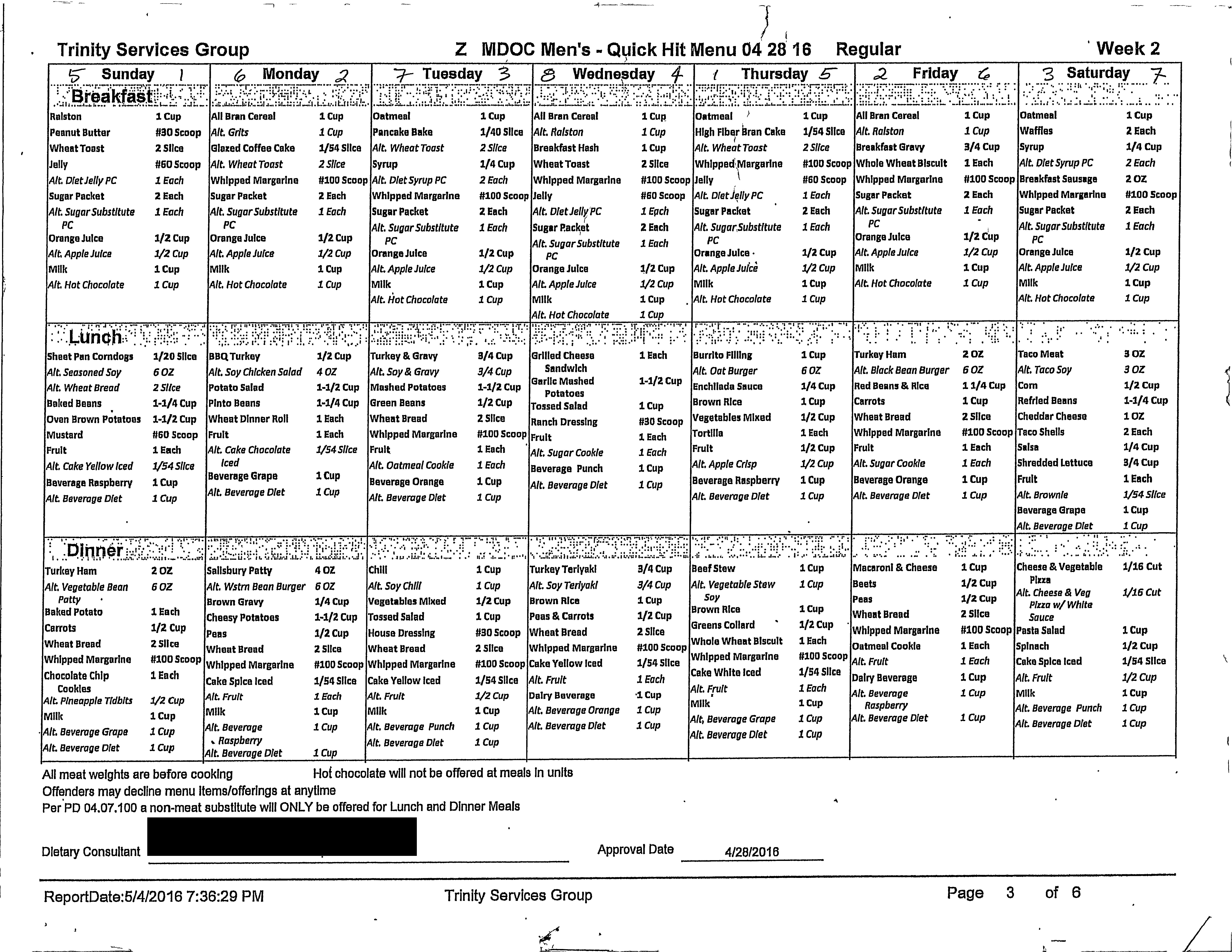

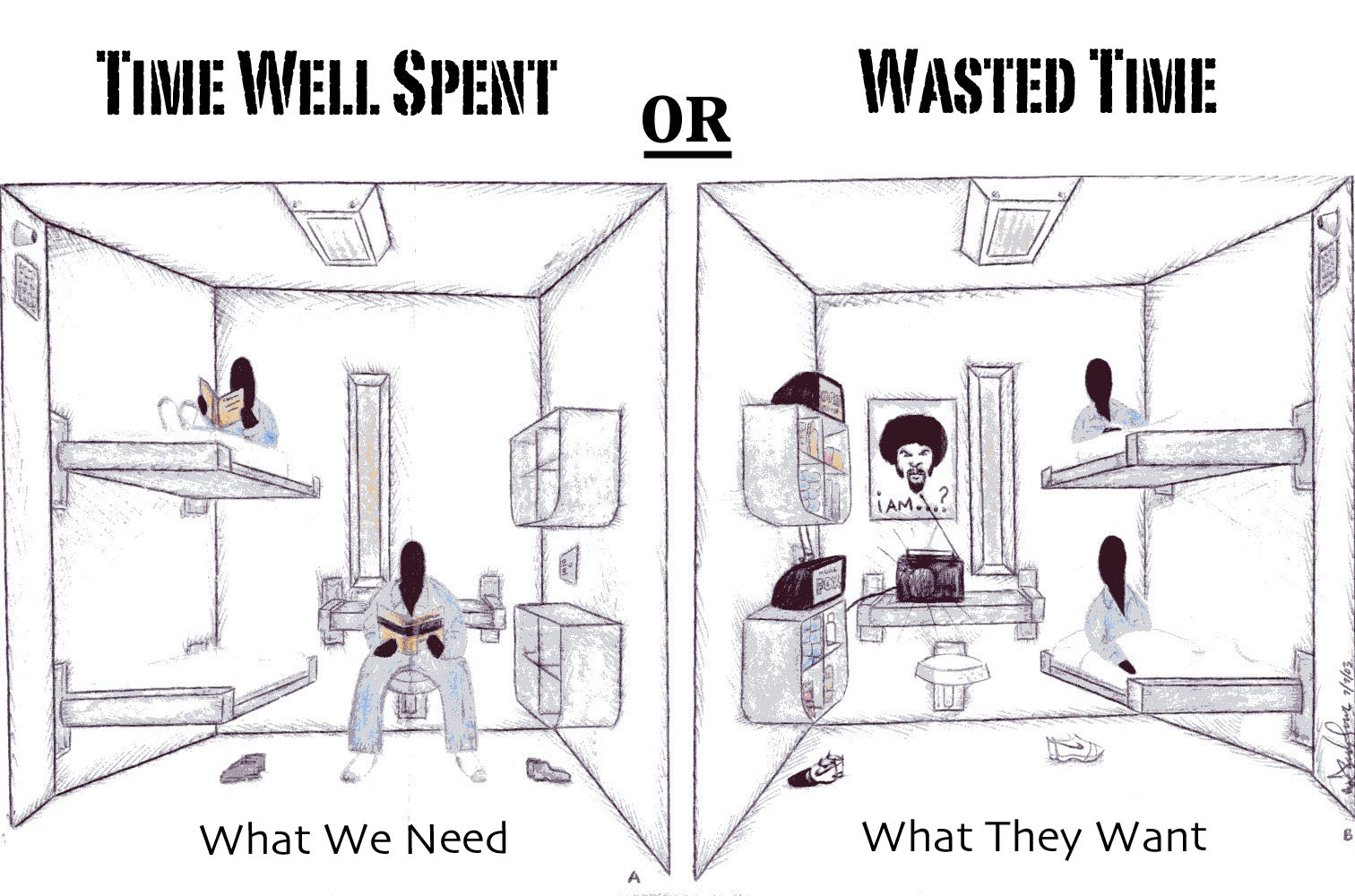
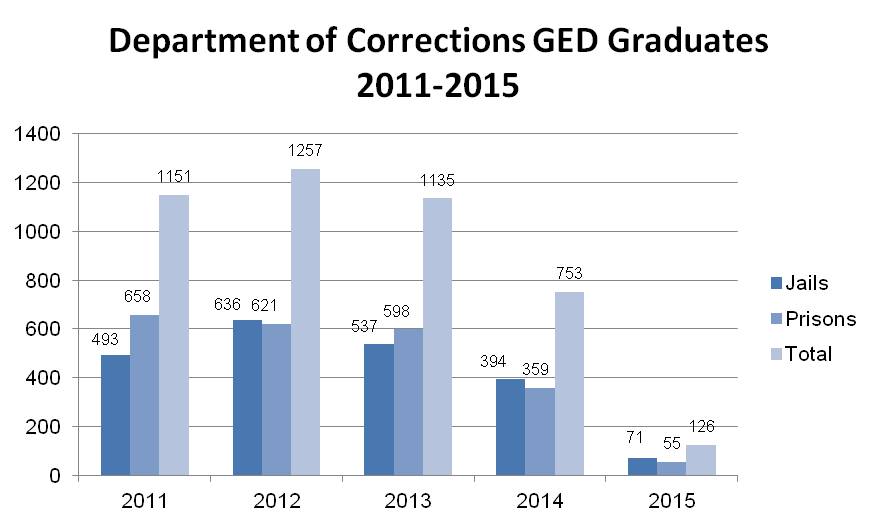
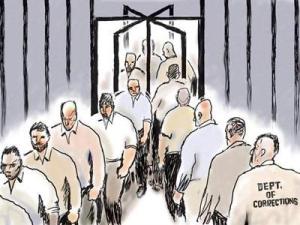
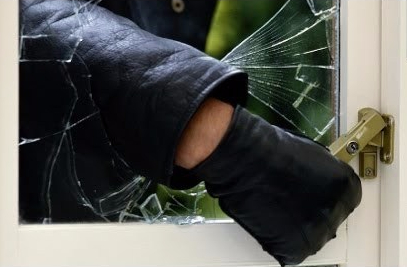


 Christ, Crime and Punishment