
Nothing New Under the Sun

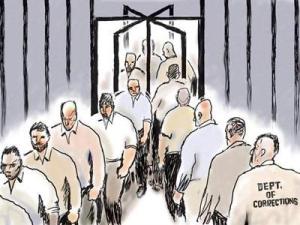
(cartoon by J.D. Crowe/Press Register) SC 1 ST Berkeley News – UC Berkeley

King Solomon famously stated in Ecclesiastes 1:9 that “there was nothing new under the sun.”  Three thousand years ago man’s folly was already tending to repeat itself.  Patterns of behavior and the propensity to do evil were well documented back then.  Man’s inhumanity to man is the same old sad tale repeated over and over, unfortunately it is not limited to those who choose to do evil.  While researching for the writing of this blog I have read a number of prison memoirs and research papers and it is apparent that the observations that I make about prison and prison life cross both space and time.  From a World War II German Military prison to 1970s Great Britain; from California to Texas to Michigan and prisons in between; from the 1930s until today, written by theologians and PhDs to the uneducated, unifying themes regarding prison life and treatment of prisoners demonstrate that my observations of life inside the MDOC in many ways are both honest and disturbing.

Ones does not expect in the twenty-first century to encounter ideas and practices discredited long ago to be the standard operating conditions.  That America and all it claims to stand for has been set aside in one area of governing a civil society is both disturbing and alarming.  As I was writing this essay there were images of yet another police shooting of an unarmed black man on the news and an advertisement for a new TV drama about a group of criminal investigators whose job was to ensure that the innocent were not wrongly convicted.  The abuses of the criminal justice system are finally making headway against the “tough on crime” agenda of the politicians, police, and corrections agencies in this country.  Grass roots organizations are cropping up in every state of the union calling for reform.  Even the president, whether you agree with his polices in general or not, has gone against the conventional wisdom of his political party and seeks to introduce some reforms into the federal corrections system.

A recent news article put a spotlight on the fact that we are not talking simply about convicted felons, but that a much larger number of people accused of misdemeanors that don’t even carry jail/prison time are serving time simply because they can’t afford bail.  According to a 2016 report by the Department of Justice over 11 million people pass through 3000 jails in the US every year.  People are even dying in jail from lack of urgent medical care and proper oversight in over-crowded and antiquated facilities.  During the recent arctic cold blast, a jail in Brooklyn, New York was plunged into darkness and freezing cold for several days when the electric and heating service to a portion of the facility was interrupted by an electrical fire.  The inmates were apparently tapping S.O.S on the windows of their cells calling for help.  The warden of the facility denied the severity of the problem even while inmates were calling the defenders office and pleading for help.  My own experience in jail was a cell so cold that frost formed on the inside of the window, no extra blankets and only a thin cotton jumpsuit for warmth in a room so cold you could see your breath.  So, I can empathize with the desperation of the situation and believe that it is true contrary to the official statements of the warden.

George Bernard Shaw once said “Some men see things as they are and ask why.  Others dream things that never were and ask why not.”   I find myself falling into the first category.  Don’t get me wrong, we need dreamers but after living through the nightmare of prison I don’t sleep very well at night.  Change must happen and the longer it is put off the higher the cost both financially and in human terms.  That is the point of prison reform.  Not just the recognition that there is a problem but there needs to be action taken to address the issue.  Not studies to determine the severity of the problem or pilot programs to explore alternatives.  The experts have already done these.  It is up to the people to demand that those in leadership of our government stop denying or minimizing the problem but take the advice of those whose occupation and preoccupation is focused on the problem.  It is like global warming.  People look at the cold winter and ask where is this so-called “global warming?”  The problem is that global warming is a poor term often used out of context when the issue really is “human activity induced climate change.”  A short catchphrase doesn’t properly encapsulate the issue.  The use of the phrase “prison reform” has the same sort of problem.  People look at crimes reported on our 24/7 news cycle and think that our society is less safe than it once was.  FBI crime statistics have shown that crime rates for all major categories have decreased steadily since the 1980s.  They then give credence and credit to the stricter laws and harsher penalties for causing this trend.  Research has shown that other factors have had a greater effect on crime reduction and that the stricter laws and harsher penalties have actually hindered what would have been even larger reductions to crime rates.

Prison reform is about addressing the underlying causes of crime and taking a reasonable approach to punishment.  Broken homes, single parent families, education, addiction, and poverty are at the core of prison reform.  Shutting off the street to prison pipeline that is responsible for the severe overcrowding, and all the problems that come along with that is what we are talking about.  The racial disparities in incarceration rates among the minorities from urban environments.  The aging infrastructure of prisons and jails that our society can’t afford to maintain let alone build more.  The erosion of respect for others different from ourselves that allows us to justify treating them not just poorly but as subhuman.   As somehow not deserving of basic human rights even thought they are enshrined in the Constitution.  This is was prison reform is about.

To know about a crime either before or after it occurs and failing to do anything with that knowledge is to be considered an accessory and makes one guilty by association.  So, wouldn’t it be true then that to ignore the advice of experts regarding the urgent need for prison reform could rise to the level of criminal negligence at the very least, or a gross misconduct in office and breach of trust by politicians who cling to alternate facts or decry reporting on prison problems as fake news?  For once I would like to see Solomon proved wrong that there is something new under the sun.  I pray that the logjam will be broken, and long overdue reforms will be instituted to our criminal justice system.  This will only happen when the people hold their representatives accountable and demand better treatment of our brothers and sisters, our sons and daughters, our friends, neighbors and aliens.

Breaking and Entering

breaking and entering

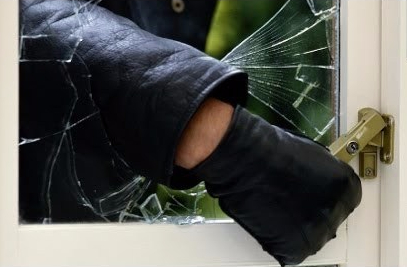
No one in prison likes a thief.  They target those they perceive as weak or look for targets of opportunity.  When lockers are open there are always eyes watching to see what you’ve got.  Being inattentive even for a few seconds can cost you.  Not padlocking your locker or footlocker even for a brief time and leaving it unattended will provide an opening for theft.  While a thief may run up into a cube and open a predetermined locker for a predetermined item in a snatch and grab, most theft is conducted by a cubemate.  They will even come up to you later and lie to your face pretending to empathize with you and your loss.

Some steal for the thrill, some are hungry, some as a passive aggressive way of expressing hatred for an individual, and some are desperate to pay their debts.  Given the culture in prison, the others living in the cube may know who did it and condone the action.  On rare occasions they don’t and then things become interesting.  Theft is premeditated and sometimes conducted by a crew.  Locks may be enough to slow them down but generally once their minds are made up, they will keep trying until they succeed.  In the end if you are marked as a target your property is as good as gone.

Lockers used in prison housing units look like any locker you’ve seen in a locker room at the gym.  A little over a foot wide and about six feet tall and about 20 inches deep.  In Level II and above the lockers are bolted to the wall.  In most Level I cubicle settings they are free standing.  In every housing unit that I lived in, the majority of the lockers exhibited damage from years of abuse.  Due to security concerns, lockers with internal rods used to secure the top and bottom of the door had the rods removed to prevent their use as weapons.  This means that the only point at which the door was secured was the middle.  This left the top and bottom corners susceptible to leverage that could be used to pry them open sufficiently to reach inside and grab whatever was in reach.  At my last Level I the maintenance department was delivering a replacement locker to my housing unit on a weekly basis.  The old lockers were being repaired and the corners of the doors reinforced with steel bar welded into them.   They were then returned to the unit when the next locker was broken into.  Too bad they weren’t being proactive and simply replace all the lockers with refurbished ones.  Just goes to show how little concern they had for the inmates

The footlockers used to be fairly secure.  They were made from ply-wood with metal trim adjoining all the corner seams and a rugged clasp for the padlock.  Over the years the quality of the footlockers decreased to keep the cost down. One time an older style footlocker was stolen in my Level I housing unit by throwing it over the wall from the back hall to the front.  Late at night you could hear the thin wood box being broken up into small enough pieces that they could be disposed of in the trash to get rid of the evidence.  At least 10 years ago a switch was made to an all metal style with a piano hinge lid with a weak clasp and no internal support to strengthen the corners of the lid.  These were easy to pry open.  I had one that was so forcefully pried open by a thief that the clasp broken off at the weld.  When I was moved to a different facility the footlocker was deemed to be damaged and the Property Room would not let me have it back.  I had to order another footlocker to replace it.  The cost was about $100 including tax and delivery.  If you had more property than could fit in a duffle bag you had no choice but to buy a footlocker.  There is a mechanism by which you can try to get the state to reimburse you for damage to a foot locker if you can prove it is the result of staff actions, which they will deny since it was by their inattention and not direct action that the damage occurred.

When unit security is lax the thief will steal repeatedly being emboldened by his success.  A favorite time for theft is during meal times when the majority of inmates are out of the unit for 15-25 minutes.  During that time if the unit officers are not making their presence known then larger items like footlockers will be broken into or TVs stolen.  To avoid the cameras that are positioned to look down the hallways, people and goods are transferred over the walls that separate the cubicles.  Because this problem was so bad the MDOC was forced to erect a metal fencing barrier to separate the front and back hallway cubicles, but not the side by side cubicles.  You can’t identify suspects if you can’t find them on camera with goods in their hands.  When it is an inside job it is even more difficult.  Even eyewitnesses will not say anything because being a snitch in prison is not a healthy vocation.  It is safer to not get involved unless the cubemates act as a group to deal with the situation since none of them wants to be the next victim.

There are a lot of people in prison who made a living by stealing out in the world and old habits die hard.  Most people in prison will continue on living how they lived in the world and even embellish on it.  But thieves are the worst.  They have no moral sense of conscience to dissuade them.  Only the threat of physical violence by getting caught by another inmate will slow them down.  They don’t even worry about getting caught by staff since the odds are so strongly in their favor.  When caught there is usually only a slap on the wrist for punishment.  Officers may write tickets, but only in extraordinary cases will theft between inmates result in restitution.  In contrast if the theft is against the state, they will charge exorbitant replacement costs.

When a thief is identified in the housing unit, he is a marked man.  Generally speaking, the only recourse is violence, and that only feeds into the dysfunctional prison culture.  If you don’t have anything to lose and feel like you have a chance to win you might try to seek revenge or have others help you.  If you don’t have acquaintances or accomplices to do this or can’t risk losing a parole, you may have to simply accept it.  It certainly helps to put things in proper perspective.  Nothing is more important than freedom, it is after all only stuff.  But for those who have little or nothing and everything they do have is hard won with scant resources and no ability to replace the stolen items then the stakes can be much higher.  People have died in prison in disputes over a single Raman noodle which costs $0.34.

50 Things I Learned in Prison

  1. Toothpaste is a better glue than Elmer’s.
  2. Ramen noodles can be the base ingredient in a gourmet meal.
  3. RAP music is Really Awful Poetry.
  4. Sometimes you have to pay extra just to get the basic free service.
  5. You can’t trust authority. If you see their lips moving you know their lying.
  6. You can educate ignorance, but you can’t fix stupid.
  7. Privacy is an illusion and personal space is dimensionless.
  8. The only difference between COs and inmates is that the COs lack conviction.
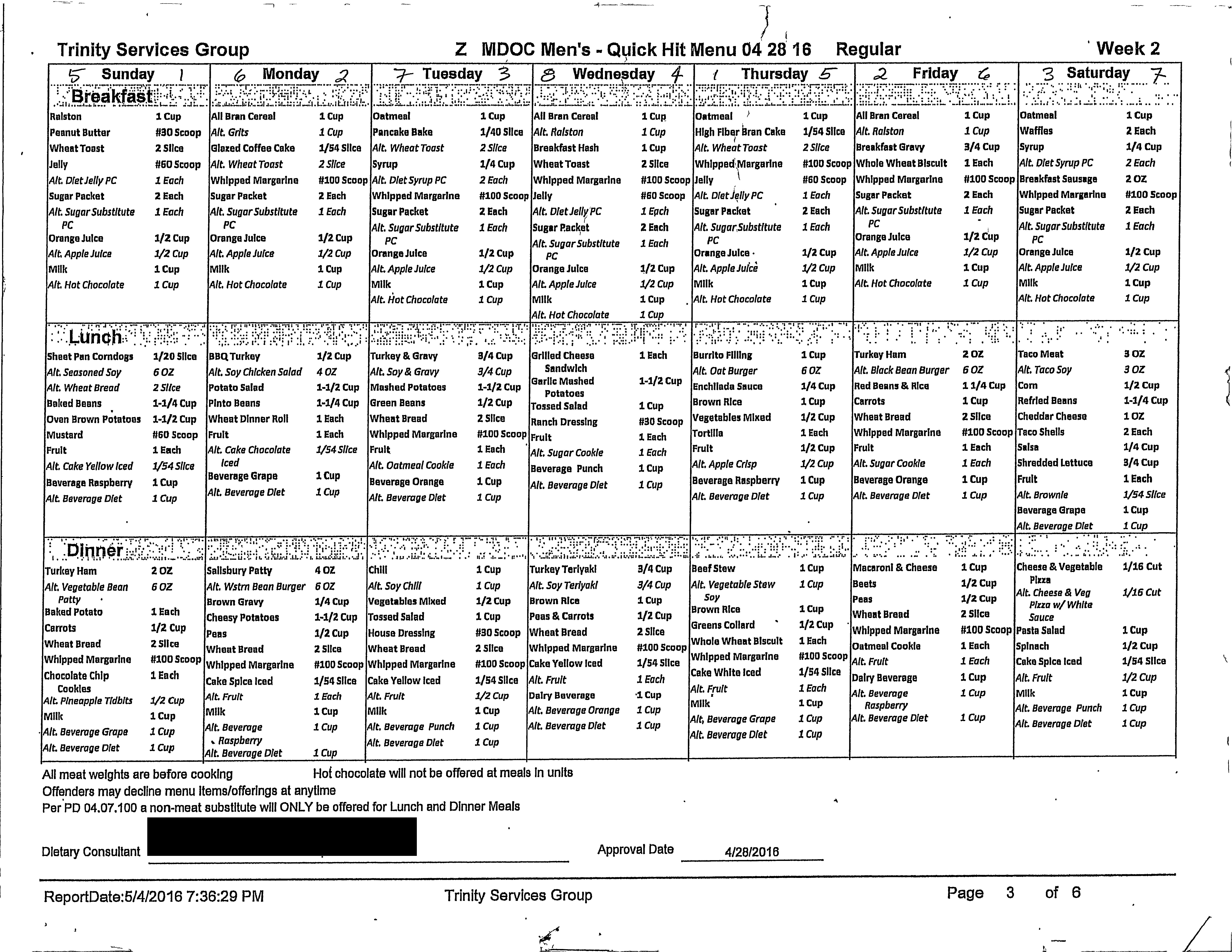
  9. While the menu looks good on paper, the reality is something completely different.
  10. Prison beds have more in common with a medieval torture rack than a place to sleep.
  11. Not only is justice blind, it is deaf, mute, and retarded.
  12. Inmates can be charged outrageous prices for inferior products because they are a captive market.
  13. Common sense is not very common.
  14. Prison health care services are careless, dental services are toothless, and the mental health services are crazy.
  15. Prison is like Motel 6, they’ll leave a light on for you.
  16. Mother doesn’t live here so you have to clean up after yourself.
  17. Behavioral issues are best handled with diesel therapy.
  18. Even when you are right you’re guilty.
  19. It’s their house and their rules, I’m just a guest.
  20. Floor sealer makes good shoe polish.
  21. Coffee is the nectar of the gods.
  22. Eating gas station vending machine food in the visiting room is like dining in a 5-star restaurant compared to the chow hall.
  23. Silence is not only golden, it’s priceless.
  24. I miss my Lazy-boy!
  25. It’s pronounced “pole-ees”.
  26. “Snitch” is a four-letter word.
  27. Hygiene is not optional
  28. Forty qualifies you as old.
  29. Fifteen minutes on the phone goes by in a heartbeat.
  30. Men gossip worse than women.
  31. The truth will not set you free.
  32. Beards are a fashion statement, tattoos are a fashion faux pas.
  33. There is a direct relationship between a man’s IQ and his level of respect for women.
  34. You are guilty until proven innocent, and since no one is innocent, QED.
  35. There is no place like home.
  36. The general public is not getting their money’s worth from the MDOC.
  37. It’s the Michigan Department of Corruption.
  38. Dogs at the pound get treated better than inmates.
  39. Prison is no place for picky eaters.
  40. The prison pay scale is criminal exploitation.
  41. Lawsuits are cheaper than proper health care.
  42. Inmates are like mushrooms: Kept in the dark and fed BS.
  43. Low expectations lead to poor outcomes.
  44. Might makes fright.
  45. If you don’t get your hopes up you won’t be disappointed.
  46. You can’t force someone to change; they have to want to.
  47. Harsh prison sentences punish more than just the guilty party.
  48. Some fashion statements should be revised before being made public.
  49. Dental floss can mend anything.
  50. The way to claim success is to keep changing programs before the failures become too evident.

You Might Be A Prisoner If:

An homage to Jeff Foxworthy

  1. You try to buy things with Ramen Noodles.
  2. You call out in a restaurant “Cookie for a burger!”
  3. You send a written request to your doctor for an appointment.
  4. Three times a day you stop what you’re doing and go sit on your bed.
  5. You never make phone calls that last more than 15 minutes.
  6. All the outfits in your closet are identical.
  7. You can tell military time but you don’t salute officers.
  8. You get signatures in your day planner for every appointment.
  9. You get your hair cut with children’s safety scissors.
  10. Instead of being chased by a posse, the posse travels with you.
  11. You wish your gin had been brewed in a bathtub.
  12. You sleep with the lights on for safety.
  13. You gossip worse than women about other men.
  14. You expect and accept “No” for an answer.
  15. You are willing to stand in line at the worst restaurant in town.
  16. You work for only pennies an hour.
  17. You have to pay your roommate to get him to take a shower.
  18. You paid for your tattoos with coffee.
  19. Convictions are something on your rap sheet, not something you believe.
  20. Earning a GED is considered a significant achievement.
  21. You answer when people call you by a number instead of your name.
  22. Instead of working 9 to 5 you have hard labor from 5 to 9.
  23. You use a Bible as a doorstop or a wedge for your bunk.
  24. You think HOPE is a four-letter word.
  25. You think that instant coffee is the elixir of the gods.
  26. You think that life and death is just fun and games.
  27. You watch free cable but are not staying in a hotel.
  28. The way you say ‘Thank you’ is “Good lookin’ out” and mean it literally.
  29. All your worldly possessions fit into a duffle bag but you don’t deploy overseas.
  30. The majority of the furniture in your room is bolted to the floor or walls.

Everything Is Backwards In Prison

Backwards

  1. We lock our closets but we can’t lock the bathroom door. In fact, in many prisons there isn’t a bathroom door.
  2. The best food you get to eat is vending machine food in the visiting room or gas station food from the commissary. The chow hall food is practically inedible.
  3. The windows don’t have any curtains but still fail to let much light in.
  4. It is dark in the housing units, yet people complain when you turn on the lights.
  5. When you do turn on the lights they are still not bright enough to read by.
  6. Bath soap and shampoo are used to wash your personal dishes.
  7. The day room is most crowded at night.
  8. We use chairs as a ladder to climb unto the top bunk instead of sitting on them.
  9. Emergency count is never an emergency and always takes longer than regular count.
  10. In the chow hall they feed grown men kid’s meal portions.
  11. Disposable plastic silverware is used over and over forever.
  12. Guys talk about the ugliest women as if they are beauty queens when they would never give them a second thought out in the world.
  13. We refill the ink barrel of our favorite disposable pen.
  14. We recharge disposable batteries.
  15. Laundry comes out of the wash looking dirtier than before it was washed.
  16. Headphones are used to block out sound.
  17. The family we were tired of listening to can’t talk long enough on the phone.
  18. We sometimes have to lock-up to get free of a bad situation.
  19. New flat screen TVs have smaller screens than the old CRTs and cost 50% more.
  20. Some work only to steal.
  21. The MDOC pays students to go to school.
  22. Some inmates have their people put money in other prisoner’s trust accounts because they can’t have any in their own.
  23. We brush our teeth before meals.
  24. No good deed goes unpunished.
  25. Bad behavior is expected.
  26. We learned that the truth will not set you free.

Freedom

“We hold these truths to be self-evident that all men are created equal and are endowed by their creator with certain inalienable rights such as life, liberty and the pursuit of happiness.”  This is the opening of the preamble to the Declaration of Independence signed on July 4, 1776.  The nation born from the struggle to achieve better treatment for its people by casting off its oppressors commemorates its freedom from July 4th rather than from September 3, 1783 when Great Britain signed the peace treaty ending the revolution and acknowledging the sovereignty of the United States of America.  Freedom was not granted by the oppressors, rather it was taken by force by the oppressed.  Unfortunately, not everyone in the country can celebrate freedom today.  Millions of men and women are incarcerated in jails and prisons all across the country.  When you don’t have the ability to participate in life, liberty, or pursue happiness there really isn’t much to celebrate on a national holiday that you can’t experience.

Christmas is a religious and cultural holiday.  Thanksgiving remembers the difficulties of establishing a home in the “new world.”  Memorial Day acknowledges the sacrifice of our soldiers to defend us.  Labor Day acknowledges the efforts of the people to make the engines of commerce run.  Those in prison can find connection to some or all these holidays, but Independence Day in my experience was different.

Prisoners have had their freedom taken away because they violated societies code of conduct.  Why take away freedom?  Because after life, liberty is the most valuable thing a person can possess.  It is like the punishment we received as children when our parents took away our favorite toy.  We didn’t like that but when that didn’t work, what did they do?  They put us in time out, which escalated to grounding when behavior fails to conform to expectation.

Parents do this because it works, sort of.  When we were little it didn’t take much to pursued us to behave.  But over time the punishment increased in severity as the effectiveness diminished.  The same thing happens with adults.  Harsher punishments for more heinous crimes and 3 strike laws to increase penalties for repeat offenders.  But just like children over time with repeated offense the effectiveness diminishes.

Nonetheless when you are in prison you are not free, but you remember what freedom was like.  You miss it terribly because all around you are reminders of what you have lost and what it takes to deny it from you.  On one hand you watch the officers and staff go home every night, cars driving by on the streets beyond the fences and the TV brings images of what’s passing you by.  On the other hand, you can’t get away from razor wire, monotonous routine, and loneliness day after day.  All of these are enough to drive you crazy and the last thing you want is something like a holiday dedicated to freedom to rub salt in the wound.

Holidays are times when people in the world get together with family and friends, take road trips, and gorge at feasts.  Prison can only offer pale facsimiles that leave little to be desired.  Once upon a time there were picnic holiday meals served on the big yard with burgers and hotdogs cooked on the grill, as the old timers tell it.  But any pretense of holiday celebration is long gone.  Holiday meals are only slightly distinguishable from any other meals.  Like putting fixings on a burger and ice cream on pie.  At my last prison the local community fireworks display was visible over the tree tops for those that had a view from their housing unit windows facing that direction.  While they drew the attention of a few guys, most simply complained about the noise.

Holidays meant that non-custodial staff would have the day off, so things like the library or gym callouts would be cancelled.  This always caused complaints, since these callouts would not be rescheduled for another day.  The visiting room was always crowded on the holidays.  Holidays meant limited hours compared to the normal visiting room hours of operation.  Vending machines run low and there is no one to refill them.  Lots of irregulars working means that chaos rules.  All this takes away from the enjoyment of having contact with family or friends.

The phones are always busy on holidays as guys call home hoping to make contact with family and friends visiting the house that they wouldn’t normally get to speak with.  Providing that you can get through.

After the Independence Day holiday is over there is an almost audible sigh of relief when things go back to “normal” at least until the next holiday in September.  The only independence day that a prisoner wants to celebrate is the day that they are released from incarceration.

Brush Strokes

vincent_van_gogh_prisoners_walking_the_round
Vincent Van Gogh’s “Prisoners Walking The Round” also called “Prisoners Exercising” painted in 1890.

It is really easy to paint everyone in prison as being the same.  Hardened criminals who are as monochromatic as the walls surrounding them with black hearts and dark thoughts that only know destruction.  But that like most popular perceptions about prison is not just an over-simplification, it is wrong.   Prison is a microcosm of society with people from all walks of life, many of whom I’ve tried to describe in this blog.  There are colorful, creative people who have done some terrible things and are paying the price.  However, rather than letting darkness consume them they are taking the proverbial lemon and making lemonade.  They do this pouring out their creative energy in painting or writing.  The University of Michigan Prison Creative Arts Project has for more than two decades hosted an exhibit of art by Michigan prisoners and for ten years have published an annual volume of creative writing.  The annual art exhibit and reading are held in Ann Arbor and Detroit and are open to the general public.

Works of art and writing are submitted to a selection committee at the U of M Humanities School.  Those that are accepted cover a wide range of subject matter from real life to flights of fancy and from poetry to non-fiction.  Many of the works of art are available for sale with the proceeds going to the artist.  The creative writing is published in book form that is available for sale by U of M.  At the reading, mainly family and friends are invited to read on behalf of the incarcerated author.  I was one of the rare authors who had paroled between the submittal and the reading and could present my own poem “Ode to Ramen.”  A humorous but truthful analysis of the importance of Ramen Noodles to prisoners.

It is fascinating to see how others view their life behind bars in color or black and white.  The diversity of perspectives and experience is showcased nicely through this program by U of M.  So much of life behind bars is a mysterious secret that very few get a glimpse of first hand.  There should be more programs like this that provide an outlet for inmates than can be witnessed by the public.

Here is the poem that I wrote regarding one aspect of prison life that was published in “Concertina Maze” The Michigan Review of Prisoner Creative Writing, Vol. 9. 2016

Ode to Ramen

Like many prison inmates I own my very survival to your savory, salty goodness.  The MRE of the penitentiary.  You are always there when the chow hall lets me down to satisfy my hungry longing for sustenance.

Your noodley presence is the only constant in a place where no one knows what tomorrow may bring.  More enduring than a Bunkie, waiting patiently in my locker to be called upon in a time of need.

Honeybuns and bagels may come and go, but your pasta lasts forever.  You never grow old or mold, having a half-life rather than a shelf life.  Meant to be crushed yet you are indestructible.  Immortality incarnate.

Haute cuisine you may not be, yet comfort food you are.  A staple ingredient in every dish, the most versatile of wonder foods.  You inspire me to new heights of cookery as master chef of the microwave.

Flavor is your claim to fame.  Packets of hot spicy intensity or meaty mellowness that travel far and wide beyond the expectations of ordinary condiments, to lift the spirits of diners in desperate need of taste enhancement.

Your value transcends your caloric content to become the currency of the land.  Exchanging hands to pay our debts, you wander far before you spend your last to ensure that I will make it ‘till the dawn.

Hail to the noodle!

Care Less

The old adage is that “people don’t care how much you know until they know how much you care” is never truer than in prison.  I have encountered very few employees of the MDOC that I could honestly say cared about anything more than their jobs.  Not doing their jobs well, just keeping them.  Actions speak louder than words and the way some of the COs yell that’s saying something.

An example of a CO that is not treating inmates with respect is when they get on the PA and call for you by saying, “Hay get up here!”  They use profanity and humiliation to publicly denigrate inmates.  Using strong arm tactics, such as tearing up a person’s property when doing a shake down and taking property such as TVs as contraband in retaliation for a perceived slight.

Food service workers that would rather throw food away then feed a little extra to the inmates that work in the chow hall.  Supervisors that refuse to write work reports with a perfect score, on the principle that we’re convicts.  Medical staff that put company profits ahead of providing life-saving health care service. Vendors that make huge profits off of those who can least afford it.

From the inmates’ perspective it is really easy to be cynical about attitudes when those who have been entrusted with the care and feeding of inmates treat them worse than dogs at the pound.  People who are always looking for an angle are jaded about the motives of others.  Respect and the lack there of is a central premise of the prison culture.  Inmates can spot a fake a mile away. Sincerity, truth, and information are of great value and in short supply.  The few MDOC staff members that have these elusive qualities are respected.  For the rest animosity, antagonism, a never-ending game of cat and mouse, with scores to settle and vendettas that result in guys going to the hole and COs getting hurt.

What is needed most by people who have received so little of it in their lives is having someone care about them as a person.  To see them as more than a number and a pay check.  To see them succeed, to go home and never come back.  Once that happens, then maybe inmates will listen a little more carefully to what they are being taught in school and programming.  Maybe they’ll be more cooperative with the system instead of being hell bent on destroying it from the inside.

I am not naive to think it will cure all the problems and that the hostility of people being held against their will, will go away. But would it really hurt those who work for the MDOC to start treating inmates as people?  To do their jobs conscientiously with the goal of treating inmates as customers or patients instead of merchandise that is simply warehoused and shipped from place to place.  We may be damaged goods, but we need help to put us back together, not to be thrown on the junk pile and discarded.

As human beings we are composed of bodies, souls, and spirits that require a lot of nurturing.  The resources required to this are not cheap, but the fact is that prison as it currently exists causes more harm than good.  It is failing to do the one job it is entrusted to do- that is to protect society by rehabilitating those who have been deemed unfit for a civil society.  It is unfortunate that people end up in prison.  An ounce of prevention is worth more and certainly costs less than a pound of cure.

But until the legislature and the general public are willing to pay the true cost of meeting the goal of reducing crime by addressing the root causes they are stuck instead paying for the cure.  Don’t let it be money just flushed down the toilet, but rather well spent by corrections professionals who act the part and take their jobs seriously and care about making a difference.

A Bird In The Hand

Deseases of Cannaries Looking Outwards

 Books by Robert Stroud are still in print today.

The Birdman of Alcatraz, Robert Stroud raised and studied birds while he was incarcerated at Leavenworth.  A convicted murderer, he published Diseases of Canaries in 1933, which was smuggled out of prison and sold.  He even ran a successful business from inside prison.  While not allowed to keep birds at Alcatraz he instead wrote a history of the penal system.  He was incarcerated for the last 54 years of his life and spent 42 of those years in solitary confinement.  A dangerous, violent man who eventually became one of the best-known examples of self-improvement and rehabilitation in the federal prison system.

While no one is raising birds in their cells for sale in the MDOC, I’ve seen a few that had the birds feeding out of their hands in the big yard.  Prisons are generally not located in heavily populated areas and are surrounded by farms, fields and forests.  The result is that there is a fair amount of wild life present.  Deer, wild turkeys, muskrats, foxes, opossum, raccoon, skunk, chipmunks, and dozens of species of birds.  It is the small animals and birds that can come and go as they please through the perimeter, obviously the larger critters will only be visible outside of the fence, but a deer did get inside the fence one time.

I’ve watched guys hold out their hand and feed birds with crumbs of bread taken from the chow hall.  Standing still with their arm outstretched near a bird perched on a fence or bench.  The bird will hop onto the hand and feed for seconds at a time.  Red Winged Black Birds, Chickadees, and other song birds that to some extent have become accustomed to humans can be coaxed from feeding nearby to feeding out of hand.  No sudden movements, no noise, just patience.

Birds perch on fences, however in prison that can be dangerous since there is usually razor wire involved. I’ve seen countless one-legged birds hopping about. That’s a high price to pay for hanging out in prison just for the sake of a free meal.

Chipmunks are another species that benefits from inmate’s willingness to feed the animals, which is of course against the rules.  Chipmunks hide in holes and are nervous by nature but can be coaxed out with a few peanuts.  I’ve never seen one feed from a hand, but there was a game to see how close you could get to one.

Prison being prison, not every story is cute and cuddly. While I was at my first level I facility, several inmates got into trouble for catching, killing and trying to cook a duckling in the microwave.

Large open grassy areas tend to attract geese and ducks, especially if there are even small temporary bodies of standing water nearby.  The big yard may look like a tempting location to raise a family.  Inmates will step aside and allow the mother duck to lead her ducklings from one location to another across the yard.  Ducklings grow fat from all the bread crumbs tossed their way.  Free from predators 1ike foxes, hawks become the greatest threat.  The ducks are closely watched and any loss to the family group is noted.  Some guys find great joy in in watching the ducklings mature and are saddened when they fly away at the end of the summer.  I think a part of these inmates who have invested their time and emotions into these ducklings flies away with them when they leave.  You can see it in their eyes as they watch the ducks experience freedom that the inmates can only dream about.

Unlike Hogan’s Heroes or Shawshank Redemption the MDOC doesn’t use guard dogs.  I’ve heard of dogs being brought in from the state police to search for drugs but that is about it. There are however several facilities that have begun raising puppies for the Leader Dogs for the Blind program. Writeups in the newspapers speak highly of these programs and the success rate that these dog programs have. They were going to set one up at my last level I facility but the new warden changed his mind.  The inmates had already been selected and moved into a housing unit and the kennels had been built in the housing unit, but no dogs. There was one dog that came to live in the prison however.  An officer had passed away after an extended illness and her dog was brought in in anticipation of the dog program.  While not actually part of the program the dog was to be looked after and cared for by the inmates.  It became the most popular individual on the compound. I would see it sometimes being taken for walks around the track during yard time.  In the winter someone even made it a winter coat by cutting up a prisoner coat to make one with little sleeves for the front legs and an orange stripe across the shoulders just like the rest of the prisoners had.  Doted on and spoiled rotten with lavish attention the dog was the center of attention everywhere it went.  It became a sort of therapy dog for everyone at that prison. No one would dare to abuse or in any way hurt the dog or they would suffer the wrath of several hundred dog lovers.

Mich Dog
Photo: Romain Blanquart/Detroit Free Press

They say that dogs are man’s best friend and that they don’t judge us but give unconditional affection.  For many in prison that type of attention is exactly what prisoners need.  In a place where there is so much negativity to find something as relentlessly positive as a wagging tail.  To have something to care for and about when it feels like you’re forgotten and alone.  To have a reason to do something for someone besides yourself.  To be responsible for the well-being of another creature when your own is under duress.  If one dog could do that what would 20 dogs do? The fact is that dogs make a positive contribution to the facilities that have them.

Mich Dog Program
Photo: J. Scott Park / AP

There is a tremendous demand for these dogs and it would seem that while having the dogs would make for more work the dividends paid by the positive mood they bring that every warden should be clamoring to get a program at their facility.  Unfortunately, that is not the case and you need to ask why.  Just like Robert Stroud who benefited from a warden who saw the value in his bird research and gave him a second cell to house all his birds only to lose it all when a new warden came and didn’t see the value and thought that he only deserved punishment and harsh treatment.  It all goes back to the question: Is prison only about punishment or should rehabilitation be the focus?

Education Connection

thebroken system

One of the strongest correlations in predicting whether or not a person will end up in prison is the lack of a high school education.  This fact has been known for many years and has been codified into a law that requires inmates without a high school diploma or a GED to attend GED classes.

Even before there was a GED program in the MDOC there were primary and secondary education programs with Jackson Public Schools at the old walled prison in Jackson that allowed inmates to earn a high school diploma.  In fact, until the Pell Grant for prisoners was eliminated under President Bill Clinton there were college classes taught by institutions such as Spring Arbor College, where inmates could earn a B.A. degree.

I worked as a tutor in the GED program for 5 years and had the privilege of working a long side two old timers who had earned their B.A. degrees from Spring Arbor College. They were bright, articulate, knowledgeable, and earnest in communicating their passion for helping men earn their GED.

In the MDOC the inmates who work as tutors are the key to the program.  The reason is both simple and shocking.  First is that peer to peer learning has been shown to be an effective adult learning tool.  Inmates teaching inmates removes the power dynamic from the situation.  Also, there is the ability to establish relationships that would be inappropriate for correction’s staff.

During my time as a tutor I worked directly for three different teachers at two different facilities.  I knew 10 teachers      well enough by interaction with them and their tutors to know about their classroom environments to say that what I am about to share is not atypical.

The first teacher I worked for knew my former employer from a previous career in medical equipment sales.  All teachers in the MDOC GED program are certified educators and all that I am acquainted with had worked in public schools.  My teacher, who I will not name, was no exception.  He worked in primary education for Detroit Public Schools.  In fact, he had been fired by them.  The old saying is “Those who can’t do, teach.”  In prison it goes a step further, “Those who can’t teach, teach in prison.”  Teachers like many others who work in prison are there because they couldn’t make it in the free world.  Like COs that couldn’t make it as police officers, there are those “teaching” in prison who couldn’t teach.  This isn’t the case for all teachers, just like there are good COs, it is just that there are more than a few bad apples.

The second teacher I worked for was the Felix Unger to my first teacher’s Oscar Madison. They were in appearance the “Odd Couple.”  One was nattily dressed and a stickler for organization, the other unkept and easy going.  But being a snappy dresser didn’t make up for his inability to manage his class.  I got along great with him until I made the mistake of correcting him in front of the class, when he incorrectly described how to solve a math problem.  I went from getting a perfect work evaluation to ‘barely meets expectations.’  I had organized his filling system, written standard operating procedures to ensure that all future tutors would be able to maintain the system.  The tutors took attendance, graded work, assigned student testing, maintained educational files, and worked one-on-one with students, while the teacher chatted with students and wrote more tickets than any other teacher.  He did not have the respect of his students and did not have control of the class room.  The result is that the class room did not provide a learning environment for those who wanted to learn.

My second teacher was the complete opposite.  Wild hair and sloppily dressed, but he had a kind and gentle demeanor that commanded the respect of his students. His class room was a quiet, stress-free learning environment, where men succeeded in earning their GED.  It was in this class that I earned my greatest compliment.  I was on a visit and one of my students pointed me out to his family and said, “That man is helping me get my GED.”  And he did.  Just as the COs set the tone for what goes on in the housing units, the teachers set the tone for the class room and it makes all the difference when it comes to educational success.

The third teacher I worked for was not like either of my previous bosses.  He worked for 20 years as a teacher in the MDOC, he had seen it all.  He held court in his class room.  He told stories in a folksy style.  Nothing got under his skin except students that squandered the opportunities given to them.  He wanted the best for his students and did more to help them succeed.  He also saw to the needs of his tutors who he didn’t treat as inmates so much as co-workers.  The respect was mutual.

Education is supposed to be a priority for the MDOC, yet year after year budget cuts to education have reduced the number of teachers in the class room and the resources available.  When the new GED standard came out in 2014 the MDOC was not prepared to change over until 2016.  Even then they still did not have the text books available in all subject matters in sufficient quantities for all students in all classes.  They had bought new computers that were supposed to run new educational software for the students to prepare them for the computerized GED exams. Unfortunately, the computers sat unused for two years and when the new programs were implemented the servers and other hardware purchased were inadequate.

Language arts Math Science Social Studies

Examples of GED textbooks used by the MDOC.

The old GED standard was said to be about equivalent to an eight-grade education. The new GED based on the new high school graduation requirements significantly raised the bar.  Many students who had passed some but not all subject areas were given several opportunities to complete their GED, but when push came to shove the lack of staff to administer the additional tests resulted in some students losing out and having to start over with a significantly elevated bar. This was a real blow to moral and I watched a number of students give up and throw in the towel, resigning themselves to the reality that the new GED standard was unattainable. The new GED was designed to be high school equivalent, while prisoners are anything but.

The old models of self-teaching by students with assistance from the teachers and tutors didn’t work that well under the old GED.  With the significantly higher educational requirements the MDOC needs to rethink how it operates its classes. Self-learning only really occurs after fifth grade because students up to that point lack the necessary vocabulary and learning skills to effectively study on their own. When all you were asking was about three grades of learning many could get by with their life skills to bridge the gap and earn their GED.  Under the new system it is asking too much for inmates, many of whom are functionally illiterate to self-study.  What is needed is a structured class room environment where teachers actually teach and students are expected to learn.

Participation in the GED program was a parole board requirement, but because there weren’t enough teachers or class room space there were waiting lists based on ERD at each facility.  The result was that inmates serving short sentences would go to the head of the list, but if they didn’t have an interest in learning thought that they could wait out their time.  The result was that those who actually wanted to earn their GED and would write kite after kite asking to get into school would have to wait.  And due to their longer sentences were further down the waiting list were prohibited from working in the interim.

In addition to the GED program the MDOC also offers vocational training programs intended to provide marketable job skills to aid inmates in gaining employment upon release. Programs like Carpentry, Electrical & Plumbing, Masonry & Concrete, Horticulture, and Food Service were popular.  These programs were available to those who had a vocational training requirement from the parole board because they had no prior history of employment before coming to prison.  These programs required a GED or high school diploma as a prerequisite.

I knew a guy who was hired to be a tutor in the Masonry & Concrete program as they were setting up the program.  He was a masonry contractor in the free world and knowledgeable in all aspects of the trade.  He was not impressed with the training curriculum and I would trust his judgement on this.  What he also told me made me sick and it should make you angry.  The facility where we were located was very limited in the available class room space.  In fact, the GED class that I was a tutor for was relocated to a much smaller classroom that had previously been used for other programs such as AA, in order to give the larger classroom to the Plumbing & Electrical class.  The room across the hall from my smaller class room was the technology room where the GED testing was held.  They were displaced to make room for the Masonry class. Before the masonry class could begin a secure tool crib needed to be built along one wall of the room to store the tools to utilized by the class.  When they brought the brand-new tools that had been ordered for the class to put them in the tool crib it was apparent that they would not all fit.  With no other storage options available the teacher had his tutors throw thousands of dollars of brand new tools in the trash compactor rather than deal with the situation.  After the class started one day I watched as they tracked cement dust all over the hallways in the school building. the utility closet was half way down the hall and they made a huge mess making mortar for a brick laying project.

The level of incompetence displayed is hard to grasp but it really happened.  My teacher saw it coming and tried to warn them but like every other good idea proposed in the MDOC it was ignored.  They tried to set up this program quickly and on the cheap and then forced it into a facility that could not accommodate it.

I understand that in recent years new programs have been introduced such as Asbestos Abatement for which I have no first-hand knowledge, just what I’ve seen on the news or read in the paper.  It makes a great sound bite but if it is anything like the vocational education classes I’ve seen first-hand then it will be worse than useless and potentially dangerous to the students.

Many of the inmates participating in these programs selected them based on availability at the facility they were housed at, not on what they saw as a potential career that they would actually be interested in.  They are just checking off a parole board requirement to increase their chances of parole.  Given how these programs are run it is a pretty obvious and safe to say that the inmates aren’t the only ones going through the notions when it comes to educational programs.